How the Brooklyn Nets CFO is measuring returns on AI
Brooklyn Sports & Entertainment CFO Peter Stern, who oversees finance for the NBA’s Brooklyn Nets, the WNBA’s New York Liberty and downtown Brooklyn’s Barclays Center is already putting a number on some of the changes his finance team is seeing from their use of artificial intelligence.
Stern, who will be speaking on a sports and entertainment panel at CFO Live: The Future of Finance on Sept. 30, said his team spent roughly 12 hours building an AI agent that autonomously produces a post-game report containing hundreds of operational and financial data points. The report previously took an employee about two and a half hours to complete after each Nets and Liberty home game.
In a recent sit-down with CFO.com, Stern discussed how his investing background at Alibaba shaped his approach to capital allocation, the financial impact of the NBA’s new media rights agreement, why he views the crosstown rival New York Knicks’ recent success as a tailwind for basketball in New York and shares how teaching financial literacy to incarcerated individuals has changed his approach to leadership.
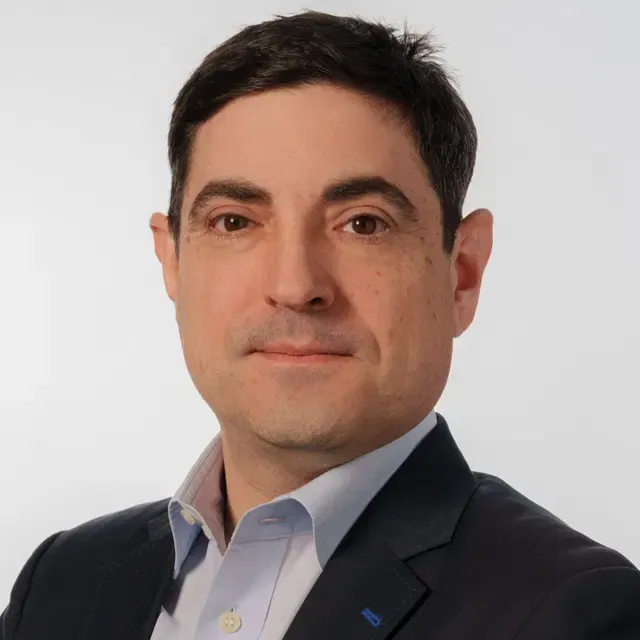
Permission granted by Brooklyn Sports and Entertainment
Peter Stern
CFO, Brooklyn Sports & Entertainment
First CFO Position: 2020
Notable previous employers:
This interview has been edited for brevity and clarity.
ADAM ZAKI: You have an interesting investing background coming from Alibaba. What was the adjustment like going from investing to operations?
PETER STERN: At Alibaba, I was fortunate enough to start their U.S. investment team, and we made only strategic investments, not financial investments. So we were investing in companies to bring their technology to China or to bring our capabilities to the United States, and we very much got into operations.
While I had kind of an investing label on my business card, I did have a bunch of exposure to operations. When I came here to Brooklyn Sports and Entertainment, I built on some of those skills that I had from an ROI perspective.
The investing stuff was very helpful to me coming here, and some of our bets at Alibaba were long-term in nature. There are kind of three different buckets if I think about capital allocation and investments here. There’s near-term ROI that’s measurable. We are in the midst of a $150 million arena renovation project, some of which has immediate ROI, some of it has longer-term ROI, and some of it, the third bucket, is immeasurable ROI.
I know in my heart that this helps drive fan engagement and build fandom, but it’s difficult for me to quantify that with numbers.
Professional sports and the CFO role in it have changed tremendously. What do you think is most different about your day-to-day compared with someone who held a similar role 20 or 30 years ago?
There are two items I would call out. First is adjacent opportunities. So in the timeframe you mention, whatever basketball team it was, whatever arena it played in, the focus was on that team and that arena. How much food and beverage are we selling when people come into the arena? What are the per caps?
Now, teams are thinking about how they can make their customers’ experience better before the game and after the game. Should I have a restaurant down the block? Should I have an entertainment opportunity after the game? You’ve seen that done in Chicago with the Cubs, for instance, where the organization literally bought up the land all around, or what the Buffalo Bills are doing with new mixed-use facilities that they’re building.
The second bucket I would call out, unsurprisingly, is technology. I probably would have said that same thing three years ago or four years ago, but now it is so pronounced. And, of course, AI is driving a bunch of this.
I’ll give you an example. We put out a game flash after every game that’s circulated to senior management here. It’s a one-sheeter that has hundreds of numbers on it. How many people attended? What were the ticket prices? What were the per caps? What was the wait time?
It takes a member of my team about two and a half hours to put the report together. We built an AI agent to effectively create the same report, and the agent does this autonomously. So you think about it: I have roughly 40 home games on the Nets side. I’ve got roughly 20 home games on the Liberty side. I’m using round numbers here, but that’s 60 games times two and a half hours.
That’s a high ROI on the time invested to build an agent. If you’re a CFO, I believe you must be using AI to better drive revenue, better segment your customers and, in particular, save money better, faster and cheaper. It’s a big opportunity for you to engage with AI and really upgrade your team.
You mentioned the ROI you’re already seeing from AI. How do you think about measuring that ROI within the finance function itself?
I think about it right now in terms of efficiencies. My example of the flash report is a good one. We invested probably 12 hours to build the agent, and you can do the math on the payback from an hourly perspective.
From a dollar perspective, it is a bigger conversation. If I were going to give you ROI on the actual cost that we’re spending on AI, on ChatGPT or Claude or what have you, I would want ticketing and sponsorship to be part of that conversation too.
We’re really not in the game of using AI to remove positions. We’re in the game of using AI to create time for impact. If my analyst has those two and a half hours back on any given day, he has more time to dig into the numbers for operations at the arena.
Is our wait time consistent with expectations? When we put in this new technology, did getting people in the building quicker really make a difference? Oh, actually, it did. Wow, our F&B is up about $2 on a per-cap basis this game versus the same game years ago because people are in the arena quicker and have time to engage with our hospitality.
Some of the ROI also comes from the renovations that we’ve done at the arena. We have better offerings. So it’s a combination of, can my ingress improve and give people more time to engage with my hospitality offerings?
I’m very optimistic and excited about AI continuing to open new doors for us.
The NBA’s new media rights deal is enormous. Are there any restrictions on this new money, and how does it impact the way you look at allocating capital now and in the future?
There are no restrictions on the money that comes in, per se. Most NBA teams participate in what’s called the league-wide credit facility, and we are permitted by the NBA to have $475 million of debt per team, no more than that, because the NBA doesn’t want folks to get overlevered.
Why are banks so happy to lend to the teams? Well, because this media money is so high credit, right? It’s coming from the likes of ESPN, Amazon and so forth. So over time, the debt levels have expanded because the league-wide credit facility money funds this debt. The bigger media deal does give us more capital flexibility, if you will, but I wouldn’t say that it changes strategy, per se.
I’m excited that instead of seeing your basketball games just on one channel, you as the consumer have various channels and platforms. We’ve seen great engagement from our fans across these platforms. So it’s actually not just about the money, but also about the eyeballs and the engagement.
Is the Knicks’ recent championship run a headwind or a tailwind for your business?
We’re happy for the Knicks. But even more so, we’re happy for the NBA. You could make an argument that it’s a tailwind because of this reason or that reason, or a headwind. We think about mostly just tailwinds.
We want more people loving basketball, and the Knicks’ championship, or I should say, even their deep playoff runs previously, really activated many dormant fans. Fans got to engage with it and appreciate this special thing called the NBA in a different way.
This year, there were plenty of folks around New York who maybe weren’t basketball fans who ended up at a watch party or engaged in some way, shape or form with the playoffs. That’s a great thing for us as the Nets and Liberty continue to grow in Brooklyn.
You’ve been CFO here since 2020. Why do you think CFOs in professional sports tend to stay in their roles longer than CFOs in other industries?
I can speak from a personal perspective. I had this really special job at Alibaba, an amazing company co-founded by our owners Joe Tsai and Clara Wu Tsai. But, I couldn’t share it easily. I have two young boys, and the coolest things going on at Alibaba were always in China. I now live down the street from Barclays Center, and I can share this job with my kids.
I think a CFO job at a place in the mid-market is more linear. I think in sports it is more challenging and more rewarding. I really enjoy walking around the arena with my young kids. They see how I interact with not only our best fans or important sponsors, but all of our employees and the people that make this operation run.
I don’t have such an opportunity if I’m working as a CFO outside of sports. I think it’s those extra attributes of the ecosystem that allow one to share, and that’s kind of my personal experience.
You’ve spent years teaching financial literacy to incarcerated individuals. How has that work shaped your leadership style and made you a better CFO?
There is no doubt in my mind that my work with incarcerated folks has made me a better husband, a better dad and certainly a better CFO.
I started teaching in maximum-security prisons years ago. The residents who take my financial literacy class own their mistakes and they seek redemption. There’s the expression, “pressure makes diamonds,” right? You can learn a lot about resiliency and determination from someone who’s been locked in a cell for decades.
I teach financial literacy for two reasons. One, there was no curriculum for the residents. There was no guidance on how to build your credit score if you get released after 30 years, and reentry is challenging in many respects. I wanted to help in an area where I didn’t see folks helping out there.
The second is I strongly believe in the power of rehabilitation. People talk about, “Oh, Stern, your students deserve a second chance.” Many of them, most of them, never had a first chance. Born into abject poverty, one parent incarcerated, the other parent passed away, or you pick the challenging situation that they’re in.
I want to inspire, and I want to empower, and I want them to know I believe in them. I want them to know that I believe that upon their release, they’re going to be successful. I tell my students, “I’m going to show you in this class how to buy a house and build an investment portfolio.” I believe if you can help those at the bottom, then all of society rises.
I am so inspired by my students when I’m at Sing Sing or Bedford Hills. As a CFO, it’s made me shift my leadership style a bit, because I think about my role not in terms of the nuts and bolts of increasing efficiency of operations. I think more in terms of leadership. I think I am more balanced and simply have more gratitude on any given day, and I think that’s really important.
I’ll tell you a story about a student of mine named Lorenzo Johnson, who had been wrongfully convicted and served over 20 years. His story is harrowing. We went out for dinner one night, and his car had been broken into that day. They took all his stuff, broke the windows and left a nasty message. I said to Lorenzo, “Dude, I am so sorry that you had a bad day.” He looked at me all confused and said, “Oh, on this side of the wall, no bad days.”
I have a sign in my office that says “No bad days,” and I try to remind myself of that. The CFO role is a humbling position. It’s really special to be here, and one needs to have the appropriate amount of gratitude to be their best. So I remind myself, as Lorenzo mentioned to me: no bad days.