Canadian families spend more on taxes than on basic necessities
Canadian families spend more on taxes than on basic necessities
beng
Thu, 08/13/2026 – 11:02
EST. READ TIME 3 MIN.
In a recent poll, 76 per cent of Canadians said the cost of groceries has been their household’s “most significant financial pressure” over the past few months, followed by the price of gasoline (47 per cent) and mortgage or rent payments (33 per cent).
This is not surprising given the high levels of food inflation, the long-standing decline in housing affordability, and recent spikes in the price of gasoline due to conflict in the Middle East. But despite these real cost pressures, taxes remain the single largest expense for Canadian families.
Canadians pay a multitude of different taxes to all three levels of government (federal, provincial and local) including income taxes, property taxes, sales taxes, payroll taxes, fuel taxes, import taxes and more. Because there are so many different kinds of taxes, and some taxes are more visible than others (you can see how much tax is taken off each paystub, for example), it can be hard to know how much we actually pay in total. But we’ve done the math.
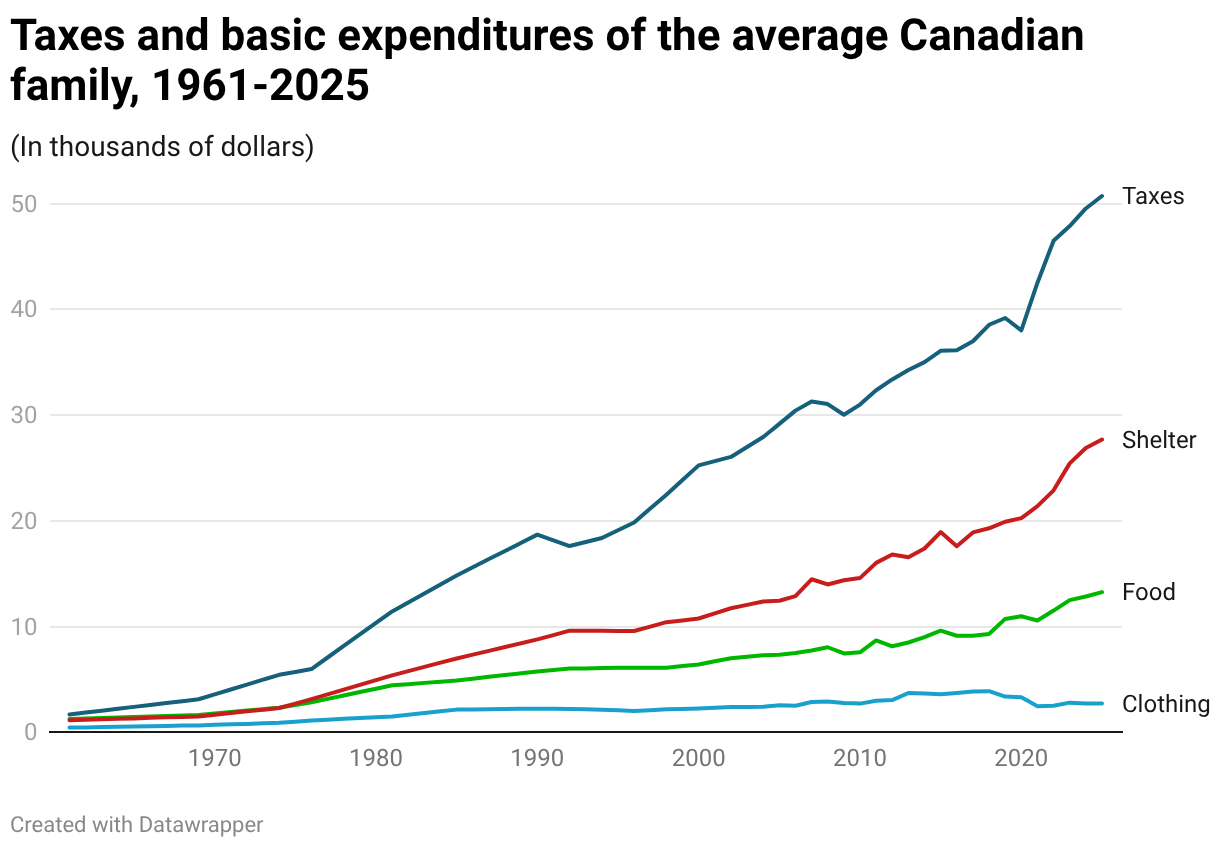
According to our new study published by the Fraser Institute, the average Canadian family (with a household income of $121,111) paid $50,721 (or 41.9 per cent of its income) in total taxes to all levels of government in 2025.
Meanwhile, that same family spent $13,249 on food, $27,686 on shelter and $2,722 on clothing. In other words, last year the average family spent a larger share of its income on taxes (again, 41.9 per cent) than on total basic necessities (36.0 per cent).
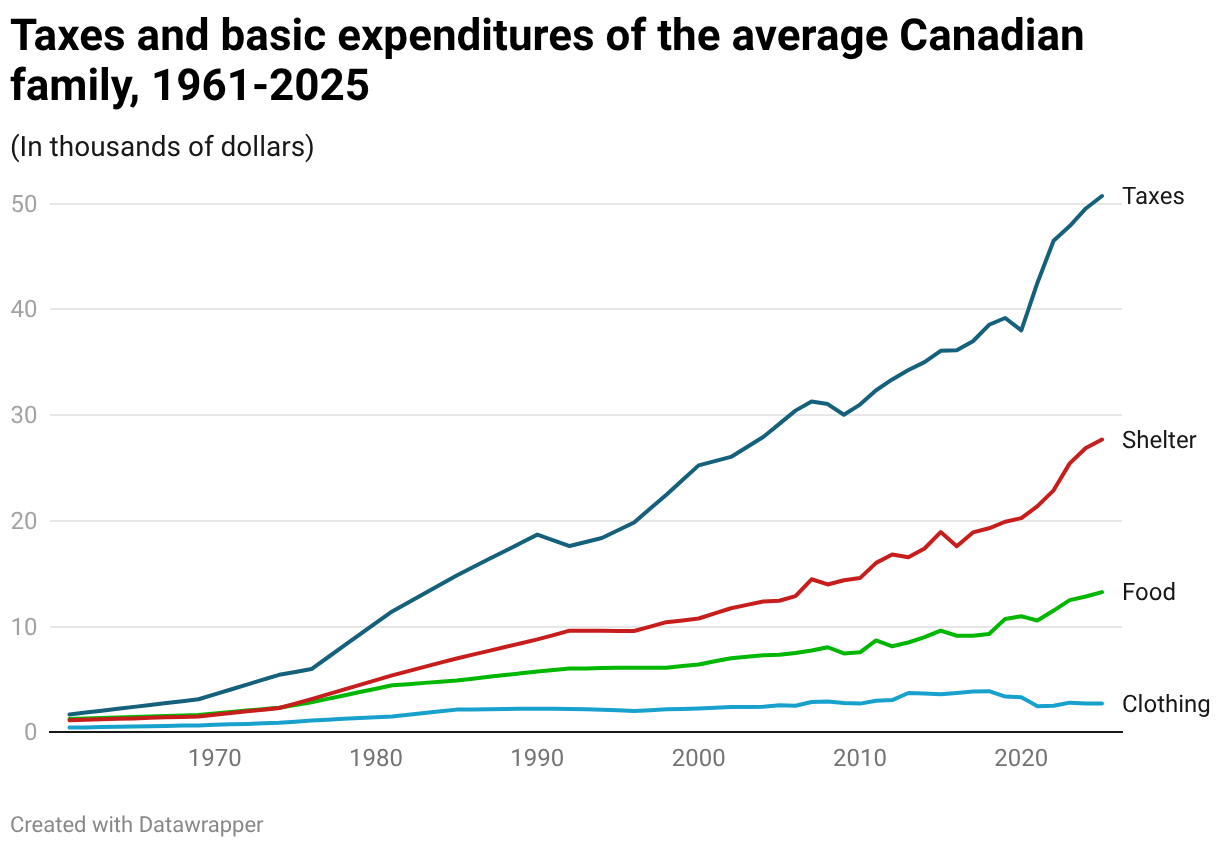
It’s also worth noting how much the total tax bill has grown over the years. In 1961, the average Canadian family paid $17,518 (inflation-adjusted)—or 33.5 per cent of its household income—in total taxes. This means the average family’s tax bill grew almost 190 per cent from 1961 to 2025 (even after adjusting for inflation), and grew faster than its income.
The total tax bill represents the price Canadians pay for government services. But whether or not we get our money’s worth is a different question, and multiple polls from recent years show that many Canadians don’t feel they receive good value for their tax dollars. In other words, many families might find it easier to make ends meet if governments cut taxes and allowed them to keep more of their hard-earned money, rather than maintaining high taxes and introducing costly (and often poorly designed) spending programs.
As many families struggle to pay their bills, the focus has been on rising grocery prices, declining housing affordability and the price at the pump. And while these cost pressures are real, Canadian families spend more on taxes than on the basic necessities of food, shelter and clothing combined. If governments across the country want to help families make ends meet, they should reduce the tax burden and let Canadians keep more of their hard-earned money.

By: and