Sundar Pichai Raised Alphabet’s Capex Guidance to $205 Billion the Same Quarter Google Cloud’s Backlog Hit $514 Billion. Here’s Which Number Actually Matters More.
Alphabet‘s (GOOGL -0.13%) latest earnings report put two enormous sums front and center: a full-year capital expenditure guidance range that it increased to as much as $205 billion and a Google Cloud backlog that has climbed to $514 billion.
The scales of these figures invite comparison — which one should investors weigh more heavily? The answer becomes more clear when these numbers are understood as two sides of the same coin.
Alphabet is pouring unprecedented sums into artificial intelligence (AI) infrastructure precisely because customer demand — quantified by its towering backlog — is accelerating. One number represents its investments, while the other is proof that the investments are paying off.
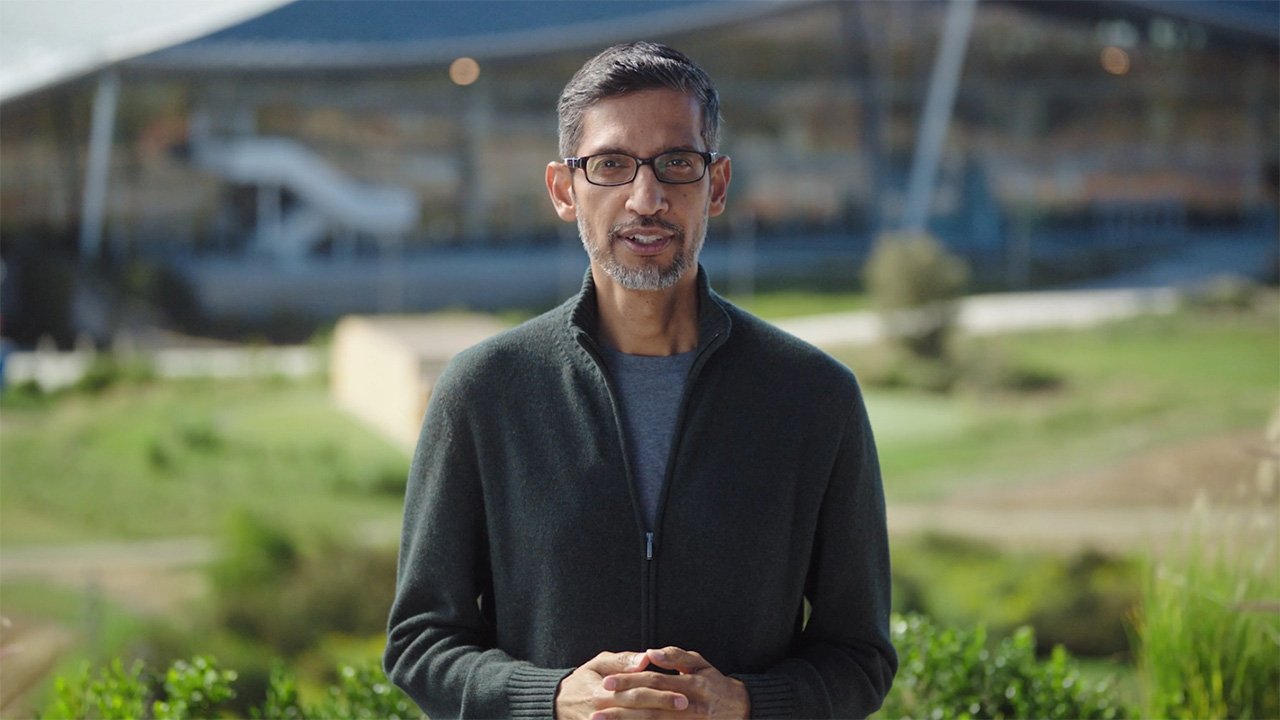
Image source: Alphabet.
Where is Alphabet’s capex going?
Alphabet’s AI infrastructure budget will be directed toward servers, GPUs, CPUs, memory, custom chips called Tensor Processing Units (TPUs), data center construction, and the networking gear that stitches everything together. Roughly 60% of the company’s recent capital outlays went into servers, while the remaining 40% funded facilities and connectivity.
The importance of Alphabet’s rising capex is straightforward. Without additional compute, the company will struggle to convert the capacity agreements it has already inked into revenue. In an environment where AI workloads are expanding faster than traditional cloud usage, underinvesting in AI development would cede ground to rivals — namely Amazon Web Services (AWS) and Microsoft Azure.
Alphabet holds more than $240 billion in cash and marketable securities on its balance sheet, providing it with the financial flexibility to fund its AI build-out even while its free cash flow turns temporarily negative.

Today’s Change
(-0.13%) $-0.46
Current Price
$345.90
Key Data Points
Market Cap
Day’s Range
$344.50 – $350.45
52wk Range
$196.59 – $408.61
Volume
17.8M
Avg Vol
32.7M
Gross Margin
60.94%
Dividend Yield
0.25%
Understanding Google Cloud’s backlog
Google Cloud’s backlog did not pile up overnight. Rather, the half-trillion-dollar sum reflects a surge in multiyear enterprise commitments for AI-powered solutions. Alphabet CEO Sundar Pichai explained that roughly 90% of the Fortune 100 now use the company’s Gemini Enterprise model in some form. He went on to explain that customer acquisition is doubling year over year as existing clients exceed their original consumption commitments by more than 50%.
Alphabet expects to recognize a little more than half of its current cloud backlog as revenue over the next 24 months. That schedule provides useful visibility to investors because it explains how a substantial portion of the infrastructure Alphabet is building today is effectively presold.
I expect sales from the company’s TPU-based systems will ramp sharply going into 2027, while the remainder of the backlog will flow through ancillary Google Cloud Platform (GCP) services.
Breaking down Alphabet’s virtuous cycle
When viewed in isolation, Alphabet’s capex plan looks like an overzealous bet on an uncertain future. However, when viewed alongside the company’s cloud backlog, it appears more validated, given an already visible future. Essentially, Alphabet’s infrastructure budget covers buying servers and building data centers that will enable the company to meet pre-established capacity demand. In turn, Google Cloud generates both revenue and cash flow that justifies continued reinvestment in its AI ecosystem.
Revenue from Google Cloud accelerated 82% year over year in the second quarter, while the segment’s operating margin expanded dramatically. This demonstrates that the early returns on prior AI infrastructure spending are materializing.
Ultimately, I think Alphabet’s backlog is the more important figure for investors to focus on because it represents external validation that the company’s internal spending is necessary. Spending on new programs alone does not create value. But smart capital allocation deployed toward durable, contracted AI-driven demand does.
Alphabet’s AI story is not one of reckless spending or intangible growth. Rather, the company possesses a unique virtuous cycle in which AI infrastructure investments are translating into measurable, accelerating cloud adoption. As long as these dynamics hold up, I suspect both numbers will continue rising.