20 Interior Design Rules & Measurements You Need to Know
Whenever I’m getting ready to hang art or drapes, choose an area rug, or buy lighting, I have a set of go-to interior design rules and measurements that help me get it right every time. They take so much of the guesswork out of decorating! Today I’ve gathered all of my tried-and-true guidelines in one post so you have an easy-to-reference source to turn too whenever you need it! (post includes commissionable links; for more information, see my full disclosure statement {here})
Hanging Artwork
When it comes to hanging artwork, there are a few interior design rules and measurements that can help you get the placement just right, whether you’re hanging a single piece of art or creating a full gallery wall like the one in the office of our previous home:
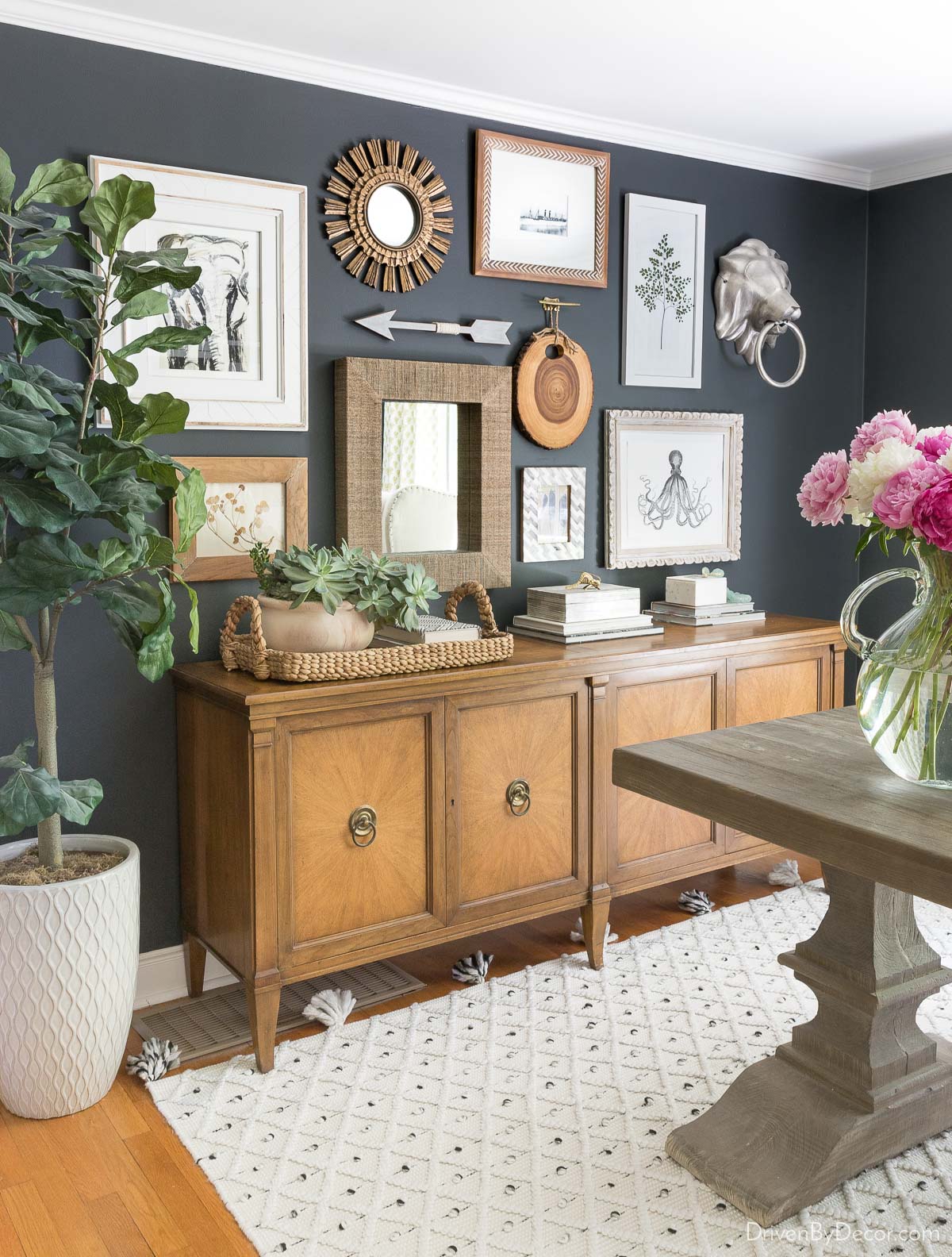
Sources: Desk (similar) | Rug | Faux fiddle leaf fig tree (similar) | Console is thrifted | Woven tray (similar) | Other sources no longer available
- For a single piece of art, the center of the image should be at 57″ – 60″ from the floor, which places it at eye level. The larger the piece of art, the closer to 57″ it should be.
- When hanging two pieces of artwork, one above another, treat them as one large picture – find the center point between them and use the 57″ – 60″ rule.
- For larger pieces of art hung on the same wall, use a spacing of about 2-3″ between them. Smaller pieces can be hung a little closer together.
- When hanging art pieces above a sofa or other piece of furniture, the grouping should ideally be about ⅔ the width of the furniture below it. Leave 3″- 8″ of space between the top of the sofa/furniture and the bottom of the art.
See my detailed post on how high to hang pictures {here} for more hanging tips!
Hanging Window Treatments
If you’re not sure how high to hang your drapes above the window frame or how wide your drapes should be, these tips will help…
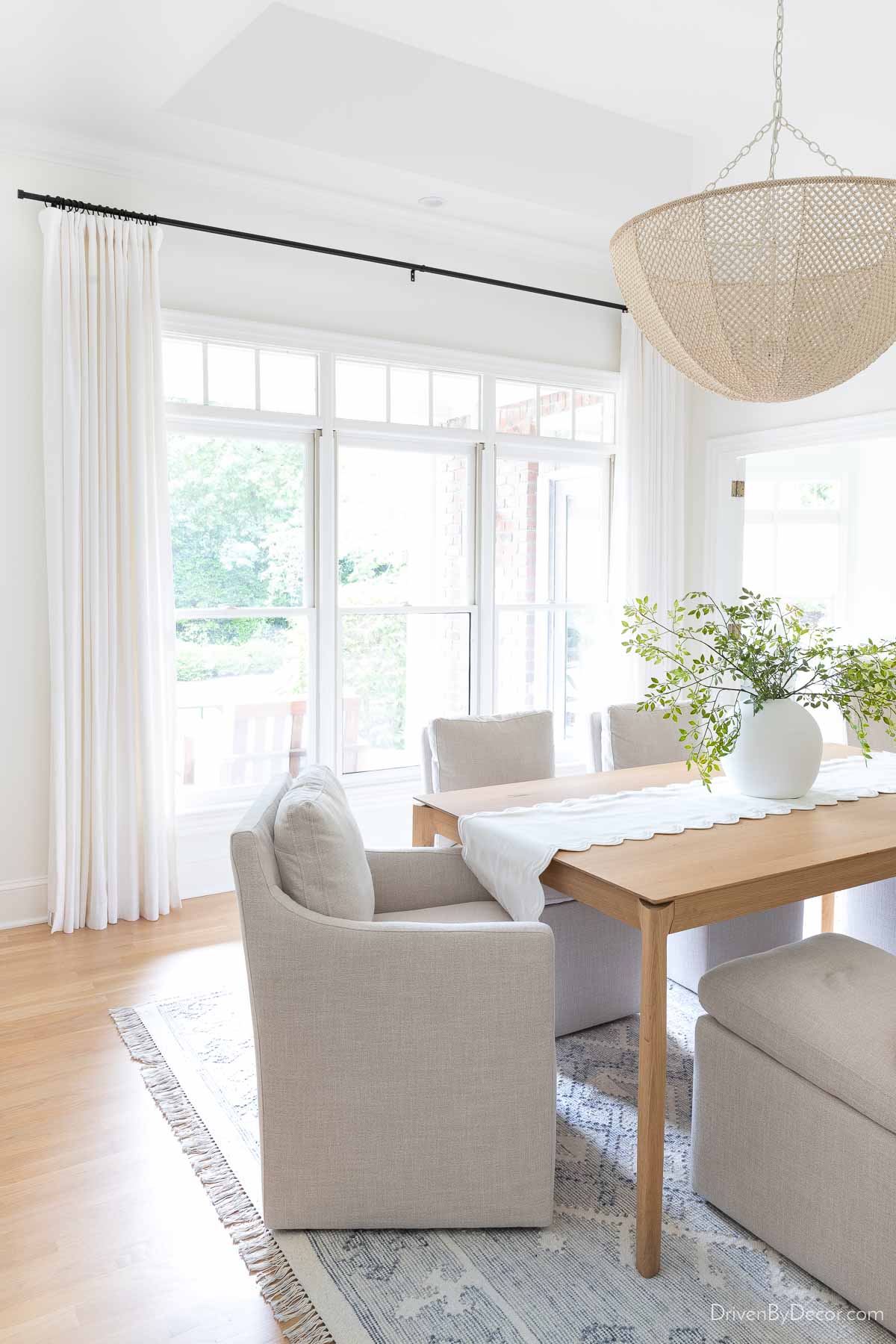
Sources: Drapes | Drapery rod | Drapery rings | Dining table | Rug | Side chairs | Armchairs | Beaded chandelier
- Buy drapery panels that will either kiss the floor or puddle on it.
- To create the illusion of a taller window, mount drapery rods above the window casing. A good rule of thumb is to hang your curtain rod ½ to ⅔ of the distance between the top of your window trim and your ceiling (or crown molding, if you have it).
- To make your windows appear wider and let in extra light, extend the rods anywhere between 4″ and 10″ (excluding finials) beyond the window casing.
- Drapery panels should have a combined width of 2-3 times the width of the window so if you have two panels framing a window, each panel should be 1 to 1½ times the window width.
These two posts have have other helpful tips related to hanging curtains and drapes:
Sizing & Hanging Light Fixtures
If you want to know how high to hang your chandelier above your table or how wide of a dining room chandelier you should buy, here are the measurements you need to know…
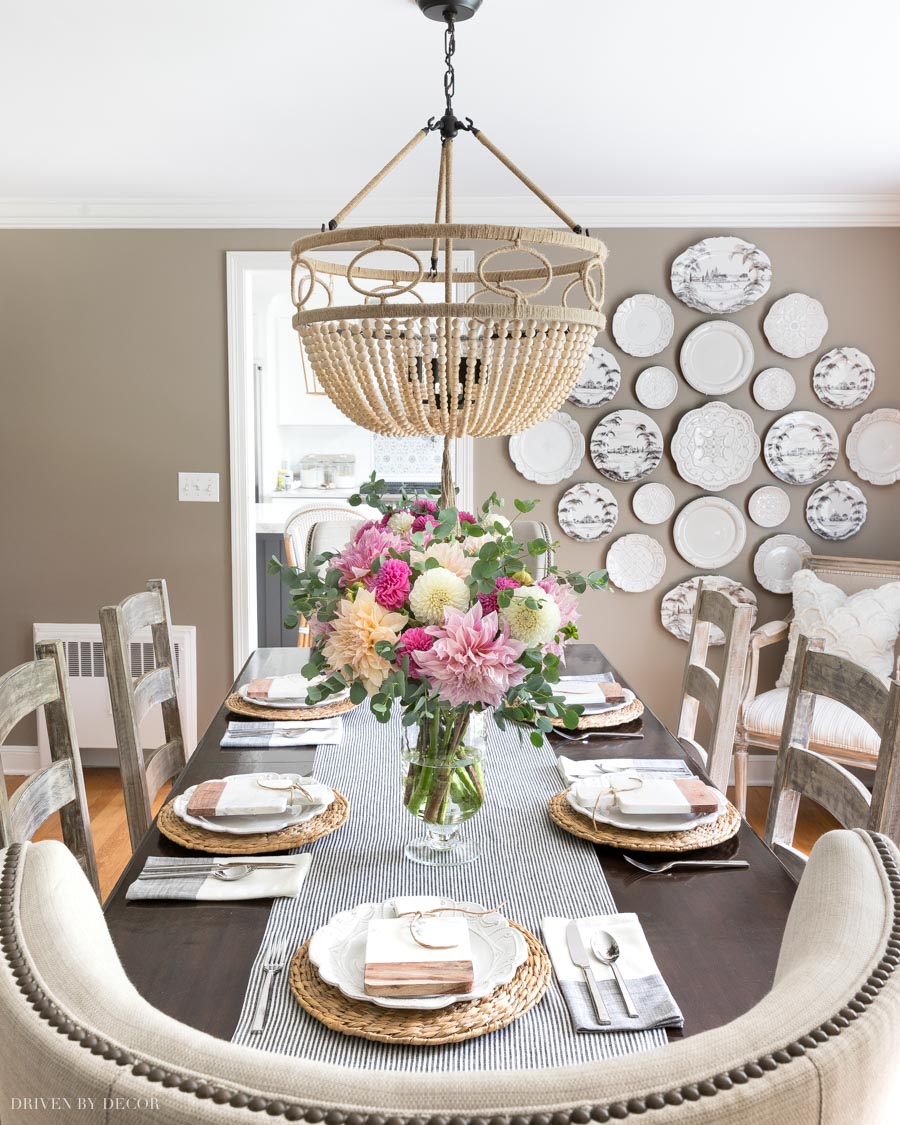
Dining Room Sources: Wood bead chandelier | Table & chairs – no longer available | 13″ Rattan chargers (similar) | Glass hurricane vase | White wall plates | Patterned wall plates
For a chandelier that will hang over a table:
- A good rule of thumb is for the width of the chandelier to be about ½ to ⅔ the width of the table it will be hanging over. Another way to determine the right chandelier size is to choose one that’s about a foot narrower than the width of your table.
- The bottom of the chandelier should hang between 30″ – 36″ above the surface of the table when there is an 8′ ceiling. For higher ceilings, you can hang the chandelier up to 3-4″ higher for each additional foot of ceiling.
For overhead fixtures in rooms such as a living room or entry way that are not hanging over a table:
- To determine a good width for your light fixture, measure the length and width of the room in feet, then add those two measurements together – the number that you come up with is, in inches, a good approximate width (For example, if your room measures 10 feet x 15 feet, add 10 + 15 to get 25. A 25″ wide fixture would be appropriate for this space.) For rooms with high ceilings, you can add up to 6″ or more to the width of the chandelier.
- An overhead fixture that will be walked under, such as in the entry, should hang 7 feet or more above the floor.
For kitchen pendants:
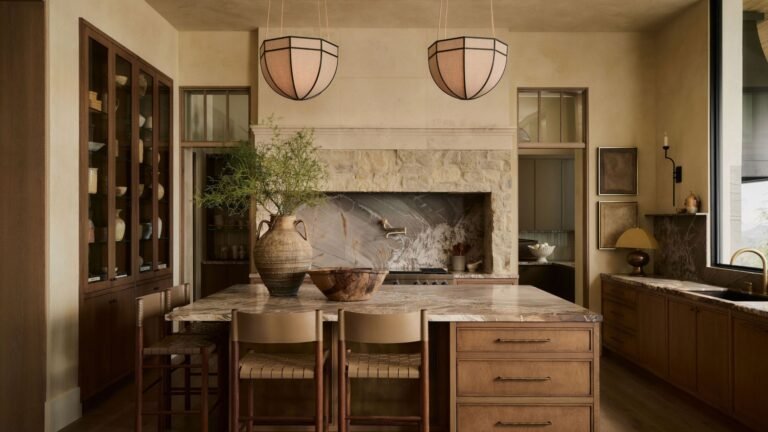
- Space kitchen pendants 30–32 inches apart, measured from the center of one fixture to the center of the next.
- As with chandeliers, the bottom of the pendants should hang between 30″ – 36″ above the island countertops.

(Kitchen sources are in my Kitchen Remodel Reveal post)
Sizing Rugs
If you’re trying to figure out the best size rug for your space, these are the tips you need to know:
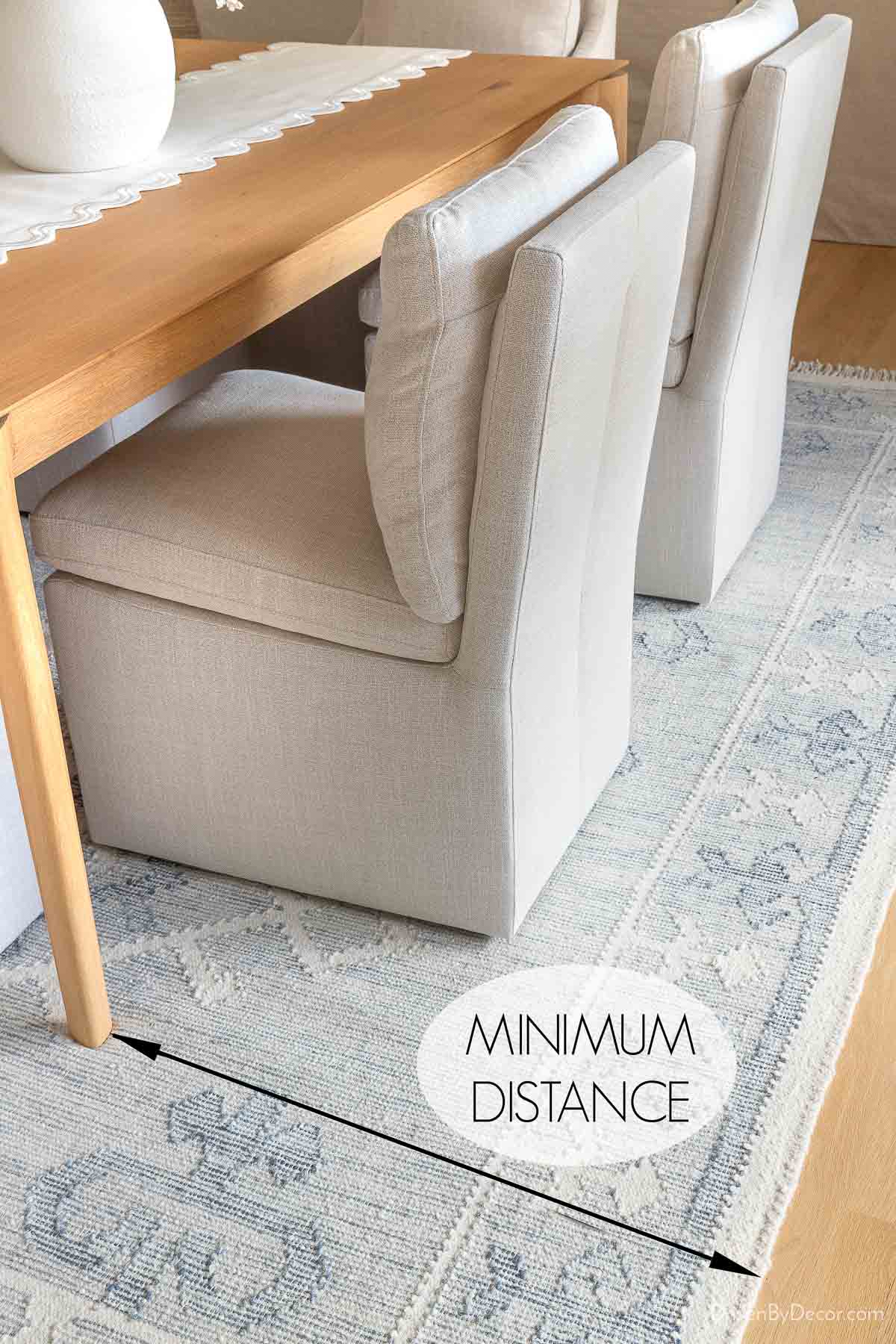
- Rugs under a dining room table should be at least 24-30″ wider and longer than the table, allowing the back legs of the chairs to stay on the rug even when the chairs are pushed out.
- Area rugs under a bed should extend at least 18-24″ beyond each side of the bed. For small bedrooms with a king bed, an 8 x 10 rug is usually best (with the longer 10′ side running in the same direction as the headboard) but if your bedroom is larger, a 9 x 12 can work too. For most rooms with a queen bed, an 8 x 10 rug is going to work best.
- For most typically sized rooms, there should be approximately 12″ – 18″ of bare floor between the edges of the area rug and the walls of the room. For small rooms, approximately 8″ of exposed floor is a good rule of thumb.
The last (and maybe most important) rule? Don’t be afraid to break the rules! These interior design rules and measurements are meant to be helpful guidelines, not squash your creativity or take the fun out of decorating. If something doesn’t follow the “rules” but looks and feels right in your space, go for it!
One example of a rule is choosing to hang {this oversized pendant} above the bathtub in our previous home:
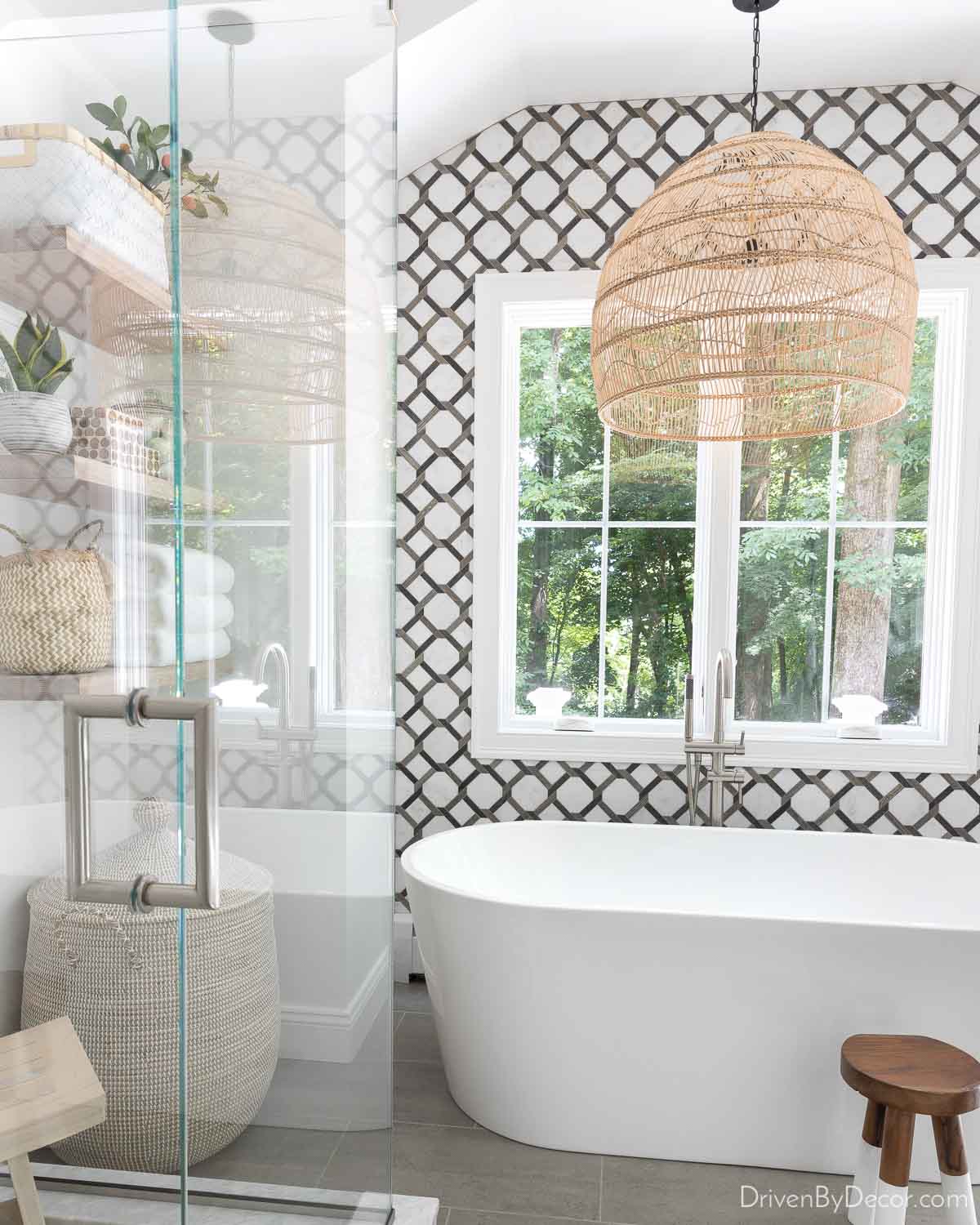
It may not be everyone’s taste, but I loved it! I hope you found these decorating guidelines helpful and have a few new measurements to tuck away for your next decorating project!