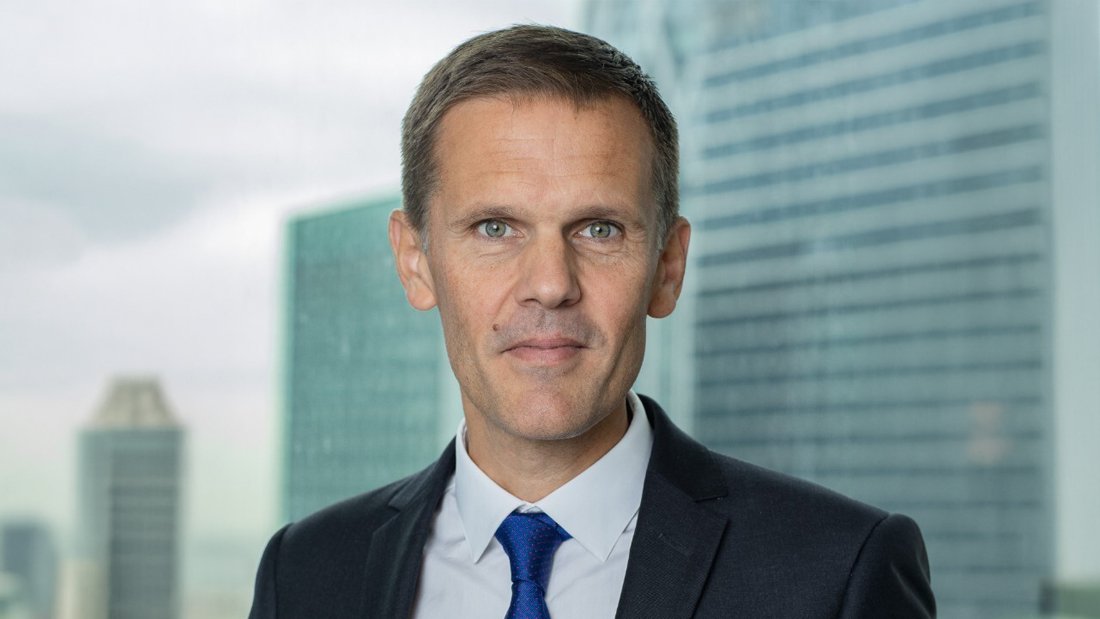
BNPP AM Prime’s Pascal Christory: ‘There won’t be enough capital for everybody’

From consolidation to succession planning, fundraising concentration to growth, the European GP stakes market has much potential momentum behind it. But activity still lags well behind the US. PE Hub caught up with Pascal Christory, CEO of BNPP AM Prime, to learn about his firm’s “super-exciting” pipeline and what he believes will drive more European GP stakes deals.
BNPP AM Prime closed Prime Capital Partners I, AM Alts’ first fund dedicated to GP stakes, at €540 million earlier this year, above its original €400 million target, with Axa the anchor investor.
It was the largest GP stakes fund yet raised by a European manager, according to the firm. But it’s still small beer compared with the sums raised by US firms. Blue Owl Capital has raised $10.6 billion of its $13 billion target for its sixth GP stakes flagship, for instance, according to an earnings call in late July.
That gap in the European market was something that inspired Christory to found then-named AXA IM Prime in 2022.
“We thought it was an underserved market, with almost no players in Europe,” he said. “I saw as well this huge success in attracting capital in the US. But that corresponded with a palatable need in the market.”
The firm became BNPP AM Prime after BNP Paribas bought Axa Investment Managers last year, with Christory also taking on the position of global head of PE at BNPP AM Alts. He was previously CIO of the Axa Group.
The firm has made seven investments, including a 5.9 percent stake in mid-market investment firm Committed Advisors in July. Last year it acquired a stake in Hayfin Capital Management from Arctos Partners, a stake in private credit market company Monroe Capital and a 15 percent stake in European mid-cap private equity firm Latour Capital.
The firm is targeting 10-12 investments per fund, leaving it with around three to five to fully deploy in its current vintage.
Lots to play for
The total addressable market is huge. There are more than 500 mid-market European GPs, according to BNPP AM Prime’s estimates, with mid-market defined as European GPs managing €1 billion-€10 billion in private equity or infrastructure, and €5 billion to €20 billion in private debt. Ninety percent of those are yet to sell a stake, Christory added.
“We estimate that there is €200 billion of enterprise value in those mid-market GPs. But if you look at just the financing from GP stakers in Europe, it’s less than €1 billion,” he said. “Obviously, there is an asymmetry between the growth of the industry, the growth of the GPs, the enterprise value of the GPs, and the growth of GP stakes.”
Some 77 percent of participants in a survey for Dechert’s 2026 Global Private Equity Outlook plan to make a GP-stake divestiture in the next 24 months – double the figure from a year earlier. For EMEA GPs, the figure was also 77 percent. EMEA sponsors tended to put ‘working capital/talent retention’ as the main reason for considering GP stakes, on 59 percent. In North America, the focus was on ‘founder liquidity’ (50 percent) and ‘succession’ (47 percent).
With that demand, why is Europe still lagging so far behind the US, both in terms of the number of GP stakers and the money put to work?
“It’s a question of education,” said Christory. “US players have been ahead of the curve as well. Obviously, the market in the US is much bigger compared with Europe. Also, there’s always some questions around whether it raises the risk and the exposure, because it’s private equity on private equity.”
EMEA sponsors’ lower relative focus on succession planning is also at play. Succession is “only at the start in Europe,” said Christory. “Many European GPs were funded maybe 20 or 20-plus years ago, and they’re finding the succession is just starting. The European market today offers us first-mover advantage.”
Another factor is the lack of intermediaries in Europe compared with the US. “In Europe, it’s more a kind of bilateral transaction,” he said. The disintermediation angle was also cited by Renaud Tourmente, deputy CEO and COO of European GP stakes specialist Armen, in an interview with PE Hub last year.
Christory is “sure the European market will catch up with the US. It’s a win-win situation for the GP, for the LP.”
Some of the deal activity in Europe comes from the big US players. Blue Owl, for instance, agreed to buy a minority stake in Paris-based private equity firm BlackFin Capital Partners in July.
Consolidation driver
Some of the factors driving the GP stakes business are only getting stronger.
Global private equity fundraising raised $3.55 trillion over the past five years, according to data from Private Equity International’s latest PEI 300, released in June. PEI’s analysis showed that the top 10 firms claimed $854.6 billion of the total, about a quarter of all capital raised by the 300 firms on the list – in what it called a “structural shift in LP behavior.”
To make it on this year’s PEI 300 required firms to have raised at least $2.8 billion over the preceding five-year period – the highest total yet.
That could lead to further consolidation among private market companies. PE Hub recently rounded up 10 such deals and it was one of the topics in PEI Group’s Private Markets 2030 series.
Would consolidation be a good thing for GP stakes? It would be a sign that the industry is maturing – providing a “very positive dynamic,” said Christory.
“It leaves the door open for multiple options for the GPs. They can go through any PE strategy – either sponsor to sponsor, sponsor to strategic, or minority stake disposal, which would correspond to a GP stake. Sometimes we offer to take a minority stake, but the GP ultimately decides to go for a majority transaction. Even in that case, we will be able to co-invest. It’s a win-win.”
BNPP AM Prime did just that with its Committed Advisors and Monroe Capital deals, where Paris-based private equity firm Wendel Group took majority stakes in each business as BNPP AM Prime took minority shares.
That also fits into BNPP AM Alts’ wider offering, which includes a range of solutions for GPs to help them manage succession, as well as other development milestones such as NAV financing, secondaries GP solutions and GP stakes.
Capital allocation
Another potential driver is the sluggish exit market. The end of ultra-low interest rates put an end to natural multiple expansion, leaving sponsors sitting on assets that may not fetch their original projections at sale.
Instead, these GPs will need to keep compounding the growth of these companies for an eventual exit at the expected value. But with reserves much lower than five years ago, supporting that growth requires extra financing, particularly given the concentration at the top cited by PEI and a population of PE firms that has grown rapidly over the last decade.
“Obviously there won’t be enough capital for everybody,” he said. “We have to think strategically. What is the flight plan for the next decade, beyond capital formation? I think this includes some GP stake partnering with large institutions like us.
“GPs thinking strategically about GP stakes are taking those aspects into account. So far, it has been a very important argument. We bring some passion, value creation, as well helping the GPs to expand their M&A and to open new offices in Europe, in the US, in the UK.”