Dr. Michelle Williams on why investment in public health is public wealth
The brief
Guest
Michelle Williams, professor, Stanford University School of Medicine
Interviewer
Lucy Pérez, senior partner, McKinsey Health Institute
Read time
12 minutes
Key themes
- Public health as infrastructure
- Women’s health and economic impact
- Place-based determinants of health
- Brain capital across the lifespan
An invisible pathogen essentially shut down all of society during the COVID-19 pandemic, highlighting a stark reality: Society and its economy rest entirely upon a healthy population. Yet, public health continues to be treated as a form of charity rather than a critical pillar of societal infrastructure, notes Michelle Williams, professor of epidemiology and population health and associate chair for academic affairs at Stanford University School of Medicine. She has spent her career championing the idea that true wellness is built upstream, long before an individual enters a clinic or emergency department.
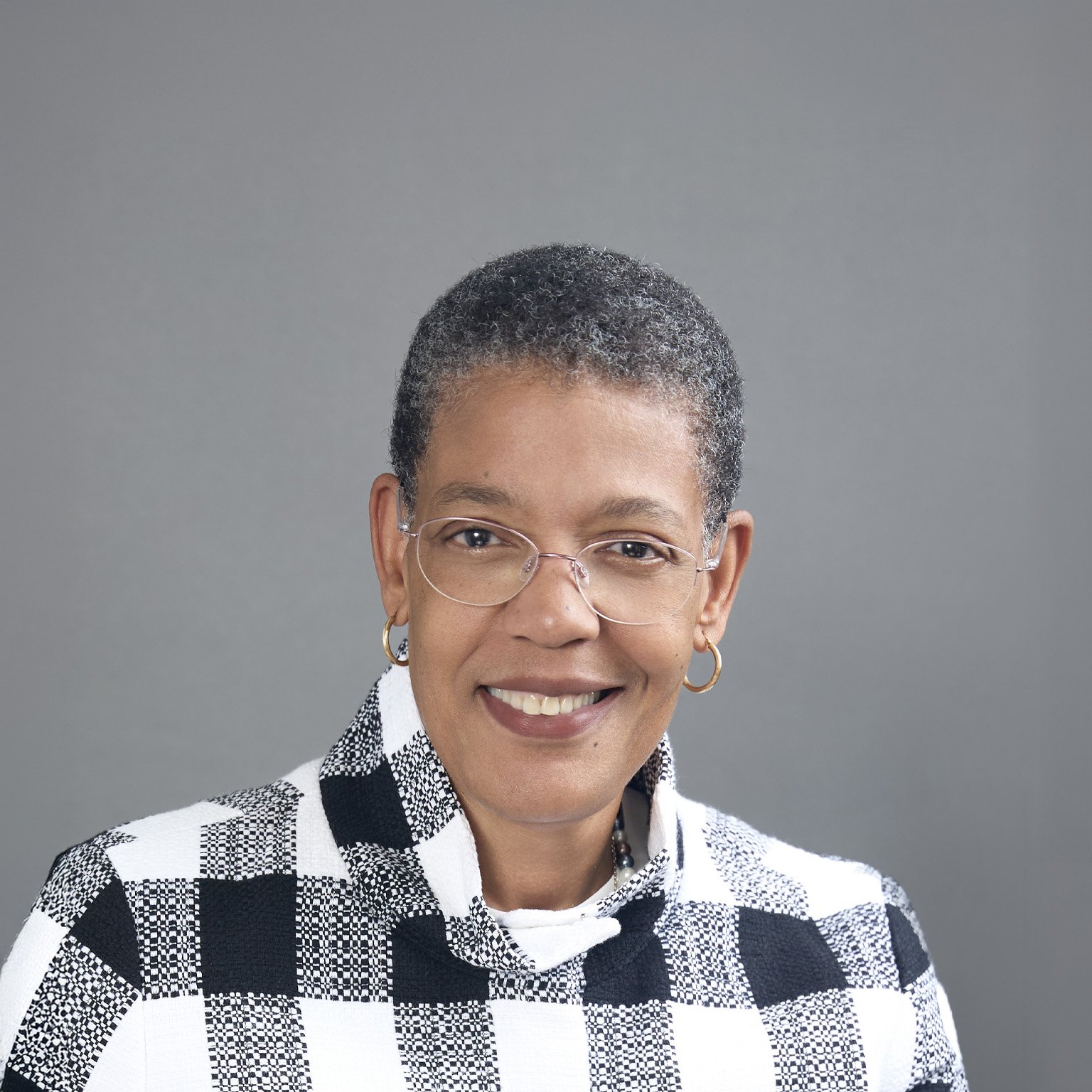
Michelle Williams
As a former dean of the Harvard T.H. Chan School of Public Health, a member of the National Academy of Medicine, and an author of more than 540 peer-reviewed articles, Williams is one of the world’s leading voices on epidemiology and population health. In this revived edition of the McKinsey Health Institute’s Conversations on Health series, she connects with Lucy Pérez, senior partner and global leader of the McKinsey Health Institute, to discuss the intersection of science, politics, and economics.
In their conversation, Williams highlights why she views gender health equity as an economic imperative, how housing and pay equity shape health outcomes, and why a dramatic mindset shift is necessary for valuing prevention.
Public health is infrastructure—not charity
Lucy Pérez: In your book, you write that public health is public wealth. Can you elaborate on what you mean by that?
Michelle Williams: I do believe public health is public wealth. That view comes from observing what happened during the pandemic: An invisible pathogen essentially shut down all of society. We forget that society rests on a healthy population. Health drives the economy, national security, and civic life. Unfortunately, in many instances, we are still seeing public health treated as a charity rather than a strategic pillar of investment.
Lucy Pérez: Are there any bright spots where you’re seeing public health treated as an investment with positive benefits?
Michelle Williams: One example that I see real hope for is the child tax credit. When we invest in children, we are investing in a pipeline that enables a healthy child population to grow into an economically vibrant and contributing group of people.
With the 2021 expansion of the child tax credit, what we’re doing is essentially what the NFL does for its talent: treat them as an investment—providing trainers, nutritionists, and mental health coaches. If we treated our population, especially our young people, in that same way, we would ensure a vibrant future for those who will inherit the responsibility of keeping our society and our economy humming.
With the 2021 expansion of the child tax credit, what we’re doing is essentially what the NFL does for its talent: treat them as an investment.
Lucy Pérez: In a way that links to the idea in your book about how the biggest gains will come when science and politics move together. Where do you see that alignment being strongest, and where are we still failing to turn evidence into action?
Michelle Williams: Operation Warp Speed was a beautiful example of government, the private sector, and academia coming together in a crisis, creating the vaccine to address the pandemic. We saw what real alignment can do.
But many public health problems are a slow boil and less visible. Preventing chronic disease or preventing premature death due to firearm violence requires sustained, focused alignment, and we’re not doing that.
Maternal mortality is another example. We tend to think of women’s health as beginning in labor and delivery, when the risks for mortality are high—but it doesn’t have to be that way if we care for girls and young women across all stages of life and make the full array of reproductive care available to women.
Women’s health—not only a woman’s issue
Lucy Pérez: You say that women’s health is a broader societal and economic issue, not only a woman’s issue. What would it take for that perspective to show up in how we fund and deliver care so that it reflects women’s full health needs across their lifespan?
Michelle Williams: It’s clear that gaps in women’s health are not just a cost or a problem for women themselves, but for all of society. That economic argument matters. If we close the gap, we could add a trillion dollars each year by 2040.
That shift changes behavior. We’ve started thinking and talking about it as everyone’s problem. Employers begin to recognize that half the population is being underserved because the science, therapeutics, diagnostics, and upstream care are not there. More investment is now going into R&D to identify drugs, devices, and procedures that address not only acute care in women’s health but also upstream health promotion and disease prevention. It’s going to be a generational effort, but the evidence is already galvanizing society.
Lucy Pérez: Let’s move to the issue in your book about structural violence against women involving not just intimate partner violence; rather, it’s embedded in our medical, social, political, legal, and economic systems, designed to deprive women of agency over their lives. If you had to choose one place to start improving this, where would that be?
Michelle Williams: I’m going to sneak in two answers. First, maternal mortality: Four out of five maternal deaths are preventable, and in the United States, we still have too many women dying during childbirth. The first place to start to close that gap is to implement what we know saves women’s lives.
The California birth program is a good example. They listened to mothers and measured hemorrhage during labor and delivery. Better information on the blood loss and standardized emergency responses helped reduce California’s overall maternal mortality rate by over 50 percent. Let’s scale that—because the United States is an outlier in maternal mortality compared with other wealthy nations.
Second is pay equity. Women still make 88 cents to every dollar a White male makes, and the gap is larger for Black women and Latino women. If we work beyond the health space—upstream in the economic space—and close that payment gap, we would add hundreds of thousands of dollars into households led by women—money that can go into childcare, healthcare, and educational opportunities.
Why place matters: The impact of housing and zip codes
Lucy Pérez: Let’s talk about place. Where do health leaders underestimate the impact of housing, sanitation, the built environment, and other place-based factors?
Michelle Williams: Place matters greatly, and housing is the first thing about place-based determinants of health. Quality housing means clean air, clean water, and sanitation systems that work.
We have known this for a long time. In a pioneering 1899 study of social determinants of health, W. E. B. Du Bois showed that housing, work, and workplace safety drove poor health in Black communities, instead of natural biological factors, proving these systemic conditions were the true cause.
Fast-forward to today, and investigators like renowned sociologist David R. Williams have shown that zip code matters. What drives health is not only genetics but also the environment in which you live, learn, work, and play. And yet, only three cents of every dollar spent on health goes into those upstream social determinants that drive about 80 percent of health and wellness. For more than 100 years, we have put too much money into expensive care after people are sick, versus early preventive care, which could prevent a lot of early mortality and morbidity cases.
For more than 100 years, we have put too much money into expensive care after people are sick, versus early preventive care, which could prevent a lot of early mortality and morbidity cases.
Building trust, valuing prevention, and debunking myths
Lucy Pérez: How can public health leaders partner more effectively with communities to build trust?
Michelle Williams: The message has to be clear, and we need multiple messengers. We cannot build a relationship with a community during a crisis. We can‘t parachute in and say, “Do this, do that.”
One of the best examples is Costa Rica. It is a small country, but because the government invested at the community level—training and empowering community health workers and primary care doctors to be present, trusted members of the community—it has life expectancies that rival those in the wealthiest countries.
That is what we need more of in the United States: recognizing community leaders, building a workforce representative of the communities, and supporting community health workers so they can take the science we know and implement it at scale.
Lucy Pérez: What do we need to change to recognize the value of prevention?
Michelle Williams: We need a mindset shift. Public health needs to be better understood by those within the public health system and those we serve. It gets attention when something fails, but it is at its best when nothing happens.
It’s like having a firehouse with the engines parked inside because there is no fire. But we don’t argue about the need for community-based firehouses or fire engines when there are no active fires, right? We treat those investments in infrastructure as insurance so we are prepared to respond when necessary. Public health should be seen the same way. If we did that, we would invest more consistently in the workforce, the knowledge infrastructure, and the data needed to understand risk and prevent crises. If we could understand that public health is the pillar that allows us all to thrive, we could have a stable workforce and the necessary tools to detect early and prevent crises proactively.
Lucy Pérez: Let’s go global. If we were having this conversation a year from now, what would you hope has meaningfully changed?
Michelle Williams: I would hope that leaders across the globe recognize that a threat to health anywhere is a threat to health everywhere. That requires alignment across borders and sustained investment, not just talk. It also requires commitment to implementing what we know works. If access to primary care were more widely available, we could reduce stroke deaths and preventable cancers. If screening and vaccines were available to everyone, cervical cancer globally could be eradicated. It is the single most powerful example of something we know how to prevent, yet women are still dying of a highly preventable cancer.
Lucy Pérez: What public health myths would you like to see debunked?
Michelle Williams: The first and most important myth is that your health is all up to you. Individual choices matter, but they are shaped by the environment.
If you live in a food desert where the only options are processed foods, how do you tell people to eat five servings of fruits and vegetables a day? Health is not only an individual responsibility. It requires an all-of-society approach: food policy, economic conditions that let small shops carry perishables, housing free of lead, and workplaces governed more safely.
If we could create a society where the healthiest choice is the first choice, the myth that your health is all up to you would dissolve.
If we could create a society where the healthiest choice is the first choice, the myth that your health is all up to you would dissolve.
Lucy Pérez: Are there any other myths you would like to see debunked?
Michelle Williams: Public health is not charity; it is a strategic pillar of investment. We learned that during the pandemic, but we are quickly unlearning it.
Global health is another example. Engagement is not charity to poorer countries. It is enlightened self-interest. It takes, say, an eight-hour flight for an outbreak in one country to become an outbreak in another. Global cooperation in public health is in all of our best interests.
Building brain capital across the lifespan
Lucy Pérez: You also talk about investing upstream in children. What are the most important ways to improve health outcomes for children across their lifespan?
Michelle Williams: I’ll start with early childhood education, especially Head Start. Julius Richmond started Head Start because he understood that investing in children would produce returns over their lifetimes. Economic analyses show that for every dollar spent on [early childhood programs such as] Head Start, society accrues up to a $13 return. That investment pays off because it gives each child an opportunity to thrive and become a contributing member of society. But our leaders often forget that the time horizon is longer than a four-year office term.
We also know that when we do not create safe environments for children, they can accumulate adverse childhood events, or ACEs. This trauma builds up and contributes to mental health issues, such as PTSD, and later high-risk behaviors. Conversely, if we took a preventive approach by providing breakfast, lunch, after-school programs, and physical activity, children would grow up in healthier ways. In turn, that could help sustain low levels of adult diseases. If children were engaged in community activities, there could be less involvement in activities like violent gangs. When we invest in children, we are investing in our collective future.
Lucy Pérez: One last theme: brain capital. What public health measures would most help strengthen the brain capital of communities?
Michelle Williams: Let’s come back to children first. You cannot learn if you are hungry, and you cannot learn if you are not sleeping. Communities should value adequate nourishment and environments where people can sleep, as these help build brain capital, lifelong learning, and resilience.
We also need a workforce that is well trained and has access to lifelong learning. And since we are an aging society, we have to age in place and age well. That means protecting cardiovascular health and neurological health together. If we start doing cardioprotective things early in life—reducing lipids, reducing hypertension—we can reduce premature mortality from cardiovascular disease, stroke, and cognitive decline.
What’s next?
Lucy Pérez: We have spent so much time focused on lifespan. But health span is the piece that still feels stubbornly unchanged. What do public health investments need to do to improve the health span?
Michelle Williams: A growing health span is not going to happen because of a single pill or a single procedure. It is going to take commitment from leadership across government, industry, and academia to implement what we know saves and protects lives.
We need to do that equitably and sustain it. It cannot be a pilot project. The basics matter: clean air, clean water, food security, housing security, and decent wages so families have the resources to live full, complete lives and build resilience when crises occur.
The basics matter: clean air, clean water, food security, housing security, and decent wages so families have the resources to live full, complete lives and build resilience when crises occur.
It is not glamorous, but it requires leadership from all sectors. If we align, the evidence from the history of public health is clear: we will thrive.
Lucy Pérez: Before we go, why are you optimistic?
Michelle Williams: My optimism comes from the history of public health. We have had remarkable gains in life expectancy. We have literally doubled life expectancy over the last century. We eliminated smallpox. You and I came of age at a time when AIDS and HIV were a death sentence. Now, because of science and commitment, that is no longer true.
Now we have the tools to see threats and evaluate interventions in ways we never could before. We are standing on the shoulders of public health people who allowed us to thrive. We have the tools today to make that happen again if we have political and social will aligned.
The takeaway
- Public health is infrastructure—not charity. A healthy population is the foundation of a strong economy, national security, and civic life.
- Prevention is an economic investment. Upstream factors like quality housing, clean water, and fair wages drive 80 percent of health outcomes and yield significant financial returns.
- Women’s health benefits everyone. Closing the gender health gap could add $1 trillion annually to the global economy by 2040, transforming family and workplace productivity.
- Community trust is built before crises occur. Empowering and training local, representative community health workers builds the trust needed for crisis resilience.
- Health span should matter as much as lifespan. Expanding healthy life expectancy requires sustained commitment to foundational basics rather than chasing single clinical breakthroughs.
Public health investments have ripple effects: Healthy mothers create healthier children, enabling a more robust workforce and a more productive global economy.