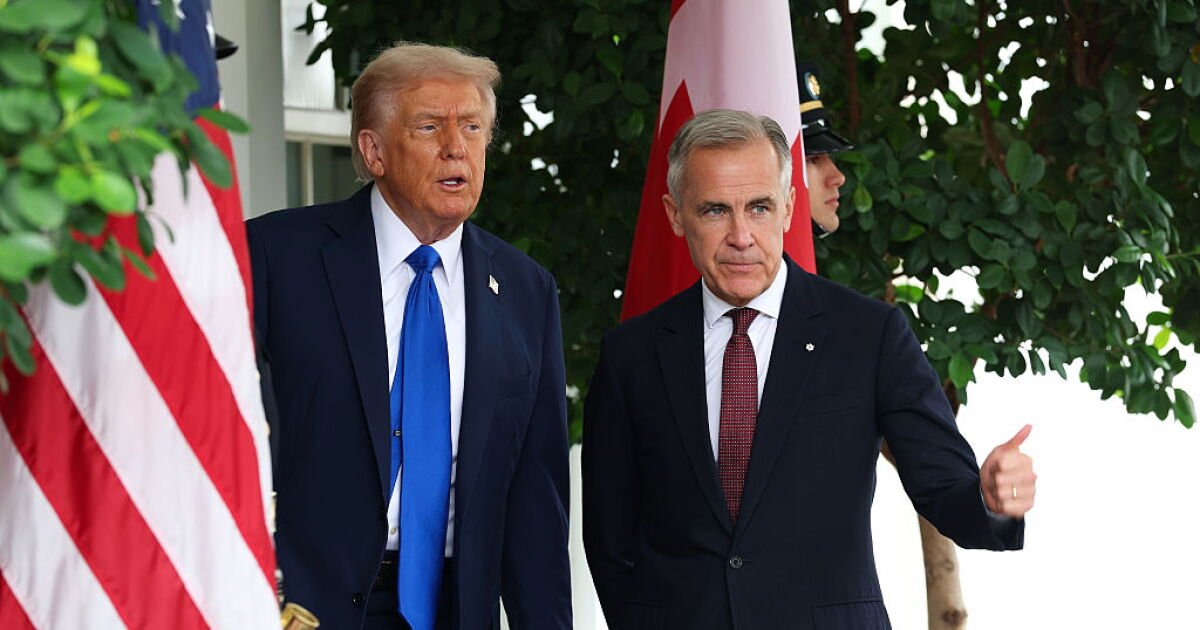
Trump delays Canada tariffs at 11th hour, saying deal close
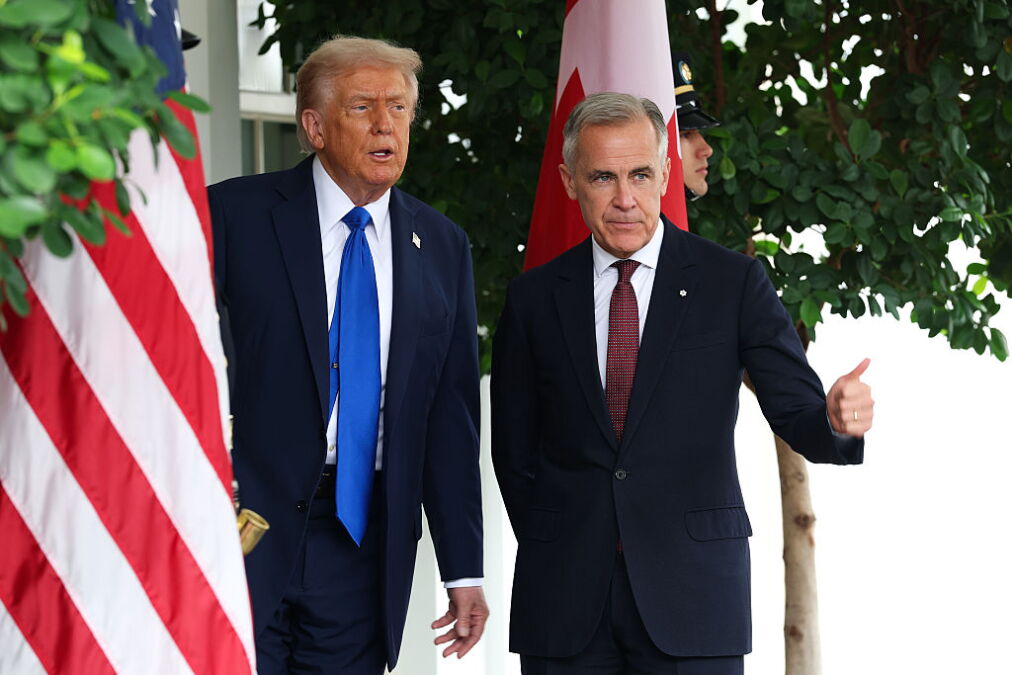
The Trump administration delayed 50% tariffs on billions of dollars of Canadian products for three days, saying the two sides had reached a tentative agreement to resolve a broader trade dispute that had plunged relations to a fresh low.
Processing Content
President Donald Trump announced the decision less than two hours before the tariffs were set to take effect. He said on social media he was pausing the tariffs “based on the fact that Canada and the U.S.A., subject to the finalization of documents, have a DEAL!”
A White House proclamation later said the duties were halted after Canada “expressed a commitment to remove the discriminations” on U.S. autos, dairy and alcohol. And the U.S. Trade Representative’s office said the deal includes “comprehensive market access for all American goods, economic security commitments, digital trade alignment” and other factors, without giving specifics.
Canadian Prime Minister Mark Carney wasn’t as definitive, stopping short of saying they had a deal. Neither side said whether earlier sticking points such as auto tariffs and lumber will be resolved.
“Substantial progress has been made, although there is important work still to be done,” Carney said in a statement. “While we continue this work, Canada remains focused on building a stronger, more independent, and more competitive economy at home.”
The Canadian dollar was up 0.2% at 1.3876 per U.S. dollar mid-morning in London.
Despite the uncertainty, the announcement signals progress in the tense relationship between two longstanding allies that conducted almost $900 billion of trade with each other last year. It also indicates the potential for a step forward in the ongoing review of the North American trade agreement, which also includes Mexico.
Trump had announced the tariffs in late July, justifying them by pointing to Canada’s retaliation against a barrage of tariffs last year, and it wasn’t immediately clear what concessions he’d won from the latest gambit. He has routinely backed off some of his biggest tariff threats when negotiations yield what are often modest concessions.
The White House had said it would put duties on a range of items from Canada — including hockey equipment, beer, milk and plywood — under Section 338 of the 1930 Tariff Act, which gives the president the power to impose duties of as much as 50% on countries deemed to discriminate against US commerce.
Most Canadian provinces, including Ontario and Quebec, have barred U.S. alcoholic beverages from retail stores, cutting off an important export market for American makers of wine and spirits.
Chris Swonger, head of the Distilled Spirits Council of the United States, said exports of U.S. spirits to Canada have dropped 70% in
Spirits boycott
“As discussions continue over the next few days, we encourage leaders on both sides of the border to reach a negotiated solution that gets American spirits back on retail shelves in all Canadian provinces and returns the spirits sector to a zero-for-zero tariff framework,” Swonger said in a statement late Tuesday.
Canada also responded to Trump’s tariffs against autos by placing similar counter-tariffs against U.S.-made cars and trucks — though it created a mechanism for refunding them to companies including Honda Motor Co. that also manufacture vehicles in Canada.
The tariffs were set to go into effect on Wednesday, creating a 30-day window for talks designed to pressure Canada into making concessions. Janice Charette, Canada’s chief trade negotiator, and cabinet minister Dominic LeBlanc stayed in the U.S. capital over the weekend to try to hammer out a deal.
The proposed Section 338 tariffs wouldn’t have applied to the most important resources that the U.S. buys from Canada, such as oil, potash and minerals.
Carney previously said Canada’s goal in trade talks was to reduce the sectoral duties on industries like steel, aluminum and autos, which have created huge uncertainty for the country’s manufacturing base and caused a number of layoffs.
In his Truth Social post announcing the tariff delay, Trump also said the Keystone XL Pipeline would be revived.
Trump has already signed a
The U.S. imports more than 4 million barrels a day of crude oil and petroleum products from Canada, an amount that has steadily grown for decades. Energy is the U.S.’s largest import from Canada.
Deborah Elms, head of trade policy at the Hinrich Foundation, said in a