Bed Frames Don’t Have to Be Four Legs Under a Mattress, These Designs Prove It

Most beds still follow the same formula: mattress, rectangular frame, four legs, and two separate nightstands. These designs show how much can change when the frame becomes part of the bedroom plan instead of a support hidden beneath the mattress.

Platforms extend past the mattress, upholstered bases replace exposed legs, cabinetry surrounds the sleeping area, and bedside surfaces connect with the bed itself. Some designs sit close to the floor, while others use posts, curves, or wall-mounted elements to change the familiar rectangular outline.
Wood, Upholstery, and a Floating Base Build One Bed

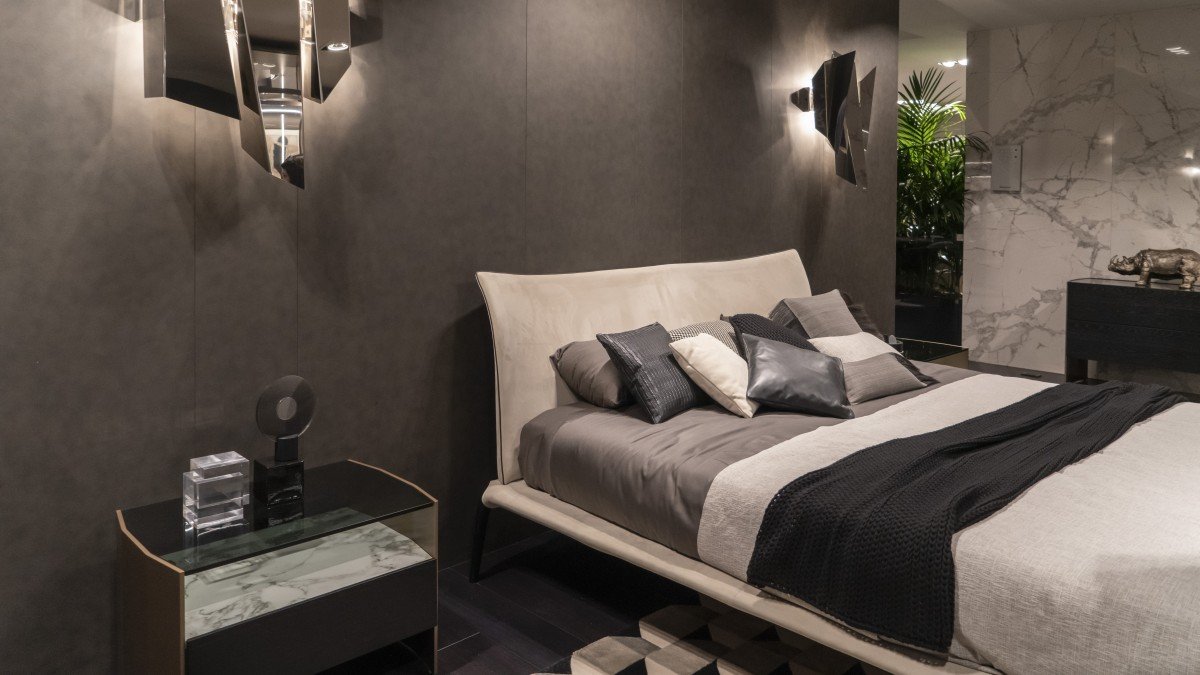
Slim dark legs raise this bed above the floor without creating the look of a standard four-legged frame. Upholstered rails wrap the mattress, while a broad padded section and dark wood panels continue across the wall behind it.
Wood also returns in the bedside surfaces, giving the bed, wall treatment, and tables a shared material instead of treating each as a separate piece of furniture.
Upholstered Base Replaces an Exposed Frame

Dark fabric covers almost every visible part of this bed below the mattress. No wood rails or conventional legs interrupt the low rectangular form.
Deep upholstery gives the base enough visual weight to stand on its own, while the angled back rises from the same structure. Two leather chairs beside it reinforce the furniture-like scale of the bed.
Cabinetry Creates a Sleeping Niche Around the Mattress

Storage takes over space that a conventional bed frame never touches. Cabinets span the wall above the mattress, open shelves fill one side, and a recessed section places the bed inside the larger built-in.
Low bedside ledges extend from the surrounding cabinetry. Instead of bringing a bed, two nightstands, and a storage cabinet into the room as separate pieces, the design combines those functions across one wall.
Thin Platform Extends Past the Mattress

White platform beneath this mattress projects past both sides and leaves a clear gap beneath the bed. Support disappears into shadow, making the broad slab more noticeable than any legs below it.
Exposed edges also create a strong horizontal line across the room. Bed and mattress no longer share the same footprint, which gives the base a role in the design rather than hiding it under bedding.
Curved Upholstery Wraps Around the Bed

Turquoise upholstery changes the shape from a standard rectangle into a broad curved form. Rounded ends continue past both sides of the mattress, while the foot follows the same soft profile.
Nightstands sit inside the span created by the upholstered structure. That extra width makes the entire sleeping area read as one composition rather than a bed placed between two tables.
Staggered Panels Connect Bed and Bedside Storage

Several upholstered panels rise at different heights behind this low bed, breaking away from the usual symmetrical frame. White bedside units run beneath them and extend past the mattress on both sides.
Different depths matter here. Bed, panels, shelves, and storage overlap rather than lining up as separate rectangles, giving the setup the appearance of furniture assembled around the mattress.
Rounded Corners Soften the Entire Frame

Curves continue from the broad green upholstered back into the low bed base. Rounded corners remove the hard edges found on most wood and metal frames, while thick upholstery gives the structure a sofa-like profile.
Mattress sits deep inside the frame instead of resting on top of exposed rails. Even with few extra components, changing the perimeter gives the bed a distinct shape.
Bedside Shelf Becomes Part of the Bed Structure

Low upholstered panels stretch beyond the mattress and meet a compact shelf at the left side. Instead of placing a conventional nightstand beside the bed, the storage surface appears attached to the same horizontal composition.
Soft light behind the panels traces their full width and emphasizes how far the structure continues past the sleeping surface. Mattress occupies only part of what reads as the complete bed.
Reading Lights Join the Bed Instead of the Wall

Wide upholstered sides extend past the mattress and create room for slim reading lights at each end. Their curved stems rise from bedside surfaces rather than requiring sconces above the pillows.
Wood around the lower mattress edge adds another layer to the frame. Upholstery, integrated lights, bedside storage, and the low wood platform turn several common bedroom pieces into one connected setup.
Four Posts Turn the Frame Into an Open Structure

Wood posts rise from each corner and connect above the mattress, taking the bed frame in the opposite direction from the low platforms in the other rooms. Instead of hiding the support structure, this design extends it toward the ceiling.
No canopy fabric fills the upper frame. Exposed wood outlines the bed in three dimensions, while the mattress rests on a slim platform below. Frame becomes one of the largest visible forms in the room rather than something concealed beneath the bedding.
From low upholstered bases to extended platforms and full-height timber structures, these beds show how much design can happen around the mattress itself. Which would you choose for your bedroom: a low floating platform, a fully upholstered frame, or an open four-post structure?