Crypto Will Get Rules One Way Or Another, CFTC Head Says
The crypto industry will get market structure rules even if Congress fails to pass landmark legislation, the head of the Commodity Futures Trading Commission said Thursday.
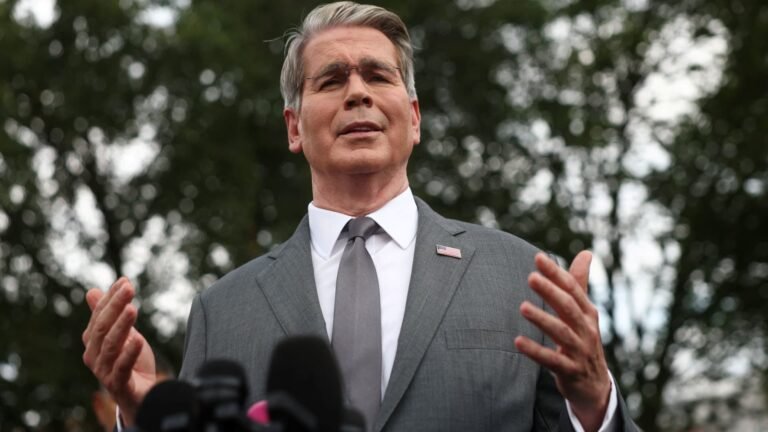
“It’s really important that we have market structure,” Chairman Michael Selig said in an interview with Bloomberg Television ahead of the agency’s inaugural Innovation Advisory Committee meeting. “We can do that through rules, we can do that through laws.”
The CFTC chairman said the agency is weighing a number of potential crypto rules, but is waiting to see what happens with the so-called Clarity Act. That bill has stalled in the U.S. Senate amid a fight over ethics provisions spurred in part by President Donald Trump’s $1.4 billion crypto windfall.
The market structure legislation could hand the CFTC primary authority to regulate the digital assets industry. While it is slated for a procedural vote in the Senate in mid-September, significant issues linger that could make it difficult to get enough votes to pass before lawmakers turn their eyes to the November midterm elections.
While legislation is “the most surefire way to lock in crypto market structure,” the agency has significant authority to act under its existing statute, he added. “If we have to utilize that authority to create rules without the supporting legislation, we’ll do it,” Selig said.
In the meantime, the agency is exploring a new type of CFTC-regulated platform that would be called a crypto asset market, which could offer trading on a leveraged or margin basis, Selig said later Thursday at the committee meeting. The regulator also is engaging with developers of on-chain finance firms to determine how they can operate legally in the U.S., he said.
Those measures could provide avenues for popular but offshore and unregistered platforms to bring their operations to the U.S. Trump said during a Wednesday event at the White House that Selig was exploring ways to bring fast-growing crypto platform Hyperliquid into the domestic market “in a fully compliant and legal fashion.”
The surging prediction market industry has also dominated much of the swaps and futures regulator’s policy work this year. Selig said the CFTC is working to finalize rules “very soon” for event contracts traded on prediction markets like Kalshi, Underdog, and Polymarket US.
“When I came into this seat, Pandora’s box was sort of open. There were all of these novel instruments and contracts trading in our markets,” he said in the interview.
The agency floated a proposal earlier this year that would crack down on wagers related to war, terrorism and assassination. That plan also proposed narrowly defining some “gaming” as games of “pure luck,” which would allow the majority of sports contracts now trading to continue.
“We’ve heard the commenters loud and clear that they want more consumer protections for retail and we’re going to implement that as well,” Selig said.
AI Compute Futures
The chairman — who is currently the sole member of what is intended to be a five-person, bipartisan commission — also kicked off a new effort this week to get public input on the trading of “compute” futures, or derivatives tied to the computating power that undergirds the artificial intelligence industry.
“If America is going to win the AI race, we have to dominate in compute markets,” Selig said. “This is the most important commodity, I think, of our time.”
Several exchanges, including CME Group Inc., Intercontinental Exchange Inc. and Architect Financial Technologies Inc., have announced plans to start trading the contracts, pending regulatory approval. The topic is one of the focal points of the CFTC’s meeting later in the day, which includes the chief executive officers of traditional and upstart financial services companies.
Selig said the agency was working closely with the Commerce Department on standards for AI compute futures, but wanted to be sure that the CFTC wouldn’t allow “a bunch of bad products” to be traded in the U.S.
“Expect some updates in the next couple months,” he added.
This article was provided by Bloomberg News.