What Happens If You Add Dawn Dish Soap To Weed Killer?
We may receive a commission on purchases made from links.
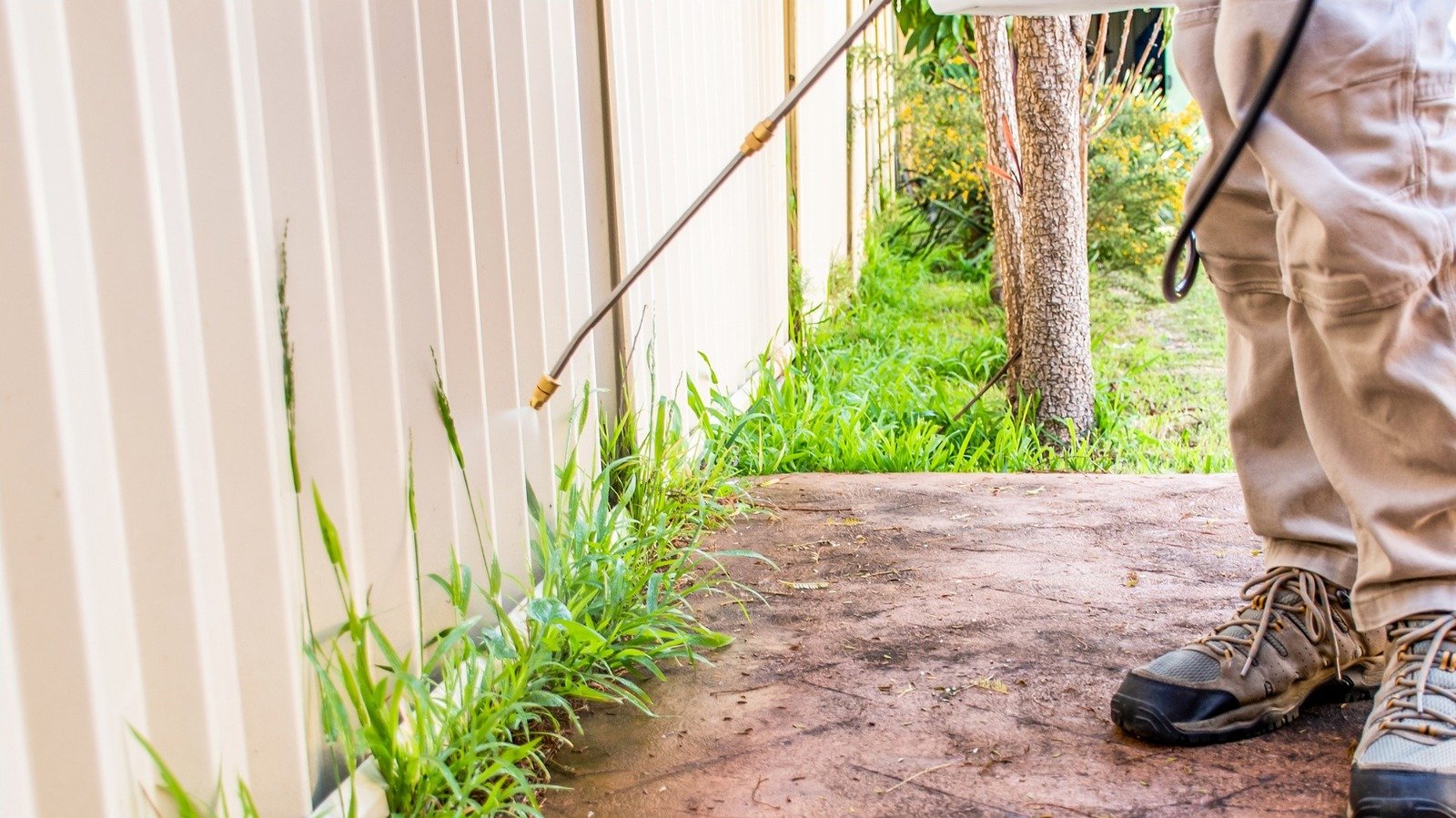
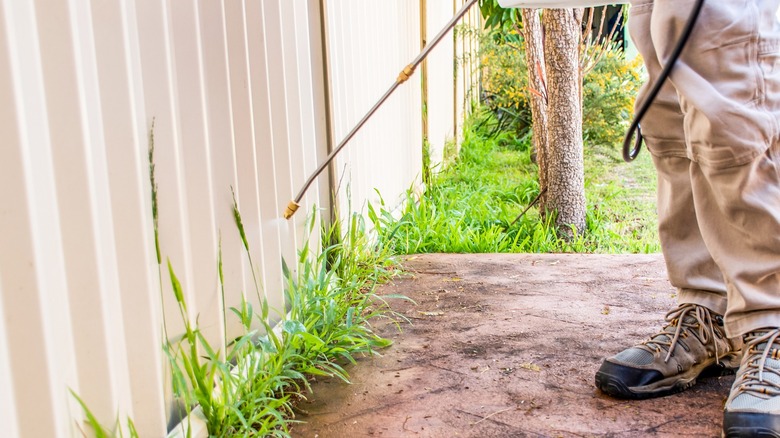
When you want to get rid of weeds growing on your lawn or in your garden, you can avoid a lot of pulling by spraying them with a post-emergent herbicide. You could choose a systemic weed killer — which is one that gets absorbed through the leaves, migrates to the roots, and kills them — or a contact-based product, which only kills the parts of the weeds the spray touches. Either way, the addition of a surfactant to the spray can help increase its effectiveness.
Dawn dish soap — and any dish soap, for that matter — can act as a surfactant, which is why many DIY herbicide recipes include it. By itself, water tends to bead up and cover the leaves only partially due to factors like surface tension and waxy coatings on plants. However, when you add a surfactant, the liquid spreads out evenly and covers completely, as you can see in this video posted by Revolutionary Garden Landscape & Design on YouTube. This dispersing action is especially important when using a contact-based herbicide, and it can increase the effectiveness of a systemic one.
Because it’s a surfactant, Dawn dish soap may make a spray herbicide more effective, but that doesn’t mean that it will. In fact, there is a good chance that it will do the opposite. Some garden experts recommend against adding dish soap — Dawn or otherwise — to a commercial herbicide. If you’re making a spray at home with ingredients such as vinegar and salt, however, the surfactant can be a valuable addition to the recipe.
When to use Dawn and when to avoid it
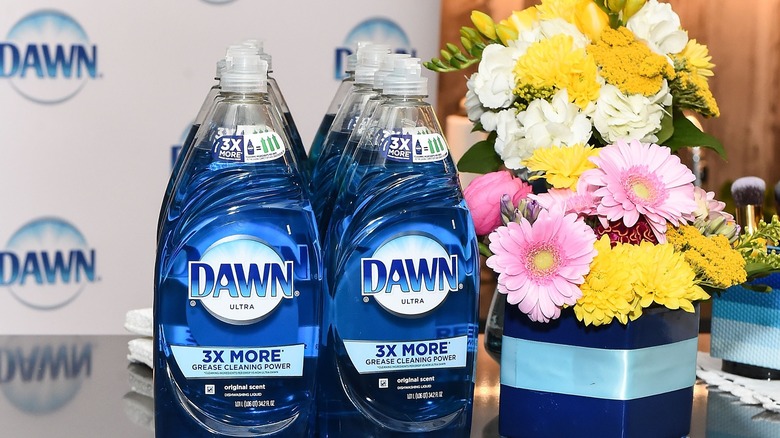
A common DIY herbicidal spray recipe calls for a gallon of household vinegar, a cup of salt and a teaspoon of dish soap. This is a contact-based spray useful for getting rid of weeds growing in the cracks of sidewalks and other places isolated from desirable plants. The spray basically burns everything it touches, and because it doesn’t need to be absorbed, the surfactant action of dish soap makes it work better.
It’s a different story when you’re spraying a commercial herbicide. It could contain any one of a number of complex chemicals, such as glyphosate, dicamba, triclopyr ester or amine salt formulations, and many more. Dish soap is formulated to break down oils and greases, and has the potential to interact with these chemicals and make them less effective. That doesn’t mean it will affect every herbicide in the same way. Nevertheless, to help retain potency, it’s best to use a commercial product designed specifically for garden chemicals, such as Hi-Yield Spreader Sticker, if you need a surfactant.
Dawn dish soap can create another problem when you add it to a herbicide spray. It bubbles and foams, and that can make it difficult to get the herbicide mixture right, and it can turn the spray into a mixture of weed killer and soapsuds. That’s fine for a DIY salt-and-vinegar spray — in fact, it may help — but it isn’t something you want when using a commercial product.