The 30-Year U.S. Treasury Bond Now Has a Higher Yield Than Ford and Coca-Cola. Is It Now the Best Asset for Passive Income?
Longer-duration bonds have seen their yields soar in recent weeks. None more than the yield on the 30-year U.S. Treasury bond, which hovered around 5.23% (as of Aug. 24), nearing its highest level seen since 2007.
Longer-duration bonds have rocketed higher as inflation remains elevated, the Iran war continues on with no obvious end in sight, and the national debt has just topped $40 trillion.
The 30-year bond now is offering a higher yield than top dividend stocks like Ford Motor Company and Coca-Cola (KO -0.38%). Has it officially become the best source of passive income?
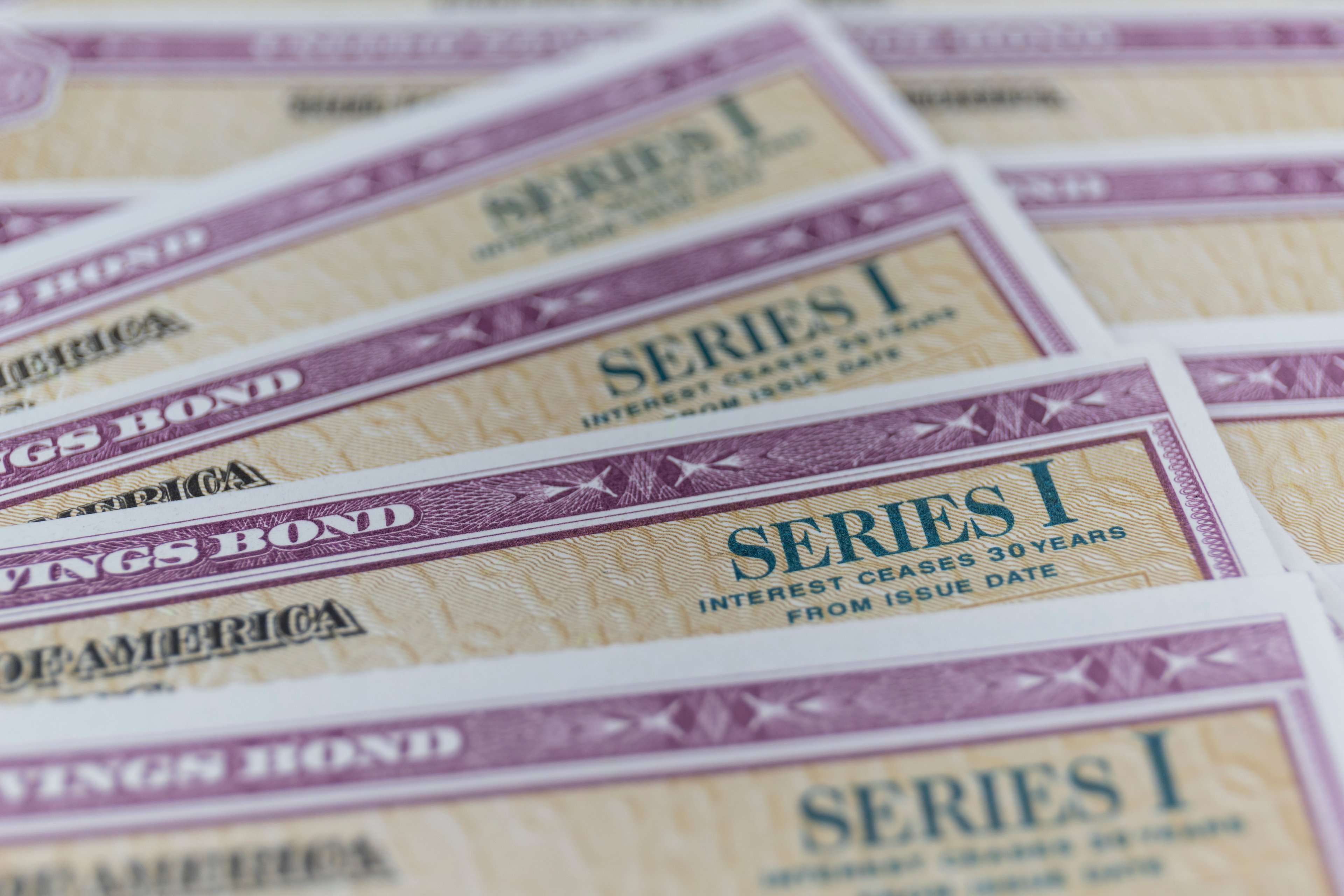
Image source: Getty Images.
Why longer-term bond yields have soared
Bonds are much different than stocks.
A bond is a form of debt, so when you buy a U.S. government bond, you are effectively loaning the government money to be paid back later. Bond investors also receive interest payments every six months.
However, bond yields have an inverse relationship to bond prices. A bond’s coupon payments are fixed, so a falling price means those same payments represent a higher return.
Bond prices also fall when interest rates rise because new bonds are issued at higher yields, making older bonds less valuable.
Bond yields, particularly at the longer end of the yield curve, are also influenced by market factors, including future expectations for inflation and economic growth. Both yields and bond prices are influenced by supply and demand, so a number of factors could impact the bond market.
More recently, some investors have expressed growing concern that the government has taken on way too much debt, leading to higher interest payments each year in the fiscal budget.
The government is running a roughly $1.8 trillion deficit in the current fiscal year, meaning spending continues to outpace receipts by a wide margin.
While high debt is nothing new, investors worry that the situation will soon get out of control. This is part of why yields on the longest part of the yield curve, the 30-year, have surged: investors again want more yield for what they see as an increasingly untenable situation.
Higher yields can hint at trouble
As with dividend stocks, a rapidly rising Treasury yield can signal risk. As recently as late February, the 30-year yield sat below 4.70%, and the Federal Reserve has not adjusted interest rates since then.
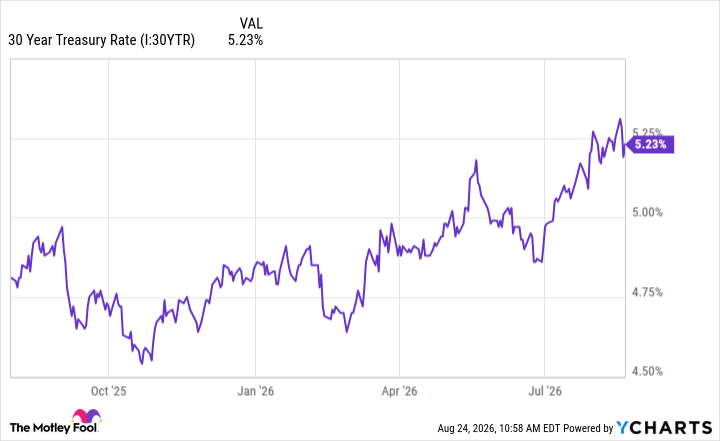
30 Year Treasury Rate data by YCharts
So I certainly wouldn’t call the rising 30-year yield a good thing.
In fact, U.S. Treasury Secretary Scott Bessent recently announced that the Treasury plans to repurchase over $4 billion in bonds at the longer end of the curve on a regular basis. Bessent said that the goal is to signal to the market that the Treasury does not believe current yields “… reflect the underlying fundamentals.”
However, this has done little to quell concerns.
U.S. government bonds have long been perceived as among the safest assets in the world, given that the U.S. dollar is the world’s reserve currency. Some would also argue that this also means the government cannot default on its debt.
One thing about bonds is that even if their prices fall, as long as you hold them to maturity, you will be made whole, so long as there is no default.
If you have a 30-year runway, buying a 30-year bond right now could end up being a good move. Sitting here today, even with $40 trillion in debt, it’s still hard to bet against the U.S. government.
But it is not risk-free, and the big takeaway is that an asset once seen as ironclad now has perceived risk. Debt has been piling up for decades, and there seems to be very little political will to address it because most options will not be easy on the economy.
So, I don’t see this as a no-brainer decision. In fact, I’m still more likely to take Coca-Cola’s 2.33% trailing dividend yield right now.
Not only does Coca-Cola have one of the most iconic brands in the world, but the company should continue to grow its earnings over the long term, which should drive further appreciation in the stock. Coca-Cola is also a Dividend King that has paid and raised its dividend for 64 straight years now.
I would, however, consider the 30-year bond over Ford, which has a trailing yield of nearly 4.2%. Ford’s track record is not nearly as strong as Coca-Cola’s, having suspended its dividend in 2020 during the COVID-19 pandemic.