GGF’s Rewiring the State research showcased in leading UK finance podcast

Global Government Forum’s research exploring how to achieve a complete rewiring of the UK state has been showcased by former UK cabinet secretary Lord Gus O’Donnell on a leading UK finance podcast.
O’Donnell led GGF’s Rewiring the state research, which set out insights from 12 UK permanent secretaries on the barriers and enablers to transformation in government, with a particular emphasis on the role of digital technologies and data.
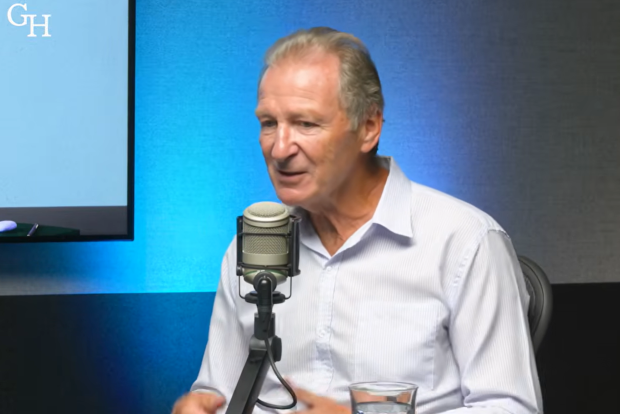
Speaking to The Rest is Money host and leading political and economic journalist Robert Peston, O’Donnell shared the insights from the research which identified four priority areas as key opportunities to accelerate change.
Discussing what he called “a very, very interesting report into how, particularly in [an] artificial intelligence world, the public sector and Whitehall needs to be reformed”, Peston asked O’Donnell about the findings in the report, which include elevating digital to the core of government leadership, building the capability for transformation at every level of government, unlocking the full power of data and AI, and driving joined up government.
Peston highlighted this last recommendation as key to the report.
Read the report in full: Rewiring the state: Unlocking government transformation
“One of the recommendations that you and the other permanent secretaries, and the authors of the report [GGF advisor Siobhan Benita and GGF research editor Sarah Wray] said was we have departments that are in silos that may have suited a country in the pre-digital world but are now totally inappropriate – and these walls, particularly when it comes to sharing of data, have to come down.”
O’Donnell said that there needed to be a lot more data sharing in government similar to the Tell Us Once programme, which ensures people only need to tell the government about the death of a relative once for the information to be shared with all relevant departments and agencies.
“In order to do that, you need a centre that understands what are the things the centre has to do.
“Now, you’re right, that report said that actually we need to define what the centre – namely the Cabinet Office in this case – needs to do.”
Public Service Data.AI
Public Service Data.AI is the UK’s flagship annual event for civil servants working to unlock the power of data and artificial intelligence across government.
Brought to you by Global Government Forum and hosted by HM Government, the event will take place in London on 15 October 2026 and is free to attend for UK and international public servants.
Find out more about the conference and register to attend
Use subsidiarity to unlock government efficiency
This should be based on a concept of subsidiarity, O’Donnell said, with the centre facilitating the use of shared tools like AI notetaking applications that can be common across departments while also getting “out of the way” where departments need specialised activities.
“You’ve got a system for taking minutes, for God’s sake: make it the same across government – don’t get multiple contracts and pay one of these companies millions of pounds multiple times – it’s ridiculous.”
He said he was hopeful that the recent machinery of government changes announced when prime minster Andy Burnham took office in July – which include the establishment of an Office for the Prime Minister and the Cabinet (OPMC), a new OneGov Delivery Agency and moving the Government Digital Service into a revamped Department for Digital, Culture, Media and Sport could set the groundwork for such an approach.
“I’m mostly against changing the machinery of government on these things but actually I think these changes do provide a core and I think you’re right: Antonia [Romeo, cabinet secretary] and Cat Little [civil service chief operating officer] have worked on making sure that the key decisions will be made centrally, which will improve efficiency.”
Read more: What do UK prime minister Andy Burnham’s efforts to rewire the state mean for the civil service?
The conversation also touched on the potential of digital ID in government. The Rewiring the State report recommended that government clarify its approach to digital identity.
While some leaders see a single identifier as essential for more joined-up services, political and privacy concerns remain unresolved, the report concluded.
On of Burnham’s first moves as prime minster was to scrap plans for a national digital ID. O’Donnell said that the programme had become a problem because it had initially been communicated to the public as a solution to immigration issues, rather than as a way to drive better public services.
But he added that he was an optimist that this concept of better services would return.
“The fundamental idea … is that basically we can get all of the benefits of this if we get this right and we create a system of digital ID… This is something that’s going to make [people’s] lives better.”
Once it is put to Burnham as the key to improving public services, “he’s going to get it”, O’Donnell predicted.
Asked how he would rate Burnham’s start as PM, O’Donnell gave him a mark of eight out of 10, and was not worried by the fact that Burnham’s full plan for government had not yet been detailed.
“I actually think that’s a good thing,” he said because new ministers need time “to bed in to think about the big issues”.
When it comes to the Budget, Burnham’s 10-year plan and the Spending Review, “there are going to be tough decisions”, O’Donnell said.