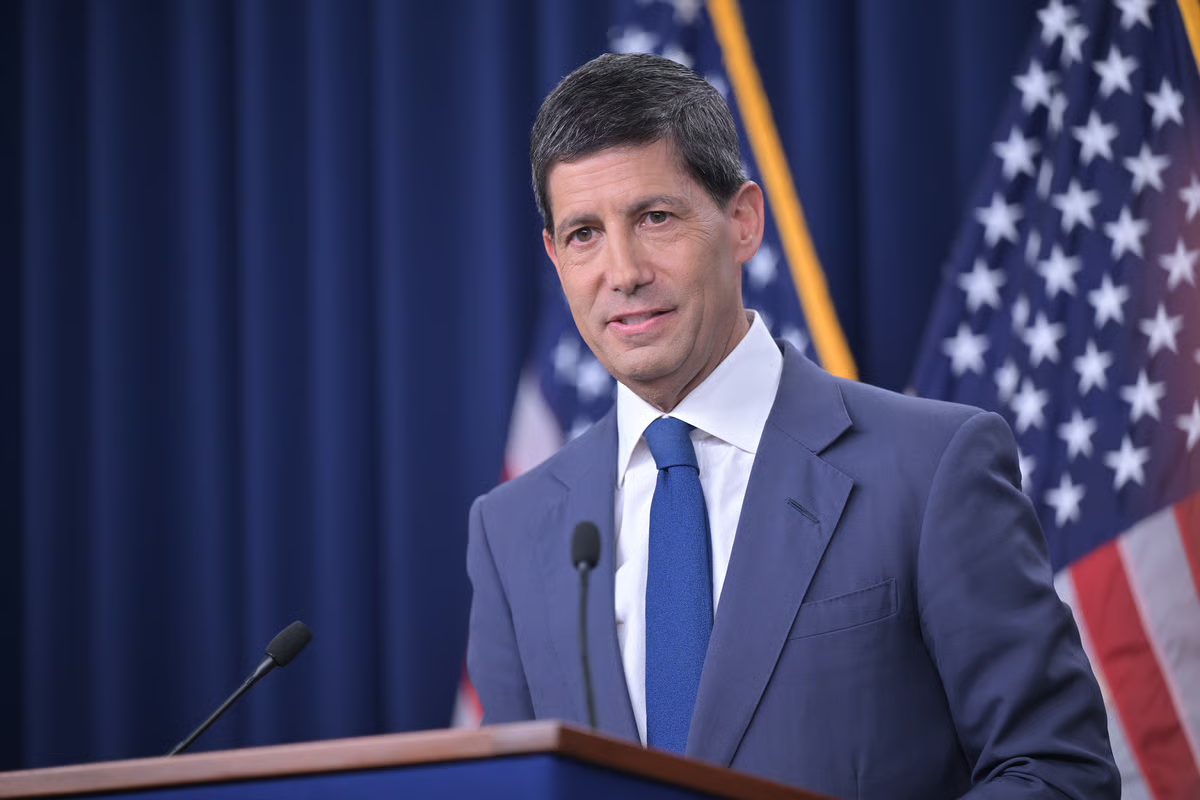
10 Terrifying Words From Fed Chair Kevin Warsh at Jackson Hole Have Spooked Wall Street
This has been a historic year for Wall Street in several respects. We’ve watched the Dow Jones Industrial Average (^DJI -0.02%), S&P 500 (^GSPC -0.25%), and Nasdaq Composite (^IXIC -0.52%) claim several record-closing highs, and witnessed the largest-ever initial public offering take shape, courtesy of Elon Musk’s Space Exploration Technologies (SpaceX).
But a strong argument can be made that Kevin Warsh becoming only the 17th head of the central bank since its December 1913 inception is an even bigger deal.
President Donald Trump’s handpicked successor to Jerome Powell has wasted little time enacting reforms since his May 22 swearing-in ceremony. In particular, he’s done away with forward-looking guidance in Federal Open Market Committee (FOMC) meeting statements, which had been a staple for more than two decades.
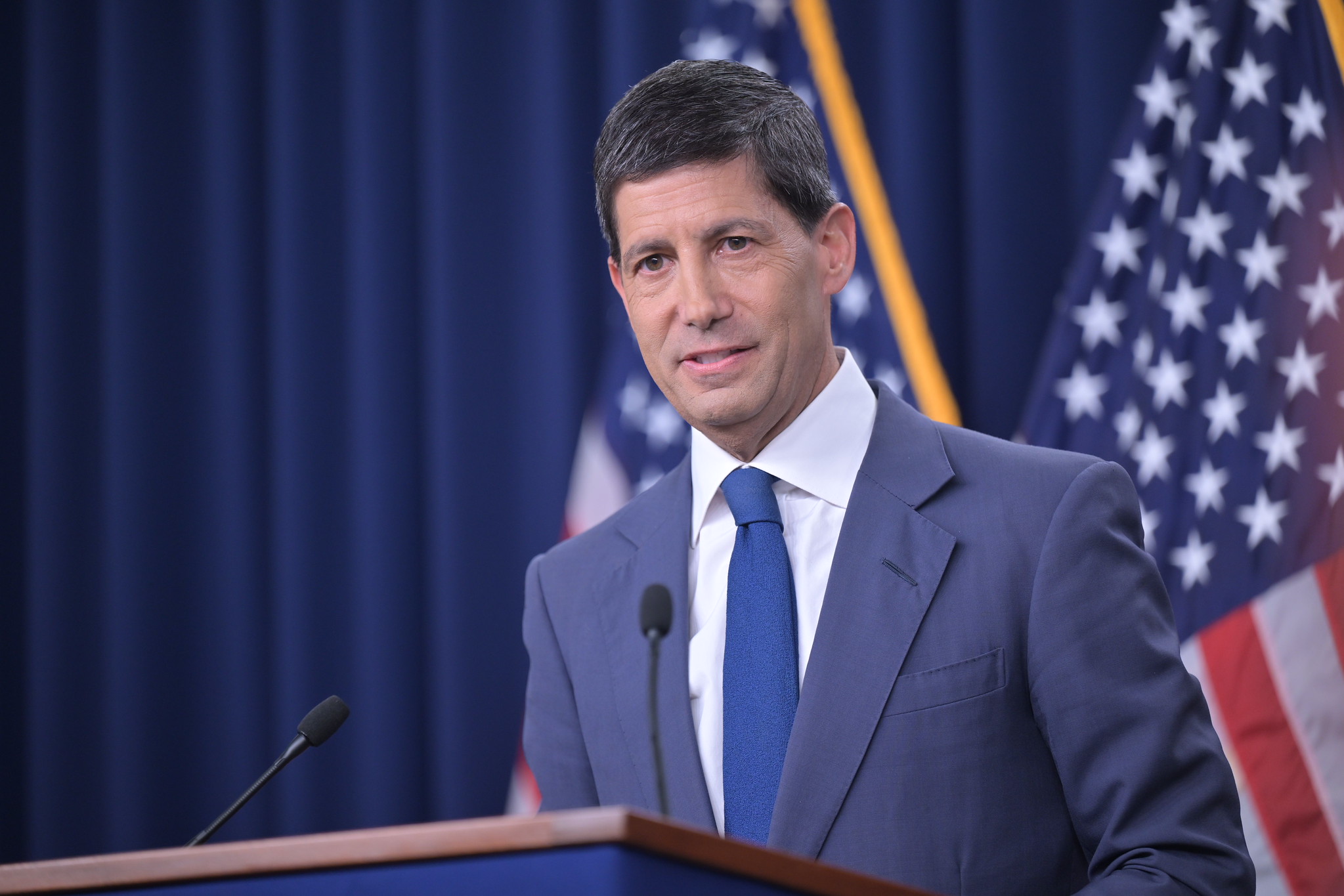
Fed Chair Kevin Warsh just leveled with Wall Street in his Jackson Hole speech. Image source: Official Federal Reserve Photo.
This perceived lack of transparency has left Wall Street and investors to guess what FOMC policymakers will do next… until now.
Kevin Warsh just spooked the stock market with the blunt truth
On Friday, Aug. 28, Fed Chair Warsh delivered a keynote speech at the annual economic conference held in Jackson Hole, Wyoming. With Warsh adamant that the central bank avoid forward-looking guidance and allow financial markets to react to economic data, Wall Street and investors were looking for clarity on how the Fed chair and his FOMC colleagues might approach persistently above-average inflation.
While Warsh expressed optimism about the labor market, saying, “I believe labor markets are consistent with full employment,” he described the price-stability aspect of the dual mandate as “concerning.” Said Warsh:
Inflation is running above our two percent target. So the Fed’s predominant focus right now should be on prices.
These 10 words, “the Fed’s predominant focus right now should be on prices,” hammer home Warsh’s hawkish tendencies and the growing likelihood that the central bank will eventually raise interest rates to tame a prevailing inflation rate that reached a three-year high of 4.2% in May.

Image source: Getty Images.
Warsh isn’t counting on the bond market to do all the legwork on inflation
Additionally, Warsh’s comments clearly signaled that price stability (or the lack thereof) lies solely with the Federal Reserve.
In Warsh’s July FOMC meeting statements with the press, he noted that a sizable intermeeting surge in U.S. Treasury yields worked in policymakers’ favor. Higher yields at the long end of the yield curve (10-, 20-, and 30-year Treasury yields) can make borrowing costlier for businesses and pump the brakes on inflation without the Fed needing to adjust its monetary policy.
JUST IN 🚨: U.S. 30-Year Treasury Yield hits 5.30% for the first time since the run-up to the Global Financial Crisis 🤯 👀 pic.twitter.com/SrUnHvClrl
— Barchart (@Barchart) August 17, 2026
However, Warsh’s speech at Jackson Hole makes it crystal clear that “short-term interest rates are the predominant tool to achieve the dual mandate.” This comes across as confirmation of Warsh’s (and the FOMC’s) willingness to raise interest rates to deliver price stability.
If the central bank raises interest rates, it threatens to stamp out the stock market’s No. 1 catalyst, the artificial intelligence (AI) data center build-out. The otherworldly spending on the AI infrastructure build-out has been financed in part by debt. If borrowing becomes costlier, downward revisions in growth projections or a re-rating of historically high stock valuations could prove devastating to Wall Street.