U.S.-Iran escalation shows Washington’s frustration with sanctions
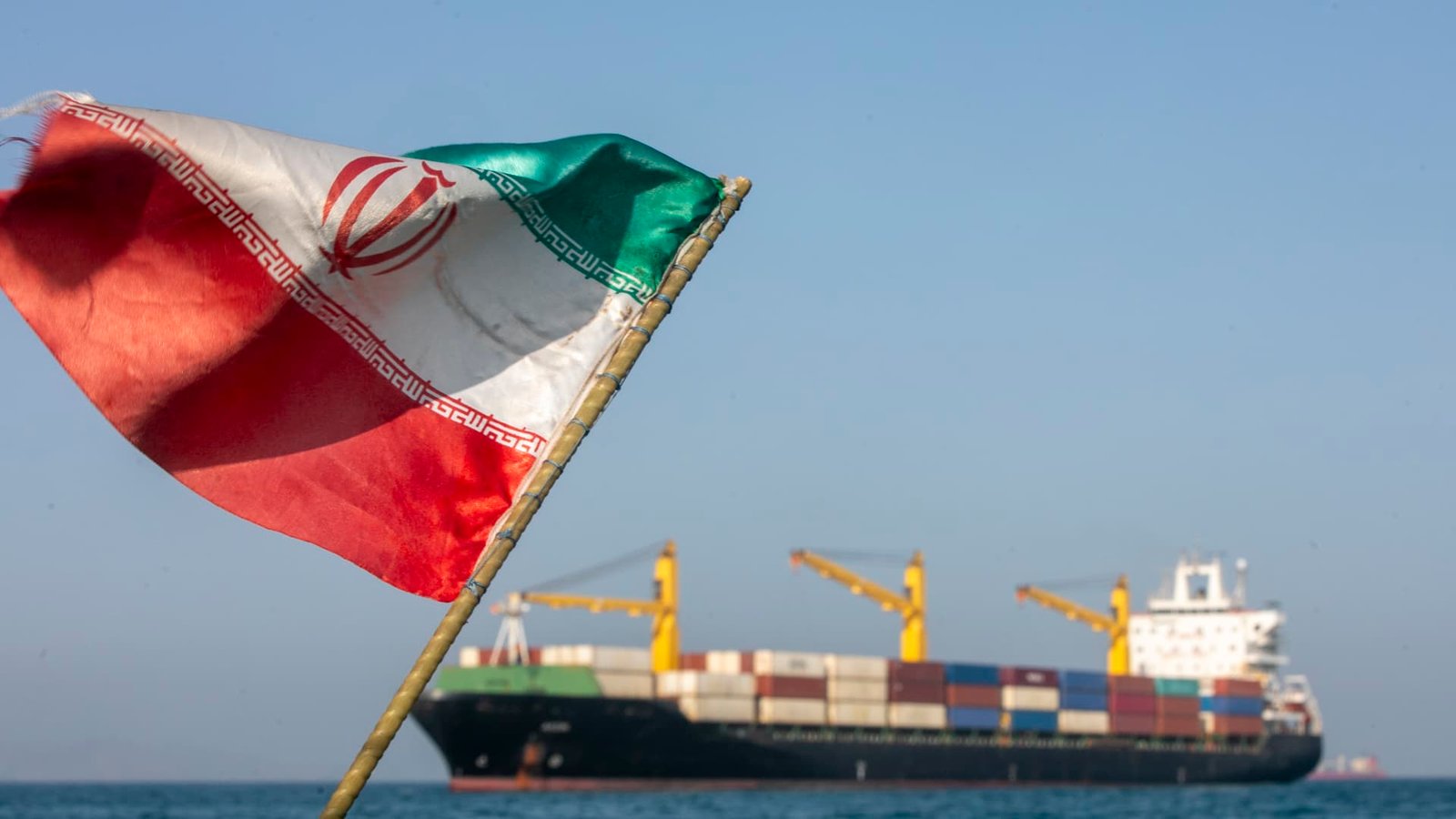
An Iranian flag flutters in the wind as ships remain anchored on May 16, 2026 in the Strait of Hormuz near Larak Island, Iran.
Majid Saeedi | Getty Images News | Getty Images
The escalation in hostilities between the U.S. and Iran over the weekend shows the U.S. is running out of patience with the slower-moving sanctions approach, according to analysts.
U.S. forces destroyed two Iranian rocket launchers on Larak Island on Sunday, as the Islamic Republic prepared to fire mine-carrying rockets into the Strait of Hormuz, ending a month-long lull in direct fighting.
The strike was the first publicly acknowledged U.S. attack since late July. Iran responded within hours, firing eight missiles at the King Hussein and Al Azraq air bases in Jordan. Jordanian air defenses intercepted all eight, with no casualties, the government said.
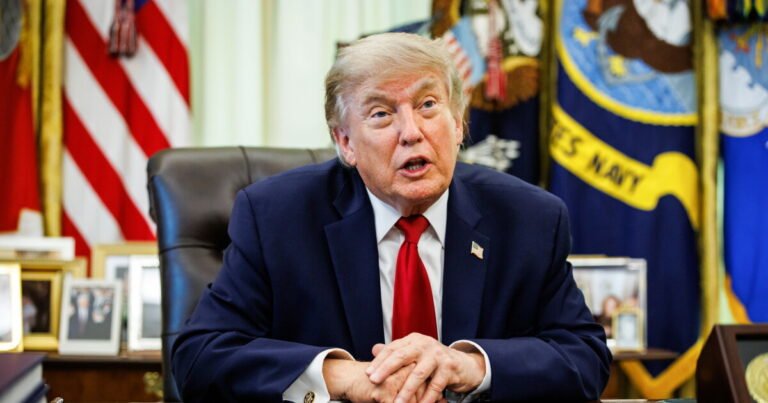
Later Sunday, President Donald Trump threatened on social media to blow up Kharg Island, Iran’s main oil-export hub, to “smithereens.”
“Most of the war has been tactically focused rather than strategic from the outset,” said Ian Ralby, a maritime security expert and president of Auxilium Worldwide. “The question, therefore, is: why this, why now?”
The sanctions campaign may not be hurting Iran’s leadership fast enough for the U.S.’s liking, Ralby said. Treasury Secretary Scott Bessent told Reuters on Sunday that he expects new sanctions on Iran weekly, particularly targeting banks, and that Washington intends to cut Tehran-linked institutions out of the dollar system entirely.

“It may be that the financial pressure was not curtailing Iranian behavior to the level the U.S. anticipated,” Ralby said. Renewed Iranian military activity may also have threatened U.S. forces or interests in the region “at a sufficiently high level of gravity that the U.S. felt it necessary to strike Iranian territory once more.”
The U.S. strike is likely an attempt to break a deadlock rather than a shift in policy, Ralby added. “The status quo has become somewhat stagnant, and I’m sure the U.S. would like to see that change,” he said. But it is unlikely to alter “the continuation of the blockade, or the economic ‘warfare’ being used to try to pressure Iran.”
Potential escalation
Trump’s threat against Kharg Island is likely to remain rhetorical. The terminal has absorbed dozens of strikes since the war began, with its oil infrastructure deliberately spared.
“It is unlikely that the President of the United States will actually carry through on the threat to attack Kharg Island,” Ralby said, noting the island also holds a historic early church that Iran has worked to preserve.
An attack “would be a destruction of cultural heritage as well as destruction of critical oil infrastructure, which would likely cause catastrophic environmental harm,” he said. “Threatening it may seem appealing, but actually blowing it up should hold little appeal.”
Rather than confronting U.S. forces head-on, Iran is more likely to retaliate through proxies and pressure on shipping and energy flows.
“The key to this conflict from the outset has been asymmetry,” Ralby said. “The Iranians have demonstrated an ability to use limited actual force to inflict substantial, actual harm.”
For instance, the Houthis, who control a large part of Yemen and have held sway over the approaches to the Bab el-Mandeb for the better part of a decade, entered the war weeks ago in support of Iran.
With the Houthis restricting navigation through the Bab el-Mandeb, the U.S. and its allies in the region could face a situation where the two major maritime chokepoints used to export the majority of the Gulf’s petroleum products are “subject to manipulation by Iran and its partners,” said Michael Ratney, senior adviser at the Center for Strategic & International Studies.
“We always assume that the Houthis and Iran are part of the same kind of group, but they’re not,” said Claudio Galimberti, chief economist at Rystad Energy. “They have worked in the past quite independently.”
Somali piracy, dormant since 2013, has also returned as coalition navies concentrate on the Red Sea and Hormuz. At least five vessels are currently held, including a tanker seized off Al Mukalla on Aug. 20.
“Enhanced pressure on oil production, the energy market, and global shipping are likely to be the focal points for Iranian retaliation,” Ralby said.
The military campaign remains the dominant force in oil prices. Flows through the strait reached roughly 7 million barrels a day last week via the Omani corridor under U.S. Navy escort, according to Galimberti’s estimates, calling it “a very costly mechanism … but it’s working.”
The strike on Larak threatens to reverse that recovery, injecting fresh uncertainty into commercial shipping through the waterway. “The expectation is that the flows in the next couple of days probably will be lower, and therefore you should expect the price increase for sure,” Galimberti said.