It’s Time for You to Start Caring About Data Centers. Here’s Why
Data centers are not new. While sometimes vitriolic discussions about the gargantuan structures have accompanied increasingly unavoidable AI conversations, data centers themselves have been around since the 1940s.
A data center, at its most basic, is a house that stores, accesses and analyzes information. They are the backbone of a lot of what we do on the internet — anything we think of as being “in the cloud” is tied somewhere to a data center, or multiple data centers. The centralization of this equipment allows for scale and efficiency.
But the data centers in today’s news are not the same as those of the 20th century. They are “orders of magnitude larger than what came before,” both in terms of an individual facility size and the number being built, said Ben Green, assistant professor of information and public policy at the University of Michigan.
Rather than being used for “streaming Netflix or checking your email,” Green said, these new data centers train and run generative AI models. The process of building them, who they’re built for and who is impacted has sparked backlash and debate on multiple fronts.
The Technical Landscape
Data centers can be thought of as AI factories where the infrastructure that makes up AI models are stored and deployed.
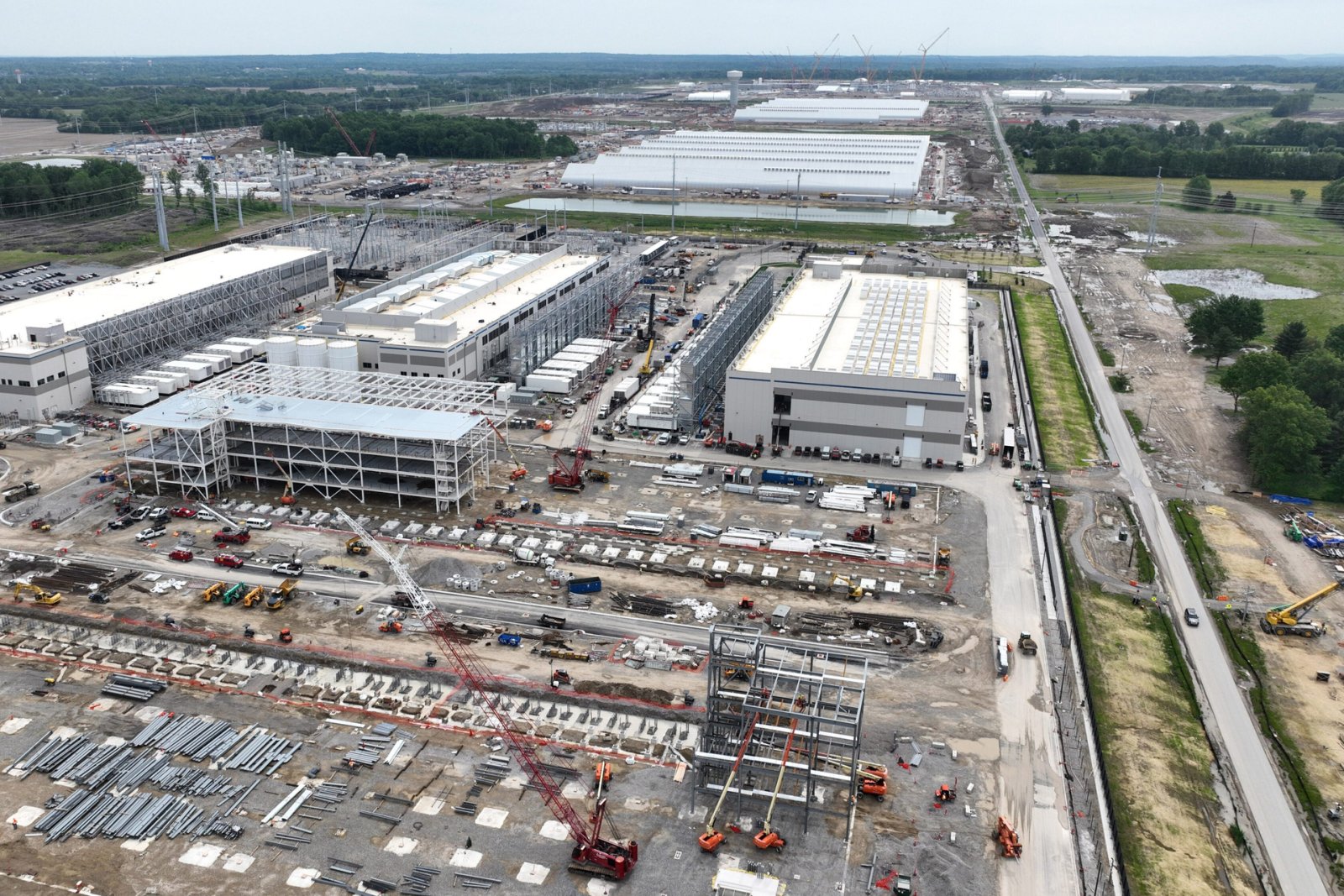
A standard data center before the AI boom took up an average of about 100,000 square feet. Today’s factories can span millions of square feet, often over 100,000 times that of a football field. Many are owned and run by companies known as hyperscalers, including Amazon, Microsoft and Google Cloud.
Data centers are comprised of millions of data servers where chips are integrated into server racks. Chips are small electronic circuits designed to optimize the processing required to train complex AI models. The standard chip is called a graphics processing unit, or GPU.
AI is trained on huge amounts of data — the more data, the better the model, thus the desire for bigger data centers. Because they must be built out, rather than up, hyperscalers typically go to suburban or rural areas with relatively cheap land.
Their massive size and 24/7 operation require enormous amounts of energy and generate a lot of heat, which Green compared to a laptop heating up when a lot of apps are open.
“All of those processors inside of that computer are working really hard at their maximum capacity and that generates heat from all of that work, so you might notice that your computer gets really hot,” he said. “A data center is that on a massive scale.”
To keep the systems running at functional temperatures, data centers use water-intensive cooling systems, which has caused heated public debate around data centers’ environmental impact and led to further discussions about who controls technology and land.
The Political Impact
Almost three-fourths of U.S. adults said they oppose building data centers near them, according to a recent Gallup survey. Part of this has to do with water usage — a 2025 report from the Environmental and Energy Study Institute found large data centers can consume up to 5 million gallons of water every day, roughly equivalent to the water use of a town of 10,000 to 50,000 people.
In addition to water, many are concerned about consumer protections regarding electricity rate increases, demands on renewable energy and requirements about who gets employed to construct data centers.
In response, many cities have introduced data center moratoriums, or temporary pauses on construction, until certain promises have been made. Moratoriums are most common at local levels, with no statewide bans passed.
“Part of how the tech industry pushes forward is by operating with extreme speed and secrecy,” so moratoriums are often the only leverage local communities have, Green said.
And moratoriums have been surprisingly effective — between January and March this year, at least 75 data center projects worth approximately $130 billion were disrupted by local opposition, according to the research firm Data Center Watch. This was the largest single-quarter concentration of blocked and delayed data center projects on record.
President Donald Trump, who has been bullish on AI and critical of any regulations that might delay its progress, has embraced data centers, describing them as “cash cows.”
“The only reason that communities throughout the U.S.A. should not want Data Centers is if they want to end up being backwards and poor,” Trump wrote on Truth Social on Aug. 31.
The economic benefits of data centers come mostly from their construction. A Virginia review commission reported in 2023 that constructing a 250,000-square-foot data center would employ up to 1,500 construction workers. Once the work was completed, 50 full-time workers would be needed.
The Personal Cost
Even with the benefits of construction, many are opposed to having a data center in their backyard, as Coldwell Banker commercial real estate broker Adam Shultz found out this year.
Shultz spent almost five years trying to sell a former General Motors site in Janesville, Wisconsin. The site makes up almost 250 acres of land. It was shut down in 2008 and has sat dormant since, contaminated by hazardous chemicals in the ground that GM never cleaned up.
The city of Janesville took possession of the site last year, according to Shultz, at which point the commercial real estate developer Viridian Partners offered to buy the land.
“I was jumping at the opportunity for our city to have this,” Shultz said.
But when news of the potential data center got out among locals, the tide turned against the local government because they were working with Viridian under an NDA. Anti-data center activists blocked the sale and introduced a referendum to be voted on in November that would have the public vote on any project over $450,000,000.
“That’s kind of the sticking point here is most developers are not going to roll the dice on soft costs and put a bunch of money into plans and all these things if a town could potentially vote down the idea,” Shultz said.
The problems Janesville faces are not unlike those of many other rural or suburban communities.
“It’s the same battle,” Shultz said.
Greta Reich covers the artificial intelligence industry for USA TODAY through a fellowship from the Tarbell Center for AI Journalism. Funders do not provide editorial input.