Can NHTSA Slow Down Tesla’s Cybercab Launch With New Probe?
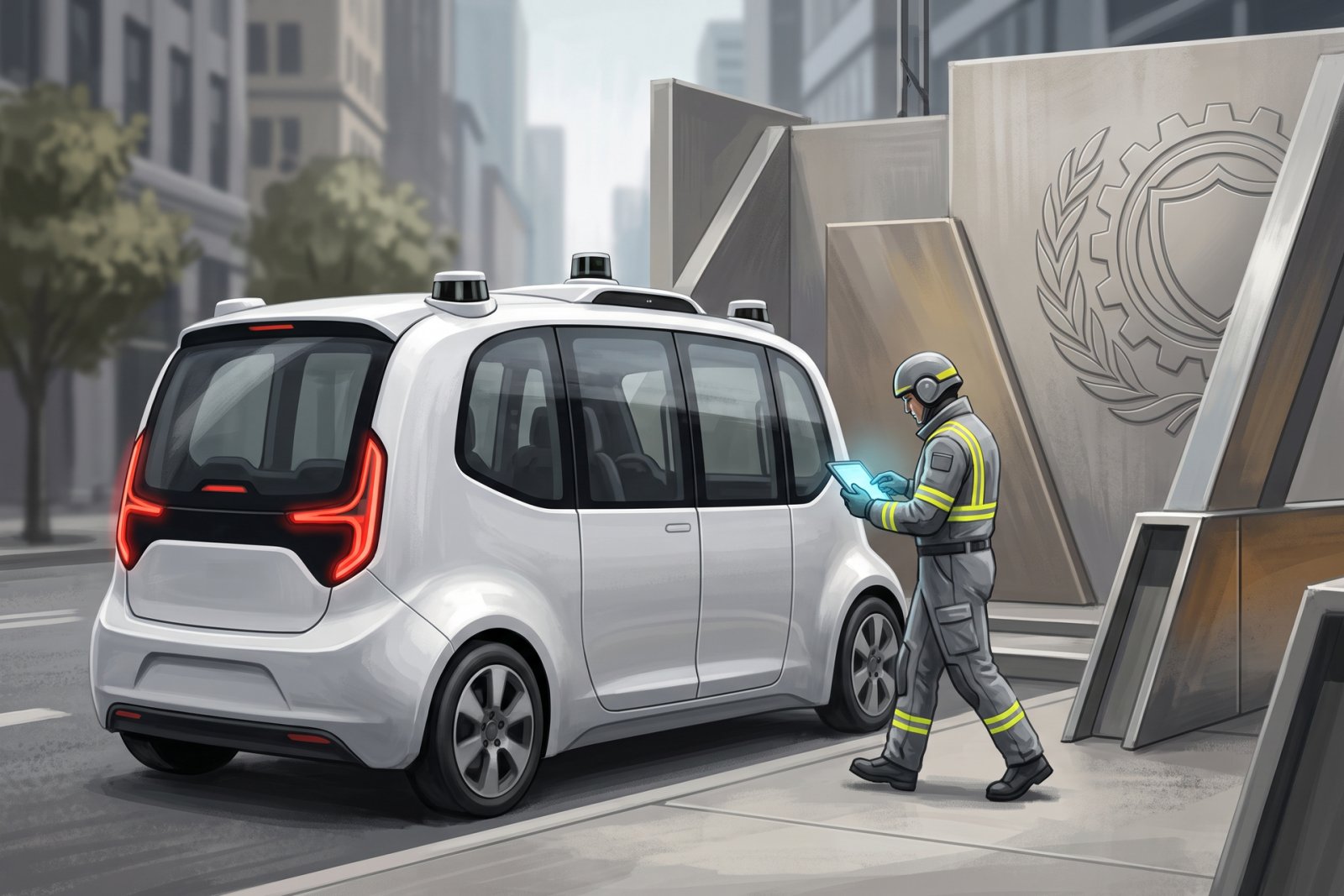
The National Highway Traffic Safety Administration has launched an investigation into Tesla’s certification of its new Cybercab robotaxi that argues the self-driving car is fully compliant with federal motor vehicle safety standards, even though it does not have a steering wheel or gas and brake pedals.
But it’s unclear how much federal regulators can slow down the Cybercab rollout without declaring the technology is defective.
NHTSA said in documents posted on its website Friday, Sept. 4, that it was launching an investigation “to examine the process and technical data on which Tesla relied when certifying the Cybercab and related issues.” The announcement came after Tesla announced plans to launch its two-seat Cybercab robotaxi service in roughly a dozen states, using a ride-hailing app similar to Uber and Lyft.
Officials with President Donald Trump’s administration said they support the development of self-driving cars, but they also have to make sure those vehicles are at least as safe for passengers as human-operated cars.
“NHTSA fully supports the safe development and deployment of automated vehicles. But as the federal regulator, we need to ensure that all of our laws are followed,” NHTSA Administrator Jonathan Morrison said in a statement. “Our approach of balancing innovation and safety oversight will allow the United States to maintain its global leadership in AV innovation.”
With that in mind, the USA TODAY CARS team examined whether NHTSA could slow Tesla’s Cybercab rollout plans, and if so, by how much.
Why Is NHTSA Investigating Tesla’s Cybercab?
NHTSA said it is investigating Tesla’s certification of the Cybercab because certification establishes clear vehicle performance requirements.
“In order for automakers to access the U.S. market, they must certify that their vehicles meet these standards — subject to oversight from the agency to confirm compliance,” the agency said. “When certified vehicles appear to not adhere to these requirements, NHTSA conducts an investigation.”
NHTSA said it has begun working on changing rules that currently require all cars to have features such as brake pedals, windshield wipers, lighting and rearview mirrors. But until the new rules are finalized, existing regulations still apply to Tesla and other robotaxi operators in the U.S.
NHTSA said it “looks forward to finishing these critical updates and removing unnecessary barriers to American AV innovation in the coming months.” The agency added that “until that work is completed, however, existing standards remain in force.”
What Type of NHTSA Investigation Is Tesla Facing?
NHTSA said its investigation is an audit query, which allows it to “assess the basis for Tesla’s self-certification that its Cybercab fully complies with all federal safety standards.”
NHTSA said the audit query will evaluate the technical data and processes Tesla relied upon to self-certify compliance for a vehicle lacking traditional human controls.
“Among other things, the inquiry will examine whether Tesla’s compliance framework relied upon determinations that certain standard FMVSS requirements are inapplicable to its automated vehicles,” the agency said.
How Much Could NHTSA Slow Tesla’s Robotaxi Plans?
NHTSA has the power to force carmakers to stop selling cars if it deems them defective. But Tesla has received clearance from the states where it currently operates its robotaxi service. NHTSA generally has jurisdiction over cars, while states control what happens on their own roads.
Tesla says it currently operates its robotaxis in limited areas of Austin, Dallas, Houston, Miami, Orlando and Tampa. Tesla has been using Model Y cars for its initial robotaxi service. The company announced plans Thursday to expand the robotaxi service to roughly a dozen additional states now that it has introduced the Cybercab.
Musk told investors on an April 2026 earnings call that the company’s expanded robotaxi service will use the same software used in the early-adoption states.
“The limiting factor for expansion is really rigorous validation,” Musk said. “Making sure things are completely safe. We don’t want to have a single accident or injury with the expansion of robotaxi and we’ve, to the credit of the team, not had a single one to date.”
Reporting by Keith Laing, USA TODAY. This article originally appeared on USA TODAY.