Ford Works to Restock F-Series Inventories: What It Means for Prices
The sales of Ford Motor Co.’s biggest moneymaker — the F-Series pickups — held up in August despite the automaker still working to ramp up production and inventory of the trucks.
From January to the end of July, Ford said it was seeing stronger prices for its vehicles compared with the year-ago period. Ford’s head of sales said he expects prices to hold steady through the end of the year, but does not expect to raise the price of the F-150 this year.
On Sept. 2, Ford reported its August sales. Total sales for the month were down 10.3% to 170,681 units compared with the year-ago period, in part because of the discontinuation of the Ford Escape and Lincoln Corsair compact SUVs. Ford also is struggling to ramp up its F-Series inventory to replace lost production caused by a fire at an aluminum supplier last year.
For the year through the end of August, Ford’s total sales were down 9.8% to 1,347,147 vehicles.
Ford said sales of the F-Series pickup were down just 1.2% to 67,504 in August compared with a year earlier. Year-to-date F-Series sales were down 10.9% to 494,060, but the truck remains on track to lead the industry as the top-selling pickup.
Ford Works to Rebuild F-Series Inventory
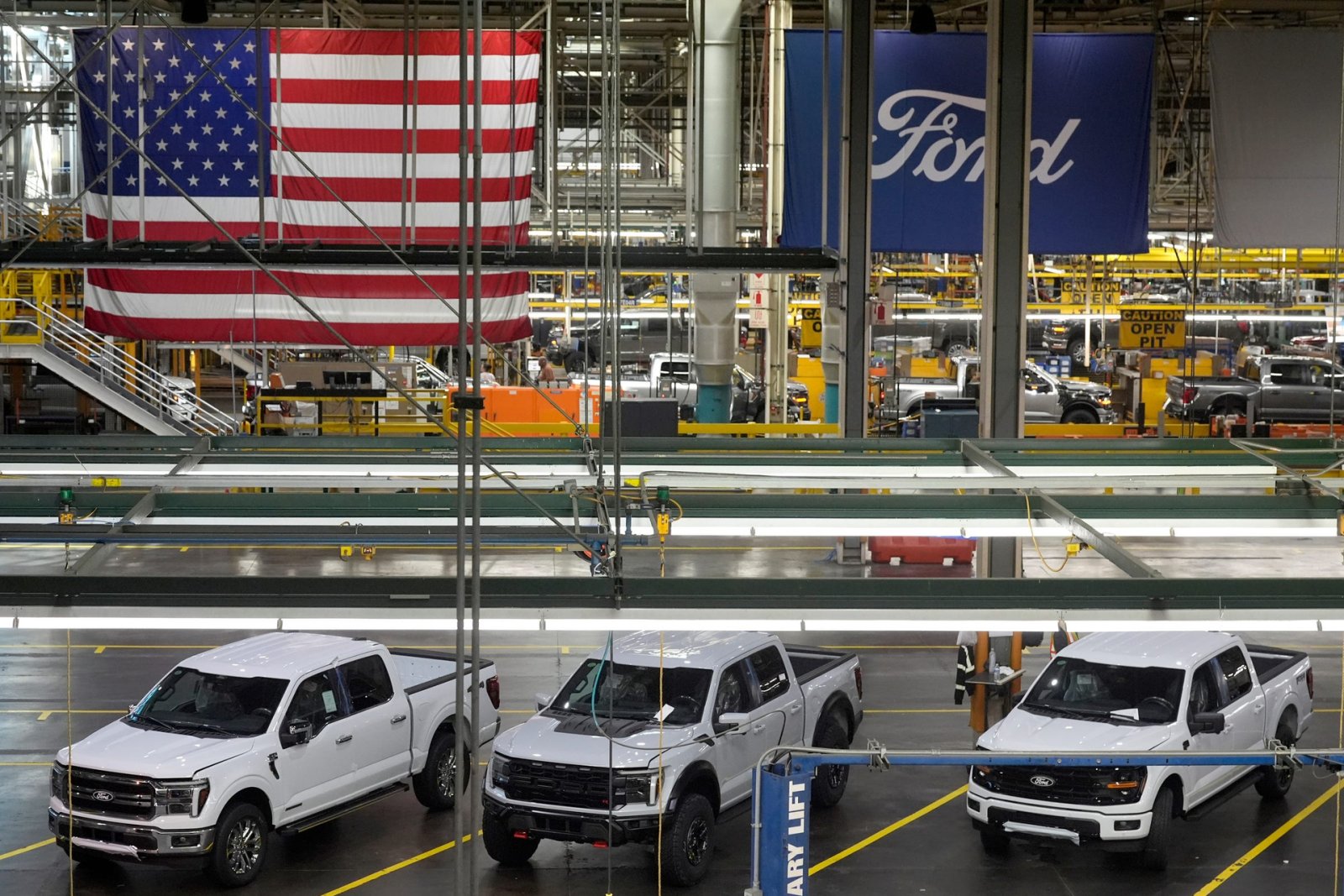
F-Series inventory remains low because of two fires last fall at Ford’s key aluminum supplier, Novelis, in New York. The halt to aluminum production disrupted production of the F-Series and some Ford SUVs, constraining inventory. Ford uses aluminum in the bodies of its pickups and SUVs.
Ford took several steps in its manufacturing process, including canceling its summer shutdown, to make up for lost pickup production. In June, Novelis restarted its aluminum production, and Ford has been catching up ever since.
“We managed through the Novelis fire, and the F-150 has a 41% turn rate, which speaks to the consumer demand we continue to see for the F-150. So we are managing well given a pretty low-day supply,” Rob Kaffl, Ford’s director of U.S. sales and dealer relations, said during a Sept. 2 phone interview with journalists.
A turn rate is the number of times a business sells and restocks a product. The higher the turn rate, the greater the demand. In Ford’s case, the F-150’s turn rate is high considering Ford had only a 40-day supply of F-150s at dealerships at the end of August, Kaffl said. The industry standard for a healthy vehicle supply is usually 60 days.
“We’re increasing production on F-Series, and dealers will start seeing that in their inventory in the next 30 to 90 days as we ramp up,” Kaffl said. “We have a healthy amount in transit and in system.”
Kaffl said Ford wants to get F-150 inventory to a 50- to 60-day supply and hold it there.
Why Ford Truck Prices Remain High
“The thing we’re focusing our dealers on now is turn rate,” Kaffl said. “A healthy dealer network doesn’t have a 70- or 80-day turn. So we think keeping it at a 50-day supply is healthy.”
When asked about Ford’s average transaction price across its brands in August, Kaffl declined to release that figure. He said overall pricing had held up across the industry and especially for F-Series vehicles.
Cox Automotive tracks average transaction prices across automakers, but it did not yet have enough data for August to supply figures. The average transaction price is what a customer pays for a vehicle after all incentives and trade-in values are deducted.
Cox Automotive did share average transaction prices for the Detroit automakers from January through the end of July. Ford had the highest price, thanks to its high-end mix of pickups. Ford also has seen regular sales growth in popular trims such as off-road and performance packages, which add a premium to a vehicle’s price. A Ford F-150 base starts at $39,585, according to Ford.com. The off-road Tremor trim starts at $64,915, and a performance Raptor version with a 5.2-liter supercharged V8 engine starts at $79,005.
Average transaction prices through the end of July, according to Cox Automotive, were:
- Ford Motor: $58,509, up 5.6% from the year-ago period.
- Stellantis (Chrysler, Dodge, Jeep, Ram and Fiat): $57,259, up 6.5% from the year-ago period.
- General Motors: $54,142, up 1.6% from the year-ago period.
- Industry: $49,644, up 2.5% from the year-ago period.
Kaffl said Ford’s “biggest asset” is the loyalty of its truck customers and that the company plans to keep prices in a range that will keep them returning.
“We have close to 12 million customers today who are driving an F-Series,” Kaffl said. “We believe we can protect that pricing with the current owner base coming in to get a new Ford, so we believe the pricing will hold up until the end of the year.”