What To Do In September To Get Rid Of Wasps

We may receive a commission on purchases made from links.
September is a tough time for wasps, especially social wasps like paper wasps, yellow jackets, and bald-faced hornets — a species of yellow jacket. Their numbers have been increasing all through the summer, and now that plants are beginning to wilt as winter approaches, food is becoming harder to find, and the end of the colony is near. They can get aggressive and bothersome during this time, and you have options to get rid of them. One way is to spray them with an insecticide like Spectracide Wasp & Hornet Killer, but there are other, less toxic alternatives, the easiest being to avoid eating outdoors or leaving food and soft drinks around. You could go so far as to get rid of their nests, but that’s particularly dangerous at this time of year, and it’s usually a job for a pro.
Not all wasps are equally problematic. Solitary wasps like mud daubers and cicada killers prefer to stay out in the garden. They don’t swarm, and they are unlikely to sting unless provoked. It’s best to leave them alone, though, because if one does happen to sting you, it will hurt.
When hungry wasps swarm you as you’re outside enjoying a meal, the first thing to remember is to avoid swatting them. Even if you manage to kill one, others will soon take its place, and they are likely to sting. Remember, they are ill-tempered at this time of the year, and they might attack you even if you don’t kill one.
How to get rid of a wasp problem in September
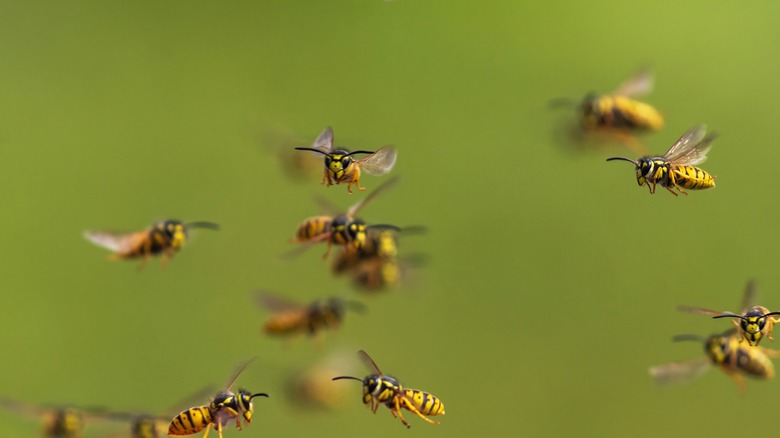
If you’re being bothered by a swarm of wasps, there’s probably a nest nearby, and one way to solve your problem for good is to remove it. You don’t necessarily have to, because if you can tolerate the wasps for just a few weeks, the colony will die off all by itself as soon as winter comes. Removing a wasp nest is always hazardous, and September is the worst time to do it, because that’s when it’s most active. You might be able to do it yourself, but you shouldn’t. If you treat the nest with insecticide or boiling water, and you’re unsuccessful, you could get swarmed. Unlike bees, wasps can sting several times, so getting swarmed is dangerous, especially if you’re allergic to the venom. Leave this job to a pest control expert.
Apart from removing the nest, you can discourage wasps from coming around by covering food while you’re outside and keeping your trash cans covered. You can also try repelling wasps with essential oils. To prevent them from coming indoors, make sure your windows and screens are closed and in good repair. If you have fruit trees, harvest the fruit or pick it up as soon as it falls. Decaying fruit lying on the ground is a wasp magnet.
You can try reducing the population by spraying them with insecticide or deploying wasp traps. These measures may bring some relief, but they won’t kill the colony, so the wasps will keep coming back until the cold weather sets in.