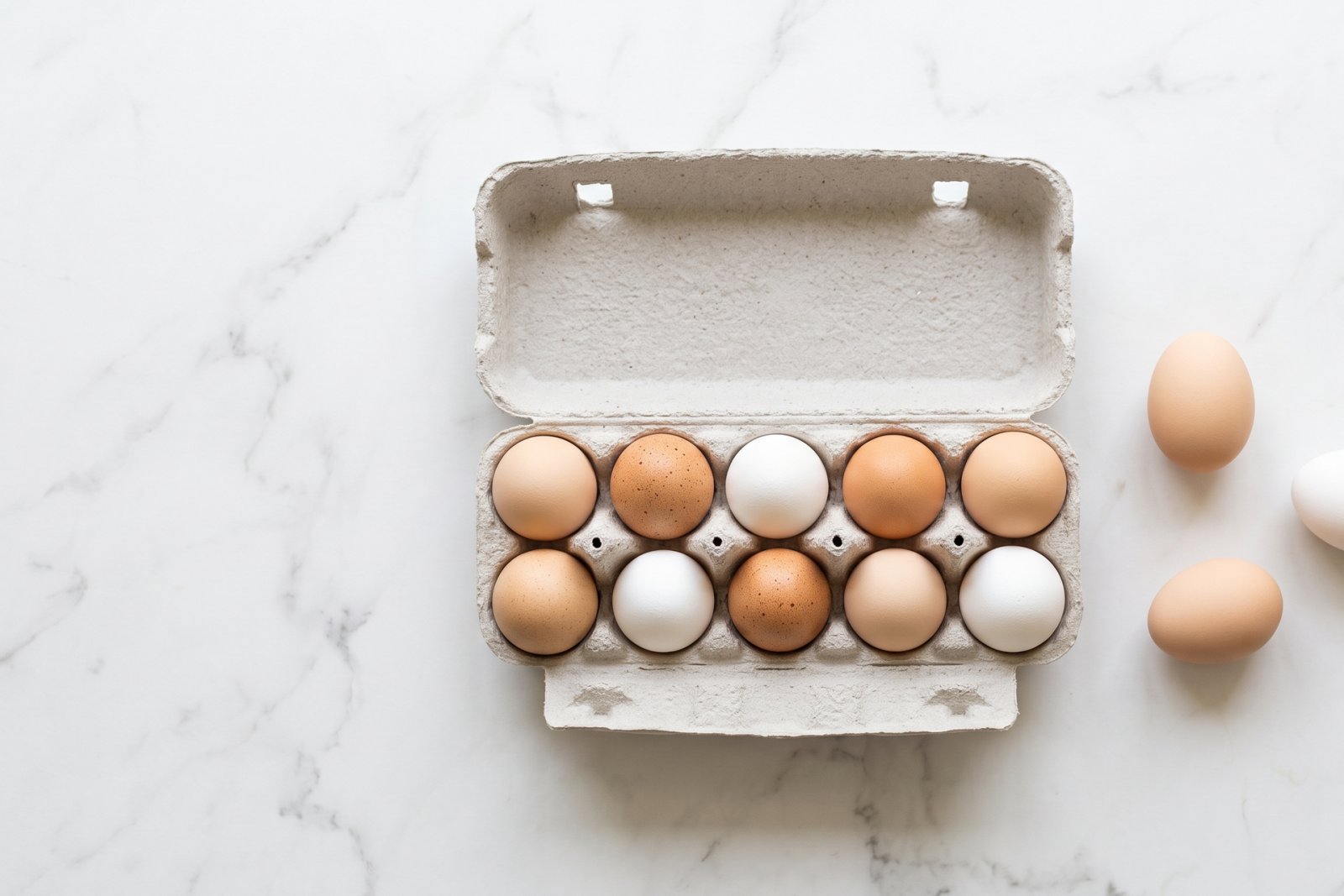
10 Things About Eggs You Didn’t Know — but Should
Egg prices have been all over the map for a couple of years now, which means every carton you throw out because a few went bad is real money in the trash.
Here’s the good news. Most of what trips people up with eggs — storing them, testing them, peeling them — comes down to a handful of simple tricks.
These 10 egg hacks will help you waste less, spend less, and swear less in the kitchen.
1. Crack them on the counter, not the bowl
Cracking an egg on the edge of a bowl feels natural. It’s also the fastest way to drive shell shards and shell bacteria straight into your food.
Tap the egg firmly on a flat surface instead — your counter or a cutting board. You get one clean break, fewer shell bits, and less risk of pushing anything on the shell into the egg.
2. Do the twist test before you buy
Never grab a carton without opening it first. Lift the lid and give each egg a gentle nudge or twist in its cup.
If one sticks, it’s cracked and leaking — put that carton back and grab another. Ten seconds at the store saves you from paying for eggs you’ll toss at home.
3. Leave them in the carton and off the door
That handy egg tray built into your fridge door? Skip it. The USDA says to keep eggs in their original carton and store them in the coldest part of the fridge — not the door.
The carton shields eggs from absorbing fridge odors and buffers them against the temperature swing every time someone opens the door. Bonus: The date’s printed right there when you need it.
4. Store them pointy end down
There’s a right way up. Keep the narrow end down and the rounded end up.
The rounded end holds a small air pocket. Pointing it up keeps the yolk centered and away from that pocket, which, according to BBC Science Focus, helps the egg stay fresh longer and lowers the odds of it spoiling.
5. Know how long they really last
Eggs last far longer than most people think. The USDA says raw eggs in the shell keep three to five weeks in the fridge — well past the date stamped on the carton.
Keep your fridge at 40 degrees or below, and don’t leave eggs sitting out more than two hours. Hard-cooked eggs are the exception — eat those within a week.
One thing before we keep going — the financial world is louder and dumber than ever. Hot takes everywhere. Almost none of it is worth your time. I’ve spent 35+ years cutting through the noise so you don’t have to. Sign up for the free Money Talks Newsletter — 10 seconds, no spam, just the stuff that matters.
6. Crack the code on the carton
That “sell by” date isn’t an expiration date. Look for the three-digit Julian date instead — a number from 001 to 365 that shows the exact day of the year the eggs were packed.
So 001 means Jan. 1 and 365 means Dec. 31. The USDA limits any “sell by” date to 30 days from that packing date, which means your eggs are often good for weeks after it.
7. Use the float test
Not sure if an egg’s still good? Fill a bowl with water and drop it in.
A fresh egg sinks and lies flat on its side. An older-but-fine egg stands upright on the bottom. One that floats has a big pocket of air inside — it’s old and dried out, and it’s time to let it go.
Why does it float? That air pocket grows as the egg slowly loses moisture through its shell. More air, more float.
8. Trust your nose
The float test tells you about age. Your nose tells you about safety.
Crack a questionable egg into a bowl and smell it. A good egg smells like almost nothing. A bad one hits you with an unmistakable sulfur stink — that’s your cue to throw it out, no debate.
A watery, flattened white is a sign of age, not danger. If it doesn’t smell off, it’s fine to cook.
9. Peel hard-boiled eggs the easy way
Fighting with the shell? Boil your oldest eggs, not your freshest.
Paulomi Burey, a food science professor at the University of Southern Queensland, explains that older eggs have a bigger air pocket and more alkaline whites — and both help the shell release cleanly.
After boiling, plunge the eggs into ice water right away. The cold shrinks the white slightly away from the shell. Then start peeling at the fat end, where the air pocket sits. Pair that with the best way to boil them and you’re set.
10. Freeze eggs before they turn
Staring down a carton that’s about to go? Freeze it — just not in the shell, which will crack.
Crack the eggs, beat them gently, and to keep the yolks from turning gummy, stir in a pinch of salt or a little sugar. The National Center for Home Food Preservation suggests about ½ teaspoon of salt per cup of whole eggs.
Pour the mix into an ice-cube tray — 3 tablespoons per cube equals one egg — freeze it, then bag the cubes. Thaw them in the fridge when you’re ready to cook.
None of this takes special gear or extra money. It mostly comes down to knowing which end is up — literally.
Do these things, and you’ll stop throwing out good eggs, and the cash that went with them. And these aren’t the only kitchen tricks worth stealing from a lifetime of cooking on a budget.