Building a Resilient Nepal by Gordon Brown
After Japan’s 2011 Fukushima nuclear disaster, the Japanese government changed the building codes for schools and housing and rethought the placement of critical infrastructure. Nepal (and other vulnerable countries) must pursue a similar approach.
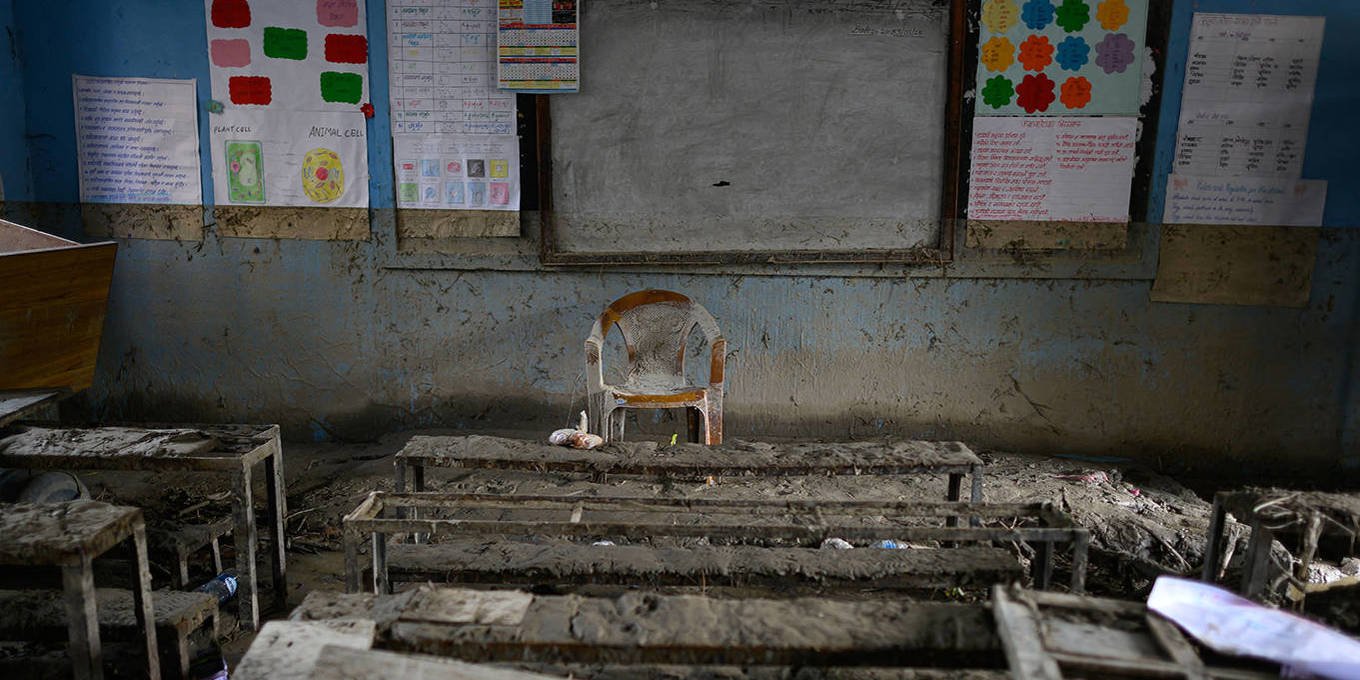
EDINBURGH—When a torrent of water, rock, and mud tore through Nepal’s Himalayan mountain valleys on August 26, following the collapse of a glacier and the mountainside beneath it, more than 1,300 people were killed, and nearly 5,000 are still missing. Tens of thousands of other lives have been severely disrupted: Nepal’s economy has ground to a halt, and many schools were destroyed.
The disaster began when a huge section of glacier and rock fell more than 4,000 vertical feet into the valley below, causing water levels downriver to rise by as much as 30 feet (9.1 meters) in 30 minutes. Towns and villages across a wide swath of the country were washed away or swallowed by mud. At the Gyirong border crossing separating Tibet and Nepal, a five-story Chinese customs building was hit by a tsunami-like mudslide and essentially vanished.
It has long been predicted that fast-melting snow and ice in high mountain areas would result in more frequent floods and avalanches. Three years ago, a glacial lake burst in the northeastern Indian state of Sikkim, causing more than 50 deaths and significant infrastructure damage. A year later, a similar event destroyed Thame village in Nepal’s Mount Everest region. But the recent tragedy in Nepal is by far the worst incident yet.
A global response is urgently required. Aided by support from the United Kingdom and other countries, the Nepalese government swiftly dispatched emergency teams to locate survivors and recover bodies. But soon the work of rescue and recovery will end, and the work of rebuilding must begin.
If anything, the recent spate of floods, fires, and drought worldwide has underscored the need for coordinated cross-border action on climate change—particularly in vulnerable countries like Nepal. With severe flooding growing more frequent, and with landslides becoming more likely in the coming years, preventive action must be taken to protect villages and buildings. That includes better early-warning systems to prevent a repeat of the catastrophic damage we see now.
There is also the question of Nepal’s reliance on hydropower, the source of nearly all its electricity. Kulman Ghising, a former energy minister of Nepal who called the deluge a “once-in-a-century” event, has said that it holds lessons for the design and location of plants. Instead of placing them in the mountains, for example, Nepal could build reservoir-based plants. The country could also invest in solar energy, as its technical potential is around ten times larger than that of hydropower.
More immediately, tens of thousands of displaced children face serious risks from unsafe water, malnutrition, trauma, and the lack of a safe place to shelter. According to UNICEF, at least 17,000 children urgently require humanitarian assistance. The United Nations estimates that more than 22,000 children will need protection, while around 2,600 children under the age of five will require treatment for severe wasting.
An estimated 20,000 homes will need to be rebuilt. But equally important is the imperative to reconstruct and reopen affected schools as quickly as possible. As relief organizations have found, the certainty of going to school—and the return to normality—eases the psychological distress faced by children in times of crisis. And getting young people back into education is instrumental to kick-starting the recovery process for whole communities.
Education Cannot Wait, the global fund dedicated to education in emergencies, is appealing for financing to support local and international partners in responding to the urgent needs in Nepal. “The immediate priority is to ensure that children continue learning. Every day out of school increases the risk of dropout, child labor, and early marriage,” ECW Director Maysa Jalbout told me.
Moreover, a team of British engineers at Strathclyde University has started an appeal for funds to help rebuild schools—and rebuild them stronger—in Nepal. Theirworld, a charity I helped establish to assist children in desperate conditions, will match every £1 raised by this initiative up to £50,000 ($68,000).
The goal is to provide safe learning spaces, which will require repairing the physical damage to buildings. In the long term, Nepal will also need to reposition schools located close to dangerous riverbanks and ensure that all are earthquake-proof. After Japan’s 2011 Fukushima nuclear disaster, the Japanese government changed the building codes for schools and housing, and rethought the placement of critical infrastructure.
Nepal (and other vulnerable countries) must pursue a similar approach, recovering from this disaster while drawing lessons from it to prepare for and mitigate future ones.