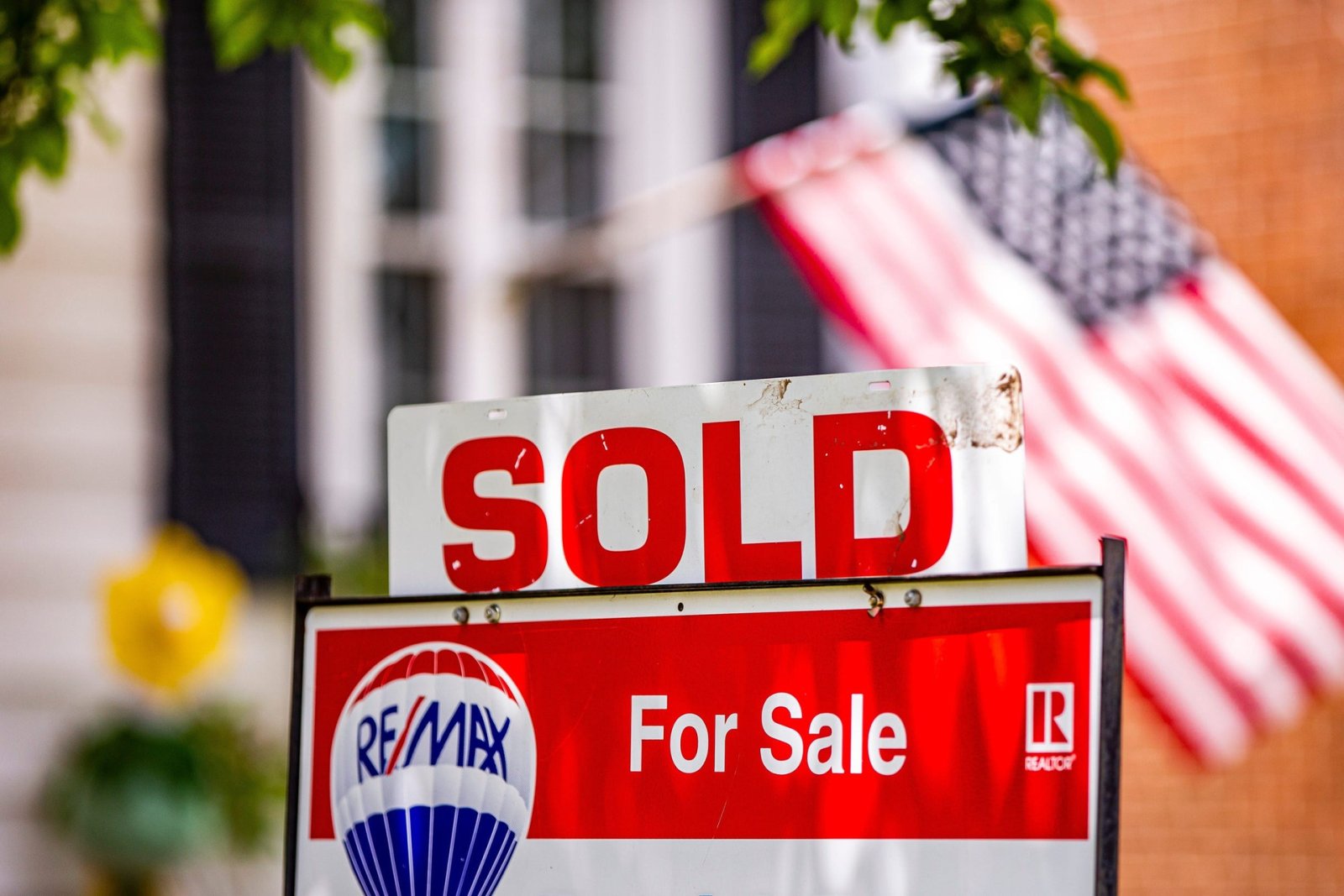
First-Time Home Buyers Are a Vanishing Breed
Millennials think that buying a first home has never been harder.
They’re pretty much right.
Back in 1975, a typical home cost about 2.4 times as much as the average under-40 household earned in a year, a standard measure of housing affordability, according to a new report from Pew Research Center.
By 2019, that price-to-income ratio had risen to 2.9. In 2024, it reached 3.5.
Over the past decade, home prices have risen much faster than wages. The rising ratio of price to income, coupled with elevated interest rates, has put homeownership out of reach for millions of millennial and Gen Z Americans.
“It’s gotten considerably more difficult for young families to afford a home,” said Richard Fry, a senior researcher at Pew.
The Pew report illustrates why homeownership is increasingly the province of older Americans, and why first-time buyers seem like a vanishing breed.
First-Time Homebuyers Are a Vanishing Breed
First-time buyers represented only 21% of all home purchasers in 2025, a record low, according to the National Association of Realtors. The typical age of a first-time buyer climbed to 40, an all-time high.
Nine in 10 adults under 40 say buying a first home is harder for them today than for their parents’ generation, Pew reports in a new survey. All under-40 adults are millennials, born between 1981 and 1996, or Gen Zers, born in 1997 or later.
Younger adults are also less likely to think a home is a “very good investment”: 24% of under-40 Americans hold that view, versus 38% of those ages 60 and older, Pew found.
Colin Poan, an older millennial, is the youngest of four. All of his Gen X siblings own houses. He does not.
“I was a little bit late to the party,” he said.
Poan lives in Irvine, California, where the average home costs about $1.5 million. Even with his six-figure income, he doubts he could come up with a down payment – or afford the monthly mortgage payments.
“I’m beginning to believe, unless I come into some sort of unknown inheritance, homeownership is not in the cards for me,” he said.
Home prices nationwide have surged since 2012, a year that saw the nation recovering from the Great Recession. Between 2019 and 2024, Pew reports, the median home price rose from $269,600 to $350,000, a 30% leap.
In the same five-year span, median incomes rose only 9%, from $92,700 to $100,900.
The ratio of home price to income hit 3.5 in 2024. The last time that ratio ranged so high was in the mid-2000s, at the peak of the millennial housing bubble, Pew reports.
High Prices, Mortgage Rates Have Pushed Homes Out of Reach
High mortgage rates have combined with soaring prices to push homes beyond the reach of renters.
Pew offers this example:
In 2019, a homebuyer could have bought a $269,600 home with a 3.5% downpayment and a 3.9% mortgage, for a monthly cost of $1,689.
Five years later, in 2024, the same buyer would face a $350,000 purchase price and a 6.7% mortgage rate, for a monthly cost of $2,776 – a difference of more than $1,000.
“That could tip the balance between, ‘Should I buy or should I continue renting?’” Fry said.
Between 2019 and 2024, home values grew faster than incomes for young adults in 142 of 160 metropolitan areas Pew studied.
“What really stands out is that affordability barriers are no longer limited to New York, San Francisco and Boston,” said Nadia Evangelou, principal economist at the National Association of Realtors, a group that has conducted similar research.
How Affordable Are America’s Big Cities in 2026?
Here are median home prices and price-to-income ratios in several large metro areas, according to Pew:
- Atlanta: The median home price is $390,000, and the price-to-income ratio is 3.8.
- Boston: Median home price is $630,000; price-to-income ratio is 4.3.
- Chicago: Median home price is $300,000; price-to-income ratio is 2.8.
- Cleveland: Median home price is $230,000; price-to-income ratio is 2.5.
- Dallas: Median home price is $375,000; price-to-income ratio is 3.7.
- Denver: Median home price is $600,000; price-to-income ratio is 4.6.
- Detroit: Median home price is $260,000; price-to-income ratio is 2.9.
- Houston: Median home price is $320,000; price-to-income ratio is 3.7.
- Los Angeles: Median home price is $850,000; price-to-income ratio is 7.5.
- Miami: Median home price is $460,000; price-to-income ratio is 5.
- New York: Median home price is $600,000; price-to-income ratio is 4.6.
- Philadelphia: Median home price is $350,000; price-to-income ratio is 3.3.
- Pittsburgh: Median home price is $250,000; price-to-income ratio is 2.5.
- San Francisco: Median home price is $1 million; price-to-income ratio is 5.8.
- Seattle: Median home price is $700,000; price-to-income ratio is 5.
- Washington, D.C.: Median home price is $550,000; price-to-income ratio is 3.9.
Across the nation, however, pockets of affordable housing remain.
“This isn’t happening everywhere equally,” Evangelou said.
10 Metro Areas That Still Have Affordable Homes
Pew identified 10 relatively affordable metro areas, with price-to-income ratios of 2.7 or lower: Springfield, Illinois; Utica-Rome, New York; Canton-Massillon, Ohio; Cleveland; Pittsburgh; Youngstown-Warren, Ohio; Syracuse and Rochester, New York; St. Louis; and Scranton-Wilkes-Barre, Pennsylvania.
Shut out of the housing market, young adults increasingly opt to live with roommates, or with their parents.
The share of adults ages 25-34 who were homeowners (heads of household or their spouses) dwindled from 40% in 2005 to 29% in 2024, according to research by the Urban Institute, based on census data.
Meanwhile, the share of adults ages 25-34 who lived with their parents rose from 12% in 2005 to 20% in 2024.
“They prefer to just stay in Mom and Dad’s basement,” said Jun Zhu, a clinical associate professor of finance at Indiana University and nonresident fellow at the Urban Institute.
Is Relief Ahead for Homebuyers?
The market for first-time homebuyers isn’t likely to change dramatically over the next few years, housing experts say. But the market is already seeing incremental improvement.
Home prices rose just 2% in the year ending in May, Redfin reports. Prices have been relatively flat over the past few years, especially after adjusted for inflation.
“Real values are coming down very, very, gradually,” said Daryl Fairweather, chief economist at Redfin.
But the ongoing costs of owning a home, including insurance and property taxes, are still rising, posing an affordability challenge to all homeowners.
“Over the next decade,” Fairweather said, “it’s probably going to become easier to get into the housing market, but more difficult to stay in the housing market.”
Reporting by Daniel de Visé, USA TODAY. USA TODAY Network via Reuters Connect.