The launch of L.A.-based designer Jesse Kamm‘s high-waisted sailor pants in the mid-aughts may have singlehandedly led to the demise of the skinny jean. Nearly every woman we knew then coveted a pair—including us. It wasn’t just that they offered a release from the tyranny of low-rise and stretch denim; they represented a sunny Southern Californian chicness and nonchalance that was incredibly alluring.
Today, Kamm’s indie line remains a favorite among those who appreciate casual minimalism and slow fashion. And she continues to be a tastemaker by adhering to her principles: simple, unfussy design, sustainable practices, and a human-scale business that allows for living. To that end, every summer since 2005, she decamps to Panama with her husband, Luke Brower, and their son to live off the grid, surf, and recharge for three months. “It is a chance for us to strip life down and reset each year,” she says.
In 2007, the couple “bought an old cattle farm on an island with a group of friends, friends of friends, and family, and broke it into group of smaller plots.” Their slice of jungle heaven now includes a magical treehouse-like cabin that they built themselves. “Designing and building this house has given us a deep feeling of pride. In a way we have built our lives, our business, and our yearly flow around this home. We got pregnant the summer we built the house. Every summer of our child’s life, and nearly every winter break have been spent here,” shares Kamm. “This house holds our family’s story within its walls.”
Their captivating retreat is one of the 40 featured abodes in Surf Shacks Vol. 3, creative director and surf junkie Matt Titone‘s latest ode to the appealingly non-traditional homes of surfers around the world. Below, Kamm and Brower’s space, as it’s shown in the book.
Photography by Jake Naughton, from Surf Shacks Vol. 3, courtesy of Gestalten, except where noted.
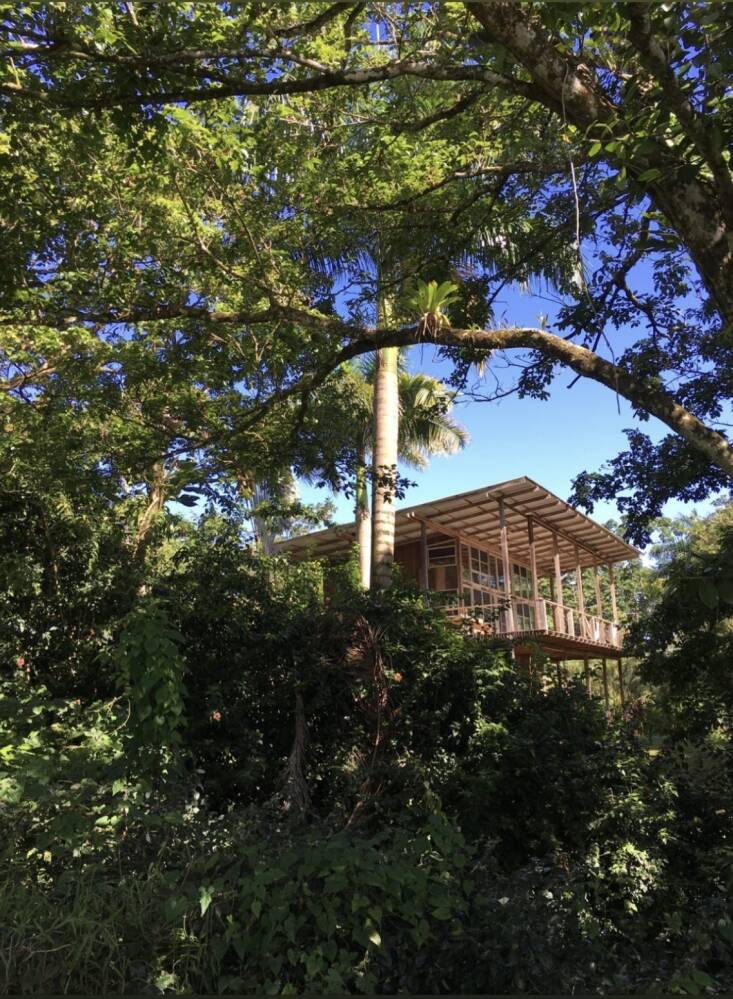
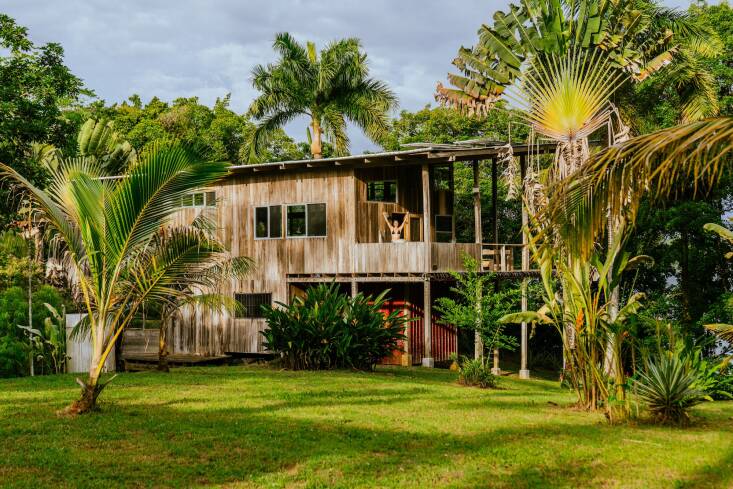 Above: Kamm and Brower built their low-impact home themselves on Carenero Island in Bocas del Toro, Panama. Its design was inspired by her own childhood home in rural Illinois, which her parents also built themselves.
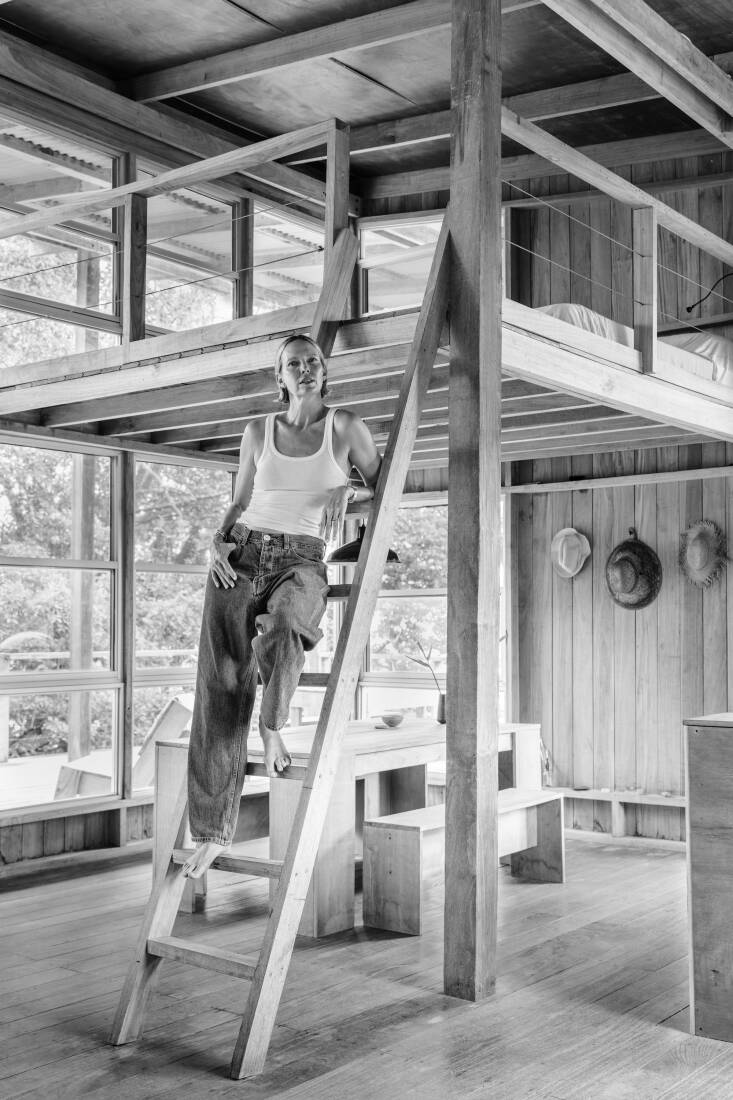
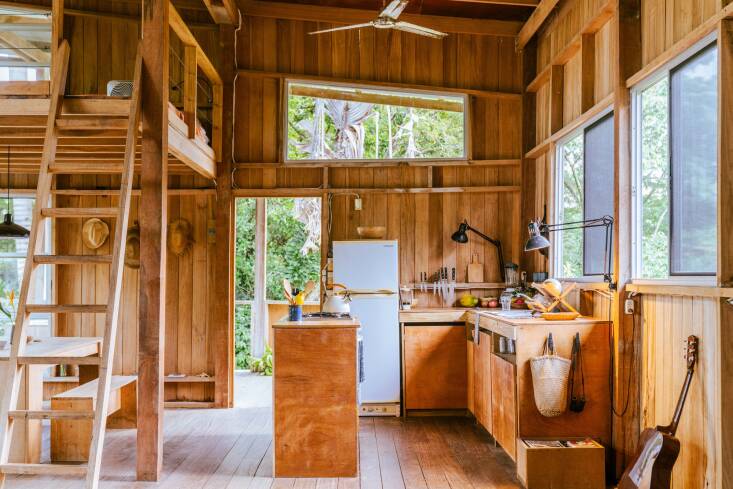 Above: “The entire home is off the grid,” says Kamm. “We have a small but mighty solar system. We collect rainwater in a 1,250-gallon tank and use that for all of our water needs. We have a composting toilet. And the stove runs on propane.” The ladder leads to the couple’s lofted sleep quarters, which “looks out into the canopy and out into the sea.”
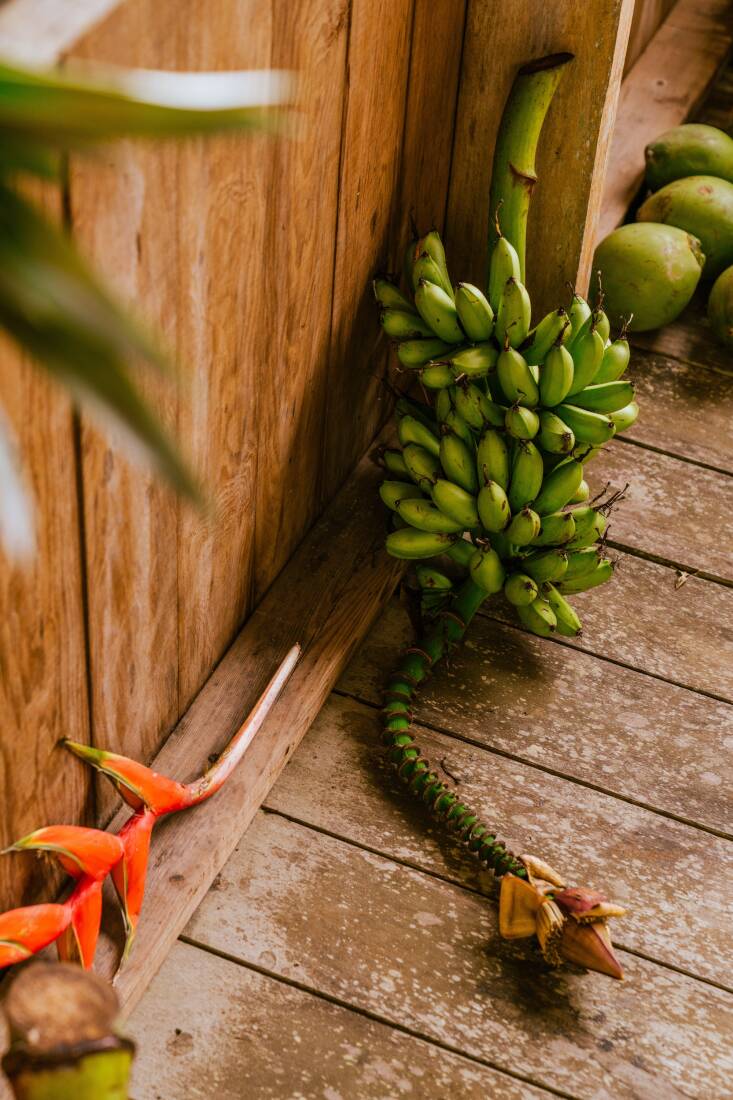
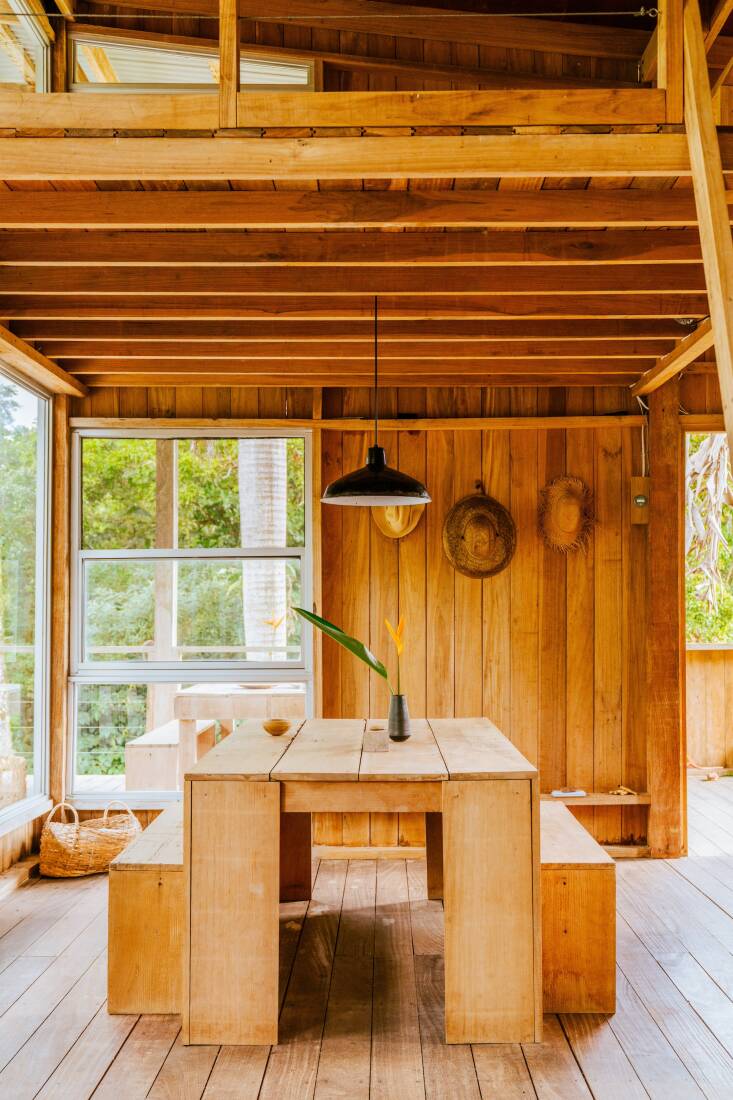 Above: Brower made all of the furniture himself, much of it inspired by Donald Judd. The home was designed to be airy and open, which sometimes means sharing the space with interlopers. “There was a green vine snake that once dropped from the rafters into the blender… That was surprising,” Kamm shares. “We get geckos, and a little jungle marsupial that will come for a bite of banana, here and there. There may be a scorpion on a towel on the laundry line once a year, so you always want to give your belongings a good shake.”
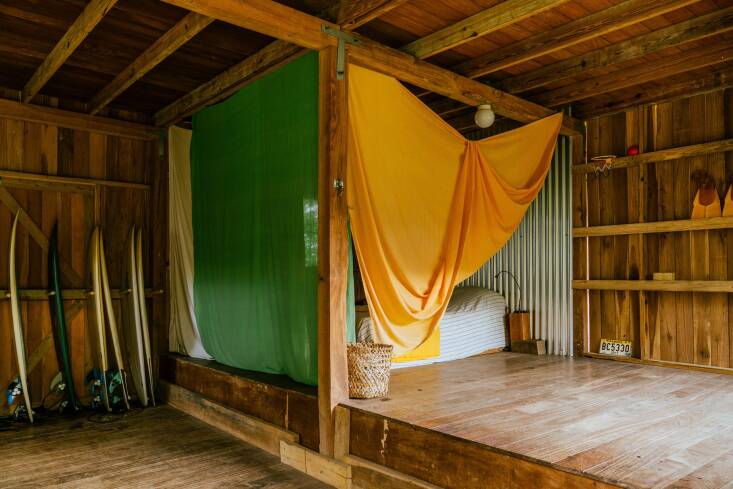 Above: Their son’s bed is on the main floor. “The curtains were a temporary solution to create walls, and we kind of just fell in love [with them]. They allow air to move, and keep it cooler. When you are as deep in the rainforest as we are, things can get damp, so we designed the house to be very open so that it can have as much air flow as possible.”
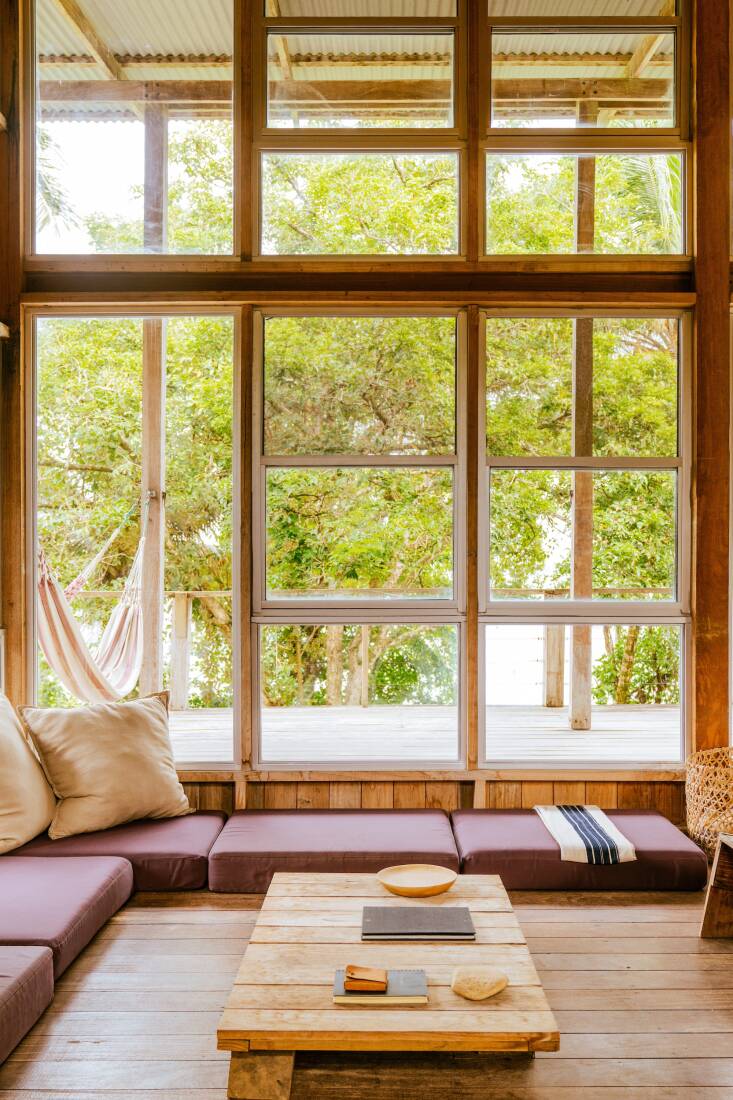 Above: “We used to have a proper sofa that Luke built out of ply-wood, that four of these cushions were a part of. After about 12 years, a wood bug got to it, and we had to pull it out of the living room. When the cushions were on the floor I got the idea to make a few more, and create this minimal floor sectional. I had the sectional cushions sewn from water-proof fabric from a sailing vendor. We can move it into other shapes when the kids are having a sleepover, or we are watching movies, or want to make a bed on the deck and watch the birds.”
 Above: On toggling between their off-the-grid escape in Panama and city life in Los Angeles: “Honestly, we have done it so much, that it is sort of just like flipping a switch. It used to be harder, but I think we are quite good at it now. It is like asking what is harder to adjust to, day or night. They are both equally easy and hard. Something and nothing. Both parts of our life have their strengths. They balance one another out quite nicely.”
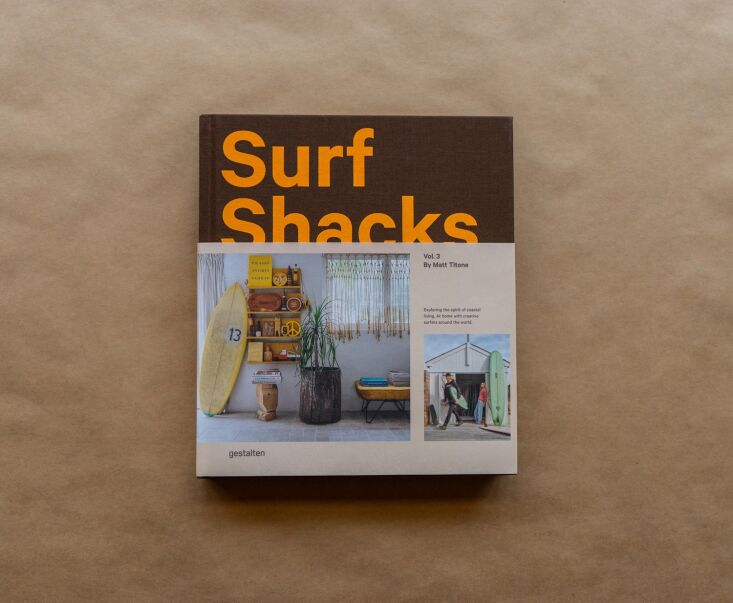 Above: Surf Shacks Vol. 3, published by Gestalten, is available for purchase online at Bookshop.org and Amazon.
See also:
- Measured Warmth: Designer Beatrice Faverjon’s All-Wood Retreat in Topanga Canyon
- Carved in Wood: The Bespoke Home of a Self-Taught Carpenter and an Interior Designer
- Rehab Diary: Architect Ben Daly and Family at Home in a Converted Sheep Shed