EzCater CEO dishes on the biggest shifts going from the CFO seat
For Nihad Rahman, the biggest adjustment going from CFO to CEO has been spending more time focused on where ezCater, which connects businesses with restaurants for workplace meals, is headed next.
The strong financial mindset that every CFO must possess has shaped his first year as ezCater’s CEO. He told CFO.com in a recent interview that the major difference between the roles is that his attention has shifted from managing the business through the next quarter to positioning it for where the company and its industry are headed several years from now.
Rahman became CEO of the workplace food platform in May of 2025 after serving more than three years in his inaugural CFO position. Along with taking responsibility for the broader organization, he inherited final say on a myriad of important decisions when he took over, including selecting his successor and helping define how ezCater would continue evolving as demand for workplace food changes.
Same calendar, new perspective
Rahman credits his years as CFO with developing a framework that still shapes the way he approaches leadership. Understanding where risk exists, determining which issues deserve immediate attention and ultimately leading those who create the plans to address them remain part of his daily responsibilities. Today, Rahman spends more of his time looking several years ahead, weighing the broader set of variables that will shape the company’s future.
“Risk management hasn’t really changed,” Rahman said. “Identification of risk, figuring out what’s material, what’s not, really trying to drive mitigation against material risk. I think that’s part and parcel of a great CFO.”
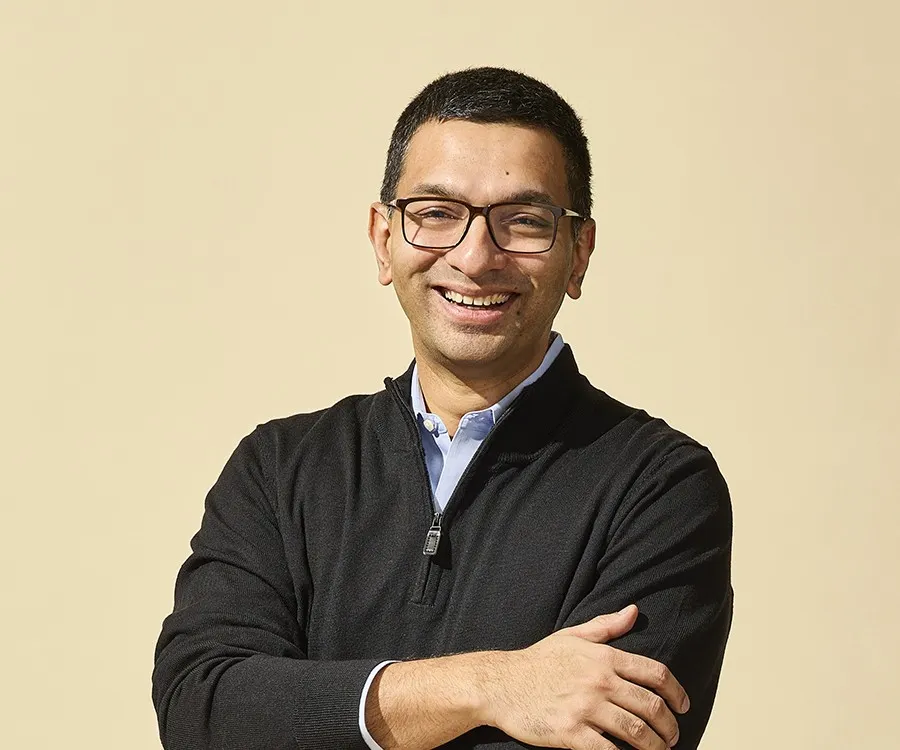
Nihad Rahman
Permission granted by Nihad Rahman
Today, he relies on his leadership team to execute the company’s annual operating plan. He said he spends more of his time considering where the workplace food market is heading over the next several years. That longer-term view has become one of the biggest changes in his job transition, he explained, because it requires looking beyond current performance and identifying opportunities before they become obvious.
“I know my management team has a lockdown on what today is and what the next quarter is and what the end of the year is going to be,” Rahman said. “I’ve got the vantage point of being two years out, looking into 2028, 2029, seeing where the industry is going such that we can position the company for success.”
Rahman said the CEO role has also changed his decision-making process. Long-term decisions rarely come with complete information, making probabilities and expected outcomes a larger part of the conversation. He said those discussions often center on weighing the potential value of an opportunity against the risks involved.
“I’m still very numbers-driven,” Rahman said. “I do like to be data-driven.”
He added that becoming CEO has made him “more aware of probabilities and expected outcomes” and more comfortable taking measured risks when the long-term opportunity supports the decision.
Selecting the next CFO
Rahman’s first major leadership decision after becoming CEO involved naming the executive who would lead the finance function he built. The company promoted Sean Stanton, who had worked closely with Rahman as vice president of FP&A throughout his tenure as CFO. Rahman said the decision reflected years of collaboration and confidence that Stanton possessed the qualities needed to lead the function through its next stage of growth.
“Oftentimes, you want a CFO to speak truth to the CEO in a very direct and transparent way. I wanted that in my team.”

Nihad Rahman
CEO, ezCater
“When it came time for us to go figure out who’s going to be CFO of ezCater, for me it was a pretty straightforward decision,” Rahman said, when asked if the search included internal and external considerations. “Sean was always going to be the No. 1 choice.”
Rahman described the finance organization as being in a strong position before the leadership transition, pointing to experienced accounting leaders while noting that the company continued investing in areas including tax and payments during his time as CFO. That foundation allowed Stanton to focus on supporting the business strategically instead of rebuilding core finance processes.
Rahman explained how he also wanted a finance leader who would never hesitate to challenge the CEO when necessary. “Oftentimes, you want a CFO to speak truth to the CEO in a very direct and transparent way,” he said. “I wanted that in my team.”
He described Stanton as an operator whose understanding of the business reaches well beyond finance and said that perspective made him the right successor. With this trust, Rahman says he has deliberately stepped back from day-to-day management within the finance function, giving Stanton full autonomy around finance’s continued investments in areas like talent and technology.
Looking back on his own transition, Rahman believes the skills that prepare CFOs for the CEO role begin developing before the succession conversation takes place. Throughout his time as CFO and now as CEO, he said he made a point of spending time with customers and the restaurants the company works with to gain a real understanding of how different parts of the business can create value.
Those experiences broadened his perspective well beyond finance and helped prepare him for the CEO opportunity when it arrived, he said.
The challenge: There is no chief food officer
Over the past several years, ezCater’s research has consistently shown employers placing greater value on workplace food. Previous surveys shared with CFO.com explored how free meals could encourage employees back into the office and how companies were increasing investments in holiday gatherings and other in-person events.
“How one enterprise client chooses to do food is totally different from another. Everyone’s food program is bespoke. It meets their needs and is a representation of their company culture.”
Nihad Rahman
CEO, ezCater
The company’s latest research suggests those investments continue to grow. According to ezCater’s 2026 Workplace Catering Insights Bundle, 91% of workplaces plan to spend the same or more on workplace food in 2026, up from 82% in 2024, while 96% of workplaces tried a new restaurant last year. He said these figures display both growth in the business and an opportunity to earn new customers for the company’s restaurant partners.
Rahman said those trends have changed the conversations he has with enterprise customers. “When I say ROI, it’s not some squishy math,” he said. “It’s hard numbers.”
He described customers using workplace food to help sales teams generate additional meetings with prospective clients. Other companies that work with ezCater subsidize meals for warehouse employees working weekend shifts to improve staffing, while employers with hybrid workforces are rethinking the economics of operating traditional cafeterias. Those discussions, according to Rahman, increasingly involve finance leaders evaluating areas like procurement and operational efficiency.
However, as workplace food becomes a larger investment, Rahman said selling into mid-market and enterprise-level organizations has become increasingly complex because responsibility rarely belongs to one executive.
“There is no chief food officer,” he said.
Instead, every customer approaches workplace food differently. In some companies, finance may oversee areas like budgets, invoicing and procurement — so they lead the charge. Operations may lead the food conversation somewhere else. Human resources or facilities teams may own the relationship at another organization. The buying committee changes from customer to customer, requiring intense work at the sales level because ezCater must understand how each organization handles food before proposing a solution.
“How one enterprise client chooses to do food is totally different from another. Rahman said. “Everyone’s food program is bespoke. It meets their needs and is a representation of their company culture.”