Buying A Mansion In Paradise Might Be Backwards
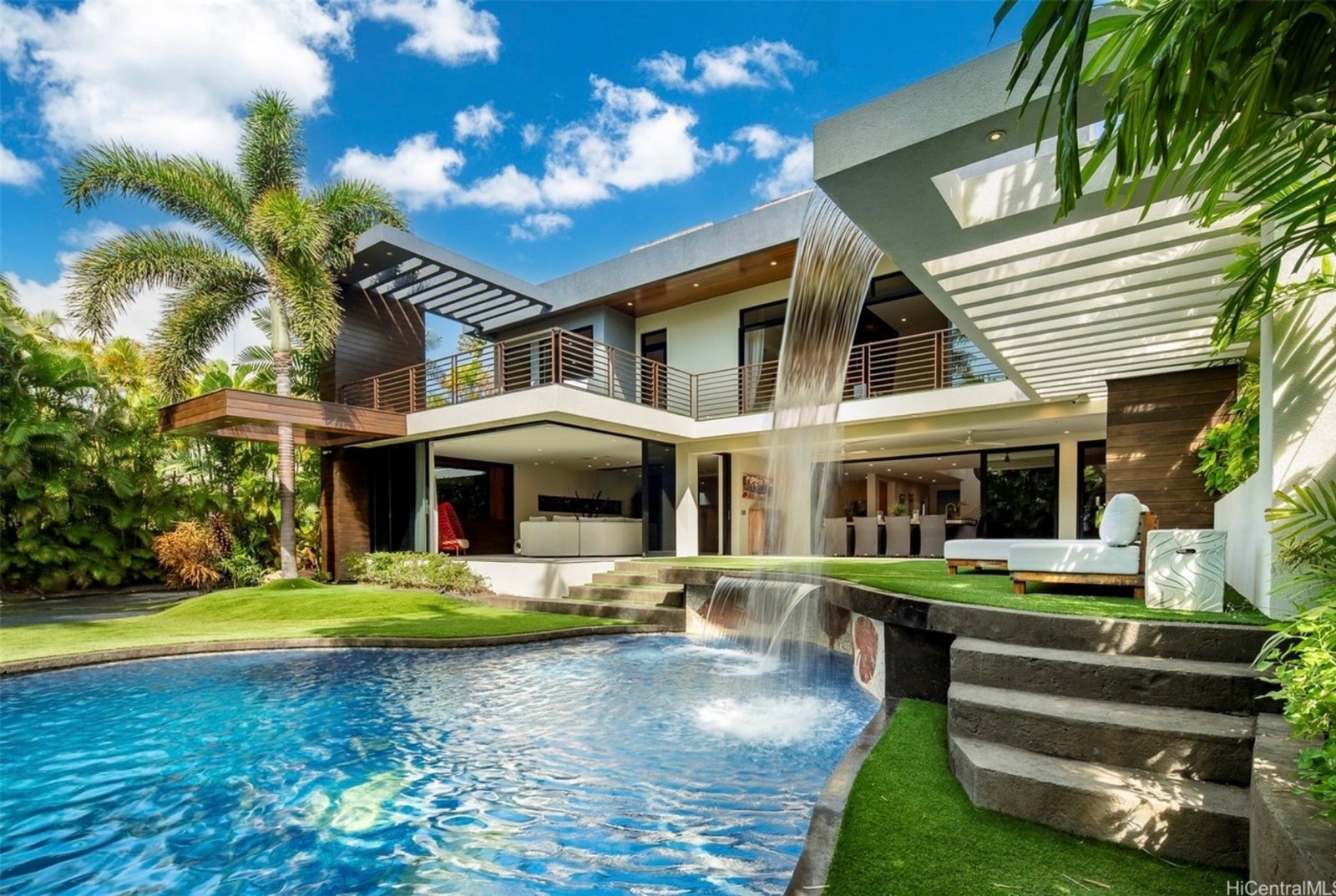
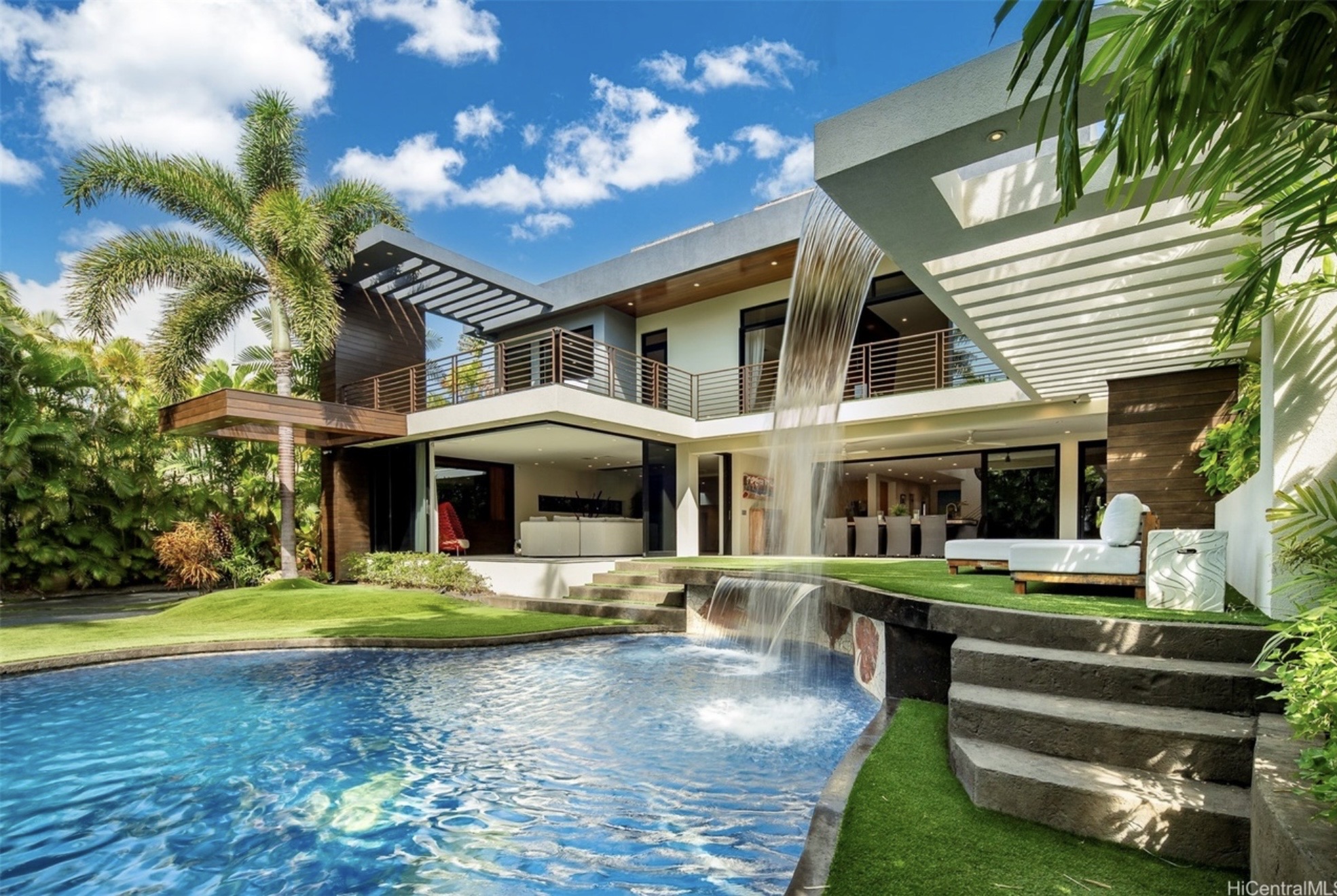
This summer I toured a couple of 6,000 to 7,000 square foot mansion in the Kahala neighborhood of Honolulu, all in preparation for a potential move in two or three years. We plan to move back for either 6th or 7th grade for our son and 3rd or 4th grade for our daughter, so we figured why not scope out some sweet properties ahead of time.
The main conclusion I came away with is that these homes aren’t just too expensive at $8 million to $10 million. They’re also too big. Maintenance plus the utility bill to cool the place and run the waterfalls alone would run $3,000 to $5,000 a month.
The Middle Of The Market Isn’t Great Value
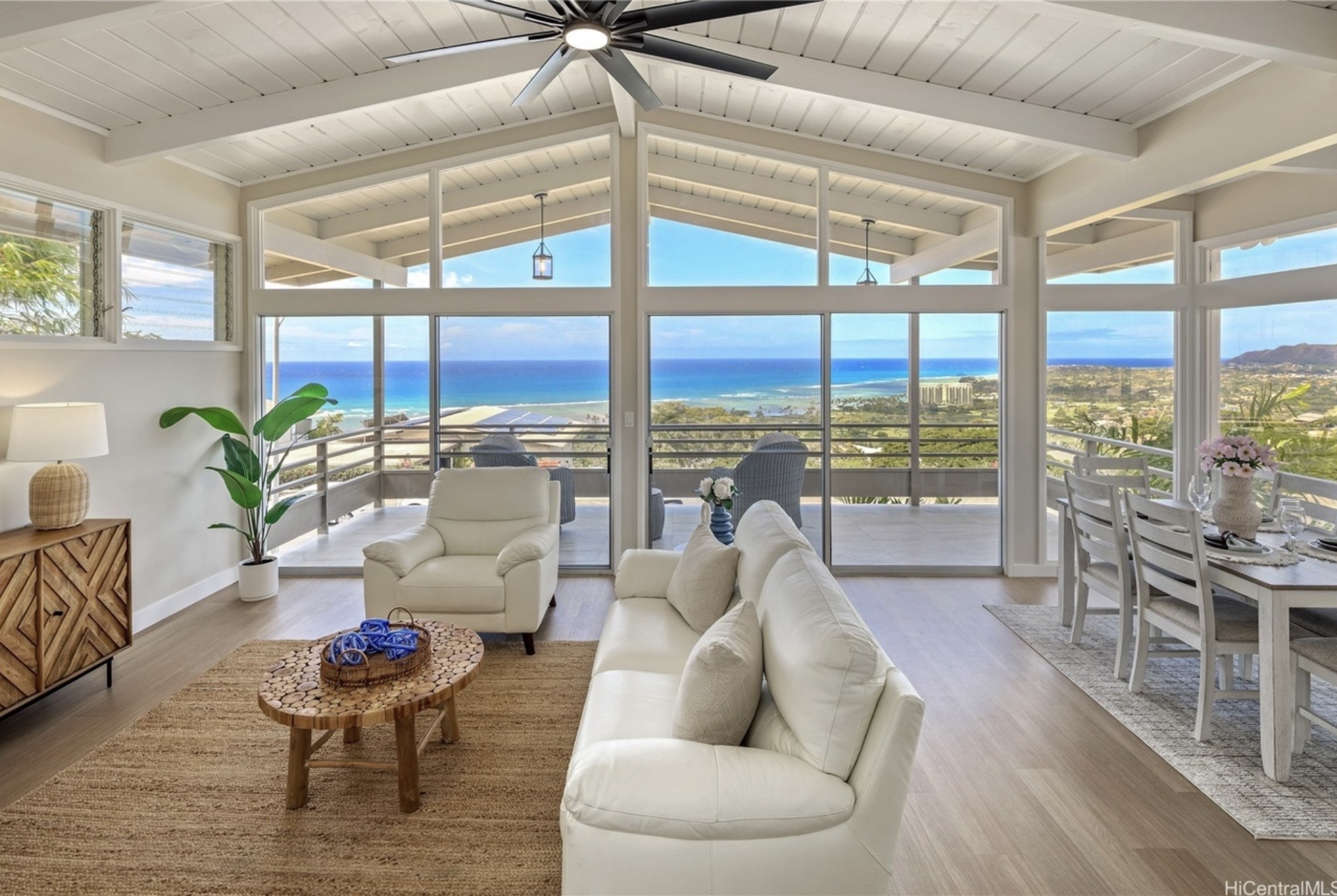
We then toured a 2,050 square foot house listed at $3.25 million, and a really outdated 3,200 square foot house at $2.95 million in the same neighborhood, Waialae Iki. The 2,050 sqft house sat across from a park, so its views of the ocean and the Waialae golf course were unobstructed. It’s much smaller than our current house, but we liked it.
Unfortunately, at $3.25 million, it felt priced at least $750,000 too high. There’s no way I’m paying $1,600 per square foot for a home in this neighborhood. I’m not sure I’d pay $1,600 per square foot for any home in Honolulu. There simply aren’t enough high-paying jobs to easily sell the place down the road if we need to.
Compare that to San Francisco, where there are thousands of tech, finance, law, and medical jobs paying $200,000 to $500,000 per person. A two-income household earning $600,000+ is common for couples in their 30s and up. So a $3 million home is still in the frenzy zone of demand. Those homes go into contract in two weeks. In Honolulu, it takes months.
So the high end feels too big and too expensive. The middle feels like bad value. That leaves the “low end” under $2 million for a single-family house. These homes are generally 1,800 sqft or less and haven’t been remodeled in decades. Instead of four bedrooms, you get three bedrooms and two bathrooms at most.
The Case For Buying A Low-End Home In Paradise
I know “low end” doesn’t sound great, just like nobody wants Economy class rebranded as Low Class. But let’s accept the term as a category for regular single-family homes near the median price for the city or neighborhood.
When you live in paradise, and I’ll consider Hawaii paradise, you’ve already got the following:
- Sunshine year-round
- Weather that lets you stay outdoors as long as you want
- Beaches, lakes, and rivers
- Hikes with panoramic views
- Tennis courts, pickleball courts, golf courses, water activities, public parks
- Fantastic entertainment and events
If you live in a city with all of these attributes, you don’t need to buy a mansion. There’s no reason to own a house with a pool and a rock climbing wall like that $8.8 million home I visited. You just walk over to the community pool or the beach and enjoy the water for free. Rich or poor, you get the same access.
A big house is designed to trap you inside, because the outside is unenjoyable. Picture living somewhere it’s over 90 degrees with 100% humidity for four months of the year, then below 40 degrees for another four months. That’s 67% of the year spent miserable.
Nobody in their right mind with financial means chooses to live in an uncomfortable place. They stay because of family or a job. So the main thing they can do to make life more tolerable is buy a mansion with AC running 24/7, plus a pool, a home theater, a gym, a sauna, a cold plunge, a steam room, and a golf simulator.
For those folks, a mansion is genuinely worth it. But for people living in moderate-climate cities with plenty to do, such as San Francisco, San Diego, Los Angeles, Newport Beach, Laguna Beach, and all of Hawaii, a mansion with all those amenities is redundant.
You already paid for the amenities with your taxes. They’re called the outdoors.
We Live In The Cheapest House In Honolulu
In the 1980s, my grandfather built a five bedroom single-family home after tearing down the old termite-infested one. 10 years later, my aunt and uncle built a three-bedroom home at the other end of the lot. My grandfather’s idea was for his children and grandchildren to all live together.
\When we visit, we stay in the two-bedroom in-law unit that I remodeled in 2025, that connects to my parents home.
It’s about 900 square feet. It might be worth $800,000 if we could sell it separately, but we can’t, since there’s no official kitchen. We use a portable induction burner. So call it $450,000 after the roughly $35,000 I spent fixing it up, plus $6,500 on furniture, a fridge, and a washer and dryer.
We stayed six weeks in 2025 and 30 days in 2026, so we got the full immersive experience of living in cheap housing. Anybody can endure anywhere for a few days. Ten weeks is a different test.
And you know what? It was fine.
Sure, the quarters were tight with the pull-out sofa bed, and people got woken up in the middle of the night more easily. There was also only one en-suite bathroom. But we made it work.
We got the kids ready in the morning and dropped them at summer camp for three weeks. When we came home from drop-off, the two-bedroom unit felt downright spacious with just the two of us. I went out 30 days in a row to the beach, the pickleball courts, and the hiking trails.
The Math On Downgrading 85%
The two-bedroom in-law unit is 85% cheaper than the overpriced $3 million homes we looked at and 96% cheaper than the $8.8 million homes we thought we might like. So for me, the financial provider of the household, the best move looks like simply living in the in-law unit for a year while we hunt for something permanent.
My wife might not agree. My children are cool with it, and so am I.
Because I went all-in and climbed to the top of the property ladder of what we could afford, we gave up about $150,000 a year in passive income. If we sell our San Francisco house in 2028 and redeploy the proceeds, we get that $150,000 back.
And if home prices rise another 15% to 20% by then, while interest rates stay elevated, we could conceivably generate $180,000 to $200,000 a year in semi-passive income by renting the house out or reinvesting the proceeds in Treasury bonds.
If that happens, I’d probably feel the richest and freest I’ll ever feel. I felt pretty free before I blew up our passive income in 2023 to buy our current house. But after selling in 2028, with higher rates and higher asset values, I’m quite certain I’d feel even better.
Living Humbly Builds Character
Yes, downgrading our living space by 85%+ is extreme. But it’s tempting, because we don’t actually need to buy a new home in Honolulu. I also think it’d be a fun challenge to live in a space smaller than the condo I bought in 2003 for $580,000 as a 26-year-old, except now I’d be doing it in my 50s with a wife, an 11-year-old, and an 8-year-old.
We’d be closer to my parents (next door), who will need more help as they age. My kids would live more humbly, which might build some character. And I’d get to test whether the freedom I’ve been chasing for 20 years actually requires 4,000 plus square feet, or whether 900 will do.
Readers, is it backwards to buy a mansion in paradise? Would you downgrade your living space by 85% to generate $150,000+ more in passive income and feel more free? Or does a big house earn its keep no matter how nice the weather is outside?
Invest in Real Estate Passively
The whole reason a $3+ million Honolulu house makes me nervous is liquidity. If I need the money back, I’m waiting months for a buyer in a city with too few high-paying jobs. That’s a lot of net worth locked in one zip code, one property type, and one weather pattern.
This is why I’ve got exposure to real estate I don’t have to maintain, cool, or eventually sell to a stranger. Fundrise runs private real estate funds concentrated in the Sunbelt, where the job growth and household formation actually are. You get diversified exposure across hundreds of properties instead of betting everything on one lot with a view.
I’ve personally invested over $500,000 with Fundrise since 2013, mostly because I got tired of dealing with tenants and maintenance issues. There are no waterfalls to run and no $5,000 monthly utility bill. Fundrise is a long-time sponsor of Financial Samurai and I’m an investor, which is the order those two things happened in.