US Treasury looks to ‘deepen practical cooperation’ across G7 on cybersecurity
By Ian Hall on 19/08/2026 | Updated on 19/08/2026

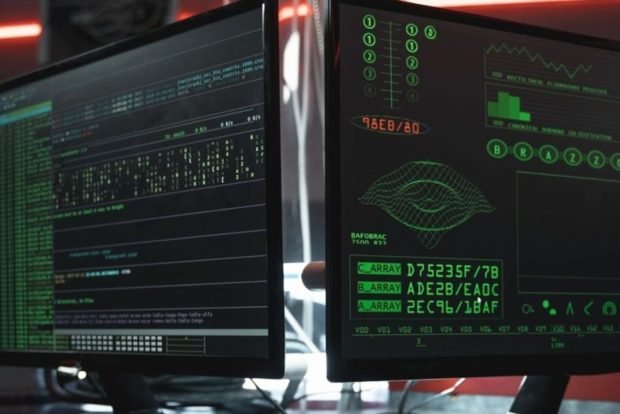
Cybersecurity: the G7 Cyber Expert Group’s 2026 cross-border coordination exercise simulated a large-scale cyber-attack across all G7 jurisdictions. Photo by Tima Miroshnichenko via Pexels
The US Department of the Treasury is looking to “deepen practical cooperation” in cybersecurity across the G7 jurisdictions when it assumes the forum’s presidency for 2027.
The G7 is a group of seven economies: Canada, France, Germany, Italy, Japan, the UK and the US. The European Union also takes part in meetings as a non-enumerated member.
The US Treasury and other authorities in the G7 nations published short press statements stating that the G7 Cyber Expert Group (CEG) – a multi-year working group that coordinates cybersecurity policy and strategy across the G7 jurisdictions to enhance the cyber resilience of the financial sector – had successfully concluded its 2026 “cross-border coordination exercise” on 18 May.
The exercise, which simulated a large-scale cyberattack across all G7 jurisdictions, involved ministries of finance, central banks, bank supervisors and financial market authorities.
G7 authorities have now agreed to expand the activities the Cyber Expert Group, which was set up in 2015.
“Cyber threats do not respect borders, and neither can our response,” said Francis Brooke, the US Treasury’s PDO deputy secretary, in the department’s statement.
“The G7 Cross-Border Coordination Exercise strengthens our collective ability to respond to cyber incidents that could affect the global financial system. As the United States prepares to assume the G7 Presidency [from France, which holds the 2026 presidency], the US Department of the Treasury looks forward to deepening practical cooperation through the G7 Cyber Expert Group and advancing a more secure and resilient global financial system.”
Read more: Government leaders define the future finance ministry in new global study
Simulations to happen more often
The 2026 exercise follows a similar undertaking in 2024.
This year’s sessions “tested key improvements identified through previous simulations and workshops focused on incident response, recovery and crisis communication, further advancing collective preparedness,” according to the press notice.
The CEG, which is co-chaired by the US Treasury and Bank of England, runs two types of workstreams: recurring and ad hoc. Recurring workstreams include annual incident response tests and quadrennial cross-border cyber exercises. Ad hoc workstreams produce reports to address specific cybersecurity topics of interest to the financial sector.
“A long-term exercise strategy has now been adopted to increase the frequency and consistency of these simulations, thereby enhancing preparedness across all jurisdictions,” the press notice states.
The 2024 CEG exercise involved 23 financial authorities, including ministries of finance, central banks, bank supervisors, and market authorities, as well as private industry participants, according to a press notice at the time.
Read more: EU assembles specialist team to combat deepfakes and AI cyber threats
Cyber risk becoming ‘more severe’: UK Treasury report
The UK Treasury published a report in July titled ‘The Value of Resilience: Cyber Resilience in Financial Services’.
“The evidence presented in this report indicates that cyber risk is becoming more severe and more complex, particularly within increasingly digital and interconnected operating environments,” the report concluded.
“Survey evidence, incident data and sector‑level analysis point consistently to rising disruption, higher recovery costs and growing exposure through third‑party and platform dependencies. Within financial services, these risks are recognised by senior decision‑makers as both a firm‑level and sector‑level concern,” the report stated.
“The findings also highlight how the financial consequences of cyber disruption have changed over time,” it continued. “Cyber incidents are no longer confined to short‑lived technical outages. They can generate material profit and loss impacts, affect firm value, and undermine trust where they expose broader weaknesses in governance, controls or operational resilience.”
The G7 CEG’s published output includes ‘G7 Fundamental Elements of Collective Cyber Incident Response and Recovery in the Financial Sector’ in September 2025; the ‘Statement on Advancing a Coordinated Roadmap for the Transition to Post-Quantum Cryptography in the Financial Sector’ in January this year; and ‘Statement on Planning for the Opportunities and Risks of Quantum Computing’ in September 2024.
This article was first published by Global Government Forum’s sister title Global Government Finance: US Treasury looks to ‘deepen practical cooperation’ across G7 on cybersecurity