GFCI vs. AFCI Outlets: What’s the Difference?
Home safety and security should be a priority, especially when it comes to your electrical system. With this in mind, you’ll want to equip your home with both AFCI and GFCI protection to reduce the risk of electrical shocks and fire. The trouble is that most homeowners aren’t clear about the differences between AFCI and GFCI outlets, which makes it difficult to adequately protect the home.
AFCI outlets are designed to sense electrical sparks or arcs in frayed cords or damaged wiring and cut power immediately, while GFCI outlets constantly measure the current and cut off the electricity if it detects a microscopic imbalance (as little as 4 to 6 milliamperes) due to the electricity leaking toward an unintended path, like water or a person’s body. Find out more about how AFCI vs GFCI outlets function, where they should be installed, and how they interact with each other to safeguard your home.
The Differences Between AFCI and GFCI Outlets
AFCI and GFCI outlets are not the same. While they are both intended as safety devices, AFCI and GFCI outlets provide protection against different risks. “GFCI protection helps protect people from electric shock, while AFCI protection helps protect homes from electrical fires,” explains Matthew Luther, electrical contractor and owner of Luther Electrical in Telford, Pennsylvania. “They solve different problems, and both are important parts of a safe electrical system.”
- AFCI (Arc Fault Circuit Interrupter): Stops fires by sensing dangerous sparks or arcing in wires. Triggered by damaged, loose, or pierced wiring. Used in bedrooms, living rooms, hallways, and kitchens.
- GFCI (Ground Fault Circuit Interrupter): Stops shocks by sensing current leaks near water (like in kitchens or bathrooms). Triggered by current leaking along an unsafe path, like through water. Used in kitchens, bathrooms, garages, and outdoors.
What is AFCI protection?
AFCI protection can include individual AFCI outlets and AFCI breakers. “AFCI protection detects dangerous electrical arcing that a standard breaker may not recognize,” Luther explains. “Those arcs can be caused by damaged wires, loose connections, or worn cords, and they can create enough heat to start a fire if they’re left unchecked.”
Advanced sensors continuously analyze the wave patterns of the electrical current, distinguishing between a relatively safe, normal arc, like the spark when you plug something in, and a dangerous arc that could cause a fire. AFCI outlets sense this risk on the specific outlet, while AFCI breakers will sense this risk along the entire circuit that the breaker is serving, including the wiring inside the wall from the panel to the first outlet.
Where should AFCI outlets be installed?
AFCI outlets are intended for use in dry areas of the home, though AFCI breakers are commonly installed on almost all 120-volt, 15-amp, and 20-amp branch circuits. “Today’s electrical codes require AFCI protection in most living areas of the home, such as bedrooms, living rooms, family rooms, dining rooms, hallways, and similar spaces where people spend their time,” Luther notes. “The exact requirements depend on the electrical code adopted by your local jurisdiction.”
Since these devices are intended for fire protection due to damaged wires, they are standard for any dry spaces, but are most commonly installed at the main breaker in order to provide protection along the entire circuit from the panel to the first outlet.
What is GFCI Protection?
Despite GFCI outlets being a common feature in your home, many people know so little about these devices that they still ask what does GFCI stand for and why do you need GFCI protection? “GFCI (Ground Fault Circuit Interrupter) protection is designed to prevent electric shock,” says Luther. “It constantly monitors the flow of electricity and shuts the power off almost instantly if it detects current leaking where it shouldn’t, like through a person to ground.”
These outlets constantly measure the current leaving the outlet and returning to the outlet. If the sensor detects an imbalance, even one as little as 4 to 6 milliamperes, it completely shuts off the power within milliseconds. So, if your hairdryer falls into a filled bathtub, an outdoor tool plug gets wet in the rain, or you touch a frayed wire, the GFCI outlet will sense the change and shut off the electricity, though you may still receive a painful shock during that brief moment, so it’s always best to put caution first when dealing with electricity.
Where should GFCI outlets be installed?
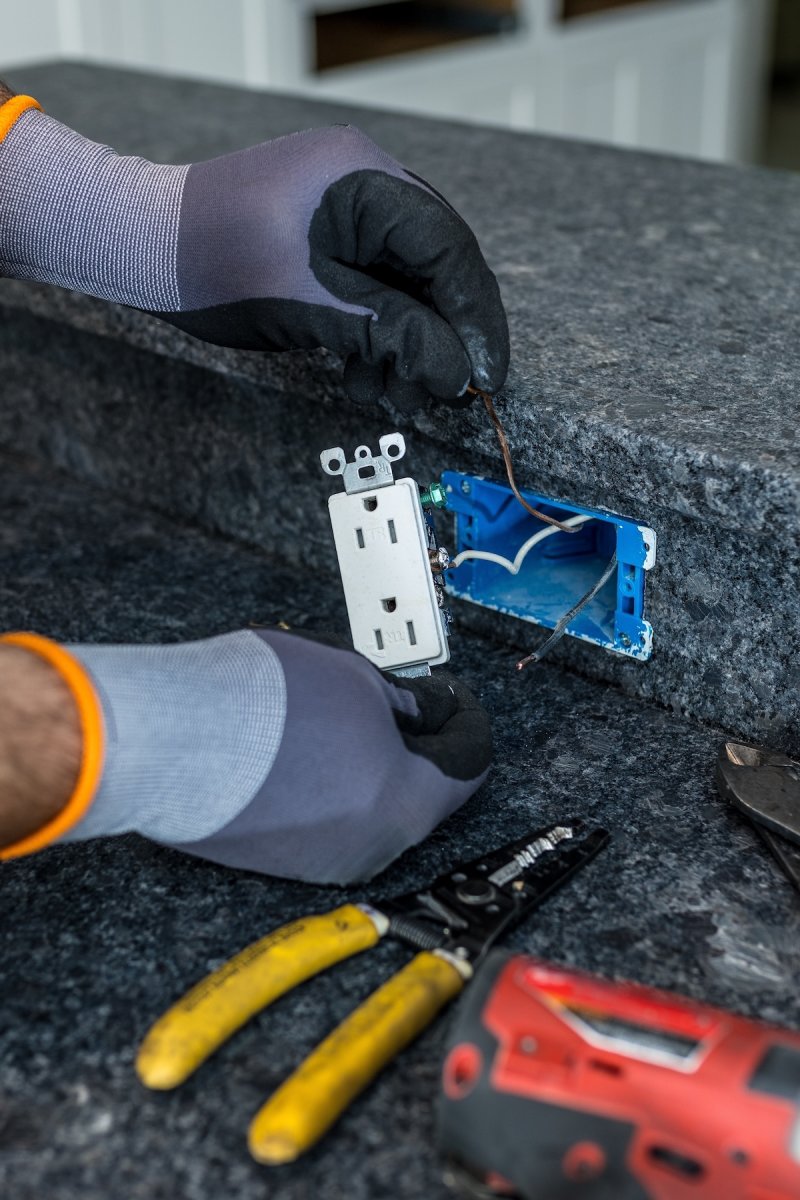
Since GFCI outlets are designed to sense changes in the flow of the current, such as if it flows through water or through a person, these devices are typically installed in damp or wet locations. GFCI outlets should be used in “any area where electricity and water can come into contact,” according to Luther. “That includes bathrooms, kitchens, garages, unfinished basements, laundry areas, outdoor outlets, and other damp or wet locations.”
Generally, in bedrooms, living rooms, and other dry areas, you either have regular outlets that are connected to an AFCI breaker, or you have individual AFCI outlets to protect against fire. GFCI outlets are especially useful outdoors for homes that have pools or hot tubs, since splashing is common. You can confirm whether you have an AFCI breaker by going to the breaker box. AFCI breakers look similar to a standard single-pole circuit breaker, but they feature a small ‘TEST’ button.
Can you put AFCI and GFCI outlets on the same circuit?
While AFCI and GFCI outlets are types of electrical outlets with different purposes, you can put them on the same circuit without any issues. “Many homeowners think AFCI and GFCI protection only comes in the form of outlets, but both can also be installed as circuit breakers in the electrical panel,” confirms Luther. “In many newer homes, we install dual-function breakers that provide both AFCI and GFCI protection on the same circuit.”
You can also find dual-function AFCI/GFCI outlets that you can use in high-risk locations, like the kitchen. These outlets will sense both arcs and changes to the flow of the current to cut the power if necessary. In many homes, it’s standard practice to have GFCI outlets installed downstream from AFCI breakers to ensure the house has adequate protection from shocks and fire.
FAQ
AFCI and GFCI outlets don’t cancel each other out. These devices are both essential for home electrical safety and perform different functions. You can even have a GFCI outlet installed downstream from an AFCI breaker without any issue, which is a standard practice in new homes. Downstream simply refers to the direction that the electricity flows away from the power source, so any component, such as a GFCI outlet, that is located after the AFCI breaker in the path of the current is considered downstream of the breaker.
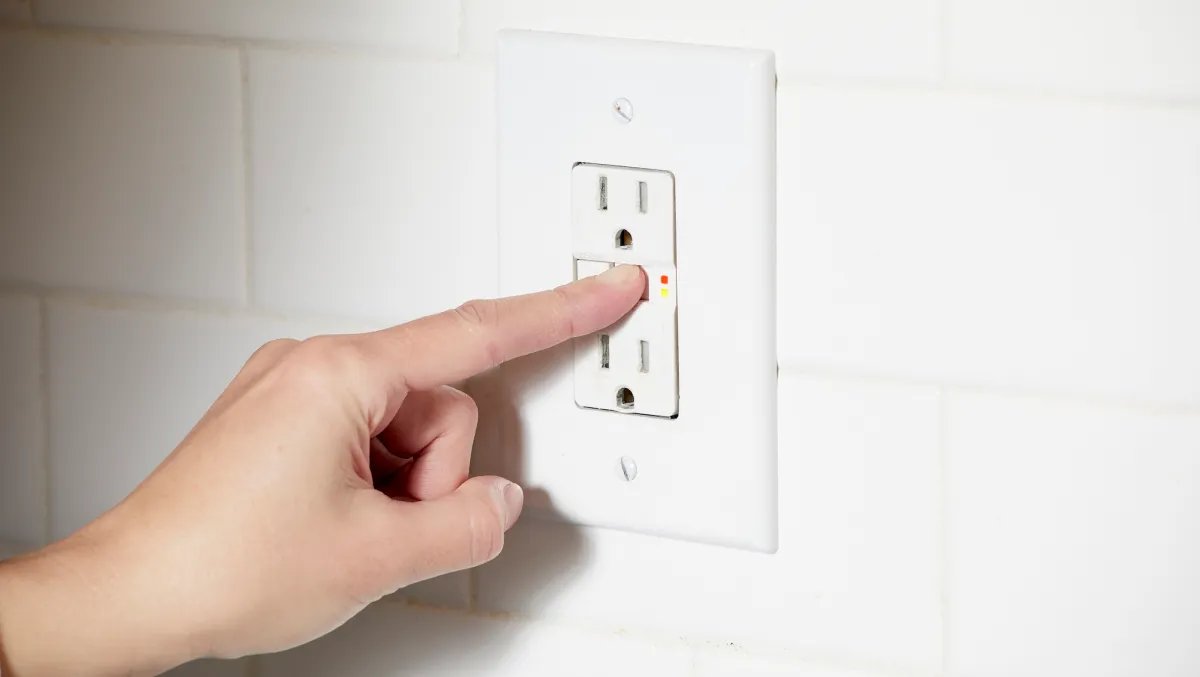
It’s easy to test your GFCI and AFCI protection with nothing more than a lamp. Simply plug the lamp into the outlet you want to test, turn the lamp on, then press the ‘Test’ button on the outlet. The power to the lamp should be cut off. You can then press the ‘Reset’ button to restore power. If the power did not cut off, then your outlet is not working properly and should be replaced. This test works on both GFCI and AFCI outlets, since they both turn off the power when the ‘Reset’ button is used.
If you have a dual AFCI/GFCI outlet, then you can perform the same test to determine if both functions are operating. These outlets have a ‘Test’ button, ‘Reset’ button, and an LED indicator light on the face of the outlet. When you use the ‘Test’ button, it should turn off power to the connected lamp. If either the AFCI sensor or the GFCI sensor is not working then the outlet will not reset and the LED indicator will show a solid or blinking red pattern indicating that the outlet has triggered the reset lockout function. A specific blink pattern (such as a predetermined number of flashes upon startup or after a trip) indicates whether the last event was an arc fault, a ground fault, or an internal self-test failure, though the exact pattern and meaning differs between brands.
Both AFCI and GFCI protection is relatively affordable and required in new homes, though not every single circuit requires both. The area where you install an arc outlet vs gfci outlet varies depending on the risks. For instance, GFCI outlets are generally used in the bathroom, kitchen, garage, or outdoors, while AFCI outlets are used in dry areas like hallways, living rooms, and bedrooms.

The Homeowner Survival Kit