International student enrollment falls amid tighter U.S. visa policies: Reports
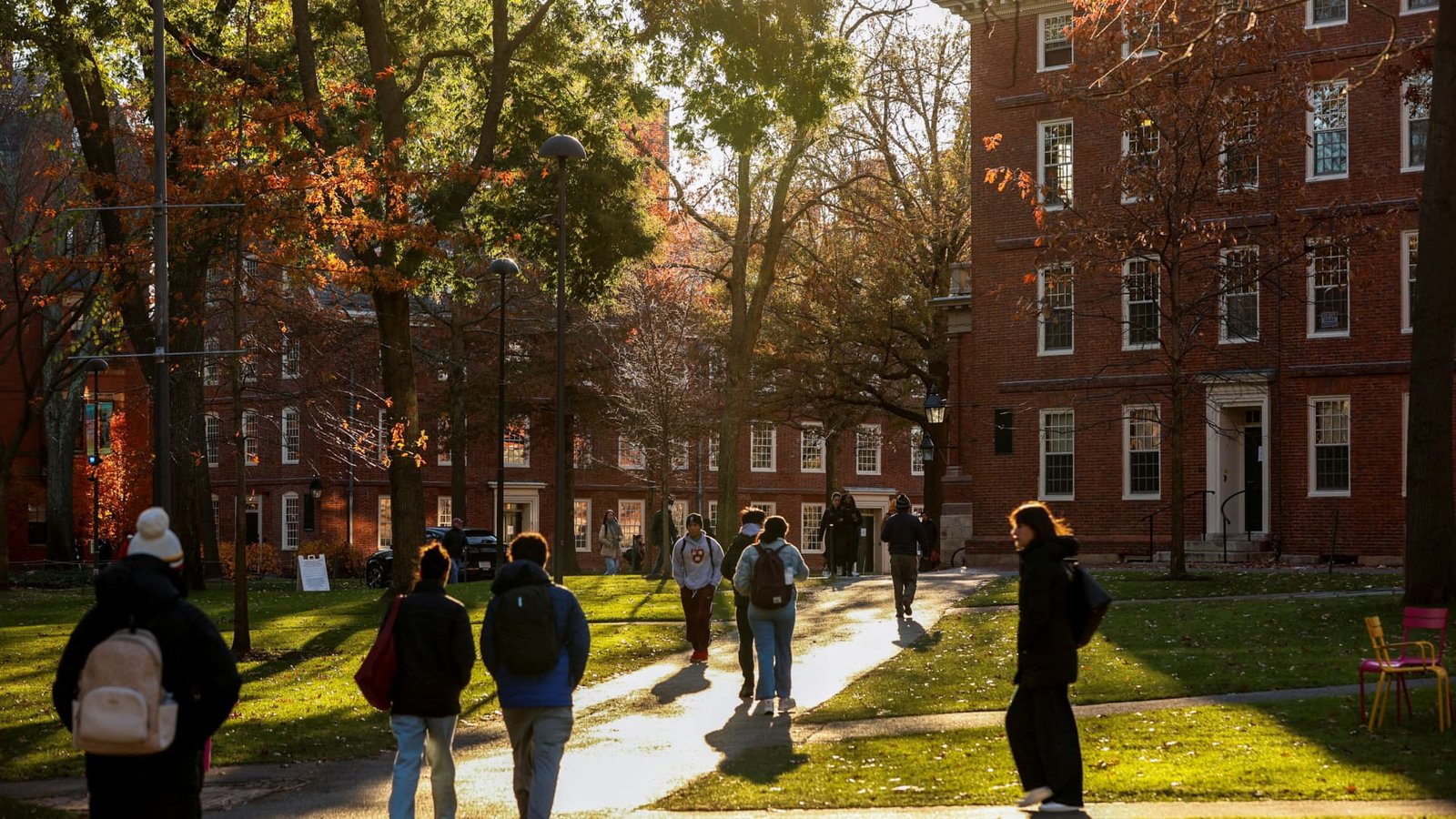
Students walk on campus at Harvard University, in Cambridge, Massachusetts, Nov. 19, 2025.
Reba Saldanha | Reuters
Amid ongoing disputes over immigration policies and international student visas, fewer new students from overseas chose to attend U.S. colleges last year, and new data shows enrollment could drop even further in the year ahead.
A report released Thursday by the Common App shows that although application volume for undergraduate admission in the upcoming 2026-27 academic year rose overall, the number of international applicants through March 1 fell 10%, the steepest decline on record.
In the fall 2025 semester, the tally of new international students studying in the U.S. sank 17% compared with the previous year, according to a Fall 2025 Snapshot from the U.S. Department of State and the Institute of International Education. IIE’s Spring 2026 Snapshot estimated another drop in overall international enrollment for the upcoming fall.
There was a pronounced decrease in the number of applicants from Asia and Africa, according to the Common App data. With fewer students outside the U.S. creating accounts on the college application platform, the pipeline for future international enrollment is likely to shrink further, according to Common App researchers.
New rules eliminating traditional “duration of status” and capping F-1 and J-1 stays at four years, limited or delayed visa appointment availability and recent country-specific restrictions “won’t hurt U.S. higher education evenly,” said Jamie Beaton, co-founder and CEO of Crimson Education, a college consulting firm.
“They’ll accelerate a sorting that was already underway, where institutions that can’t demonstrate clear return on investment lose enrollment and cut programs, and the very top schools like Harvard, Stanford, MIT and Duke continue standing strong.”
Colleges at risk
For colleges and universities that rely on tuition revenue from foreign students, the Trump administration’s new rule capping student visa stays at four years could put some schools in financial jeopardy, according to a separate analysis from Fitch Ratings released earlier in August.
“Sustained drops in new international student enrollment can have outsized revenue effects, as international students often pay full tuition or receive less institutional aid than domestic students,” Fitch analysts said. “Lost revenue is hard to replace quickly.”
Specifically, universities with large graduate and STEM — science, technology, engineering and math — programs, where degree completion can exceed four years, will have a harder time sustaining the enrollment pipeline and “may incur higher costs to address overseas recruitment challenges,” the analysts said.

According to Beaton, the nation’s most elite colleges, including Ivy League schools, will continue to fill their classes easily — “their international applicant pools are so deep that even a hypothetical big drop in demand leaves them massively oversubscribed.”
The real impact, he said, lands a few tiers down. “Mid-ranked private colleges and regional public flagships are quite reliant on full-pay international students, and when those applicants start to diversify to the U.K., Australia or Singapore, these schools can’t backfill the revenue since the domestic pipeline is shrinking with the demographic cliff, and they can’t raise prices on a market already questioning their ROI.”
Falling enrollment costs local economies
The Trump administration‘s changes to the student visa policy could also come at a significant economic cost.
The U.S. has been the top host of international students, mostly from India and China, but this year’s enrollment decline is projected to cost local economies a collective $3.4 billion, according to an analysis from NAFSA: Association of International Educators.
The loss of students could also put as many as 40,000 U.S. jobs at risk, the report found.
“The projections underscore what we’ve long warned: U.S. policy and regulations affect where international students plan to invest their future — and their decisions carry significant short- and long-term consequences for U.S. society and economy,” Fanta Aw, executive director and CEO of NAFSA, said in a statement.