A Win-Win Deal: Here’s Why the Archer Aviation and Boeing Deal Adds Value to Both Stocks
Boeing (BA -0.42%) and Archer Aviation (ACHR +3.45%) recently made a definitive agreement that strategically strengthens both companies and makes them a bit more investable. Archer will acquire three businesses from Boeing in exchange for a near-20% stake in the electric vertical take-off and landing (eVTOL) business.
It’s a good deal for both companies, as it derisks both companies’ business models, gives Archer access to technology it couldn’t develop itself, and gives Boeing an opportunity to profit from the eVTOL industry.
The terms of the Boeing and Archer aviation deal
Boeing will receive 19.75% of Archer’s outstanding Class A stock, while Archer will acquire the following businesses from Boeing in return:
- Wisk, Boeing’s business focused on developing autonomous eVTOL within a transportation-as-a-service (TaaS) model;
- SkyGrid, Boeing’s aircraft-agnostic air traffic management solution, which can support autonomous and piloted air mobility, including eVTOLs; and
- Insitu, a designer, developer, and manufacturer of uncrewed aircraft systems, which already has over $200 million in annual revenue.

Today’s Change
(3.45%) $0.21
Current Price
$6.30
Key Data Points
Market Cap
Day’s Range
$6.10 – $6.53
52wk Range
$4.30 – $14.62
Volume
32.9M
Avg Vol
42.6M
Gross Margin
-39275.36%
Why the deal is good news for Archer Aviation
The deal diversifies Archer’s business, reduces risk, brings in much-needed early revenue, and accelerates its technological development. The diversification comes from adding Insitu’s defense business and the potential for autonomous eVTOL from Wisk. Furthermore, SkyGrid gives Archer an infrastructure advantage and access to the eVTOL ecosystem.
In addition, it removes a potential rival in Wisk, as its autonomous eVTOL and SkyGrid could have significantly challenged piloted eVTOL. Acquiring Wisk also gives Archer the option to develop a comprehensive transportation-as-a-service (TaaS) business, as Wisk’s eVTOLs are designed to operate in a TaaS model. Finally, Insitu’s revenue could provide much-needed cash flow to Archer as it continues to develop its eVTOL business.
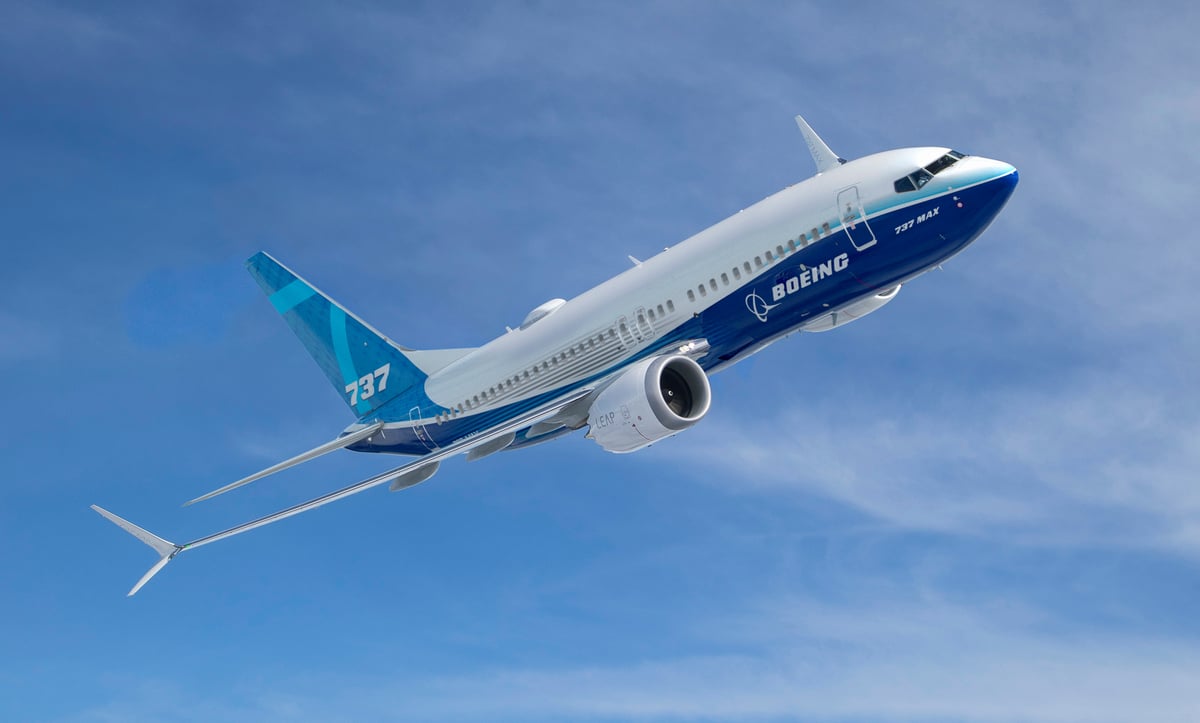
Image source: Boeing.
Boeing is getting a good deal, too
It’s no secret that the 737 MAX has proved problematic for Boeing and, thus far, hasn’t generated the cash flow to comfortably fund investment in the next generation of narrow-body aircraft. To give you a sense of the scale of the challenge, former Boeing CEO Dave Calhoun is on record as stating that Boeing’s next aircraft could cost $50 billion to develop.
That’s a big number in itself, but it’s an even bigger number when you consider where Boeing’s free-cash-flow generation and debt have gone in the decade since the 737 MAX first took flight.
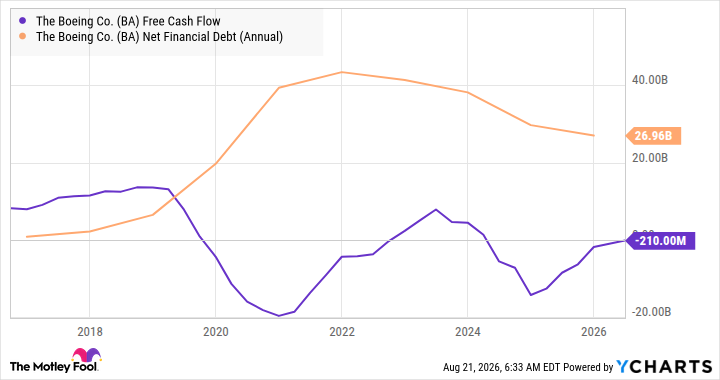
BA Free Cash Flow data by YCharts
That said, current CEO Kelly Ortberg is generating tangible results in improving the company, not least in 737 MAX delivery rates. This deal helps further Boeing’s strategic aims. The stake in Archer is worth about $930 million on current valuation, and exiting the business refocuses management and resources on its core businesses. Moreover, the stake allows Boeing to participate in the growth of eVTOLs while retaining “access to the Wisk core autonomous flight technology for its current and next-generation commercial and defense aircraft,” according to the press release.
All told, the deal strengthens the investment case for both stocks and should be welcomed by investors in both.