How To Make Kitchen Lighting Instantly Warmer for Fall
Making a kitchen feel stylish and inviting looks different through the seasons. In the summer, it’s all about letting natural light take the lead and creating a connection between indoors and out. But for fall, it’s all about adding warmth. And one of the most impactful ways to do it is through your kitchen lighting. Blending functional needs with atmospheric design, even the most subtle lighting alterations can take your kitchen from harsh to warm.
With the ‘ber months in sight, now is the perfect time to update your kitchen lighting to create a warm and cozy (yet still functional) space for fall. Here’s how designers infuse much-needed warmth through small but impactful lighting changes.

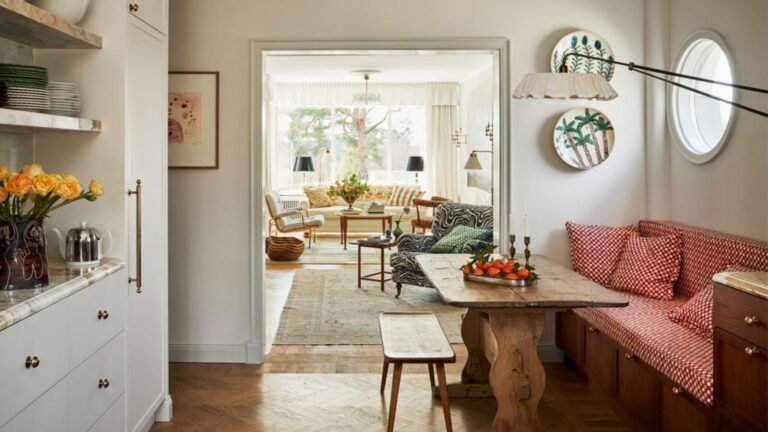
In this kitchen, a mix of fixtures and placements means different light levels can be turned on and off for various tasks.
(Image credit: Pandora Taylor / Photography Astrid Templier)
Unlike other rooms in the home, your kitchen lighting needs to be functional for food prep, cooking, and cleaning. But it also needs to adapt for other uses, whether it’s hosting, socializing, or even relaxing after a long day. With varied needs, your lighting scheme needs to work harder and be more versatile to avoid a cold, sterile atmosphere. And designers say there are a few key culprits causing harsh lighting.
‘A kitchen can start to feel harsh when it relies too heavily on one type of lighting, especially bright overhead recessed lights. Cooler bulb temperatures, too many ceiling fixtures, and a lack of dimmers can make a space feel more clinical than inviting. Kitchens also have so many hard, reflective surfaces, so the wrong lighting can easily amplify that,’ explains Kailee Blalock, Co-Founder of House of Hive Design Co.
‘Most kitchens are lit entirely from the ceiling. Every source is overhead, so you get shadows under the wall cabinets, shadows on people’s faces, and a dark band around the perimeter of the room. The finishes can be beautiful, and the space still reads flat,’ agrees Michael Winn, Owner and Principal at WINN Design + Build.

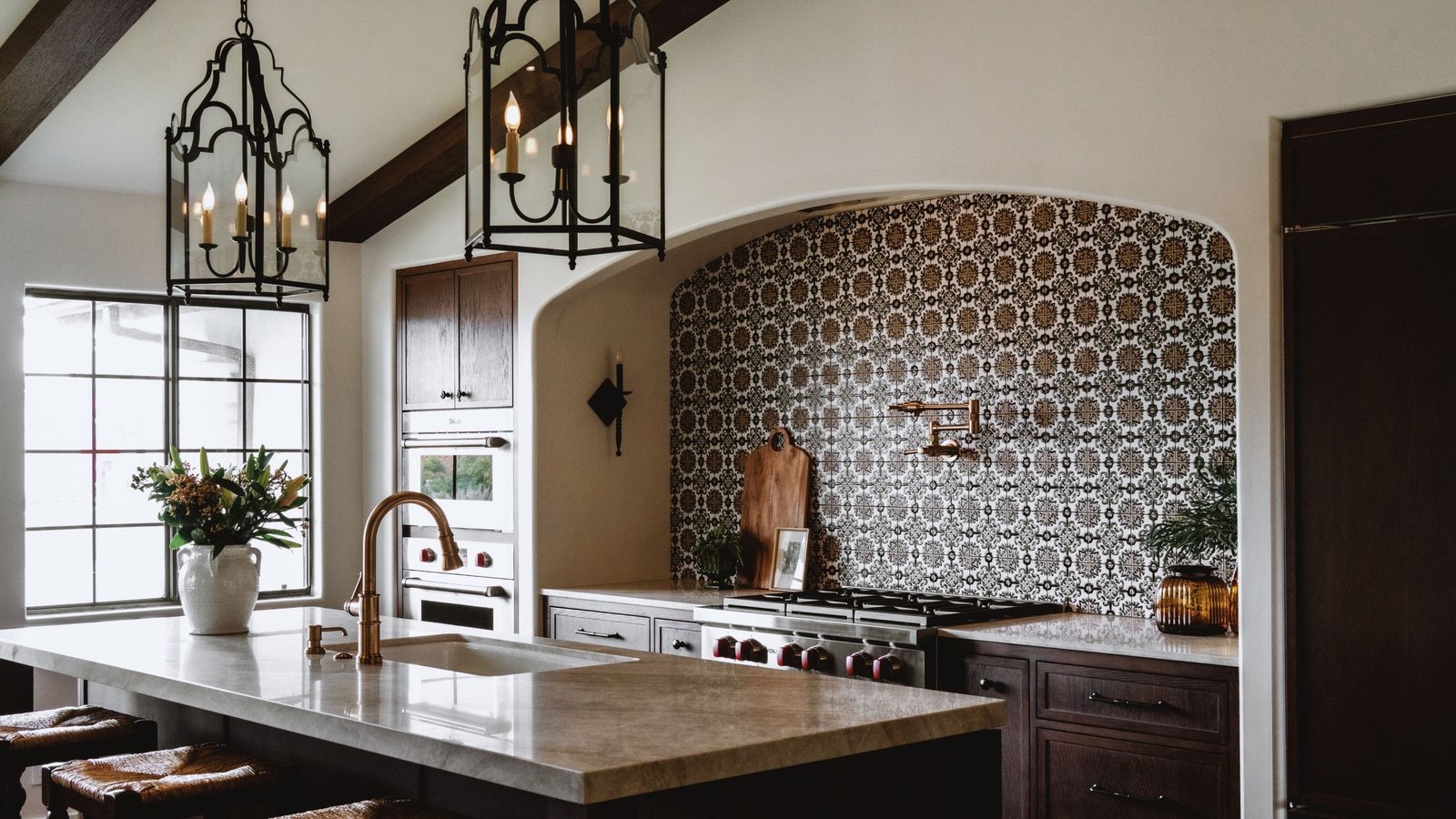
Different light sources offer a unique opportunity to play with pattern while adding a warmer glow.
(Image credit: deVOL Kitchens)
But more often than not, it’s the bulbs that cause the most coldness in a kitchen, specifically the temperature. When we think of warm lighting, there’s usually more of an orange glow than a white or blue one – a detail that depends on the bulb temperatures you introduce. ‘A lot of kitchens get built with recessed lights at 3500K or 4000K, which is closer to office lighting than home lighting. Put that above a polished quartz counter, and all of it bounces straight back at you,’ Michael explains.
‘Bulbs rated high on the Kelvin scale (4000K to 5000K+) emit a stark, blue-toned light similar to commercial or office lighting. While high Kelvin ratings work well for intense task zones, in a residential kitchen they drain the warmth from cabinetry, wash out natural wood tones, and create unflattering shadows,’ adds Shannon Kadwell, Kitchen and Bath Director at Anthony Wilder Design Build.
A lot of these details don’t become obvious until you reach the darker, colder months, as you rely less on lighting during the summer when natural daylight does all the heavy lifting. But as soon as those darker evenings draw in, stark or underwhelming lighting will become glaringly obvious. For Pooky‘s Chief Creative Officer, Jo Plant, a successful kitchen lighting scheme ahead of fall is about a balance of function and ambiance. ‘The key is to avoid treating kitchen lighting as purely functional; it should add atmosphere as well as provide practical illumination.’
5 Ways to Make Your Kitchen Lighting Warmer for Fall
The slow shift from summer to fall is one of the most noticeable in our homes, especially as evenings grow darker and light disappears much sooner. And as a functional and social space, your kitchen lighting is one of the first details you need to adapt for the season. ‘As we move into fall, kitchen lighting becomes particularly important,’ says Jo.
‘As the days get shorter and natural light starts to fade earlier, a kitchen that felt bright and welcoming in summer can suddenly feel quite stark.’ It’s easy to give your kitchen lighting a warmer, cozier update for fall. It doesn’t require a full replan, nor does it need to cost a fortune – the subtle changes are the most impactful. These are the 5 worth trying this year.
1. Switch to Warmer Bulb Temperatures

The warmer light in this kitchen adds a subtle glow to shelves, creating a much cozier atmosphere – perfect for fall.
(Image credit: Pooky)
One of the key elements that makes your kitchen lighting feel harsh is using bulbs that are too bright and too cool-toned. As we head towards fall, swapping these harsher bulbs out for softer, warmer alternatives makes a huge difference to the atmosphere of your cooking space.
‘To instantly soften the space, shift your bulbs down to a lower color temperature – specifically around 2400K to 2700K. A 2400K bulb delivers a rich, golden warmth that closely mimics the cozy glow of traditional incandescent bulbs,’ Shannon explains. ‘Swapping overhead recessed cans or under-cabinet task fixtures to this warmer range transforms the kitchen’s ambiance, making island seating and open-plan prep areas feel inviting as the days grow shorter.’
You can find light bulbs in this Kelvin range in most stores, including Amazon, for easy ordering and delivery. These LED Dimmable Edison Light Bulbs made from amber glass offer a warm white glow, while these A19 Vintage LED Edison Light Bulbs offer a more retro look.
2. Look to Lower-Height Lighting

‘In our kitchens specifically, the warm brass lighting, dark wood cabinetry and beams, handmade tile, natural stone, and linen Roman shade all help soften the light. It’s really about considering the lighting as part of the overall material palette rather than treating it as an afterthought,’ says Kailee.
(Image credit: House of Hive Design Co. / Cassie Wilson Photography)
The focus in a kitchen often lands on the ceiling fixtures, but taking the time to edit your lower-level lighting is often more impactful. It’s the lights that sit below eye level, like cabinet lighting and lamps, that bring a warmer feel as fall approaches.
‘The move most people skip is light below eye level. Undercabinet strips, a pair of sconces, even a small plug-in lamp at the end of a counter. Low light is what makes a kitchen feel like a room instead of a workspace,’ says Michael.
If you’re looking for easy, affordable changes, a countertop lamp is always a stylish addition. ‘A great option is to add a lamp on the countertop that has a fun shade and keep it on through the winter. It feels really lovely to have a lamp lit during those darker afternoons and evenings and invites you into the space,’ adds interior designer Jess Cooney.

Target
Brass Portable Table Lamp
Easy to clean with no cords to clutter your countertops – this charming brass lamp is a great way to add warmer, more ambient light to your kitchen this fall.

Pottery Barn
Ronnie Wireless Touch Metal Table Lamp
For something with a more vintage feel, this wood and brass design is a chic addition to kitchens of every style. The narrow form takes up minimal space, too.

Pooky Lighting US
Thimble Cordless Table Lamp in Natural Marble
If you prefer to play with pattern for fall, this Pooky design ticks all the boxes. The marble base is classic, while the patterned shade adds personality.
3. Take Note of Bulb Types and Styles

‘We always prefer to layer lighting rather than relying on one type of fixture,’ says Kailee. ‘We layer in decorative pendants and sconces and keep everything on dimmers whenever possible.’
(Image credit: House of Hive Design Co. / Cassie Wilson Photography)
While the temperature of the light bulbs you choose is an important factor to consider when swapping to warmer lighting for fall, so are the bulb types. It seems like such a minor detail, but one that changes the way light diffuses around the kitchen.
‘As we transition into fall, swap out standard glass or exposed-bulb fixtures for LED filament ‘Edison’ bulbs. Modern LED Edison bulbs combine energy efficiency with classic aesthetic appeal, offering clear or amber-tinted glass and visible glowing filaments,’ Shannon explains.
It’s one of those details that instantly makes your kitchen lighting feel more considered and design-led. It’s a bit like swapping out your outlet and switch plates for something more elevated. ‘They emit a deep, cozy amber radiance that pairs beautifully with autumnal textures, rich cabinet finishes, and natural stone countertops,’ she adds.
4. Consider Putting Kitchen Lighting on Dimmers

Picture lights are a fun way to make wall lights feel less predictable – and they are a great option when only a small amount of wall space is available.
(Image credit: WINN Design + Build / Stacy Zarin Goldberg Photography)
If there’s one piece of advice designers always give, it’s to put kitchen lighting on dimmers. It’s the easiest and most effective way to take your lighting scheme from functional to ambient, bright to softly moody.
‘Dimmers are another simple but transformative addition, allowing you to turn the brightness down as the evening progresses and instantly shift the mood from practical to atmospheric,’ says Jo. Although this is a step to consider during a larger project, it’s one experts say you won’t regret. And for maximum impact, avoid putting every light in the kitchen on one switch.
‘Our designers separate the ceiling lights from the pendants and the under-cabinet lighting so you can run the room at thirty percent on a Tuesday night without lighting it like you’re prepping Thanksgiving dinner. If you’re replacing fixtures anyway, look at dim-to-warm LEDs. They drop towards 2200K as you dim them, the way an incandescent used to,’ Michael advises.
When the overhead lighting is on a dimmer, you can utilize different light sources throughout the day, and let decorative lighting take over. ‘As the days get shorter, we naturally start relying less on bright overhead lighting and more on the decorative and ambient layers. We’ll dim the ceiling lights and let pendants, sconces, and other smaller fixtures create pockets of warmth throughout the room,’ says Kailee.
‘We love when a kitchen feels a little moodier in the fall! You still need functional task lighting when cooking, but the entire room doesn’t need to be illuminated at the same intensity.’ If you do add dimmers, make sure to add elevated switch plates, like this Classic Toggle & Dimmer from Rejuvenation, or add autumnal color with Anthropologie’s Merritt Enamel Switch Plate.
5. Create a Layered Approach

Alongside a ceiling light, wall sconces and a counter lamp add a warm, cozy ambience to the kitchen – the warmer bulb temperature instantly feels more inviting.
(Image credit: Neptune)
Fall conjures images of cozy interiors, and nothing brings that feeling to life quite like layered kitchen lighting. Categorize your various fixtures into task, ambient, and accent lighting, often referred to as the kitchen lighting rule of 3, to balance function and atmosphere, and remember to think beyond your typical ceiling lights.
‘The easiest way to soften a kitchen is to introduce more layers of light. Rather than relying solely on ceiling spots or a central pendant, combine practical task lighting with softer, ambient sources. Wall lights, under-cabinet lighting and small table lamps can all help to create pockets of warmth and make the room feel more inviting,’ says Jo.
‘Layering is particularly effective at this time of year. Keep your brighter task lighting available for cooking and food preparation, but switch to softer pools of light when you’re entertaining or settling in for the evening. It’s these smaller, lower-level sources that create that lovely cocooning feeling we all crave as the nights draw in.’
Your kitchen walls are a great way to bring in a new layer of lighting – an area that is often overlooked. ‘Any spot you can add a sconce really creates a soft enveloping feel in the evening when you are sitting and having a cup of tea at your breakfast table,’ says Jess. But you can also look beyond the obvious kitchen fixtures and introduce softer lighting more typical of a living room or bedroom.
‘Incorporating picture lighting above artwork helps to make spaces feel more intimate, warm, and personal,’ says Kelly Emerson, Senior Designer at Aidan Design. ‘Investing in unique table and floor lamps with warm shades and warm color temperature bulbs will certainly bring a fall refresh you’re looking for! Any chance to layer multiple sources of lighting will bring sophistication and mood.’
Taking a layered approach to kitchen lighting as we head towards fall works because it can be easily edited as seasons change, rather than being suitable for just one quarter of the year. ‘One of our favorite things about a layered lighting plan is that you can change the feeling of the kitchen seasonally without actually changing the design. In summer, natural light can take the lead; in fall and winter, the warmer decorative lighting becomes much more noticeable and creates that cozy, intimate feeling,’ Kailee notes.

Pottery Barn
Frances Alabaster Double Tube Sconce
If you want to bring more marble into your kitchen, this sconce is the perfect way to do so. Paired with brass, it diffuses light beautifully along your walls.

Pooky Lighting US
Regular Clyfford Picture Light in Waxed Antiqued Brass
Available in three sizes and two finishes, this picture light is an unexpected way to add a new layer of lighting to your kitchen, above art, shelves, or windows.

Lulu and Georgia
Matthews Sconce
A more classic sconce design, the oversized pleats of the lamp shade bring a softer material to your walls, while the brass adds timeless style.
While kitchen lighting is functional, it’s also a decorative detail that can make or break the entire mood of the room. As fall approaches, it’s all about coziness and warmth – two things the right lighting can create effortlessly.
Love beautiful design ideas, expert advice, and inspiring decor trends? Sign up for our newsletter and get the latest features delivered straight to your inbox.
CATEGORIES