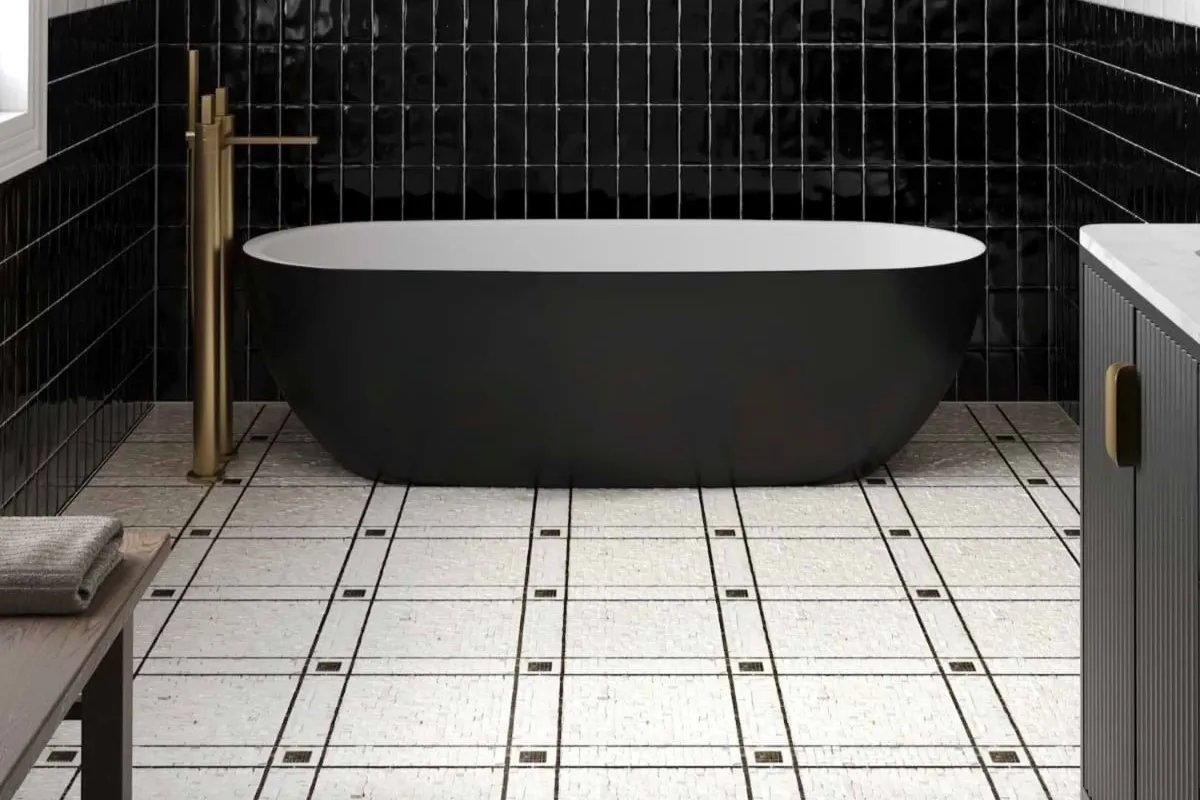
Bathroom Flooring Ideas | Materials, Trends, & More
Choosing the right bathroom flooring involves more than finding a material that complements the decor. Because bathrooms are exposed to frequent splashes, spills, humidity, and temperature changes, durability and water resistance are often the most important considerations. The flooring should also be easy to clean and provide enough traction to reduce the risk of slips.
Fortunately, bathroom remodelers have plenty of practical and stylish options. These bathroom flooring ideas compare materials suited to a range of budgets and design preferences, from sleek and contemporary to warm and traditional, while considering factors such as durability, maintenance, comfort, and ease of installation.
What to Consider When Choosing Bathroom Flooring
Before you install or replace a bathroom floor, consider how the material will perform in a damp, high-traffic space as well as how it will complement the room’s design. The most important factors include:
- Water resistance: Confirm that the material is waterproof, not just water-resistant.
- Durability: Look for flooring that can withstand moisture, foot traffic, and regular cleaning.
- Safety: A textured or slip-resistant surface can give you better traction when wet.
- Maintenance: Consider how easy the floor is to clean, seal, or repair.
- Style: Choose a color, pattern, and material that suits the bathroom’s overall design.
- Budget: Remember to account for both the material cost and the cost of professional installation, if you are not completing the job yourself.
The 6 Best Flooring Options for Bathrooms
1. Ceramic and Porcelain
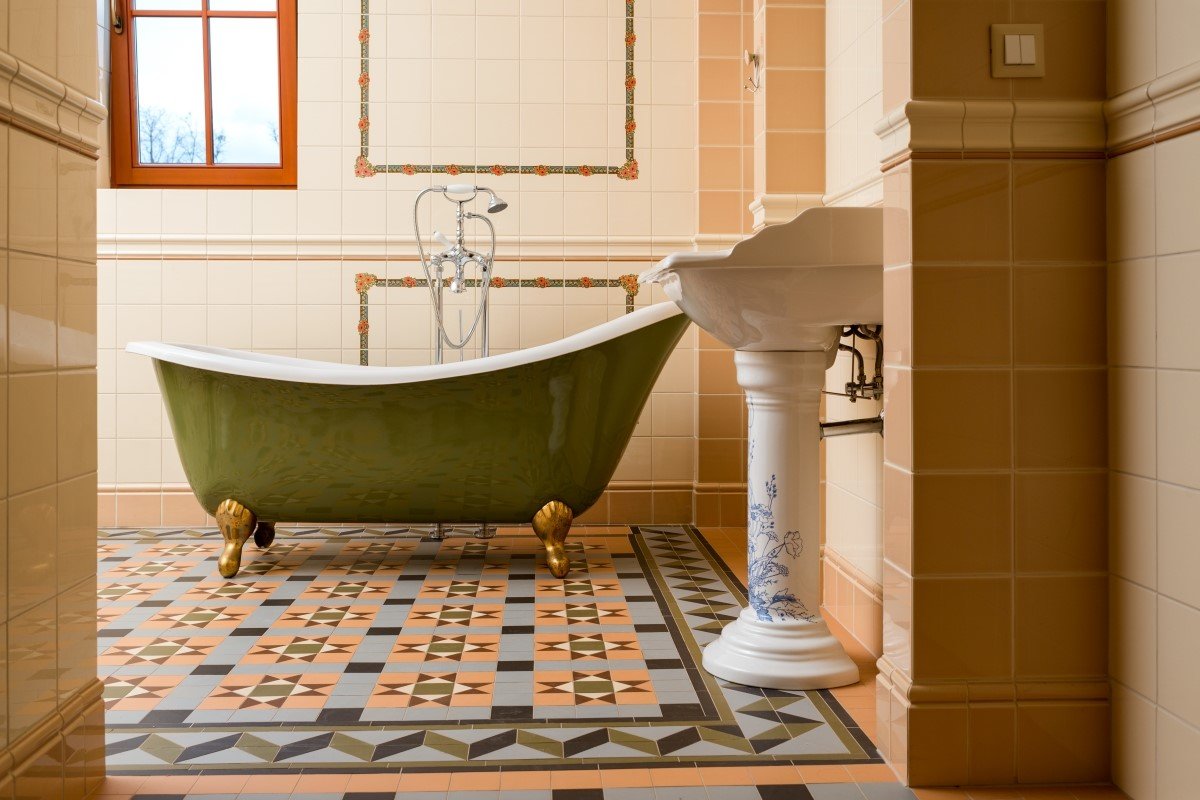
Ceramic and porcelain tiles are among the most popular bathroom flooring choices because they are durable, water-resistant, and available in a wide variety of styles. Options range from small mosaics and traditional square tiles to large-format designs and wood-look planks, making tile suitable for bathrooms of nearly any size or style.
When shopping for bathroom tile, look for options that are rated for use on floors and offer adequate slip resistance, and keep in mind some key pros and cons of porcelain vs. ceramic tile. For instance, porcelain tile absorbs very little water and is generally easy to maintain, while some unglazed ceramic tiles are porous and may need to be sealed periodically. Tile installation can be time-consuming because the subfloor must be level, and the tiles and grout need to be laid and finished correctly.
Ceramic and porcelain tile trends:
- Large-format tiles with fewer grout lines
- Wood- and natural-stone-look finishes
- Geometric patterns and mosaic accents
- Warm, earthy colors and subtle textures
| Pros | Cons |
| Durable and water-resistant | Can feel cold underfoot |
| Available in many colors, sizes, and styles | Some finishes get slippery when wet |
| Easy to clean and maintain | Installation can be time-consuming |
| Works with many bathroom designs | Grout may need periodic cleaning or sealing |
2. Vinyl
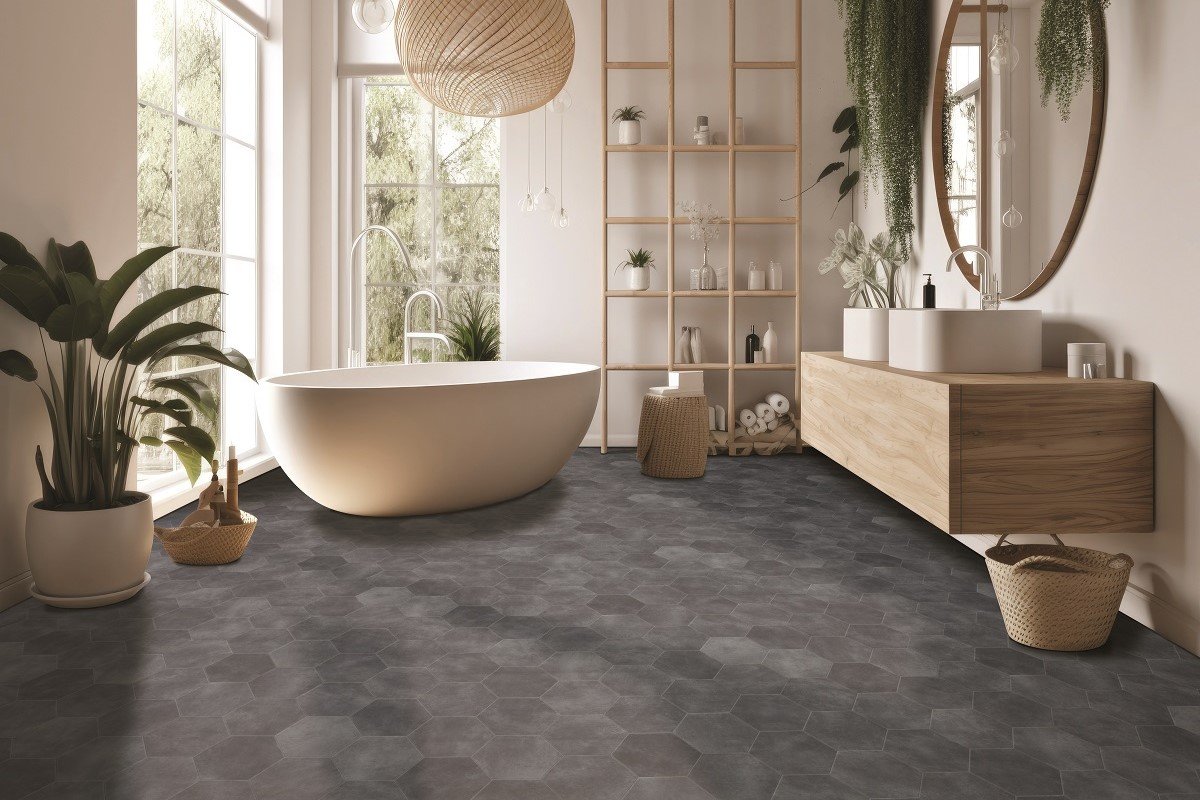
Vinyl has a lot going for it. This waterproof bathroom flooring is perhaps the easiest type to install, is often warmer underfoot than porcelain or ceramic tile, and has a safe, tactile surface that can be printed in virtually any color or pattern, including designs that mimic stone and wood.
There are two main types of vinyl flooring: Standard vinyl flooring is an inexpensive option that comes in sheets or tiles. It can be cut with a utility knife, making it easy to fit in awkward bathroom layouts. Vinyl sheets are glued down, whereas tiles are usually self-adhesive.
The second type, luxury vinyl plank, or LVP, comes as boards that lock together and are generally laid as a floating floor or glued down. LVP is constructed from multiple layers that often include cork or foam to increase comfort underfoot. LVP is often confused with laminate flooring, which we look at later.
When installing vinyl sheets or tiles, make sure the subfloor is smooth and level because irregularities may show through the finished surface.
Popular vinyl flooring styles:
- Wood-look planks
- Stone- and marble-look tiles
- Geometric patterns
- Neutral and natural finishes
| Pros | Cons |
| Versatile, budget-friendly, and easy to install | Thin materials may show subfloor irregularities |
| Waterproof and easy to clean | Some options can dent or tear |
| Warmer underfoot than tile | Quality varies between products |
3. Concrete
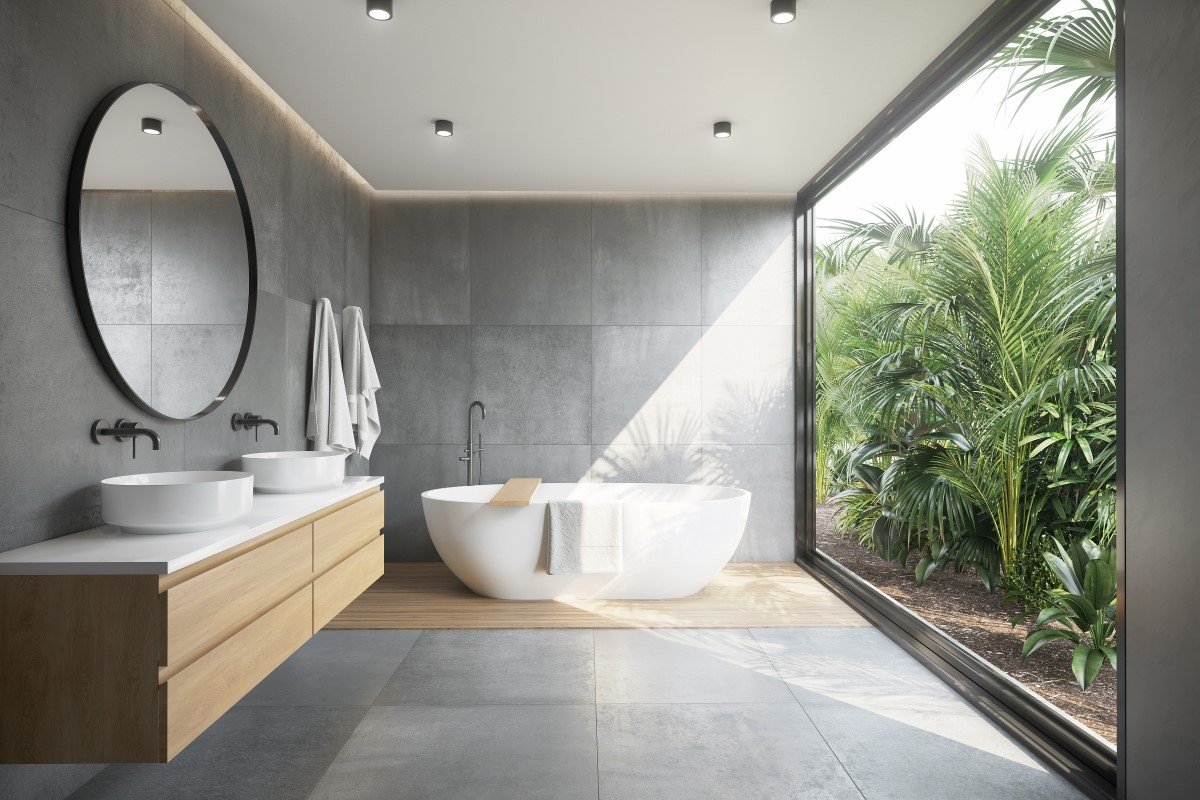
Concrete is an unusual material for a bathroom floor, but it is well suited for creating a modern, industrial style, and it has a number of advantages over other materials. It is durable, highly customizable, and can be sealed to improve its resistance to water and stains.
Concrete is poured in place so it’s a terrific option for wet rooms, where the toilet and shower areas are not separated and share a continuous floor. The fact that concrete can be poured makes it a good choice for oddly shaped bathrooms—it’s a great idea for small bathrooms. Concrete is very hard-wearing and although it is porous, it can be sealed and made waterproof. Concrete can be colored, painted, and textured to suit your home’s style.
There are a couple of downsides to concrete flooring, however: Mixing and pouring is labor-intensive, and although the surface may be dry to the touch in 24 hours, it takes at least a few days to cure enough to be walked on. Concrete can also be difficult to warm unless there’s underfloor heating installed along with it. A textured finish is important because smooth concrete may become slippery when wet.
Popular concrete flooring styles:
- Polished or lightly textured finishes
- Integral colors and decorative stains
- Large, seamless wet-room floors
- Finishes that mimic stone or tile
| Pros | Cons |
| Durable and hard-wearing | Can feel cold and hard underfoot |
| Ideal for a modern, industrial look | Mixing and pouring are labor-intensive |
| Can form a seamless wet-room floor | Requires sealing for moisture protection |
| Available in many colors and textures | Smooth finishes may be slippery when wet |
4. Natural Stone
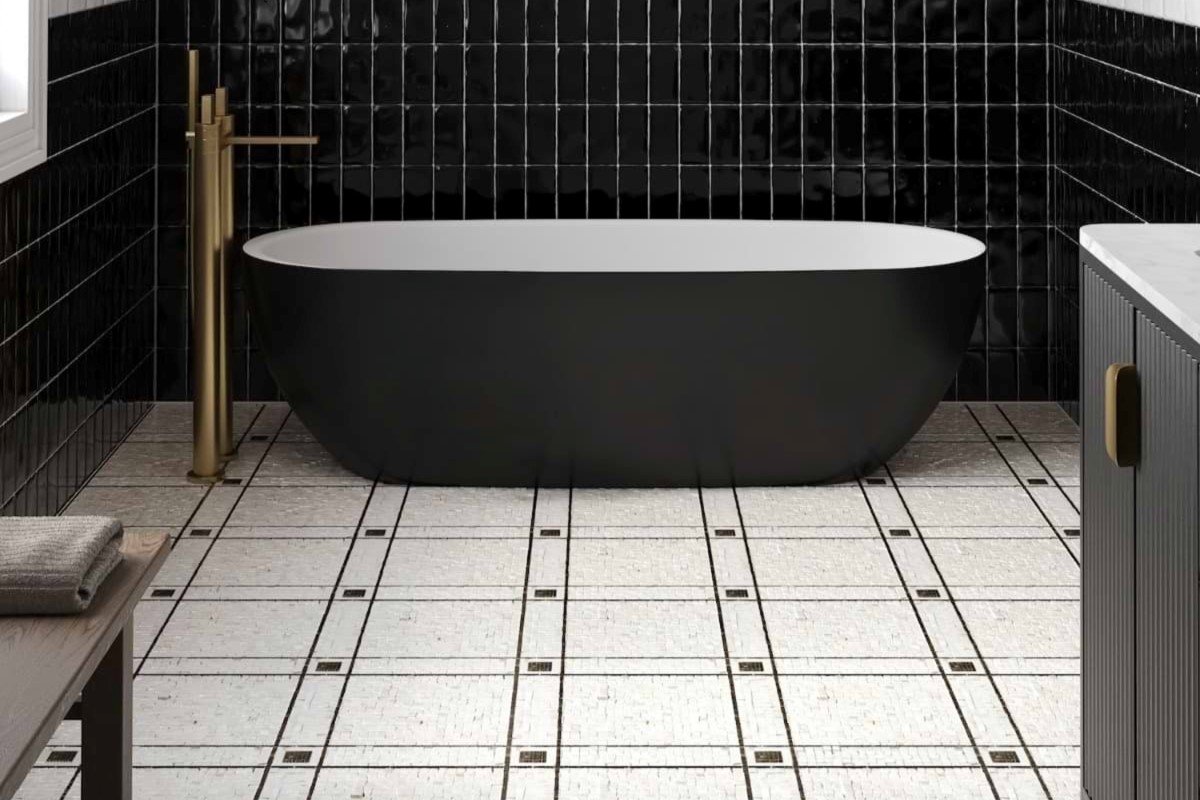
Few bathroom flooring ideas are more luxurious or impressive than marble, travertine, and other natural stone surfaces. Granite and slate can also be appealing and are available in darker shades that designers often favor when paired with lighter colored walls. Natural stone is durable and visually distinctive, although its performance and maintenance needs vary by stone type.
“If you think of going into older buildings, you will typically notice limestone or marble that can be hundreds of years old,” says interior designer Danielle Nicholson, author of Don’t Start Without Me: Your How to Design Planner. “You will notice the imperfections in it, but yet it’s still beautiful. That is what I’m starting to see people embrace in their homes.”
Natural stone for bathroom floors almost always comes in the form of tiles, though sizes can vary. Large tiles can make a particularly strong statement in spacious bathrooms. Smaller or textured tiles may provide better traction, while highly polished stone can become slippery when wet.
Natural stone should last many years, but it is often expensive. A sealer is usually required to help prevent stains and moisture absorption. Although marble flooring is beautiful, it is not always ideal for high-wear areas, as it is prone to scratching. While natural stone can provide great visual warmth, the material itself is often cold to the touch, and may present safety issues when it’s highly polished.
Popular natural stone flooring styles:
- Large-format marble tiles
- Textured slate in darker shades
- Warm-toned travertine
- Mosaic borders and accent patterns
| Pros | Cons |
| Creates a luxurious, distinctive look | Often expensive |
| Durable when properly maintained | Usually requires periodic sealing |
| Available in varied colors and textures | Can feel cold underfoot |
| Works with traditional and modern designs | Polished surfaces may be slippery |
5. Terrazzo
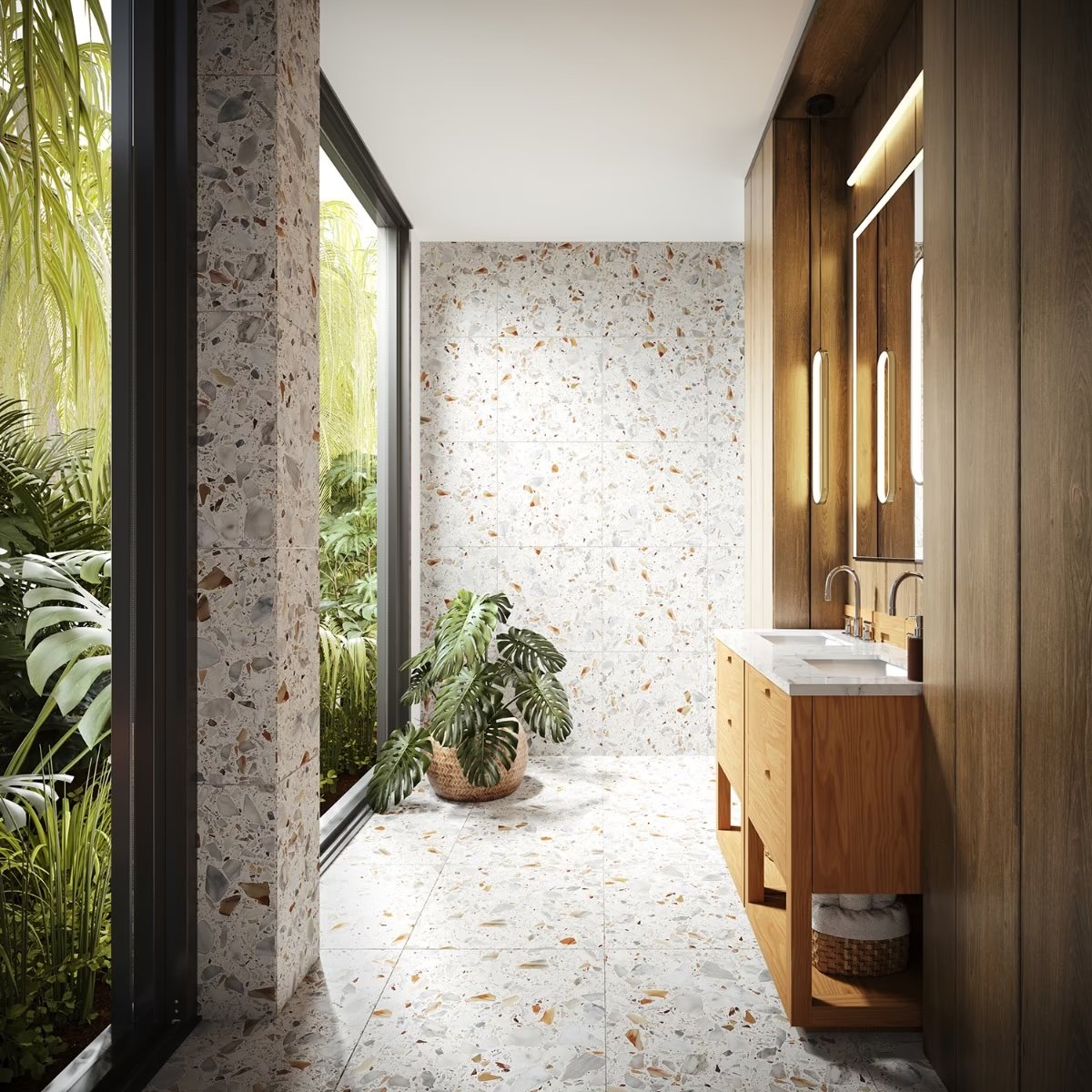
Although terrazzo flooring has a distinctly modern look, the material has been used for hundreds of years. Italian craftspeople first made terrazzo in the 16th century from waste marble and granite chips mixed with cement. Because of these inclusions, the finished surface can sparkle with reflected light, creating a unique ambience.
This type of terrazzo is still available but needs to be poured on-site. Although it produces a beautiful, seamless bathroom floor, it is labor-intensive and expensive. Terrazzo also comes as tile, which, while not cheap, is more affordable and easier to install.
There are two types of terrazzo, and the difference is important. Cementitious (cement-based) terrazzo is porous, whereas resin-based terrazzo is nonporous and more resistant to water. While both are very hard-wearing and easy to maintain, cement-based terrazzo needs periodic sealing. A slip-resistant finish may also be preferable in wet areas.
Popular terrazzo flooring styles:
- Large, widely spaced stone chips
- Colorful custom aggregate blends
- Neutral, minimalist patterns
- Seamless poured floors and large tiles
| Pros | Cons |
| Creates a striking, high-end finish | Poured terrazzo is expensive |
| Available as poured flooring or tile | Professional installation is usually required |
| Very durable and hard-wearing | Cement-based terrazzo needs sealing |
| Offers extensive color customization | Some finishes may be slippery when wet |
6. Vinyl Tile
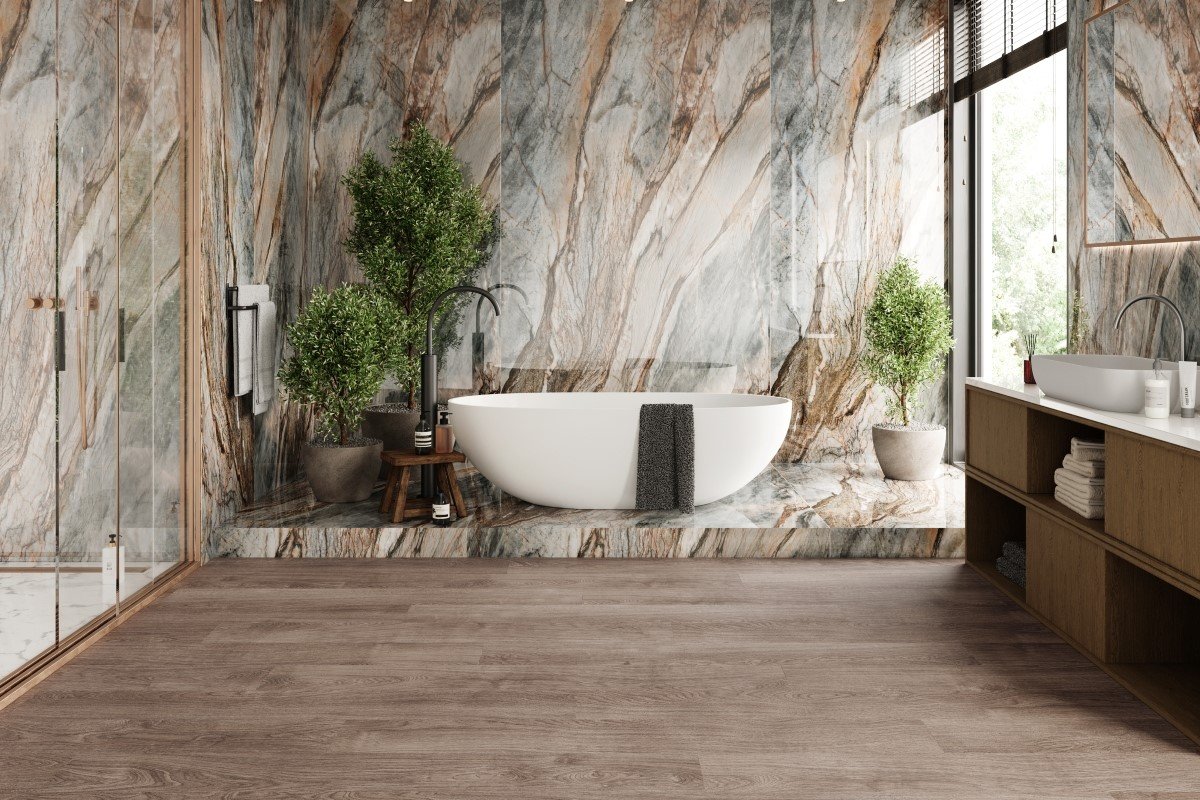
Vinyl tile is a budget-friendly bathroom flooring option that combines easy installation with a wide range of colors and patterns. Many products are waterproof or highly water-resistant, and they can mimic the appearance of ceramic tile, natural stone, or decorative encaustic (i.e., inlaid) designs without the cost or cold feel of those materials.
Vinyl tiles are often available with peel-and-stick backing, making them appealing for a DIY bathroom update. However, the subfloor must be clean, smooth, and level because imperfections can show through the finished surface. Seams between tiles may also allow moisture underneath if they are not installed tightly, so check that the product is approved for bathroom use and follow the manufacturer’s preparation and installation instructions.
Popular vinyl tile styles:
- Marble- and stone-look finishes
- Geometric and encaustic-inspired patterns
- Neutral checkerboard designs
- Large-format luxury vinyl tiles
| Pros | Cons |
| Affordable and widely available | Subfloor imperfections may show through |
| Often easy to install yourself | Seams can admit moisture |
| Available in many colors and patterns | Lower-quality tiles may lift or shift |
| Warmer and softer than ceramic tile | May not last as long as tile |
Other Types of Bathroom Flooring to Consider
Some flooring materials can work well in a bathroom but require more careful product selection, installation, or maintenance. Consider the following options based on your budget, design preferences, and willingness to keep up with care requirements.
1. Waterproof Laminate
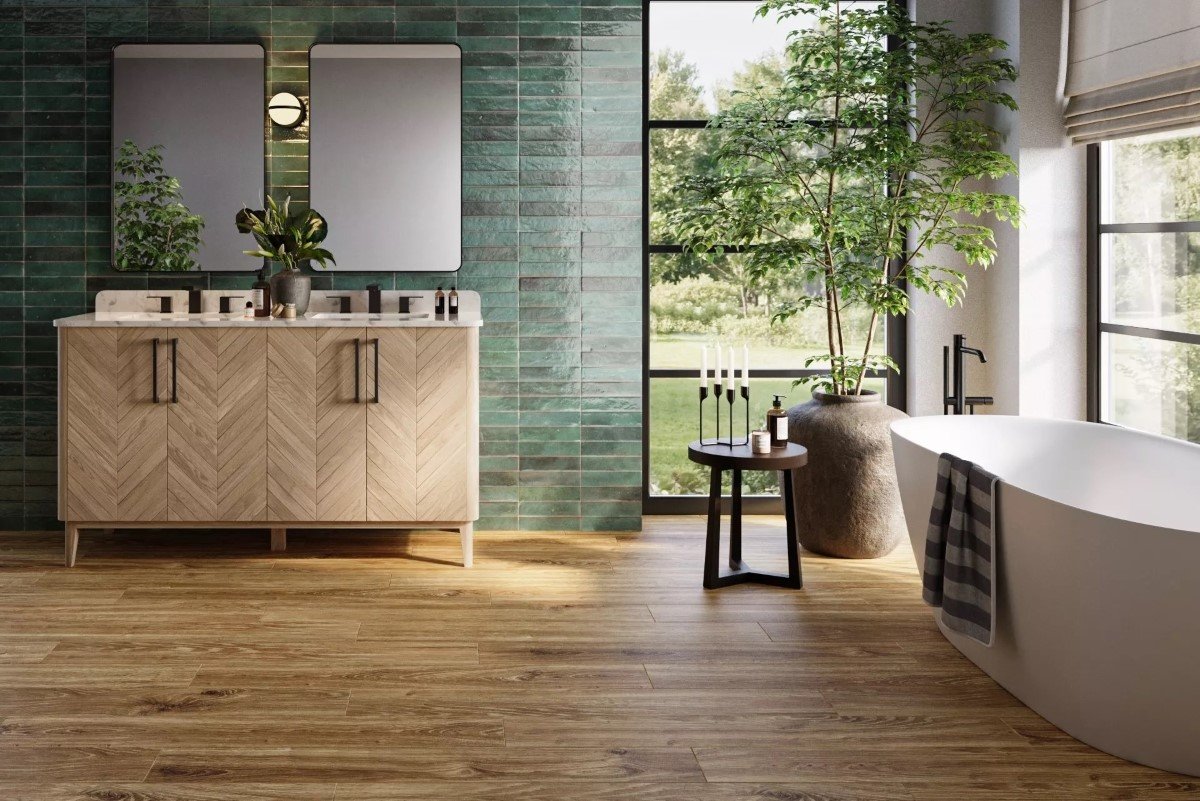
Waterproof laminate is a flooring option that can help keep down the cost of bathroom remodeling. It is supplied as click-together planks, usually with a realistic wood grain pattern. While this might sound restrictive, hues can range from pale gray weathered boards to rich dark oaks. Its ease of installation makes it a popular DIY choice, and it is much more stable than real wood.
Waterproof laminate is often confused with luxury vinyl plank flooring, but there are important differences in structure. LVP typically has a waterproof synthetic or composite core, while laminate often uses a fiberboard core that can swell if water reaches it. In a worst-case scenario, the edges will peel, and the floor will buckle.
For bathroom use, it is absolutely vital to choose a fully waterproof laminate, not one described as merely water-resistant. Check that the manufacturer specifically approves the product for bathrooms, and carefully follow its wet-area installation instructions. Even then, water should not be allowed to pool on the surface for long periods.
| Pros | Cons |
| Affordable and easy to install | Not every product is bathroom-safe |
| Available in realistic wood looks | Fiberboard cores may swell if exposed |
| More stable than real wood | Standing water should be cleaned promptly |
2. Linoleum
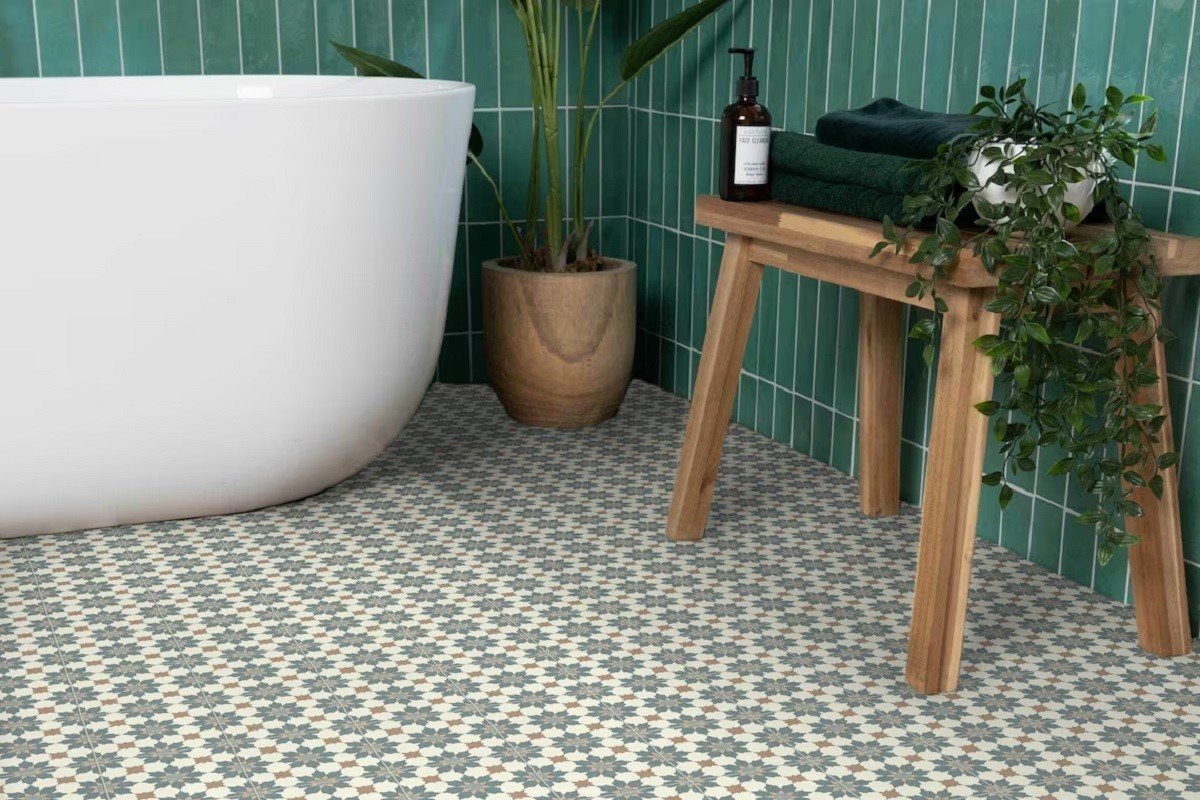
Linoleum was popular in the 1950s and 60s, and is sometimes seen as an old-fashioned flooring. However, it received something of a makeover in the 2000s and is once again a popular bathroom flooring option, particularly if you prioritize natural and sustainable materials. Linoleum is a natural product made from linseed oil, plant fibers, and resins.
Linoleum comes as sheets, tiles, and occasionally as planks. It is easy to fit, though large sheets can be difficult to manage in small bathrooms. Like ceramic and porcelain tile, it can be used over underfloor heating. It is very durable, provides good comfort, and is easy to keep clean.
However, while linoleum is water-resistant, it is not necessarily fully waterproof. Suitability for bathrooms varies between products, so check that the manufacturer specifically approves the flooring for use in damp rooms. Careful installation and sealing may also be necessary to prevent moisture from reaching the seams or subfloor.
| Pros | Cons |
| Made primarily from natural materials | Not all products are recommended for bathrooms |
| Durable and comfortable underfoot | More expensive than many vinyl options |
| Available in sheets, tiles, and planks | May require careful sealing and installation |
3. Cork
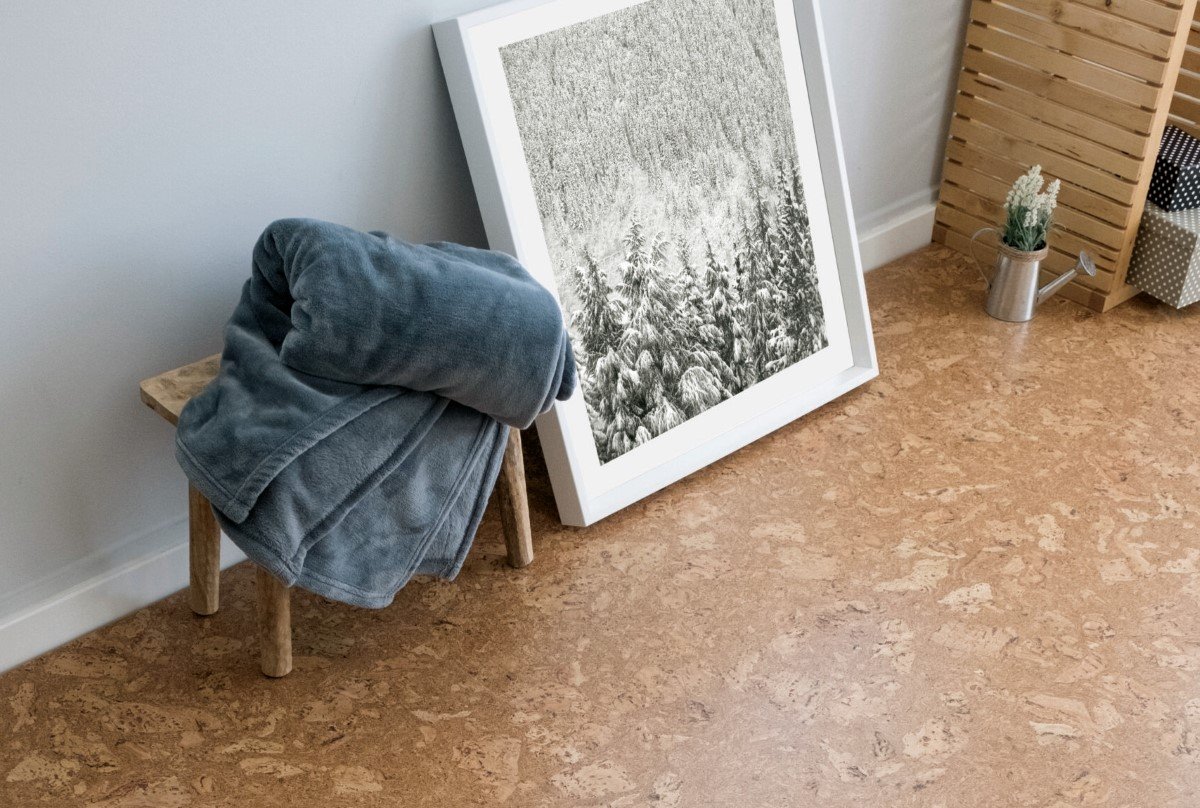
Although cork is one of the less common types of bathroom flooring, it is one of the most eco-friendly and sustainable choices. It is made from the bark of the cork oak. Careful harvesting ensures the tree is not cut down, and the cork regrows naturally. Cork also feels warm and comfortable underfoot, but it requires more protection from moisture than many conventional bathroom flooring materials.
Cork flooring is relatively inexpensive and easy to cut and fit. The surface texture is naturally slip-resistant, and the material resists bacterial growth.
Although the natural appearance is popular, cork comes in many colors and textures. It is porous, so for bathroom use, it will need to be properly sealed. It will deform if heavy objects are placed on it—for instance, when you sit on a stool—but in most cases, it will regain its shape when the pressure is removed. However, cork can tear or chip if things are dropped onto it or dragged across the surface. Check that the specific cork product is approved for bathroom installation before purchasing it.
Popular cork flooring styles:
- Natural cork patterns
- Warm brown and honey tones
- Printed wood-look finishes
- Tiles and click-lock planks
| Pros | Cons |
| Made from a renewable material | Porous and requires sealing |
| Warm and comfortable underfoot | Can tear, chip, or dent |
| Naturally slip-resistant | Not every product suits bathrooms |
| Relatively easy to cut and install | Needs periodic maintenance |
4. Bamboo
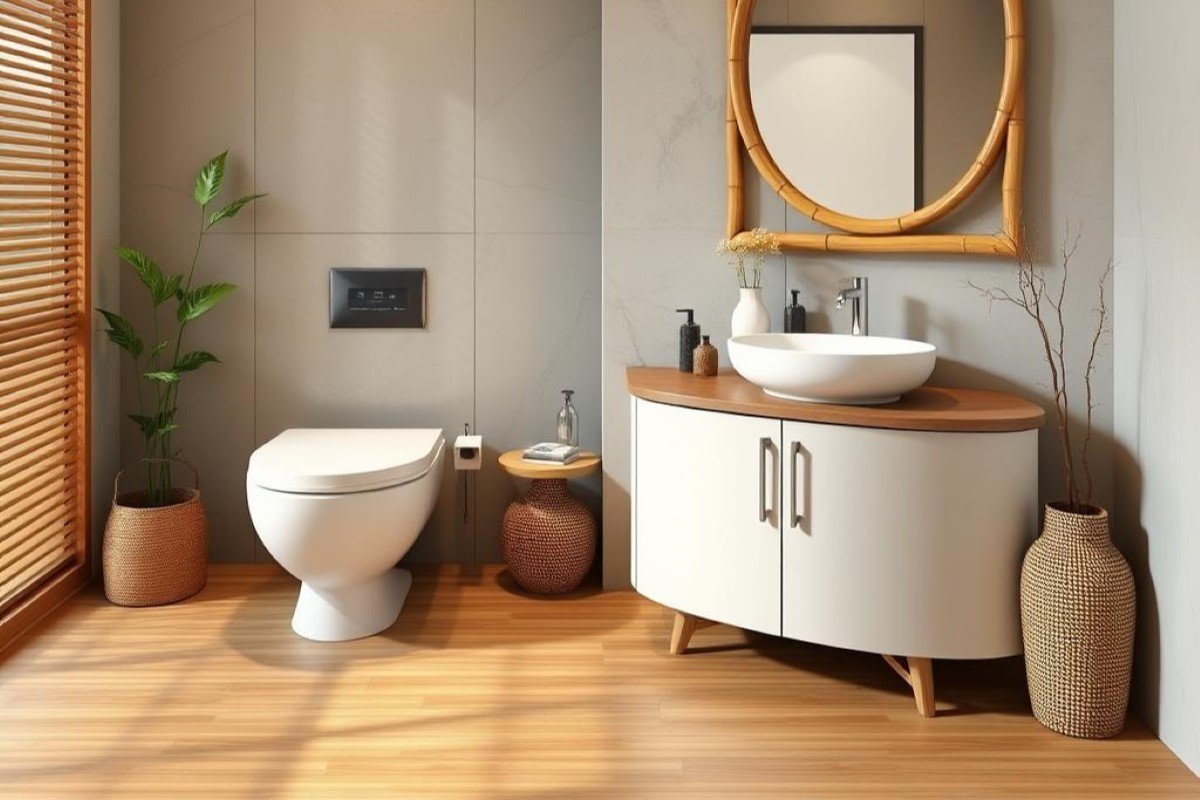
Bamboo, a fast-growing grass that is usually formed into strips or planks, is another sustainable material for a bathroom floor. Bamboo flooring may be supplied as solid bamboo or combined with other woods or fibers, which is often labeled as engineered bamboo. Depending on the materials and adhesives used, the latter may not have the same environmental credentials. While bamboo can offer the warmth of wood, it requires careful product selection in a moisture-prone bathroom.
Although bamboo may resist moisture better than some hardwoods, it is not fully waterproof. While it can be treated, bamboo can swell if water gets into its joints, so spills should be wiped up quickly. Be sure to choose a product specifically approved for bathrooms and follow the manufacturer’s installation requirements.
Bamboo is a hard and durable material, but the surface can be scratched. If necessary, solid bamboo can be sanded and refinished, while engineered bamboo would probably need to be replaced if the wear layer is too thin to refresh.
Popular bamboo flooring styles:
- Natural and carbonized finishes
- Horizontal or vertical grain patterns
- Strand-woven planks
- Light, contemporary wood tones
| Pros | Cons |
| Made from a fast-growing material | Not fully waterproof |
| Offers a warm, wood-like appearance | May swell if water reaches the joints |
| Hard and durable | Can be prone to scratching |
| Solid bamboo may be refinished | Bathroom-safe products may be limited |
Trending Bathroom Flooring Ideas
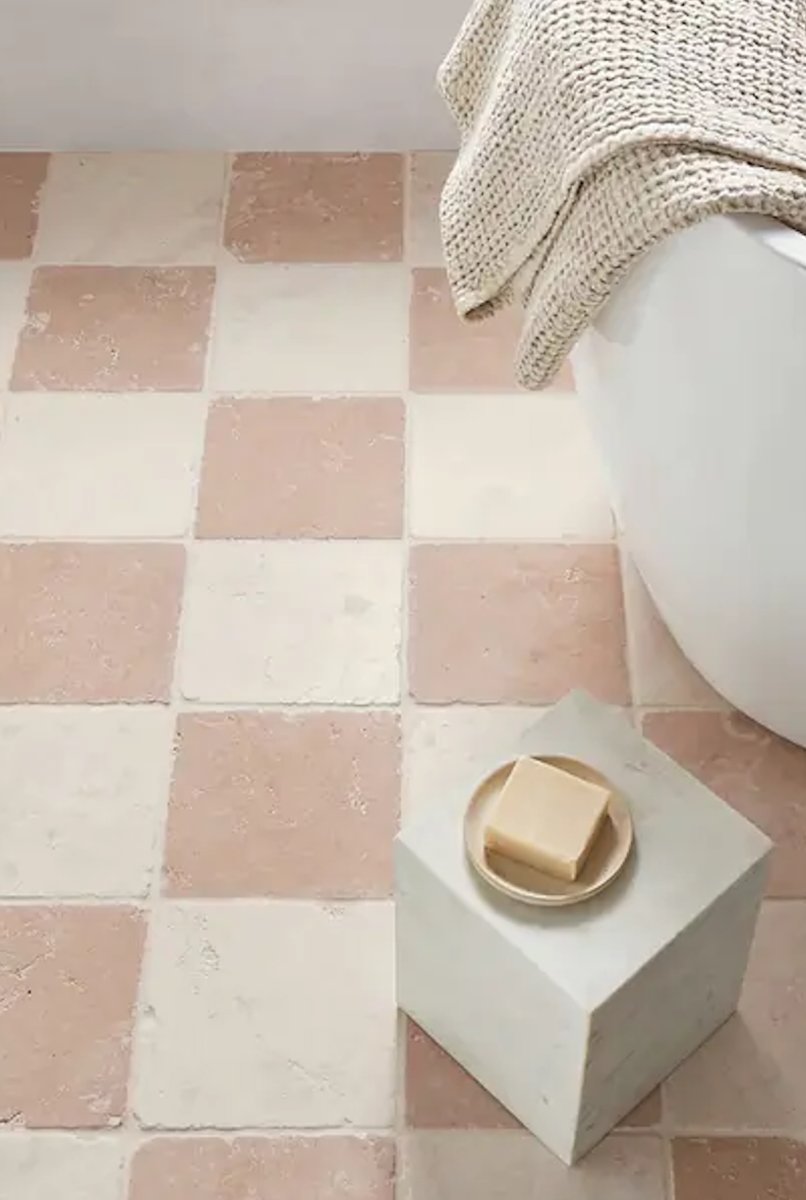
Bathroom flooring trends offer plenty of ways to add personality through color, pattern, texture, and tile layout. You don’t need to commit to an especially bold design, either; even a subtle grout contrast or a different tile arrangement can make the floor more distinctive.
- Mosaic tile: Penny rounds, hexagons, and other small-format mosaics can introduce pattern and provide useful traction, though their many grout lines may require extra cleaning.
- Updated classic patterns: Checkerboard, herringbone, and geometric layouts give familiar tile shapes a more decorative look. Softer color contrasts can keep these patterns from overwhelming the room.
- Contrasting grout: Dark grout can emphasize the shape and arrangement of light-colored tiles, while matching grout creates a quieter, more continuous appearance.
- Creative color: Warm earth tones, greens, blues, and other nature-inspired shades can bring more character to a bathroom than an all-white or gray palette.
- Large-format and continuous tile: Oversize tiles minimize grout lines and can make the floor appear more expansive. Carrying the same tile into the shower can also create a cohesive wet-room effect.
Flooring to Avoid Installing in a Bathroom
- Wall-to-wall carpet is generally a poor choice for bathrooms because it absorbs moisture, dries slowly, and can trap odors or encourage mold and mildew growth. Area rugs designed for damp spaces are a more practical way to add softness without covering the entire floor.
- Untreated solid hardwood is also risky because repeated exposure to humidity, spills, and standing water can cause it to swell, warp, or develop gaps. The same applies to laminate, engineered wood, and other flooring that is only labeled water-resistant rather than specifically approved for bathroom use.
FAQ
Porcelain tile is one of the best all-around choices because it is durable, highly water-resistant, easy to clean, and available in many styles. Waterproof vinyl is another practical option if you prioritize affordability, comfort, or easier installation.
Properly installed ceramic or porcelain tile is among the longest-lasting bathroom flooring options and can perform well for decades. Natural stone can also last for many years, but it usually requires more maintenance and periodic sealing.
Small bathroom flooring ideas include selecting large-format tile with narrow, closely matched grout lines to minimize visual breaks, making the room feel more spacious. Using light colors and carrying the same flooring into the shower can also create a more continuous appearance.
Peel-and-stick vinyl tile is generally one of the easiest bathroom floors to install yourself. It can be cut without specialized tile tools, but the subfloor must be clean, smooth, and level for the adhesive to bond properly.
The Homeowner Survival Kit