The Best Restaurant Pickers Spot These Make-or-Break Details
There are people who have a knack for choosing the best restaurants and know instinctively how to recognize a reservation-worthy establishment the moment it opens its doors, looking for the details that will either confirm or refute their first impressions of a just-inaugurated spot, and others who, to put it very plainly, don’t.
But if you think that identifying these addresses amid the myriad of new eateries that grace our cities every month is a talent you are either born with or, else, you can’t acquire with dedication and time, well, we might have something that will make you change your mind.
To get to the bottom of what allows certain restaurant openings to instantly garner the approval of seasoned chefs, restaurateurs, and hospitality experts alike, while also charming the wider public, we asked a dozen gastronomy insiders to share the non-negotiable design credentials every self-respecting food destination should have — and the decor mistakes they wish they wouldn’t have to see ever again. Read on to uncover the interior elements that give away a great restaurant.
5 Overlooked Design Details That Give Away a Great Restaurant, According to Top Restaurateurs
For many restaurant amateurs, the experience of a new foodie hotspot begins upon tasting the very first plate they have ordered from the menu. While we might have been taught that one shouldn’t judge a book by its cover, hospitality gurus think you should already be able to tell whether an eatery takes itself and the diners it serves seriously as you step in, if not before that.
1. The ‘Arrival Sequence’, From the Exterior and the Host Stand to Fragrance

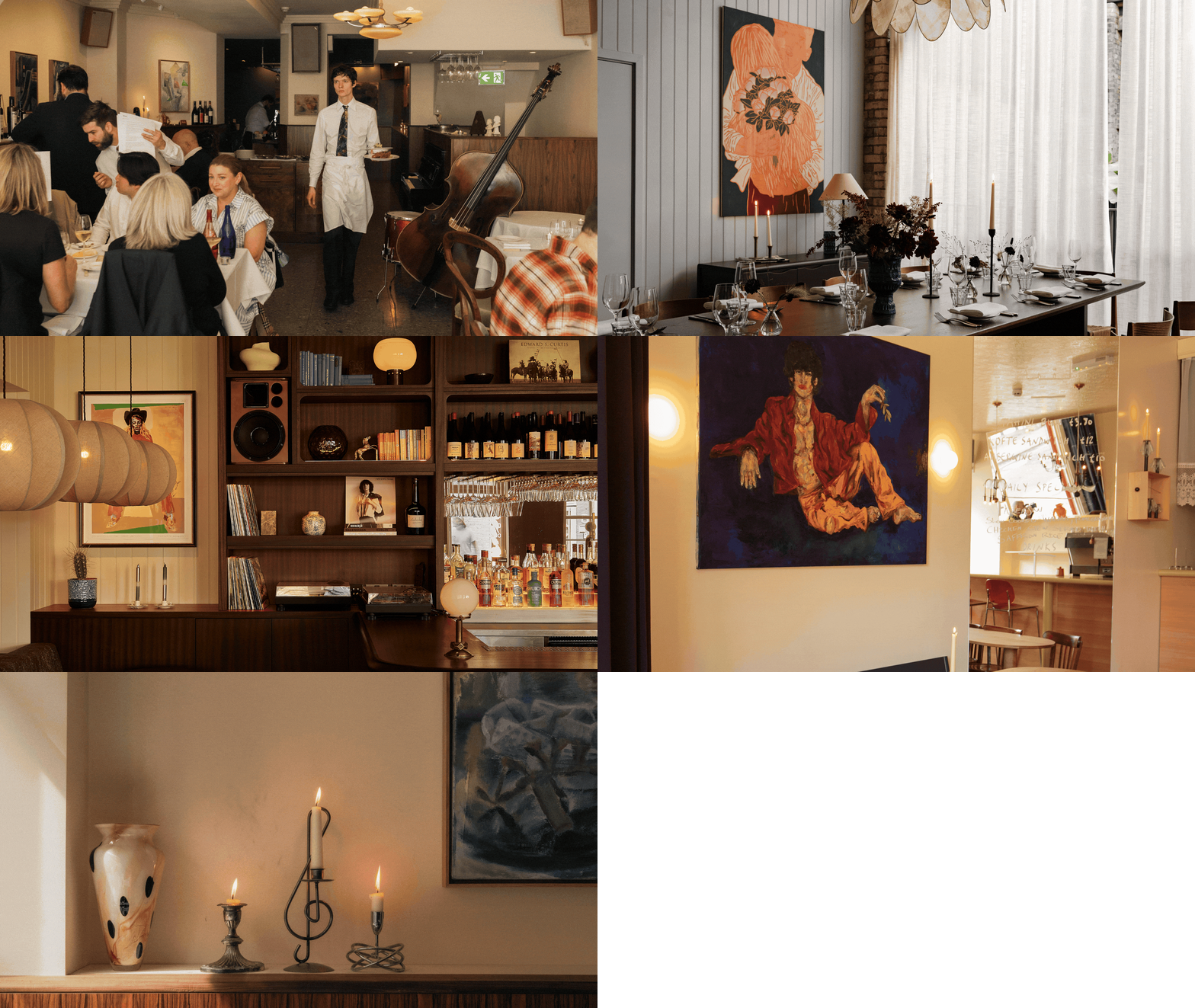
“I’m suspicious of a monolithic host stand that turns a welcome into border control. I like being a little unsure where the restaurant begins and ends, and having a human resolve that uncertainty,” says Alex Young, co-founder of Ltd Ltd, the hospitality group behind Goodbye Horses (captured above) and The Dreamery, among others.
(Image credit: Adam Kang. Design: Leopold Banchini Architects. Mural artwork and curtains: Lucy Stein)
“The first thing I always notice is how the front is maintained,” Max Venning, co-founder of London’s award-winning cocktail bar concept Three Sheets, tells me. “It doesn’t matter if it’s a million-pound restaurant or one put together on a shoestring; you can clean the outside.”
The most important thing an eatery should do is know how to greet, I am told by his peers. “Being greeted warmly by any FOH is, in my opinion, the precursor to a great experience,” says Jay Patel, founder of MICHELIN Guide-approved Italian restaurant Legare and sibling wine bar Luna, both located in the Shad Thames warehouses. “To me, hospitality is about being looked after first, and that first moment of being acknowledged is key to visitors, especially when the restaurant is busy.”

“At the townhouse that’s home to MiMi and MiKO Mei Fair, we developed a distinct fragrance that catches your attention the moment you walk through the door,” says hospitality group LSL Capital’s CEO and creative director Samyukta Nair.
(Image credit: Jonathan Stewart)
What that level of care looks like in (design) practice is deeply subjective, yet restaurateurs agree that entering a restaurant should be enough to have you feel or notice something. For Alex Young of Ltd Ltd, the hospitality group behind East London favorites Goodbye Horses, Day Trip Coffee, Stable Wines, and The Dreamery, what happens between the street and the table is particularly revealing.
“I’m suspicious of a monolithic host stand that turns a welcome into border control,” he says. “I like being a little unsure where the restaurant begins and ends, and having a human resolve that uncertainty.”
Being Goodbye Horses one of my favorite restaurants in London currently, I can assure you that its Lucy Stein murals and sculptural wooden bar are enough to communicate you have left the De Beauvoir Town to be somewhere else. It’s a distinction that the interaction with staff and tactile detailing of its interiors make manifest more than any space designed off a 3D render could.

“I’ll notice things like the acoustics, the warmth of the lighting, or how you’re greeted at the door, ideally not from behind a screen at a big host stand,” Wildflowers and Bar Flor’s co-founder Laura Hart tells us of the first things that stand out to her of a restaurant.
(Image credit: Rebecca Dickson. Design: Studio Found and Laura Hart)
The acoustics of a space, the warmth of the lighting, and how you’re met at the door are all things that “tell you a lot about whether a restaurant knows what it wants to be,” Laura Hart, co-founder of London’s Mediterranean-infused restaurant Wildflowers and its first-floor, next-level tapas spot Bar Flor, tells me. These are no restaurant design secrets. But smell is as crucial an element of the experience as sound, sight, and, of course, taste.
“The best restaurants engage all the senses, not just the obvious ones,” Samyukta Nair, CEO and creative director at hospitality group LSL Capital, shares. “At the townhouse that’s home to MiMi and MiKO Mei Fair, we developed a distinct fragrance that catches your attention the moment you walk through the door,” she says of the special scents inebriating two of the addresses in their portfolio, which also include beloved Indian restaurants Jamavar and Bombay Bustle and lavish Italian Nipotina.
Bespoke fragrance can set a restaurant apart from another, but other tricks, like “scented towels, burning Palo Santo, or spraying a little Agua de Florida on the cloths we use when crumbing the tables”, can still make for a memorable first impression of an establishment, Jo Radford, co-founder and sommelier of Michelin-starred Edinburgh restaurant Timberyard, tells me.

Wild flowers play a key role in crafting the atmosphere of Laura Hart’s London restaurant of the same name. Here, we can see the interior stylist and restaurateur at work on its seasonal floral arrangements.
(Image credit: Rebecca Dickson)
2. Glassware and Tableware That Reflects the Restaurant Atmosphere

“With fine dining, if I had to pick one detail that makes a big difference, it’d be stemware. Even in our little Italian restaurant, there are at least a dozen different silhouettes,” Osteria Vibrato’s founder Charlie Mellor reveals.
(Image credit: Tommaso Serra)
If there’s one restaurant element that, although easily missed, immediately classifies an eatery as either high-end or cheap, it’s the glassware, restaurateurs claim. “The thought that goes into the choice of glassware is incredibly important and highlights that even the smallest of details can change how something tastes or feels,” says Elliot Milne of recently launched Queen’s Park hangout Bar Blondie, a restaurant and bar whose retro-fueled interiors and artwork draw cues from the cult of Spaghetti Western.
“Oversized cheap wine glasses are really a killer. If you can’t afford fancy glassware, just go for simple small glasses,” recommends Three Sheets’ Venning. And if there’s anyone you should be taking serveware advice from, it’s the 2019 CLASS Bar Awards’ Best Bartender winner.

Not just glassware, but plates and serveware, too, make the difference for restaurants with standout design credentials. Revisit the past installments of our Chef’s Essentials series to get your hands on tableware that passes the style check.
(Image credit: Timberyard)
But price isn’t the only indicator of curated glassware. “At Nipotina, we chose colored glassware reminiscent of the amber-hued stained glass you might find in old Italian homes,” SLS Capital’s Nair says.
She suggests there’s something instantly considered about glassware and tableware that have been picked to amplify the atmosphere of an eatery, rather than simply supplied. And it’s thoughtful touches like this one that allow iconic addresses to retain their status long-term.
3. Materials That Age Beautifully as the Dining Room Acquires Its Patina

“I love it when a restaurant takes you somewhere else, makes you feel special, and leaves you wanting more,” Bar Blondie’s co-founder Elliot Milne says. And with its Spaghetti Western atmosphere, the newly unveiled hangout checks all three out.
(Image credit: Bar Blondie. Design: Macaulay Sinclair)
Whether people can envision how an address will change as years go by is another indicator of a restaurant worth booking today. Rather than focusing on freshly manufactured, Instagram-ready finishes, gastronomy insiders call for a return to lived-in authenticity.
Alex Young of ice cream and wine bar The Dreamery goes as far as to say that the patina of the surfaces and worn seating are exactly what he looks for in a beloved establishment. “There is something deeply reassuring about battered chairs: they suggest an eatery is well-trodden enough for objects to acquire a life”, and won’t just shut overnight.
Opulent fabric and expensive art can undoubtedly contribute to elevating a restaurant, but for Timberyard’s Jo Radford, “there’s much more interesting markers of quality than something obviously expensive: the weight of the cutlery, the feel of the napkins, the surface of the table, the baquette you are sitting on, the ceramics,” he adds.
Textured wood, gritty terracotta or cement bricks, plaster that begs to be touched, and high-quality upholstered textiles hold the secret to dining rooms that don’t just accommodate but dictate a restaurant’s rhythm — how and for how long visitors feel they can engage with their surroundings. Together, they envelop guests in a distinctive ambiance that leads them to believe they couldn’t find elsewhere.

“Design is a vehicle to shape the energy of a space; the interiors, or exteriors, facilitate that energy and influence people’s way of being in the space. That is design, whether it occurs organically or instinctively,” say Logma’s co-founders Farsin Rabiee and Ziad Halub.
(Image credit: Ali Koobideh. Design: Bahbak Hashemi-Nezhad and Farrokh Aman)
Be mindful, though, as finishes can also be used the wrong way. Materials that imitate other materials, for example, are the ultimate nightmare of Logma’s co-founders Farsin Rabiee and Ziad Halub: “think chipping laminate tables, wood-effect ceramic tiles, marble-effect anything, and, more generally, factory-fresh furniture that does not have the opportunity to age,” they explain.
Avoiding that very mistake is something the favorite restaurants of Legare’s Jay Patel do very well: Paris’s Clamato with its reclaimed wooden furniture, small pillar candles, and vintage crockery and cutlery; Portuetxe Erretegia in San Sebastián thanks to its exposed wooden beams, stone and brick walls, and tiled floors; and South Kensington’s The Lavery through its ornate high ceilings, intricate wall molding and panelling, floor-to-ceiling mirrors, and beautiful tables, chairs, and banquets.
Even in dining rooms aging gracefully, “the materials should feel cohesive and tactile, but not compete with one another; there needs to be somewhere for your eye to rest,” says Laura Hart of Wildflowers. A great restaurant, after all, should comfort you, not exhaust you.
4. Nostalgic Ritual Objects That Capture the “Theater” of Service

With a past in opera singing, Charlie Mellor knows how to jazz up a night at Osteria Vibrato.
(Image credit: Tommaso Serra)
If there’s anything all restaurateurs I spoke with for this piece miss about old-school gastronomy, it’s the “theater” of service.
“Ceremony. Celebration. Romance. Nostalgia… I want to bring back some of the ‘special’ and provide a space people know they can go to celebrate,” Charlie Mellor says of what he’s trying to achieve with his candlelit Soho spot, Osteria Vibrato.
“We became so determined to make restaurants relaxed that somewhere along the way we occasionally confused relaxed with stripped back,” LSL Capital’s Samyukta Nair says. “I love informality, but I also love a sense of occasion. There should still be moments during dinner when everyone at the table stops talking and watches.”

“Tableside preparation of simple dishes like steak tartare, crudo, carpaccios or salads are what I missed most about old-school restaurants. Maison Francois in Mayfair do this effortlessly and it’s very special,” Legare’s Jay Patel says.
(Image credit: Maison Francois)
The group is putting this vision into practice at MiMi Mei Fair, where the Applewood-fired Peking duck is carved tableside, and at Nipotina, where no meal really ends before the arrival of the dessert trolley. Something similar happens at Maison Francois in Mayfair, where “simple dishes like steak tartare, crudo, carpaccios, and salads are whizzed up before your eyes,” recounts Jay Patel of Legare.
“There is a reason why places like the Connaught or Dukes bar have maintained their status as some of the best places to drink in London: they place importance on the ceremonial aspect of hospitality,” Bar Blondie’s Elliot Milne explains.
They might seem unnecessary frills, “but a trolley full of champagne or digestifs brings so much charm and old-school decadence.”
5. Design Statements That Serve the Address’s Story, Not Just the Gram

Forget Instagram: today’s coolest restaurants are made to make you feel something and share time with people IRL.
(Image credit: Ali Koobideh for Logma. Design: Bahbak Hashemi-Nezhad and Farrokh Aman)
We are all fans of an aesthetically pleasing restaurant, but for many industry insiders, it is time to take the culinary experience away from Instagram and back to where it belongs: real life.
Anything designed primarily to be photographed rather than experienced, argues LSL Capital’s Samyukta Nair, is exactly what today’s eateries should shed to feel worth reserving, from “the obligatory neon slogan to the oversized fake-flower installation that feels entirely out of place”.
Max Venning of Three Sheets, Logma’s Farsin Rabiee and Ziad Halub, and Laura Hart from Wildflowers all agree: nowadays, too much of the restaurant design is built around Instagram rather than crafted for people to have a good time. That needs to change. As Venning puts it, “candles over LED lamps always.”

“We want fewer people encouraged to use their phones in restaurants, and more design that encourages guests to engage with each other; spaces designed to entertain, to preoccupy people through design, and to connect them to one another,” Logma’s Farsin Rabiee and Ziad Halub say.
(Image credit: Shams Al-Fekaiki)
“Too many spaces are starting to feel like copy-and-paste versions of each other, with personality sacrificed for whatever is trending,” Hart explains, adding that the same trend-led mentality also spills into the service and the food. What stands out to experts, though, is “a restaurant with a strong point of view”.
“We’ve become slightly obsessed with designing restaurants to be consumed through a phone: the statement ceiling, the bathroom mirror everyone photographs. But the things that make you return to a restaurant are much less obvious,” concludes LSL Capital’s Samyukta Nair. “The ultimate luxury isn’t a restaurant that makes you want to photograph everything. It’s one that eventually makes you forget to look at your phone.”
The next time you catch yourself reaching for your phone at dinner, ask yourself what the room is missing.
In more F&B news, Marylebone’s Cup of Joy is not just serving some of the best specialty coffee in the capital, but is alive with lighting inspiration, too.
Head to our restaurant design archives for all the latest openings worth knowing about, and the interior details breaking through the noise, or sign up for the Livingetc newsletter to receive our best stories across interiors, homes, expert advice, wellness, and lifestyle in your inbox weekly.