Trump renames Lake Ontario ‘Lake America’ amid Canada trade war
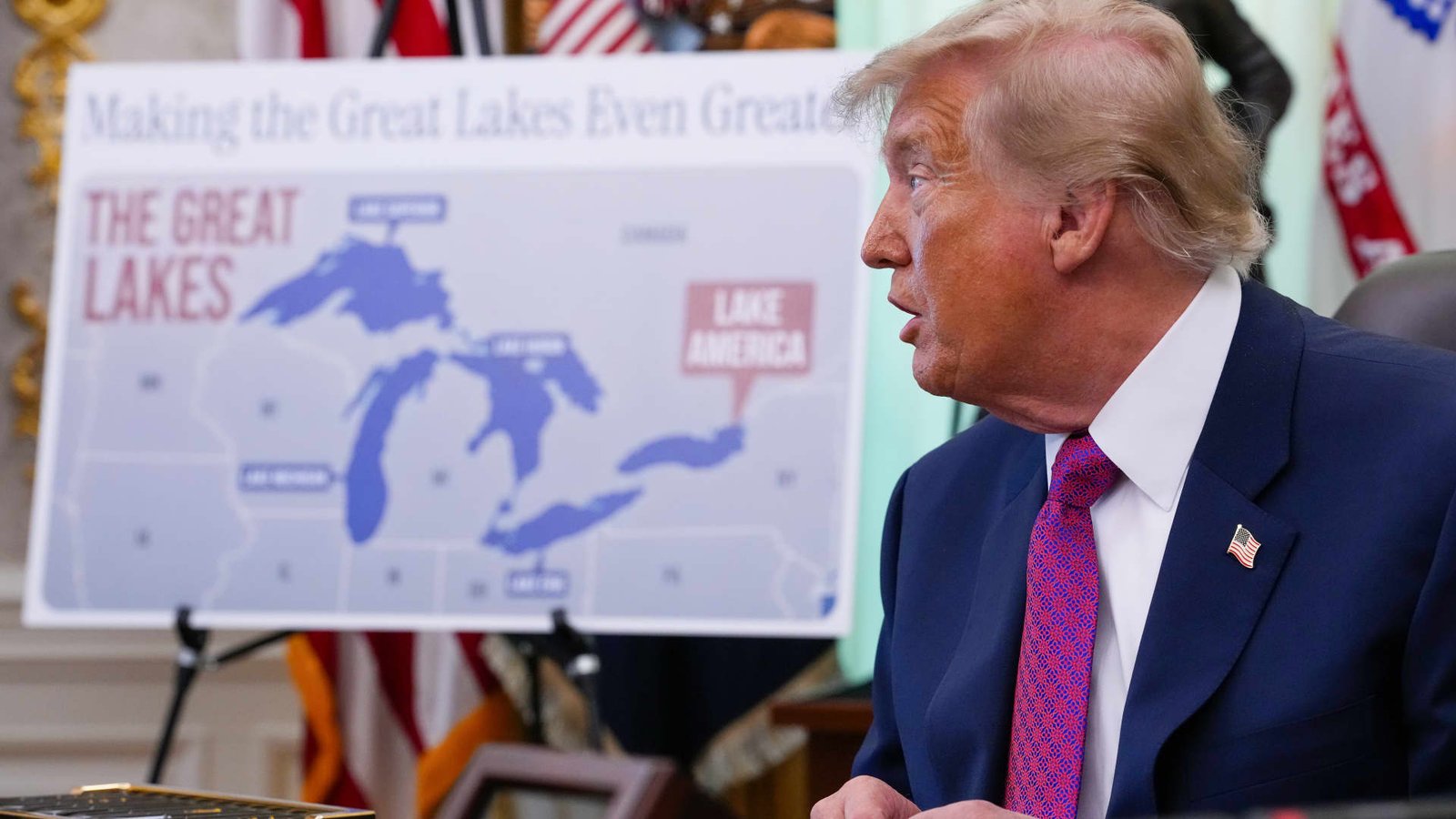
President Donald Trump on Thursday signed an executive order that he said will “immediately” change the name of Lake Ontario to “Lake America.”
Trump’s attempt to rename the Great Lake, which straddles the U.S. northern border with Canada, came as a recent breakdown in trade talks between Washington and Ottawa has led to new retaliatory tariffs and a rapidly deteriorating relationship.
Trump in recent days had repeatedly threatened to take the symbolic step, but it was unclear if he was being serious. Canadian officials have already said they will not recognize the new name.
“We’re going to be changing the name of Lake Ontario, effective immediately to Lake America,” Trump said in the Oval Office before signing the executive order.
A White House official told Trump that the order directs Secretary of the Interior Doug Burgum and his department to update the Geographic Names Information System “to reflect that lake once known as Lake Ontario will, from this day forward, be known as Lake America.”
The executive action marks the second time Trump has targeted the long-enduring name of an international body of water and renamed it for the U.S.
On the first day of his second term, Trump signed an order to change the name of the Gulf of Mexico to the “Gulf of America.” The attempt to rename the gulf, which has gone by the same name since the 16th Century, drew international opposition, and numerous media outlets vowed to stick with the common usage.
Trump said Thursday, “If you think about it, we have a gulf and we have a lake. Now, all we need is an ocean. So, maybe we’ll have to change the name of the Atlantic, and/or the Pacific. Maybe we’ll change them both.”
When asked what message he was trying to send by renaming Lake Ontario, Trump initially claimed, “No message.”
But he immediately added, “Canada has been ripping us off for a long time on trade.”
“They don’t pay for anything, and they want to be treated like a state, but they’re not a state,” said Trump, who last year angered many Canadians by repeatedly advocating for making Canada the 51st U.S. state.
The latest provocation could further inflame tensions between the U.S. and Canada, whose trade war reignited over the weekend when Trump imposed 50% tariffs on about $20 billion worth of Canadian goods.
Canada responded by announcing “dollar for dollar” retaliatory tariffs of up to 50% on imports from the U.S., currently set to take effect on Sept. 8.
On Wednesday evening, Canada said it would pare back some of those tariffs targeting seafood and fish products “to protect against broader economic harms.”
But the new round of import taxes could still raise costs and reduce choices for consumers, as Canadian Prime Minister Mark Carney acknowledged after the two countries’ trade negotiations fell apart Friday evening.
But Trump, an ardent fan of tariffs who has long complained about the U.S. maintaining trade deficits with its economic partners, dismissed the idea that the dispute could exacerbate affordability in the U.S.
“Ultimately, it’s going to be very good for us,” Trump said Thursday afternoon, citing the average annual U.S. trade deficit with Canada.
“It’s too much. We can’t lose that. We don’t want to lose that. We don’t want to lose it anymore,” he said.
Lake Ontario’s centuries-old name comes from the Iroquoian word “oniatarí:io,” meaning “lake of shining waters,” according to the Center for Great Lakes Literacy.
It is farthest east of the five Great Lakes, the world’s largest freshwater system. It is bordered to the north by the Canadian province of Ontario and to the south by New York.