Use An Old Wood Plank And Rake To Smooth And Level Your Yard
Chances are your lawn is a lot more than just a lovely green space. It could be a playground for your kids or grandchildren. Perhaps it’s a party plaza for you and your friends, or a neighborhood meeting place. Regardless of its role, low spots that can trip people up or cause unsightly drainage issues are a yard problem that needs to be addressed. The good news is that with a long straight board and a rake, you can properly level low spots. Adding soil, measuring the dip with the board, and raking it smooth is an accessible DIY job with huge upsides.
Low spots can occur for a host of reasons, one of which is soil compaction. Areas exposed to heavy equipment or frequent walking can experience soil compaction, which presses soil particles together. This process can eventually cause uneven settling. Poor drainage and erosion are another way that low spots are formed, as water washes away loose soil, deepening a depression. Tree roots or other organic substances can also break down, dropping the level of the soil. You can likely spot the low areas, whatever their cause, by the appearance of the grass in those spots. Both compaction and wet spots can cause yellowing or browning grass, with the latter naturally displaying overly wet soil.
Leveling your lawn
The way to fix low spots is uniform, with the exception of compacted soil. Before you can fix that low spot, the compacted area needs to be aerated aggressively, then treated like all the other low spots. It’s easier to find low spots just after you’ve cut the grass. When you find low areas, you’ll need to estimate how much soil is necessary to fill them. It’s not easy to noodle that out, and you’ll need a lot more than you think.
Dump your first load of regular topsoil in the low spot, spread it out with your rake, then pack it down with your feet to help form a solid base. You can just use topsoil if the low spot is two to three inches deep or less. Deeper low spots benefit from a dirt structural foundation beneath the topsoil.
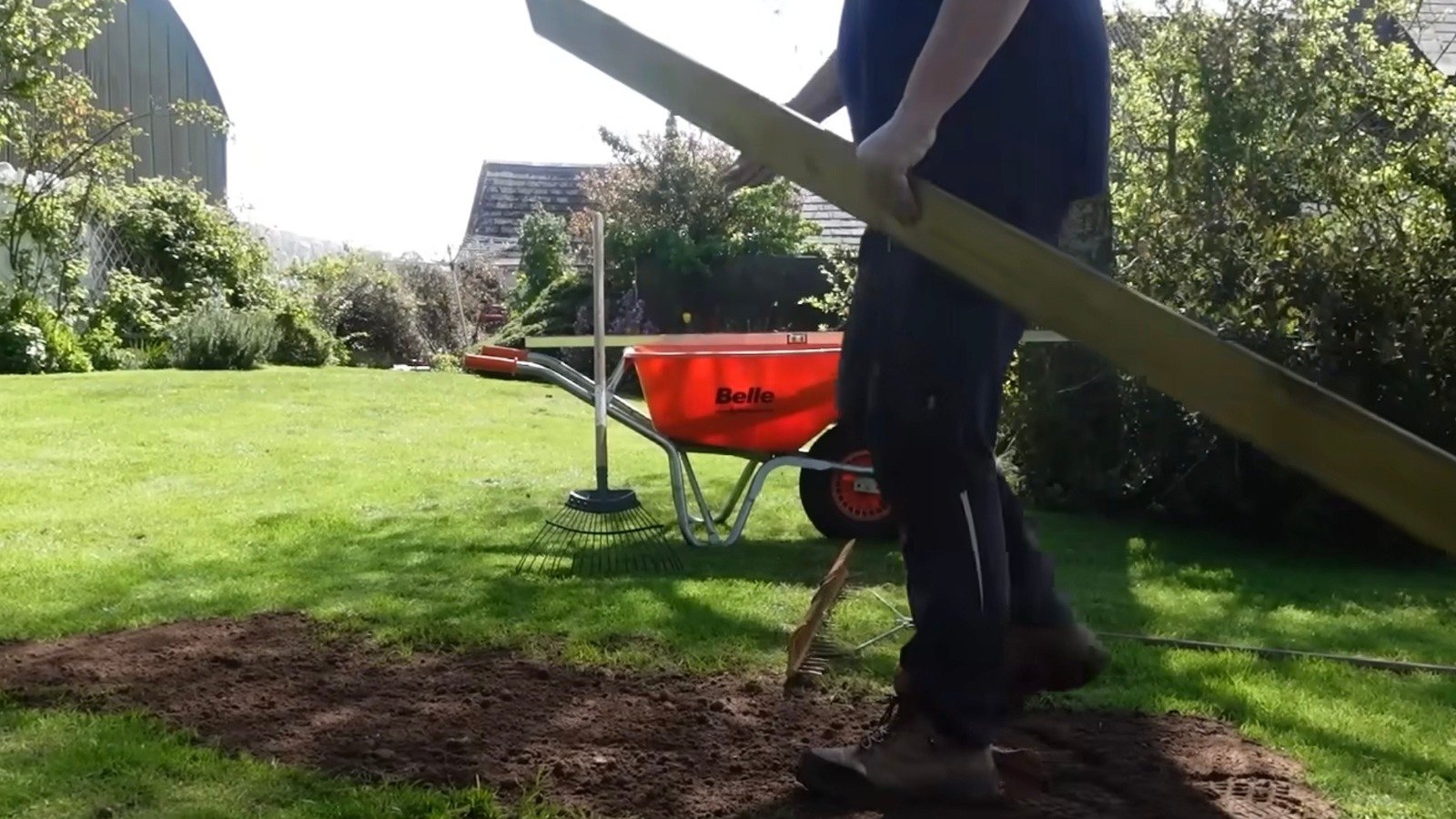
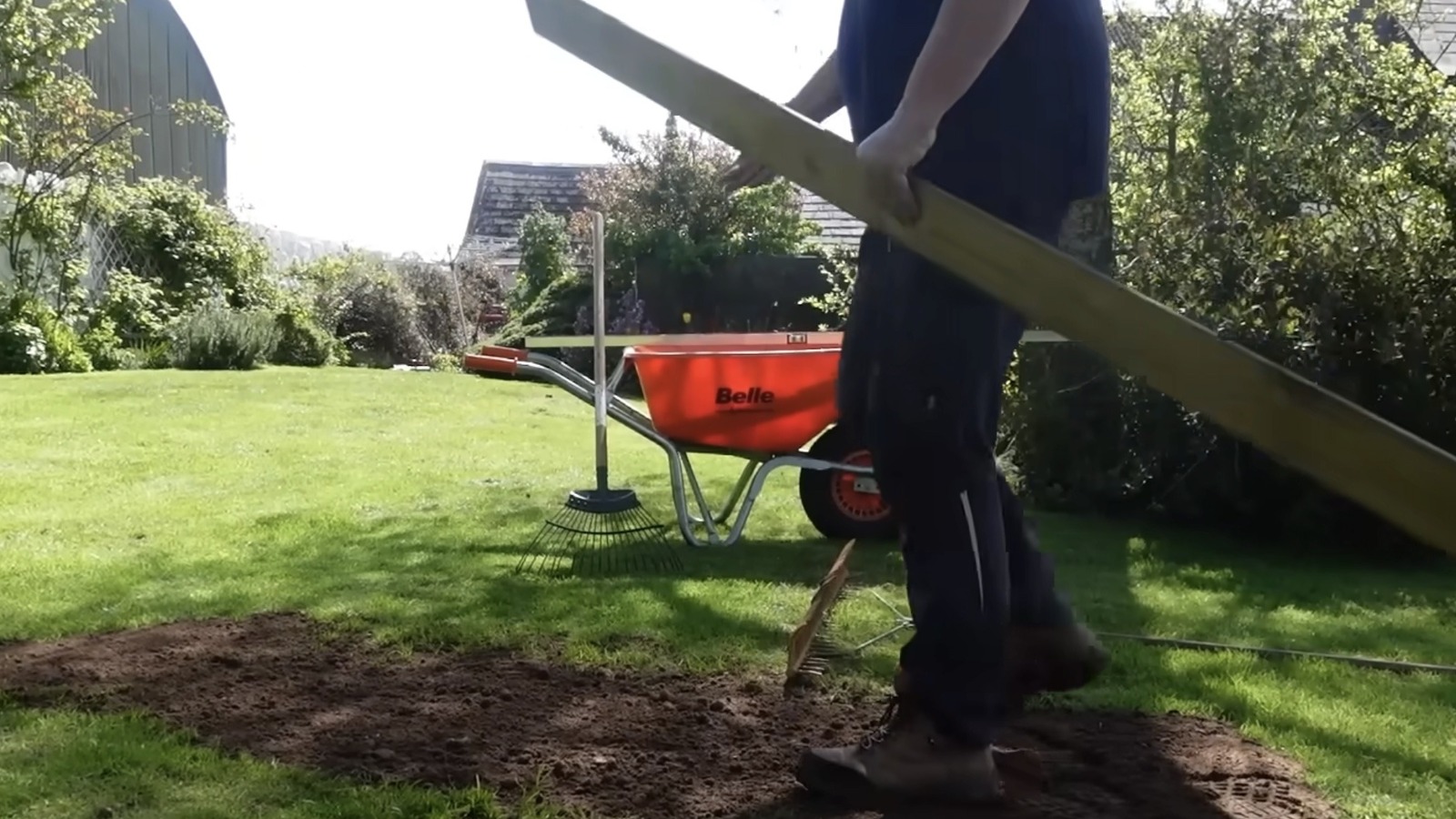
Next, use your wooden plank to measure how much more soil you’ll need (as reflected in the above photo). Make two or three soil applications, each followed by foot packing. Repeat this process until the soil is level or a bit higher than the surrounding lawn. Finally, smooth it with your rake and broadcast plenty of grass seed on the area. The straight board can also be used exactly as you would a screed stick (to level newly poured cement) to flatten the soil you’ve piled into the low spot. Still, the board must reach completely across the depression for this to work.