Garden Diaries: Laurie Blumenfeld’s Urban Community Garden
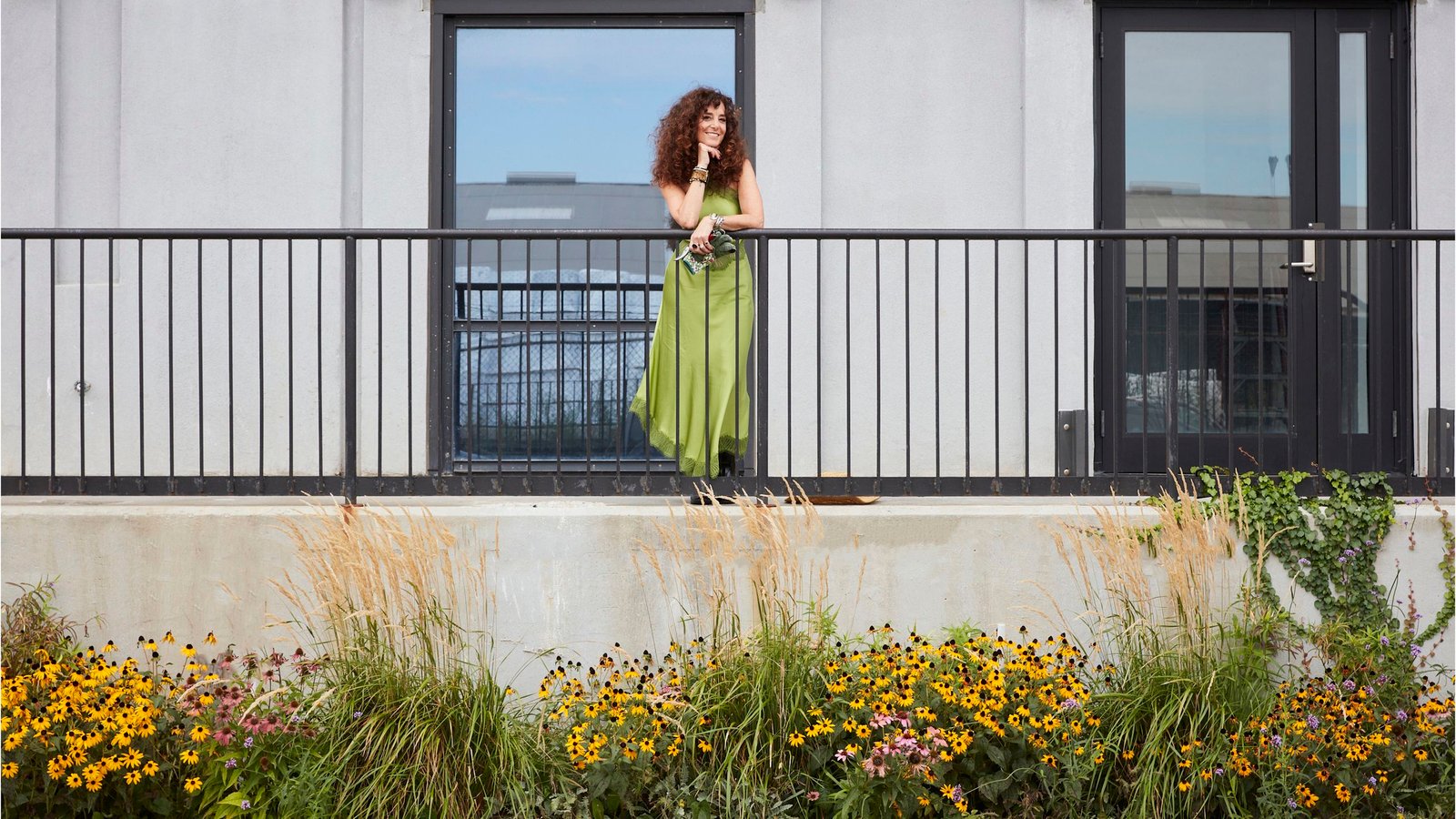
Four years ago, interior designer Laurie Blumenfeld left behind her beloved Brooklyn Heights roof garden for a new Red Hook loft, where the only outdoor space was an overgrown parking lot. But where others saw an eyesore, Laurie saw gold – the perfect plot for a naturalistic meadow set against the city skyline
With a love for creating juxtaposition in her interiors, it seemed obvious to Laurie to create an unexpected community garden right in the middle of an urban landscape. Today, wildflowers, native perennials, and pollinator-friendly plants fill sweeping borders, softening hard edges and inviting passers-by to pause in the busy pace of city life.
And while Laurie was confident the building’s residents would embrace the garden, she hadn’t anticipated quite what it would give back to her. The garden has become a creative outlet, giving Laurie a new way to play with color, texture, and form beyond four walls. ‘Creating this garden just seemed obvious to me,’ Laurie says. ‘It’s what the space needed; it’s what the people here needed. Now, I get to watch it be enjoyed every day.’

(Image credit: Alexa Bendek)
It All Started with a Parking Lot
When we lived in Brooklyn Heights, we had a private roof deck that we transformed into a garden and built-in kitchen. It really was our personal oasis. But it was time for a change – and we needed more space – so we moved into a brand-new loft in Red Hook.
But in doing so, I had to sacrifice having a garden. Then I saw the building’s parking lot: weedy, overgrown, and neglected. It was perfect – a blank canvas, somewhere to grow plants not just for us, but for the residents who live here and everyone who passes by.
So, I started a fundraiser. Thanks to the enthusiasm of our neighbors, it took just one week to raise more than enough money to start the transformation.

(Image credit: Left: Julian Wass / Right: Alexa Bendek)
Our building is a converted warehouse right on the water, with people passing by on bikes and the ferry all the time. There was a real incentive to improve the curb appeal and create a beautiful space for residents to enjoy.
Everyone was happy for me to lead on the project, so I created the design and selected the plants. Then I wrangled some friends from the building to help with the planting.
It took a couple of years to extend the garden along the whole space (it’s a city block long), but now, in its third year, it has really come into its own.
Bright mixed borders frame the plot, trees add height, and each parking spot has its own triangular bed filled with ornamental grasses – though I plan to eventually grow lavender here for more color and fragrance.
When people stroll by, they tell me how happy it’s making them. I don’t think we always notice how much our surroundings impact us. I genuinely believe the weeds were draining everyone’s energy. Now, we have the cool contrast of the industrial building with a naturalistic garden, and it’s an uplifting place to be.

(Image credit: Alexa Bendeck)
Creating an Urban Meadow
I knew what to do with this space straight away. In my interior design work, I find magic in the juxtaposition of a vintage piece of furniture in a modern room, something textural with something shiny. This community garden was the same: a meadow in a concrete jungle.
It felt meant to be, even if it sounds cliché. My last name, Blumenfeld, translates to ‘field of flowers’ in German, so that’s what I did – created a field of flowers in New York City. The vision was clear from the beginning.

(Image credit: Alexa Bendeck)
I mixed taller shrubs like butterfly bush with shorter flowers like Nepeta ‘Junior Walker’ elsewhere for dynamic height and movement. It was only natural for me to obsess over the color palette, too, although I had to exercise some restraint. I love purple, but we couldn’t just have a sea of it. That’s why I contrasted it with the pinks and yellows of echinacea, rudbeckia, and yarrow instead.
I also thought about how it would look throughout the year. I wanted little floral surprises in each month. Really, it’s been like designing with a year of programming in mind, deciding what will take center stage next as each season comes along.
Spring brings a field of tulips erupting in all sorts of bright colors, summer is all about the mulberries with their delicate fruits, and fall is much more fiery, with Japanese maples shifting in color and fall flowers getting ready to put on a show.
Against the concrete and glass of the building, the plants simply pop. Everyone who saw it come together told me they never would have envisioned it before. It’s that unexpected, yet delightful beauty I always aimed to create here.

(Image credit: Alexa Bendeck)
This Place Looks Like It Belongs
I don’t have a background in horticulture or garden design. My journey with creating gardens has been a ‘boots-on-the-ground’ experience, experimenting with colors, textures, and shapes as I do with interiors.
When creating this community garden from scratch, I looked to the surrounding landscapes for inspiration. Brooklyn Bridge Park and the New York High Line were two of my biggest influences, with their native planting and perennials.
It’s brought so many bees, butterflies, and birds. Monarch butterflies are always flitting around in the morning, which is pretty incredible to watch with the city landscape in the background.

(Image credit: Alexa Bendeck)
It is a lot of work, though. Before we had irrigation put in last year, two other women and I took turns watering. It became a really meditative practice for all of us. It’s so unusual to have garden space in the city, so coming out here to weed, water, and tend to the plants is the escape we all look for.
There are quite a lot of families in the building, and I see them take their children through the flowers. Even dogs love to stop to admire it – my miniature Australian shepherd, Ava, loves the rudbeckia. She always closes her eyes and lifts her little nose into the air.
She reminds me to always stop and smell the roses, even when life feels busy.

(Image credit: Julian Wass)
You Can’t Control Everything
When it comes to a community garden, you can only have so much control.
One of our biggest challenges has been what we call the South Garden. It’s a 2,000-square-foot patch full of butterfly bushes and mulberries, but finding a way to extend the irrigation system out there was difficult. Funnily enough, my experience renovating kitchens and bathrooms helped me solve the problem.
We’ve also had our fair share of garden pests. Aphids took over our birch trees, and I immediately called professionals in to deal with them. My experience with our old roof deck garden taught me that if we didn’t act quickly, they’d cause quite a lot of damage.

(Image credit: Alexa Bendeck)
I’m also working on a way to introduce a kitchen garden. The problem is that I don’t want to plant directly into the soil, where pests and rodents might get to the crops, so we’re planning raised garden beds instead. We also have the wind to contend with because we’re quite exposed next to the water.
For me, it’s an obvious addition. My husband loves to cook, and I miss growing herbs, tomatoes, peppers, and lettuce. For now, we can grow some things indoors, thanks to our huge, sun-filled windows.
But watching everyone enjoy the garden makes me want to keep expanding it. We’ve got a roof deck with a spectacular view of Lady Liberty and Manhattan that’s currently under construction, but the hope is to plant up there eventually. I’d also like to put some furniture in the garden so people can sit and watch the sunset over dinner.

(Image credit: Alexa Bendeck)
Our Garden Is More Than I Ever Imagined
The best thing to have come out of our community garden is the response from the residents and wider neighborhood. I get people sending me photos at 6 am when they’re rushing to catch the ferry to Wall Street but still take a moment to admire the blooms.
One interaction that sticks with me is with a lovely lady who told me the garden feels like it came from my soul. She described the flowers as representative of my energy, and I resonate with that.
I find myself being present in the garden. I like having these living beings in the form of plants to care for every day.

(Image credit: Julian Wass)
This whole project has scratched my itch for gardening. I’ve even been asked to create a planting style guide for the rest of Red Hook. I’ve pulled together a list of native plants and how to look after them, helping businesses in our neighborhood brighten up their storefronts with flowers.
I’ve learnt that interiors and gardens work together. I’ve always loved using greenery in my clients’ homes, filling rooms with houseplants, and the garden is simply an extension of that. Both spaces are influenced by seasonality, texture, and color to make them your own.
But there’s something about gardening that goes beyond design. While watching the garden go dormant in winter is a little sad, there’s hope in the fact that spring comes next. There’s a sense of renewal with each season, as the garden evolves and changes – just as we do. That’s the beauty in it.
Garden Diaries is our series where we share inspiring stories of designing and cultivating a stunning garden space. We explore how creatives, designers and tastemakers have grown a deeply personal space, inviting creativity, learning and happiness in their gardens, and how they live in these spaces.
Love beautiful design ideas, expert advice, and inspiring garden trends? Sign up for our newsletter and get the latest features delivered straight to your inbox.