10-year yield hits highest since January 2025
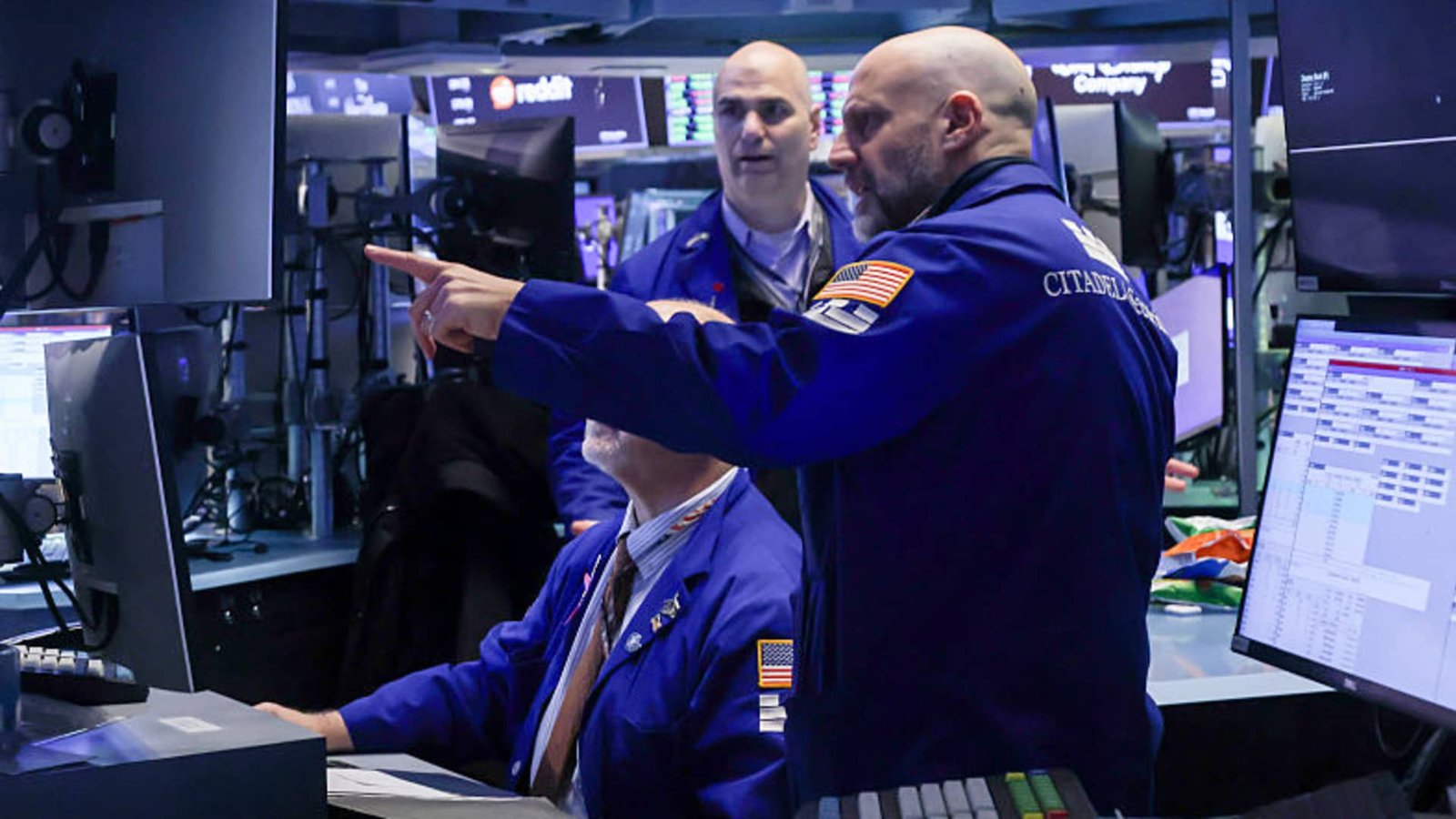
Traders work on the floor the New York Stock Exchange (NYSE) in New York, US, on Monday, Feb. 2, 2026.
Michael Nagle | Bloomberg | Getty Images
U.S. Treasury yields traded were little changed on Tuesday after renewed tensions in the Middle East drove global government borrowing costs to their highest point going back to early last year.
The 10-year Treasury note yield — the main benchmark for mortgages, auto loans and credit card debt — slid less than 1 basis point to 4.756%. The yield hit its highest level since Jan. 14, 2025 earlier in the day.
The longer-dated 30-year Treasury bond yield, which tends to track geopolitical events, was down more than 1 basis point at 5.235%.
The yield on the 2-year Treasury note, which typically moves in line with short-term Federal Reserve interest rate decisions, climbed more than 1 basis point to 4.365%.
One basis point equals 0.01%, or 1/100th of 1%, and yields and prices move inversely to one another.
Borrowing costs reached their highs of the day as traders continued to weigh developments in the Middle East. The focus comes after U.S. forces earlier launched fresh strikes against Iran and a tanker was struck by unknown projectiles off the coast of Oman in the Strait of Hormuz.
The escalation pushed oil prices higher. West Texas Intermediate futures were last seen 3% higher at above $88 per barrel, while Brent crude — the international oil price benchmark — advanced more than 2% to above $92.
“With no clear path to reopening the Strait after six months of war, inflation worries remain elevated. Uncertainty over the Federal Reserve’s policy outlook, fiscal concerns, and rising AI-related debt issuance have all kept bonds under pressure,” said Ulrike Hoffmann-Burchardi, UBS chief investment officer of the Americas and global head of equities, said in a Tuesday note. “Yield volatility is likely to persist in the near term.”
Investors are also monitoring the G20 finance ministers’ meeting in Asheville, North Carolina, which is set to conclude later Tuesday, as well as a raft of domestic economic data, with nonfarm payrolls figures expected Friday.
The August reading of the ISM Manufacturing Index fell 1 point from July to 54.6, which was slightly below the 55.3 that economists polled by Dow Jones expected. Meanwhile, job openings in July came in roughly as expected.