3 Appliances You’re Slowly Killing — and the $4 Fix That Saves Them
Pull the lid off your coffee maker’s water tank and take a whiff. If it smells a little funky, you’re not imagining things — and you’re not alone.
NSF, the independent public-health testing group, ranks the coffee reservoir among the top 10 germiest spots in your home — right up there with the kitchen sponge. Mold and yeast love that warm, damp little tank.
And that’s just the coffee maker. Your kettle and your steam iron are quietly clogging with mineral scale, too. The good news? One cheap jug of white vinegar fixes all three — and can add years to each.
Here’s why this matters to your wallet. A scaled-up, gunked-up appliance heats slower, works harder, and dies younger. Toss it and you’re out $30 to $150. Clean it and you’re out about four bucks.
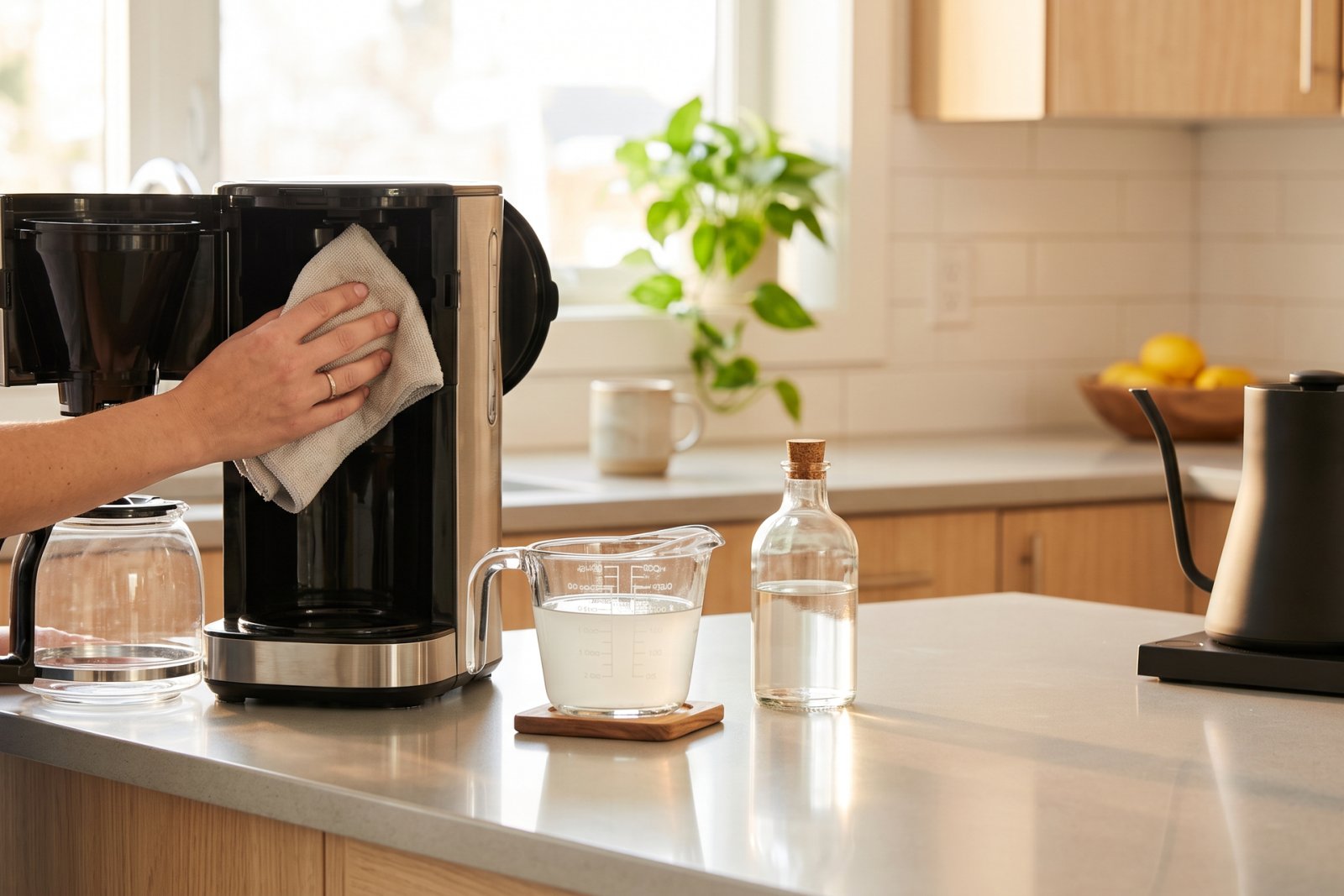
1. Your coffee maker: The germ factory on your counter
That warm water tank is basically a spa for mold. And the scale building up inside slows your machine down and leaves your coffee tasting bitter and weak. Here’s the fix.
- Fill the water tank with equal parts white vinegar and plain water.
- Start a brew cycle. Halfway through, switch it off and let the solution sit for 30 to 60 minutes.
- Turn it back on and finish the cycle.
- Run two or three cycles of fresh water to rinse out every trace of vinegar.
- Wash the carafe, lid, and filter basket in hot, soapy water.
Do this once a month. If your water’s hard, make it every couple of weeks.
Quick gut-check — if your money advice is coming from random online influencers, you’re playing a dangerous game. I’ve been a CPA since 1981 and writing about money since before the internet existed. Sign up for the free Money Talks Newsletter and get expert advice that’s been tested by time.
2. Your electric kettle: The limescale trap
See that chalky, crusty film on the bottom? That’s limescale — minerals left behind every time the water boils off. Left alone, it makes your kettle slower and noisier, and it can shorten the life of the heating element.
- Fill the kettle halfway with equal parts white vinegar and water.
- Bring it to a boil, then switch it off and let it sit for 20 to 30 minutes.
- Pour it out, then scrub away any loose scale with a soft sponge.
- Rinse well, then boil a full batch of plain water and dump it. Repeat so your next cup doesn’t taste like a salad.
Got a stovetop kettle instead? Same vinegar-and-water trick, same result.
3. Your steam iron: The clog that ruins your shirts
When mineral gunk clogs an iron’s steam vents, it spits brown, crusty water right onto your good shirt. Before you pitch the iron, try this — but check your manual first, because some makers want distilled water only.
- If your iron has a self-clean button, fill it with distilled water, heat it up, and hold the button over the sink to blast the vents clear.
- No self-clean? If the manual allows it, fill the tank with equal parts distilled water and white vinegar.
- Steam it through an old rag until the tank’s about half empty, then let it rest 30 minutes.
- Empty it, refill with plain distilled water, and steam through again to rinse.
- Wipe down the soleplate, and clear any stubborn vents with a cotton swab.
One caution: A few manufacturers warn that vinegar can damage the insides of certain irons. When in doubt, skip it and stick with the self-clean function and distilled water.
Notice the theme here. The enemy is buildup — germs, scale, minerals — and the weapon is a $4 jug of vinegar and 20 minutes you’d have spent scrolling your phone anyway.
Keep up with it and these machines will run like new for years. Neglect them and you’ll be back at the store, wondering why appliances “just don’t last” anymore. Truth is, it’s often how we treat them, not how they’re built.
So this weekend, grab the vinegar. Your coffee will taste better, your shirts will stay clean, and your wallet will thank you.