Home, office or hybrid: Where do CFOs work best? Peer Audit
Six years out from the onset of the COVID-19 pandemic, return-to-office mandates don’t tend to generate the same attention-grabbing headlines they once did.
While some big-name companies continue to roll out strict office attendance policies, many business leaders have come to realize that the way their employees get work done isn’t always quite as important as the actual work they produce.
Consequently, the way employees work remains in flux across businesses, departments and individuals. But, if given the choice, where are members of the C-Suite working these days primarily?
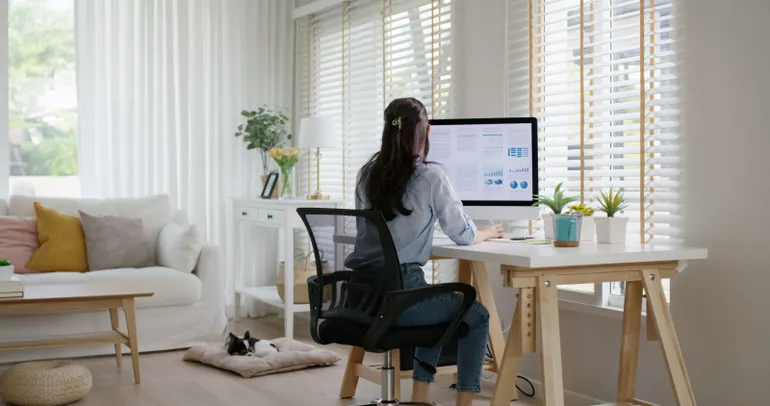
To find out, we posed the following question to a range of finance chiefs: In what physical location do you find yourself being the most productive? We asked a similar question on a LinkedIn poll conducted Aug. 22-29, and the results appeared to reveal a clear preference for working at home. Among the 110 respondents, 50% said that their home office was their most productive spot to work, while about a third (31%) cited their company office.
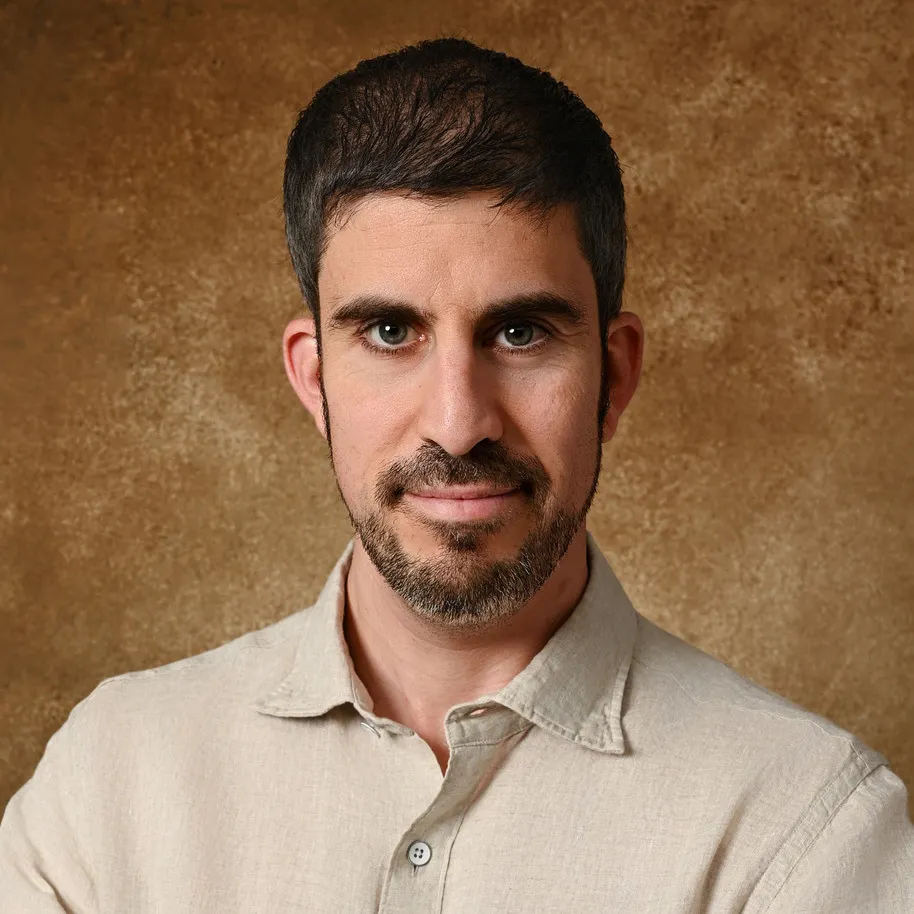
Guy Zeltser, CFO, Hippo Insurance (homeowner’s insurance company)
Optional Caption
Permission granted by Guy Zetlser/Hippo Insurance
“The honest answer is that it depends on the work, and being deliberate about that is the whole point. Convergent work — closing the quarter, pressure-testing an assumption, reading a model until I find the line that’s wrong — happens at my desk at home, early, before the day starts. It needs long blocks and no audience. Adding people to that work doesn’t improve it.
Divergent work is the opposite. Understanding where a growth initiative actually stands, or whether someone on my team is stuck, requires being in the office. Oftentimes, the most useful information I get is unsolicited, and nobody schedules a meeting to tell you they’re worried. That happens in a hallway or in the ten minutes after a meeting formally ends.
Failure is handing that choice to your calendar, doing deep work in fragments and relationship-building over video.”
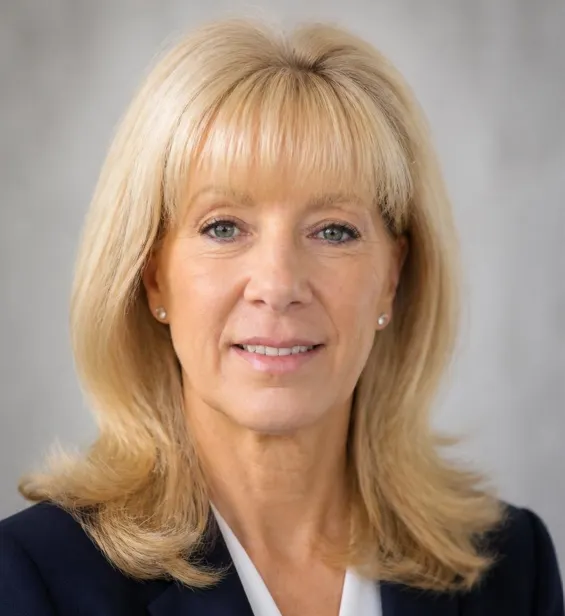
Susan McKeon, CFO and Associate Lab Director, Brookhaven National Laboratory (U.S. Department of Energy lab)
Optional Caption
Permission granted by Susan McKeon
“I personally work best in the office. Brookhaven has a hybrid workforce right now. We are in the office four days a week, with one day that can be remote depending on the job. As soon as I was allowed to come back, I was back in the office five days a week.
Part of it is because I like the connection to the laboratory site. I like being able to physically talk to people. I don’t have the bias that some people do that you’re not as effective over Zoom. There have always been international companies that worked very well remotely, even before we had all the tools we have now.
But I was home for two years during COVID because the business staff could work off-site. I’m a bit of a Type A personality, so I was working nearly 24 hours a day, seven days a week. It was much too convenient. Even with a home office, I had no separation between home and work.
During COVID, my team worked very well off-site. Coming back was a hard transition for many of them because they felt they were working effectively, and they were. But as an institution, we felt that scientific discovery relies heavily on collaboration. Even though we aren’t scientists doing science, our work supports that mission. That was part of the decision to bring most people back four days a week. For me, five days in the office is where I work best.”
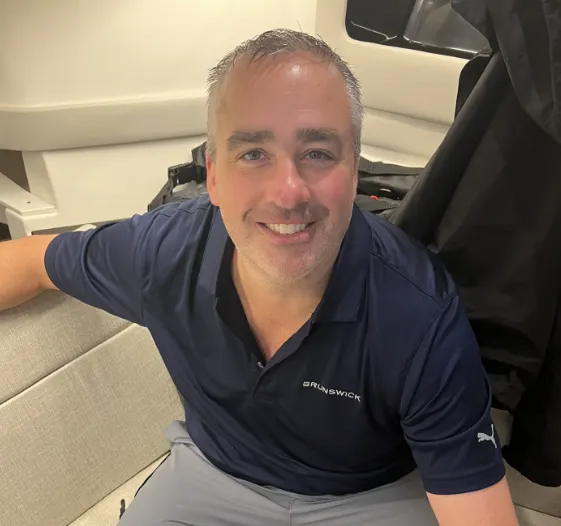
Ryan Gwillim, CFO and chief strategy officer, Brunswick Corp. (marine recreation company)
Optional Caption
Permission granted by Adam Zaki
“My main office is at the company’s headquarters. I’m a bit old school in believing that being in the office is best, but I’m also big on flexibility. That doesn’t mean I need people at their desks Monday through Friday from 8 a.m. to 5 p.m. We’re all professionals, and people should have the flexibility to do their jobs.
I do think there is value in people being in the same place and working together. I can get more done walking from my office to fill my water bottle because I’ll see two people along the way. I can say, ‘Can you remember this?’ or, ‘Why don’t we consider showing it this way?’ I might see someone else and say, ‘I saw your forecast. There was a number I didn’t expect. Can we talk about it?’
If you’re not in the office, that becomes an email or a Teams message, and then you have to wait for someone to get back to you. Maybe it’s a little old-fashioned, but I do my best work in the office. I can shut my door and power through something while still having the people I count on around me.”
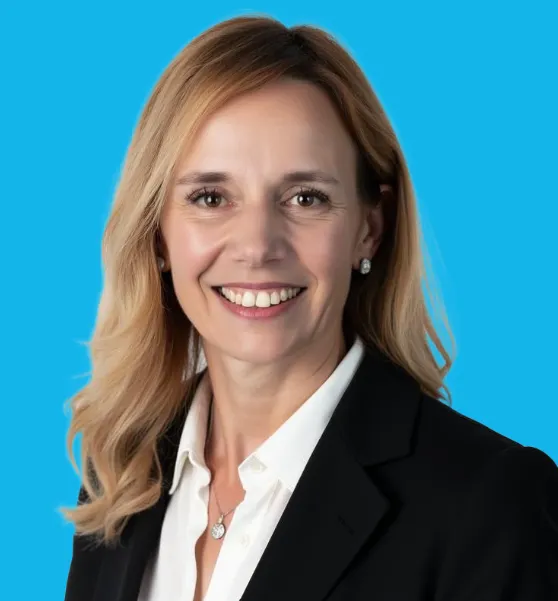
Claire Bramley, CFO, Xero (cloud-based accounting software provider for small businesses, accountants and bookkeepers)
Optional Caption
Permission granted by Xero
“I’m going to say it depends. If it’s a problem I have to solve by myself, which is quite rare these days, I like to be in my home office. I can lock in, shut the door and think.
If it’s a team problem, I want to go into an office. I don’t care which office. It could be San Mateo, Sydney or Wellington. I want to sit in a room with other people, and I like to use a whiteboard.
I like to talk through what the problem is and how we got there. What do we know about the problem? More importantly, what don’t we know that we need to find out? Then, how do we work through it and find a solution?
One of my strengths is managing through difficult times, issues or change. If we have something that needs to be solved, I want us to collaborate as a team and find the best solution for the company. That might not be the best solution for one particular team or person, but it is about working together to find the right answer for the company. I’m quite happy to be alone in my home office and shut everyone else out, but I also love being in a room with people, whiteboarding and really understanding a problem.”
Jannis Koehn, co-founder and COO, FLOAT (platform that provides financing and financial management tools to European technology companies)

Optional Caption
Permission granted by Permission granted by Jannis Koehn
“I work best in a coworking space where nobody knows me. I don’t get distracted, and the particular space I use is very close to my house. I don’t lose any time commuting or sitting in traffic, but I also don’t have the distractions I would have at home.
It’s a nominal fee and something I pay for on my own. I really enjoy having the option to work in a quiet, semi-private space.”
Andrew “Rusty” Russakoff, CFO, TouchTunes (digital jukebox and dartboard operator)

Optional Caption
Permission granted by TouchTunes
“The ability to dictate my stream-of-consciousness thoughts and have conversations with AI has unlocked productivity in some new places on the road, in the car, on the walk that I’ve found to be novel and powerful.
But overall, other than that, I’m pretty adaptable. I’ve worked fully in office, fully remote and hybrid, like we are at TouchTunes. My overall output is pretty similar across all three.
The type of work does shift at home; I can go deeper on analysis and modeling without interruptions there. In the office, I get connections to the team, the ad hoc kind of hallway conversations, the ability to see kind of how people are working, and the speed of moving things forward in real time. Ultimately, I prefer being in the office for that reason.”