Will The U.S.’ Big, New Venezuelan Oil Deal End Up A Dry Hole?
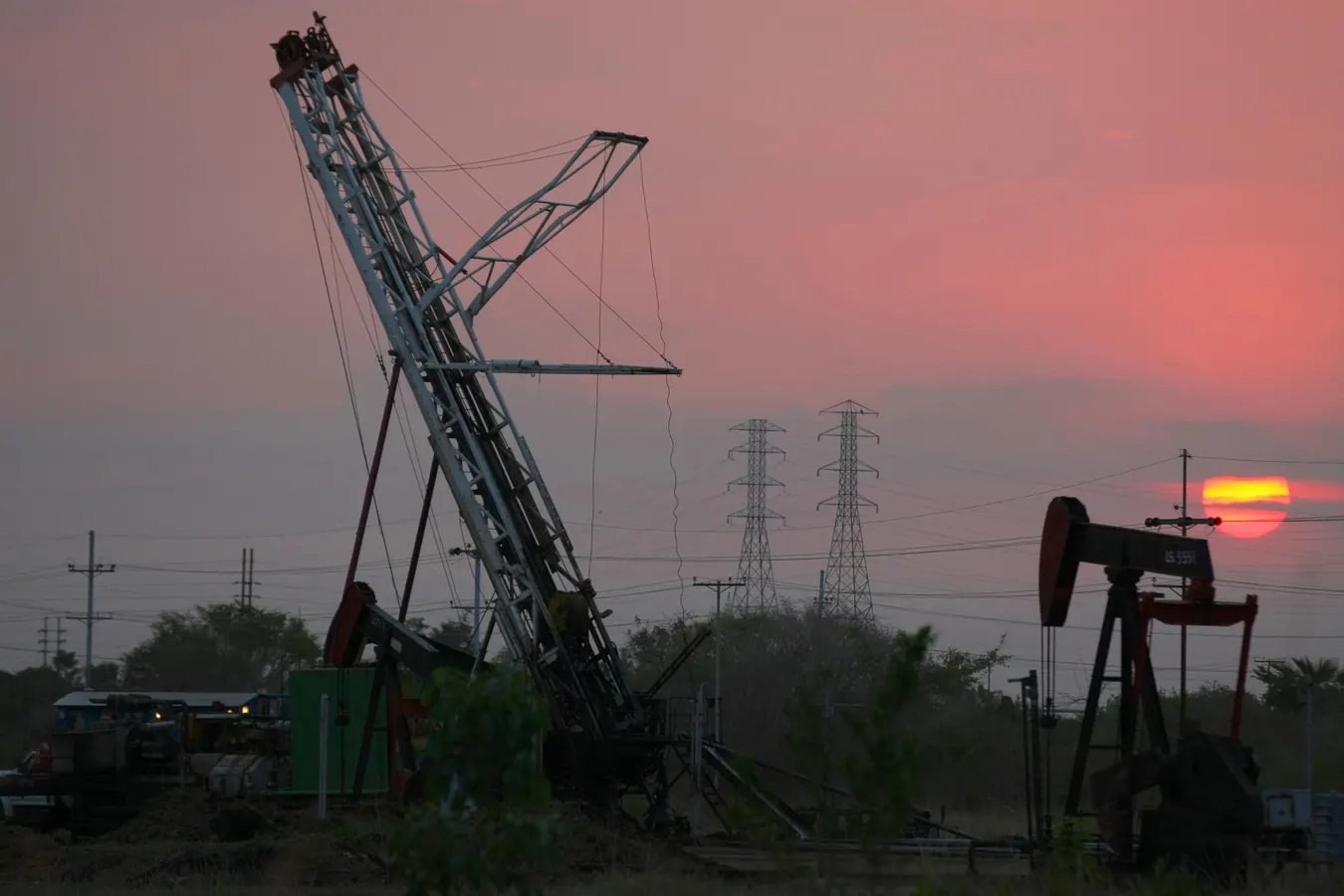
Cabimas, Venezuela, oil pump jack is seen at dawn in oil field. (Photo by: Jose Bula Urrutia/UCG/Universal Images Group via Getty Images)
UCG/Universal Images Group via Getty Images
With much fanfare President Trump has announced a deal in which the U.S. government—the Pentagon in this case—gets a direct stake in key Venezuelan oil fields. The President declared on Truth Social, “This Historic Transaction MORE THAN DOUBLES American Oil Reserves, greatly increases our Oil Supply, and will substantially lower Gas Prices for all Americans, long into the future.”
The actual arrangement is unusual. The Pentagon gets a 35% stake in a company called North American Blue Energy Partners, which is run by a crony of current Venezuelan president, Delcy Rodríguez. But don’t bank on a future gusher from Venezuela—certainly not as fast as the president anticipates.
The reason is that nothing is more of an emotional, combustible political mix than nationalism and oil.
Mexico, for example, nationalized 17 foreign oil companies operating in their country back in 1938. Mexicans regarded the seizure as a declaration of independence. The date of the nationalization, March 18, is a national holiday.
With similar nationalist fervor, other countries have followed Mexico’s example. In 1953 a pro-communist government in Iran nationalized the country’s British-controlled oil industry. The event precipitated a coup that had the fingerprints of the CIA and its British equivalent all over it. It restored the deposed Shah Mohammed Reza Pahlavi to the Peacock throne. The Islamic terrorists, who ousted the Shah in 1979, used this oil incident as one of their justifications for seizing power.
Ostensibly, what we have in Venezuela is the government making a deal with a supposedly independent company in which the U.S. stake is less than 50%. But the political reality is that the deal is being regarded by political forces in Venezuela and elsewhere as a U.S. takeover, particularly since the Pentagon will have a stake in this entity.
The current, unelected President Rodriguez heads an unpopular government that is seen as illegitimate. The previous dictator, Nicolas Maduro, agreed to hold elections back in 2024 as a way to escape American sanctions. He barred the popular opposition candidate, Maria Corina Machado, from the race, so she endorsed a surrogate who won overwhelmingly. But Maduro, controlling the military and the police, did the vote counting and brazenly declared himself the winner.
Machado, Venezuela’s leading advocate of democracy, had to go into hiding lest Maduro arrest and kill her. She was awarded the Nobel Peace Prize.
After President Trump arranged the dramatic seizure and arrest of Maduro, who was a major drug kingpin, everyone assumed Machado would return when honest elections were held, which were quickly anticipated. Instead, the Trump Administration dealt with the discredited Rodriguez, who had been Maduro’s obedient lackey.
The process to return to democracy, which is being overseen by U.S. officials, has been proceeding at a snail’s pace. With incredible shortsightedness, the popular Machado has been sidelined by the Trump team. It should come as no surprise that this oil deal has set off a gusher of opposition across the political spectrum.
Genuine oil industry giants are reluctant to release the floodgates of investments necessary to revive and then expand Venezuela’s incredibly immense oil resources until they feel they can trust the governing institutions and the rules of the game. That’s why oil output remains low despite Maduro’s removal.
Whatever happens with this deal, it sets another awful precedent of the U.S. government’s taking direct, socialist-like stakes in companies. Far-left democrats are taking note.