Bathroom Trends 2027: The Rise of Personalized Wellness Design

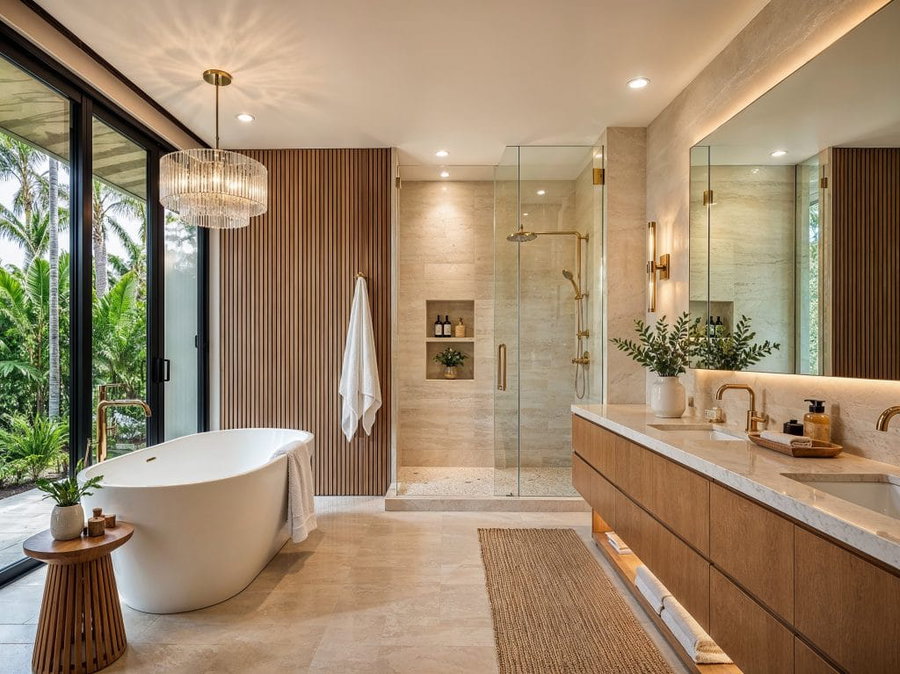
Bathroom trends 2027 are making everything noticeably more personal. The room design now actually begins from those moving through it: where you stand first thing in the morning, what you reach for next, where towels land, how much light you want before you are fully awake. That shift has made bathrooms more intuitive, but it is also changing how they look.
Wood-faced vanities are overtaking painted cabinetry; finishes are moving away from starkness. Technology, meanwhile, is receding into the architecture and nothing needs to advertise itself with another control panel. These twelve trends show where all that is leading.
12 Bathroom Trends That Will Define 2027

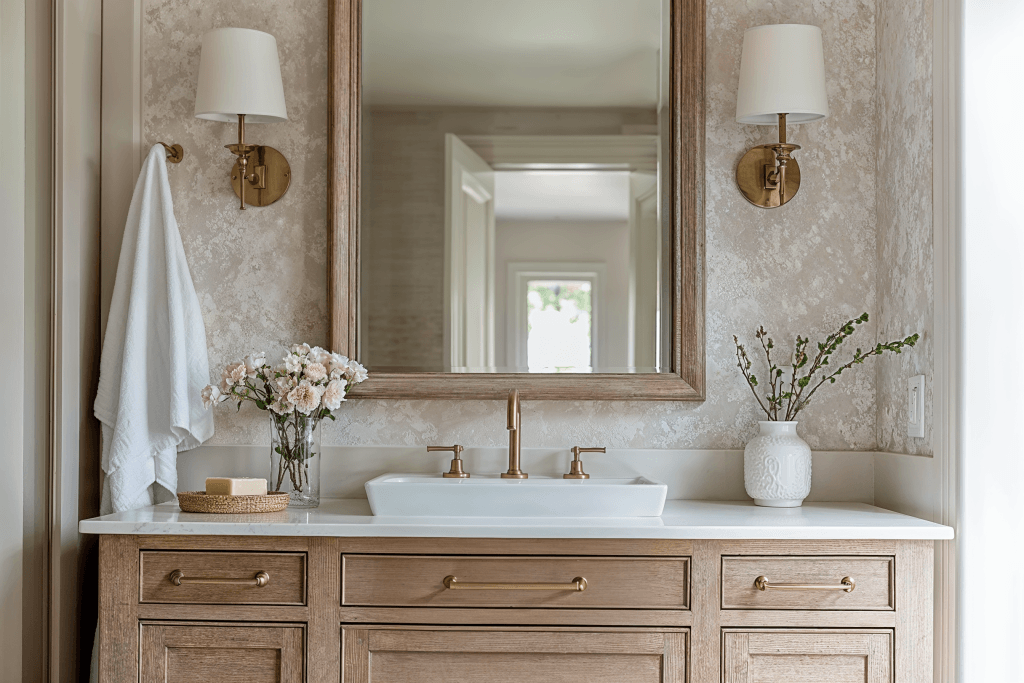
Master bathroom trends 2027 concentrate the budget in two places above all others: the shower and the storage.
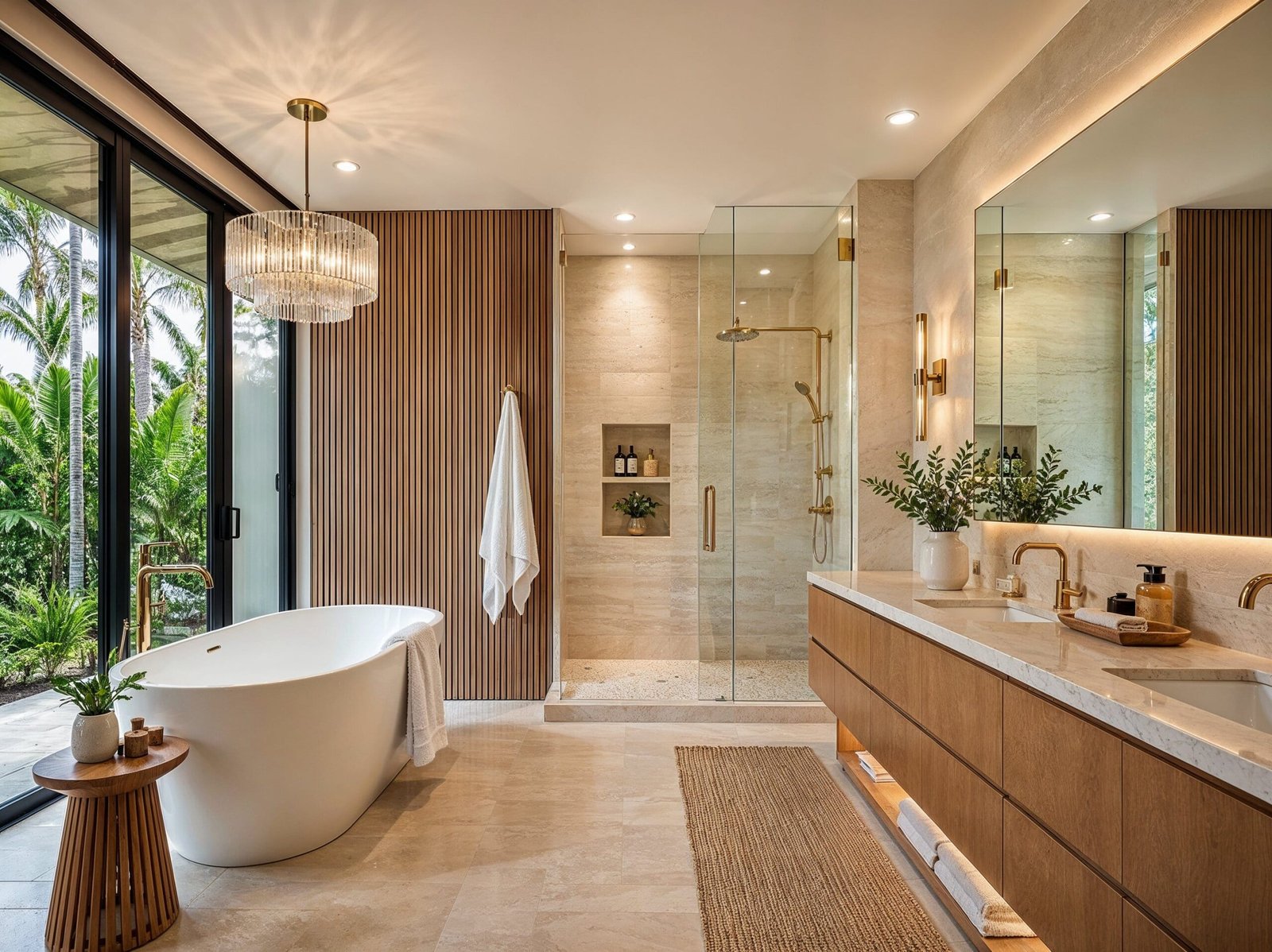
1. Personalized Wellness Replaces the Generic Spa Bathroom
A spa template produces the same room in every house, and that’s exactly what bathroom ideas 2027 are moving away from. For someone showering at 5:30, the trend brings a warm floor and low light. An evening user gets soaking depth and a ledge wide enough for a glass. NKBA frames this as movement from standardized luxury toward layouts built around individual routines.
That thinking extends into the cabinetry, too. Vanity drawers are being fitted to house specific tools, medicines, and everyday products to promote better organization and thus minimize stress. Sauna and aromatherapy are also moving into custom private bathrooms, but even those features are becoming part of an individual routine instead of shorthand for “spa.”
2. Statement Showers, the New Bathroom Centerpiece
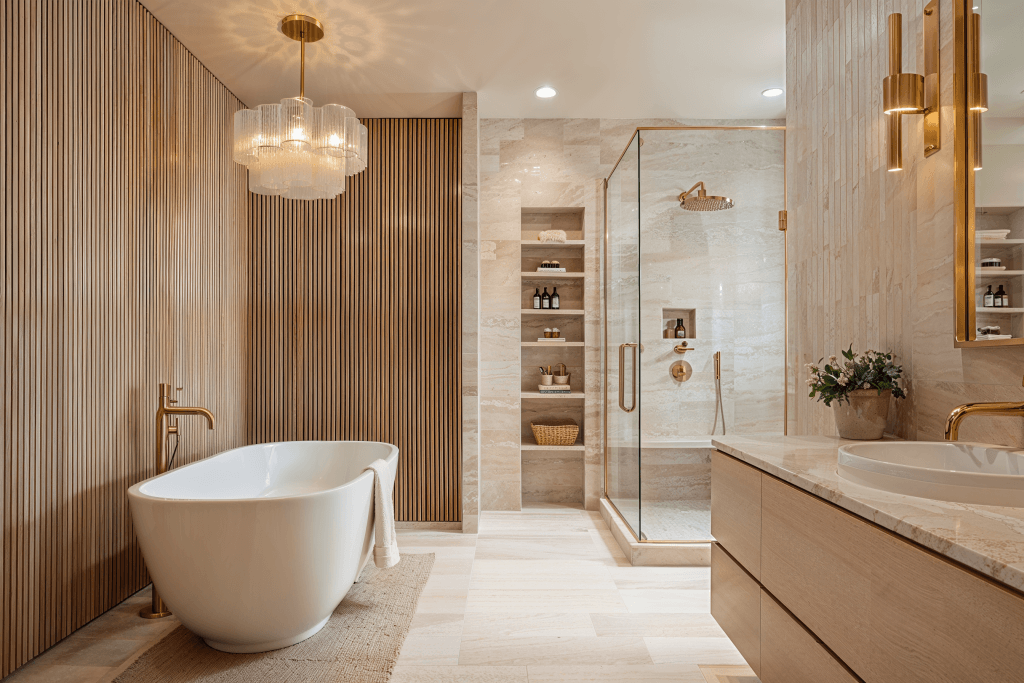
The shower keeps claiming more of the floor plan, and homeowners appear quite willing to let it. Houzz found that three in five homeowners enlarge the primary shower when renovating, while searches for double showers have climbed well above the previous year’s bathroom remodel ideas.
What drives this trend is how much the possibilities change inside a more generously sized enclosure. There is room for a proper wall bench, another shower head, plus a much wider entrance. Benches are increasingly cut from the same slab as the walls and cantilevered so the floor continues underneath them. Curbless entry follows from the size, too, since an opening that runs the full width of a wall gives a raised threshold nothing left to do.
Find your style before choosing your finishes. Drawn to several of these bathroom trends? Our free interior design style quiz helps you identify the looks you love. Take My Free Style Quiz
Takes less than 2 minutes!
3. Wet Rooms Grow More Sophisticated

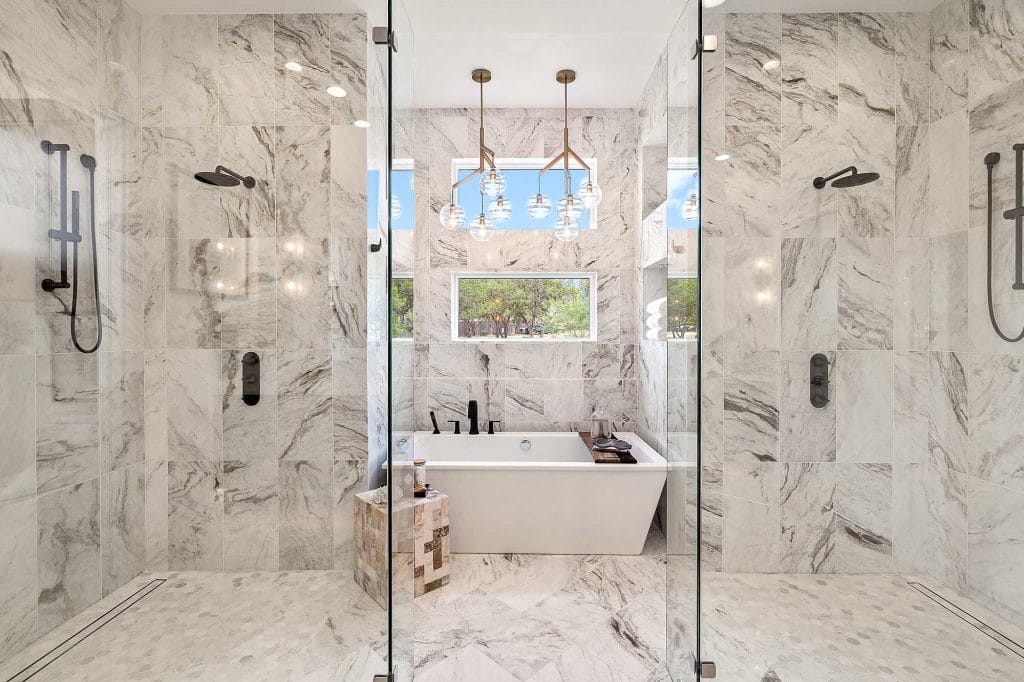
In 2027 bathroom trends, the wet room reads as one volume. The tub and the shower share a single waterproofed zone, with a glass panel as the only thing separating that zone from the vanity. Tile runs from the doorway to the far wall over a floor that holds one level throughout. Large formats work at this scale because the fall runs in a single direction toward a linear channel set against the wall.
Freestanding tubs have moved into the wet area, close enough to the shower head that a single drain serves both. What this layout buys above all is floor space: a 60-square-foot room feels considerably larger once the shower is no longer a separate object inside it.
4. Bathtub Trends 2027 Move Toward Sculptural Soaking

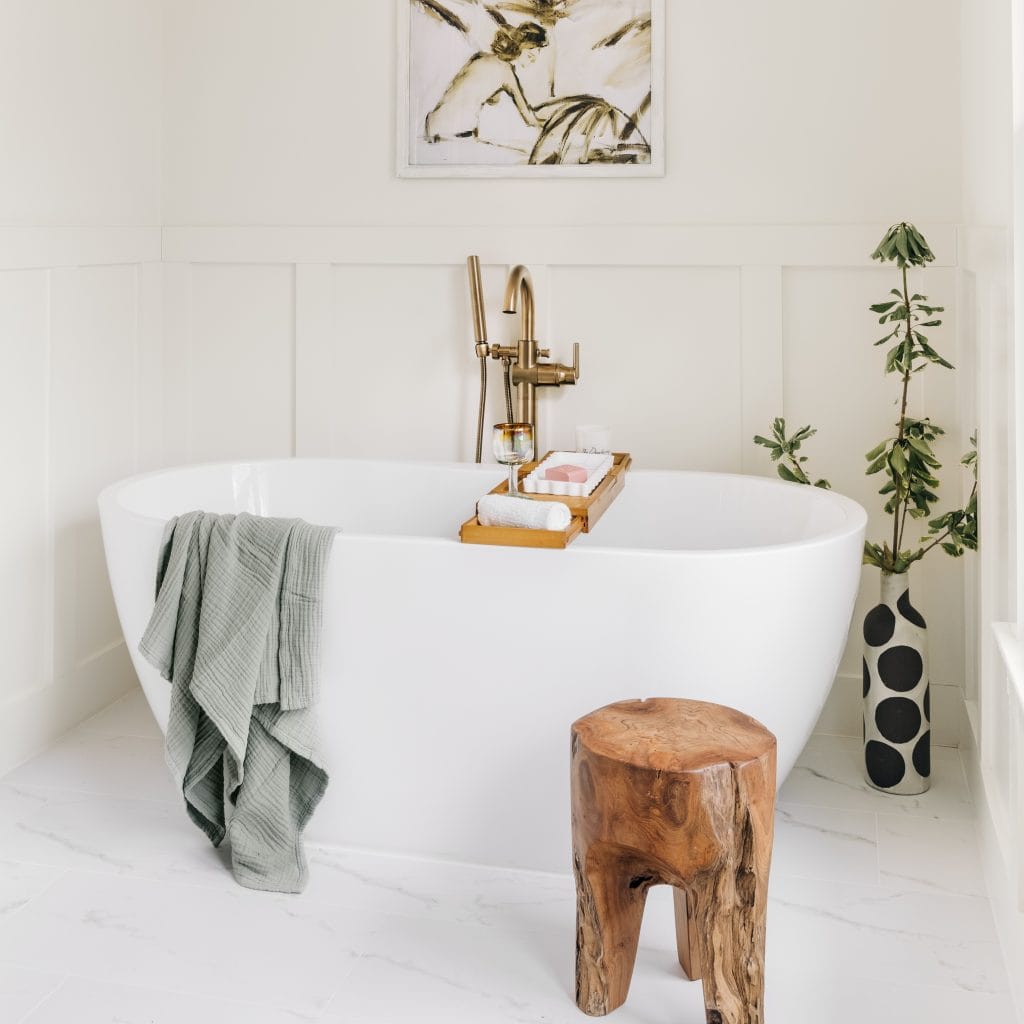
The tub that survives into a 2027 plan stands away from the wall and looks almost like a decorative object. Japanese soaking tubs are still the thing, as they run 24 to 27 inches deep, compared to 14 to 16 inches for a conventional Western tub.
Rims have thickened into a visible band, and the sides pull in toward the base, leaving the tub on the floor as a carved solid. Cast stone and solid-surface composites hold that wall thickness unsupported. They also keep heat through a long soak, which is what has taken the category off acrylic. The rest of the room gives the tub clearance on all sides and turns it toward a window, the way it would place a piece of furniture. Which brings us straight to the next trend.
5. Bathrooms Become More Furnished and Residential

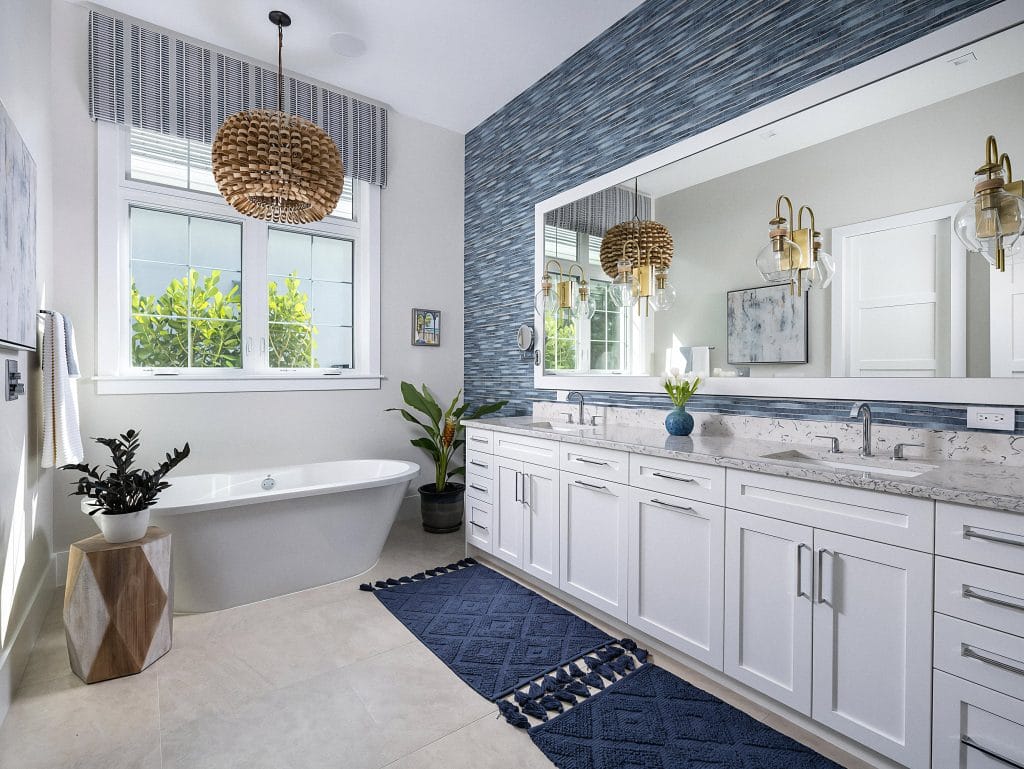
Bathroom trends 2027 have picked up the furniture vocabulary of the rooms around it. Think a stool beside the tub or a slim bench under a window that seemingly has nothing to do with washing. Sink skirts have also come back to close the underside of a pedestal basin, returning fabric to a room that had gone overly hard.
Textiles arrive in the shapes of a statement bathroom rug at the tub and a curtain at the window. Oak and walnut fronts sit on visible legs, and the counter looks like a piece of furniture that just happens to hold a basin.
6. Furniture-Inspired Vanities Designed Around Personal Routines
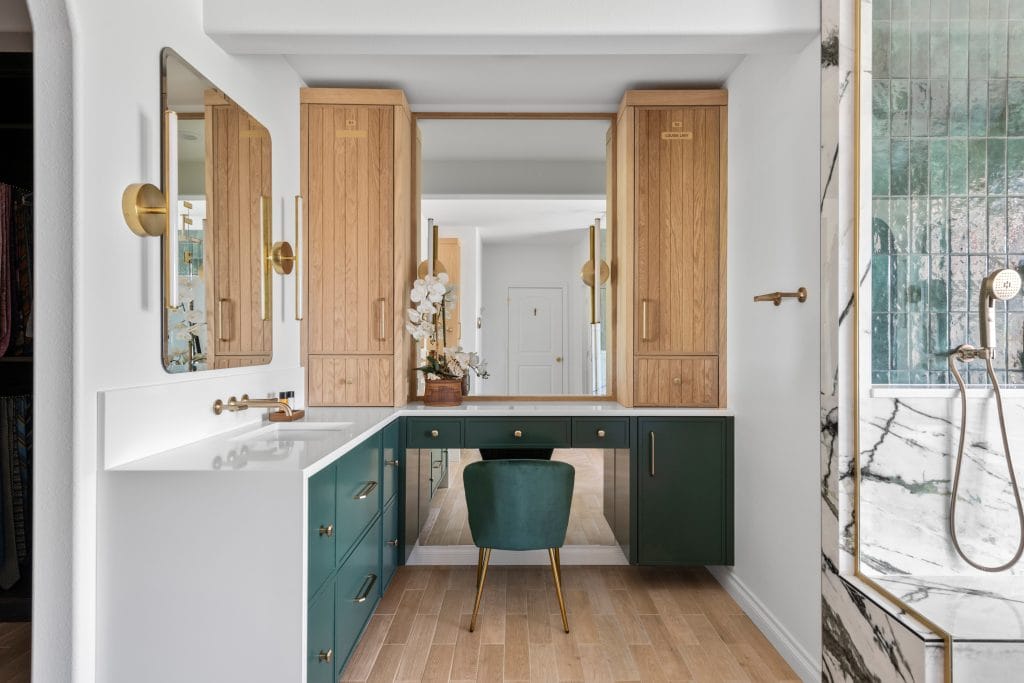
The vanity is where personalization becomes joinery. Behind the fronts, compartments are cut to the routine they serve. A seated section drops the counter to roughly 30 inches and carries knee clearance behind its panel face, which puts a long grooming routine level with the mirror.
Drawers divide the same way, one wired with an internal outlet, another fitted with a shallow insert that holds daily items at hand height. Medicine and cleaning supplies move up out of reach in households with children. Lighting belongs to this joinery as well, with vertical fixtures at face height on either side of the mirror throwing light evenly across both cheeks.
7. Smart Bathroom Trends 2027 Move the Controls Out of Sight

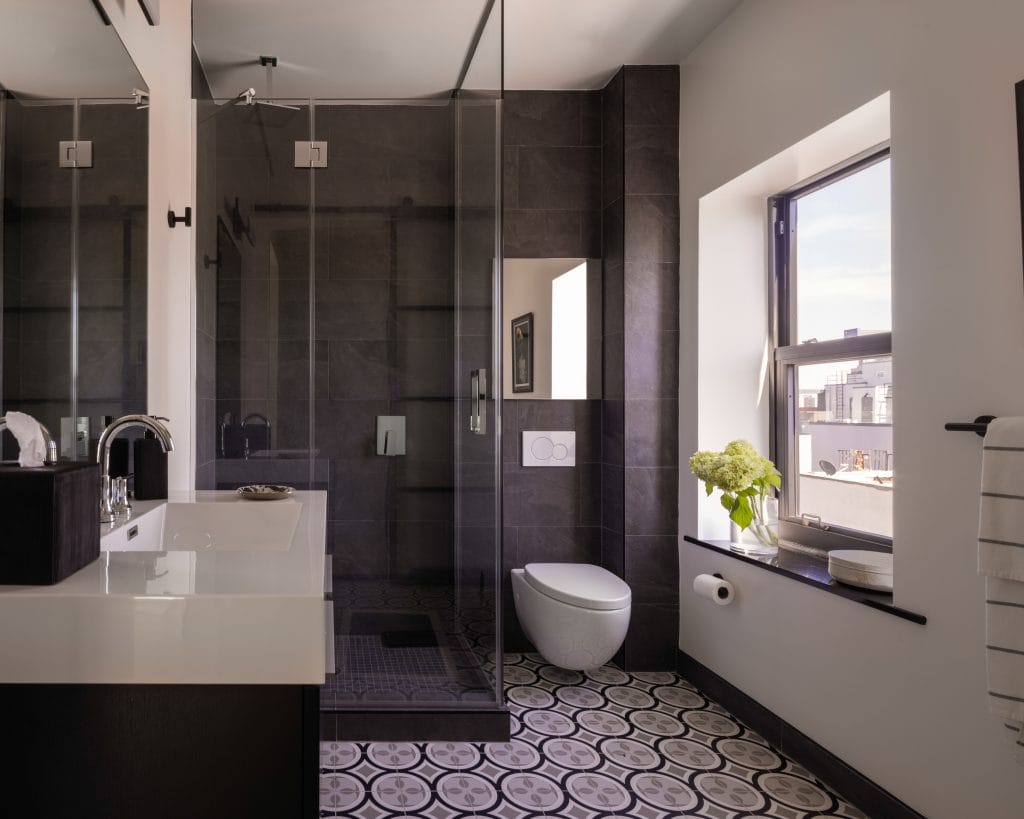
Digital showers now hold a set temperature and start from a preset, so the valve stops being something to adjust each morning. The control plate sits flush with the tile while the mixing hardware goes into the wall cavity or an adjacent closet, behind an access panel cut into the joinery. Humidity sensors run extraction on demand and cut the fan once the room clears.
At the fixtures, NKBA found 51% of respondents expecting smart toilets to gain ground over three years, and integrated bidet function is already standard at the upper end. Voice control remains the exception, with the same research showing users reaching for a physical control. Chromatherapy and steam have moved into residential cabins. CES 2026 also brought a shower system that reads skin hydration levels via a mirror sensor and adjusts the water sequence accordingly.
8. Water Intelligence Prevents Waste and Damage

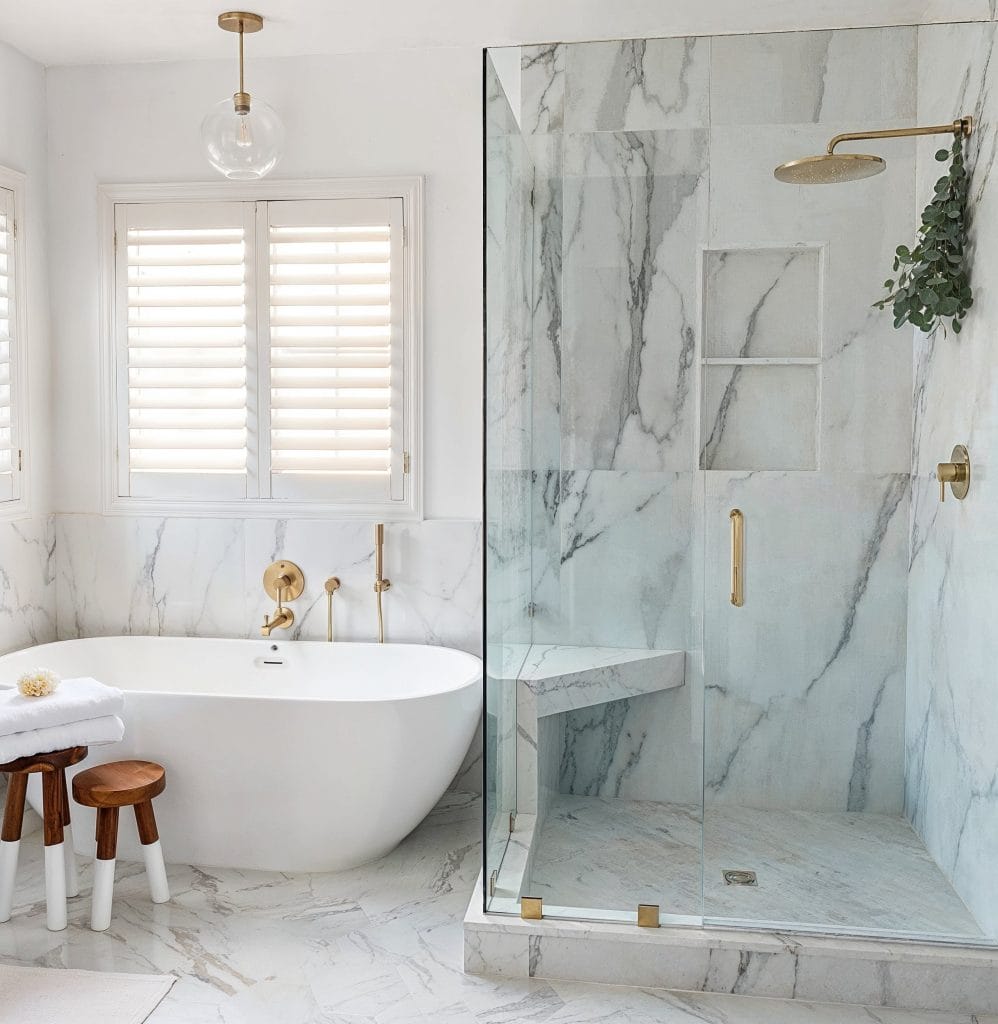
Bathroom technology in 2027 is becoming less visible and more useful. Leak detection, automatic shut-off valves, and water monitoring can now sit quietly behind the finishes, stepping in only when something goes wrong. A sensor beneath the vanity might catch a slow leak before it damages the cabinetry, while a smart valve can cut the supply if water use suddenly falls outside the household’s normal pattern.
Water efficiency is also beginning to shape specification more directly. As regulations tighten and consumption becomes easier to track, showers, toilets, and fittings are being judged not only by how they look or feel to use, but by how much water they ask for. The design implication is subtle: better performance built into the bathroom itself, with fewer gadgets demanding attention.
9. Architectural Glass Creates More Defined Bathroom Zones

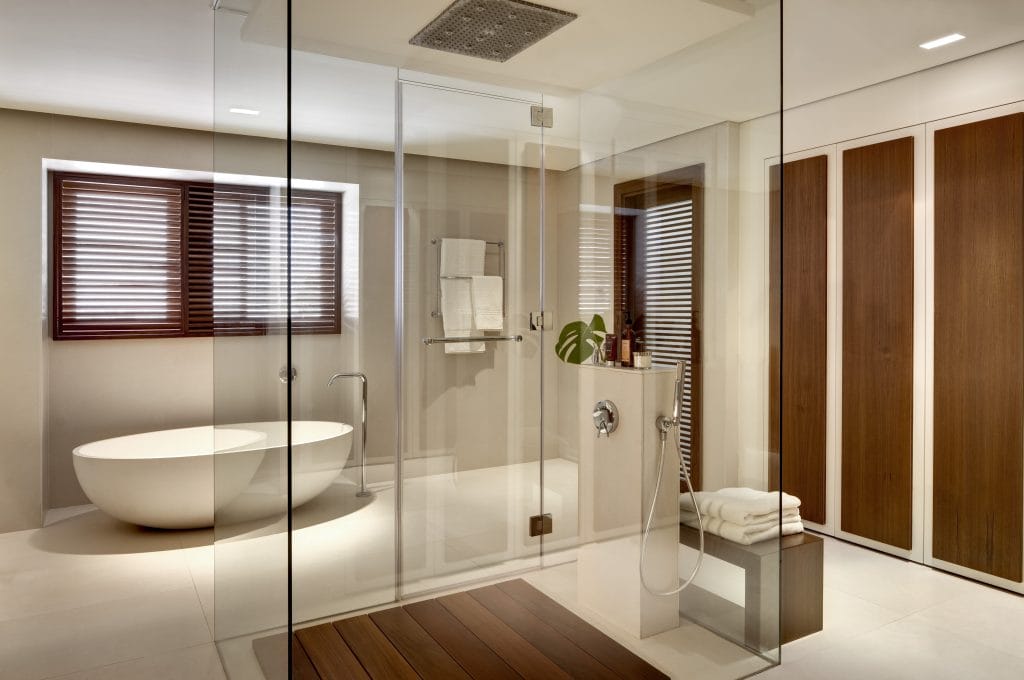
Reeded glass is replacing the old frosted shower screen in 2027 bathroom design trends. It gives privacy, but it does not block the room off in the same heavy way, so light still moves through the space. That matters especially in bathrooms where the shower sits near the window or forms part of a larger wet zone.
Designers are also using framed and tinted versions to give the enclosure more presence. Black and brass frames connect it to the tapware, while bronze or grey glass sits well against darker stone. In tighter layouts, curved panels are helping soften corners and make the path past the vanity feel easier.
10. Materials Gain Character Through Texture and Patina

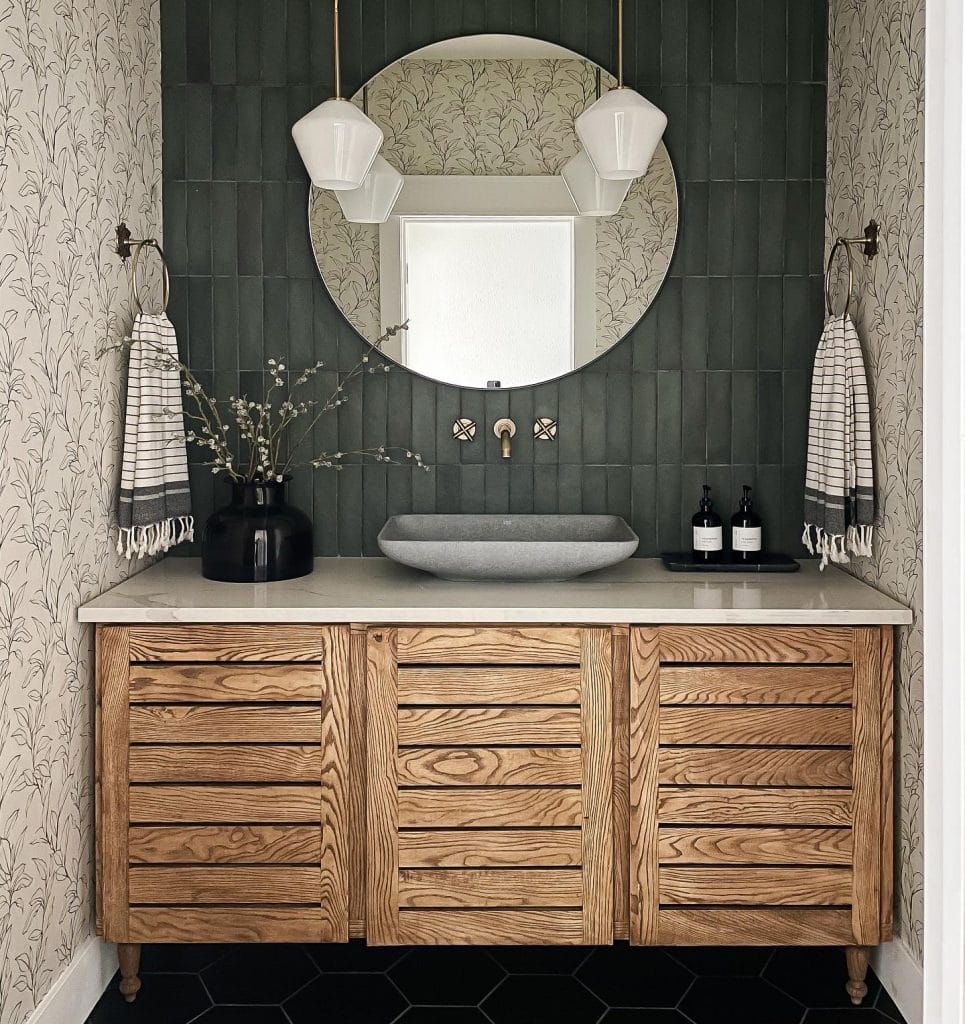
Bathroom materials in 2027 are looking less pristine and more comfortable with change, serving the idea of personalized wellness at home. Limewash and microcement bring movement to otherwise plain walls, while natural stone features more visible veining and less insistence on perfect uniformity. Even the edges are getting softer, moving away from the sharply machined look that dominated for years.
The same preference shows up in the details. Unlacquered brass darkens where it is handled, teak gradually greys. The appeal is partly visual, but it also changes the expectation of what a well-designed bathroom should look like over time. A surface that develops character through use communicates on more levels than the one mimicking an untouched showroom setup.
11. Bathroom Tile Trends 2027 Move in Two Directions

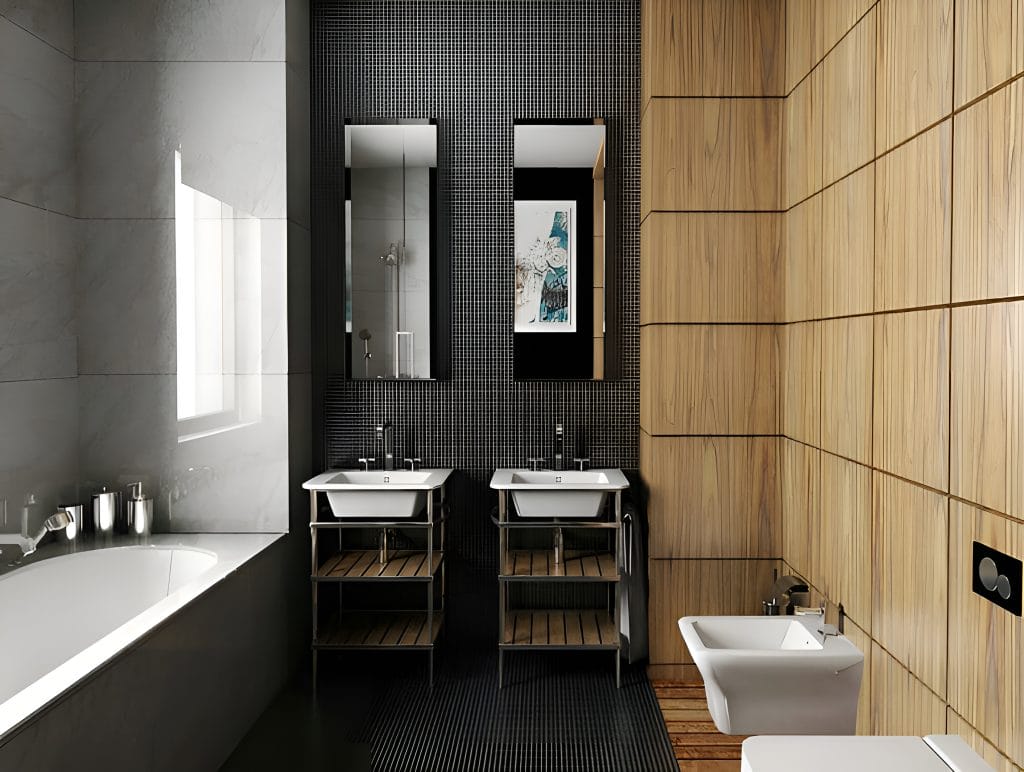
- Artistic Tile Becomes the Focal Point
Tile is getting more expressive again, but usually in a concentrated area. Handmade pieces, relief surfaces, and decorative patterns are showing up on shower walls or across a single feature plane where their variation can actually be seen. Zellige remains part of that movement, particularly because no two pieces catch the light in quite the same way.
The point is not to cover every surface in pattern. One area carries the character, while the rest of the bathroom gives it room to register.
- Large-Format Tile Creates a Quieter Backdrop
At the other end of the spectrum, large-format tile is making bathrooms calmer and more continuous. Bigger pieces reduce the number of grout lines, which works especially well in curbless showers and wet rooms where the same surface can run across much of the floor or wall.
There is also a practical reason for the shift. Fewer joints mean less grout to maintain, while stone-look porcelain and slab formats can give a bathroom the visual scale of natural stone with a much simpler cleaning routine.
12. Layered Lighting Supports Wellness and Atmosphere
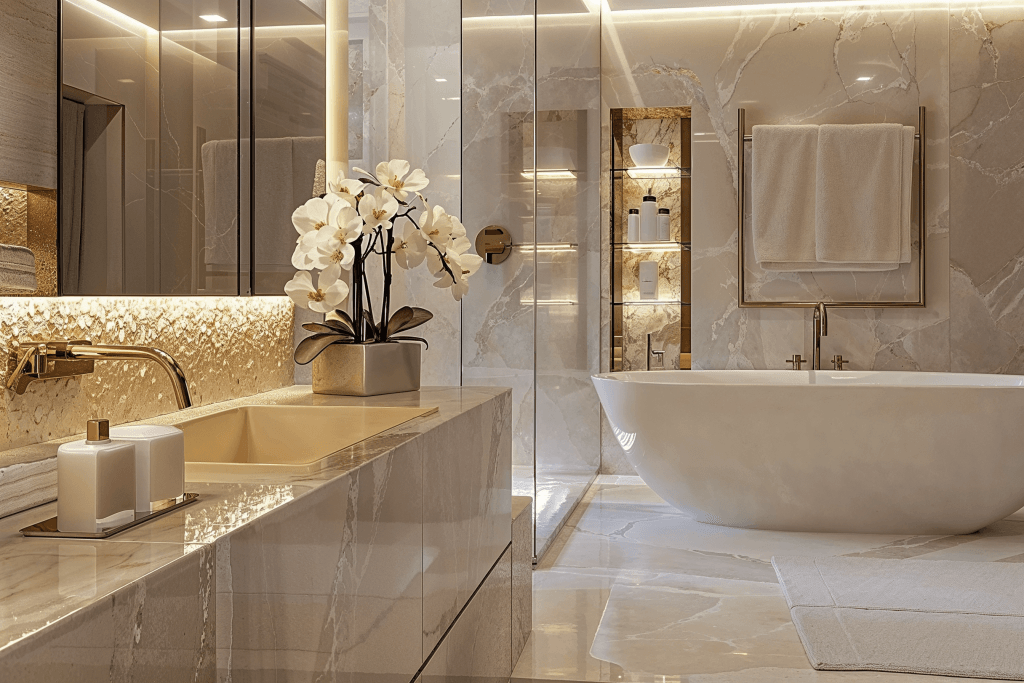
Bathroom lighting in 2027 is becoming much more responsive to how the room is used. Brighter, clearer light belongs around the mirror when someone is getting ready, while warmer illumination works better for a bath or the last visit before bed. Low-level lighting near the floor is also appearing more often, giving enough visibility at night without switching on the whole room.
That shift is making master bathroom lighting more decorative too. Sconces are moving beyond purely functional strips; pendants are appearing over tubs. Higher-spec systems, meanwhile, can gradually dim or warm the light as evening approaches. NKBA’s data puts lighting at the top of the luxury features designers are prioritizing, which makes sense: it can change the character of the same bathroom far more than another expensive fitting.
Bathroom Color Trends 2027

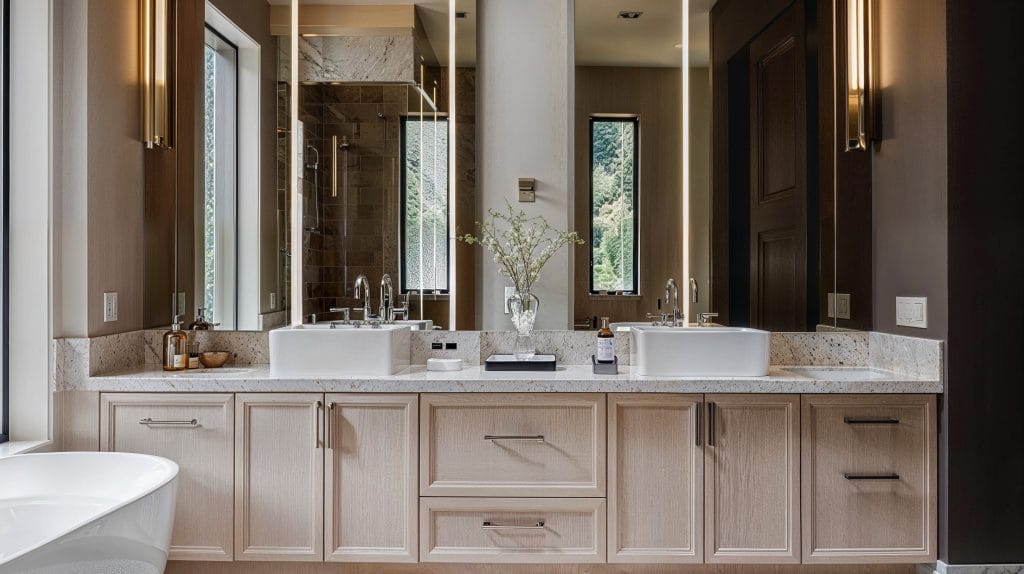
Color in 2027 bathrooms is shifting more by undertone than by intensity. The palette remains largely restrained, but cool greys are giving way to earthier neutrals.
Warm Neutrals Replace Cold Clinical Whites
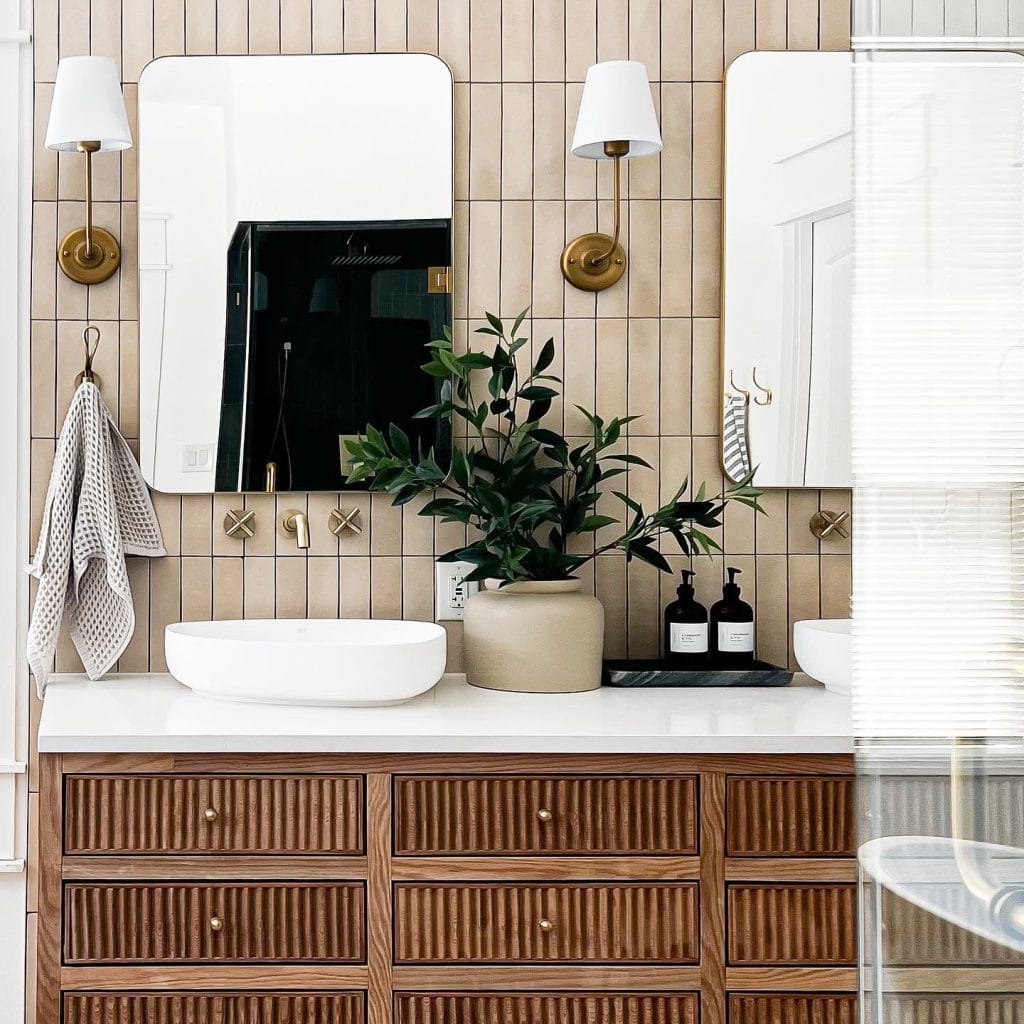
Neutrals hold their position and change temperature. NKBA has 96% of respondents naming neutrals as the leading bath color, with off-white running ahead of light brown and tan. The movement shows up in undertone: chalky whites, mushroom, clay and caramel in place of grey-based whites.
Nature-Inspired Colors Continue
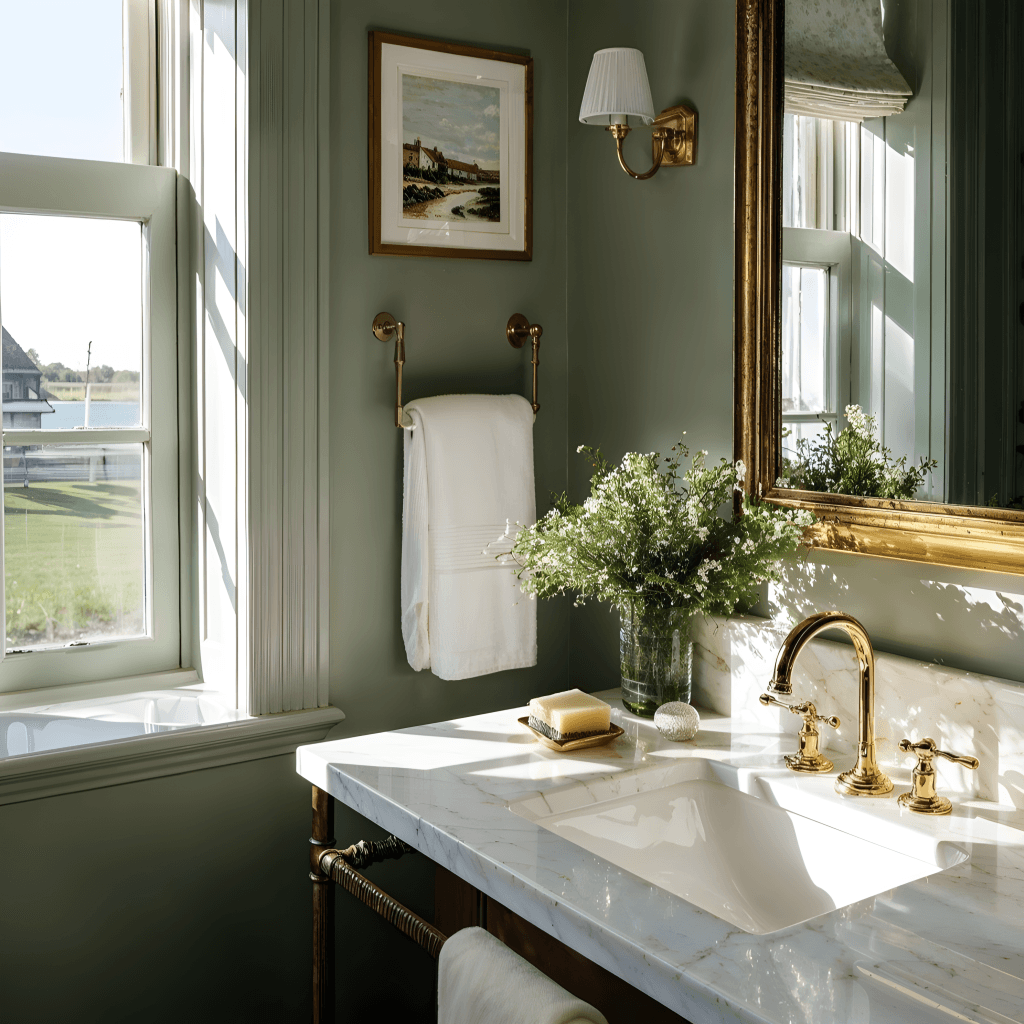
Green continues as the accent of record, led by sage and olive while brown-based greens are emerging fast. The 2027 color-of-the-year announcements point the same way. Behr named a mossy olive with brown undertones, and Dutch Boy an earthy orange. Valspar opened the season with a steely mid-tone blue, and WGSN’s forecast landed on a saturated one. Moss and jade sit comfortably in that company, too.
Richer Accent Shades Appear
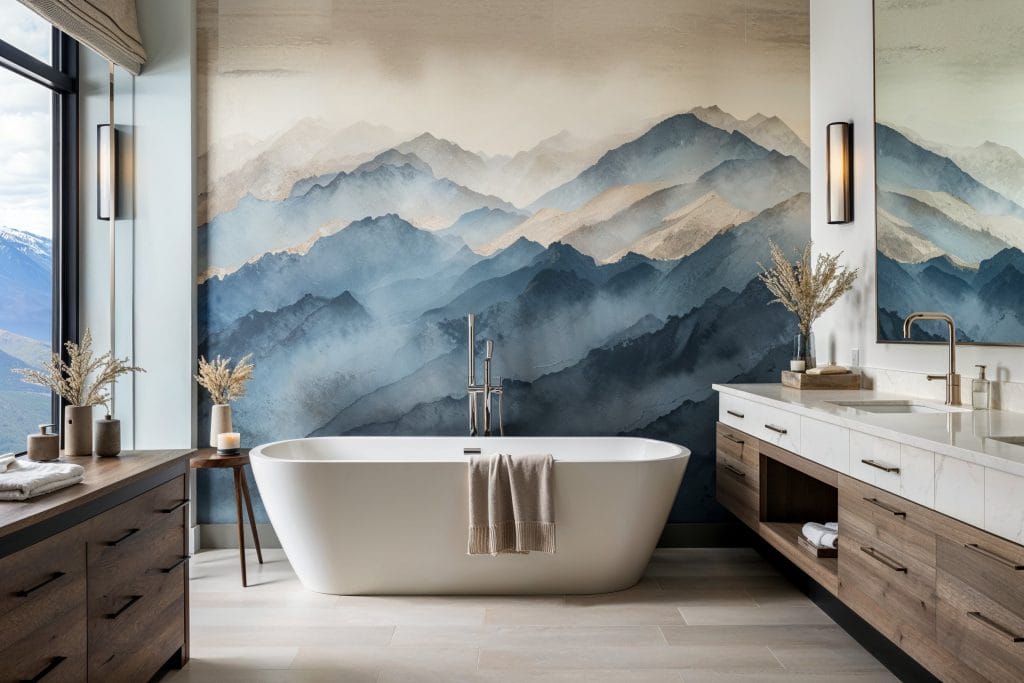
Richer accents are doing the work grey used to. Oxblood and burgundy appear in tile and in painted joinery, searches for burgundy bathroom tile are also significantly up. Charcoal and bronze anchor the darker end, usually on hardware or across a single stone wall. The move is a temperature change inside the neutral family, and pale schemes remain the majority selection.
Small Bathroom Ideas for 2027
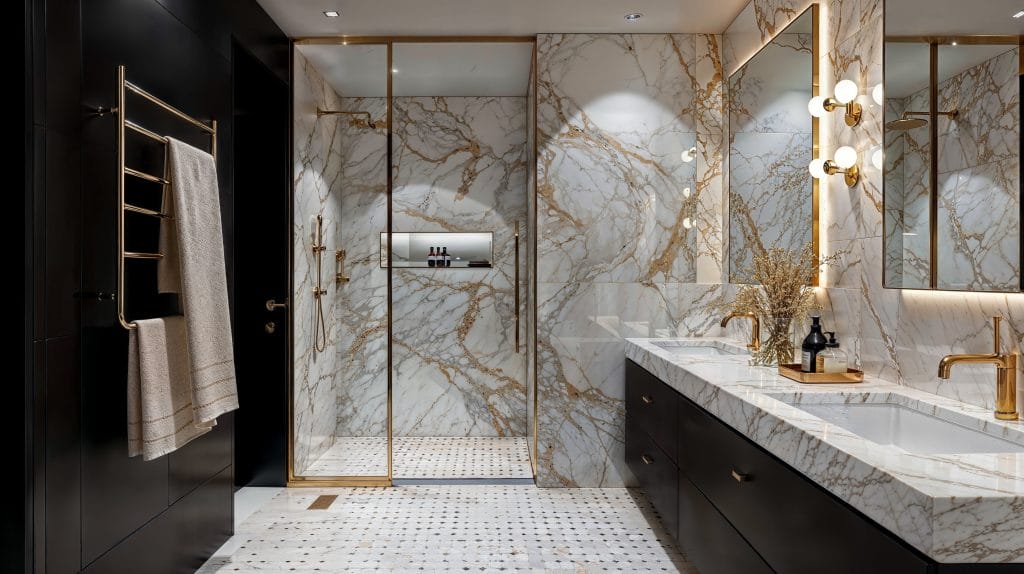
Small bathroom trends for 2027 are moving toward layouts that make the room feel more open without adding square footage. Wall-hung vanities are thus becoming an evergreen choice because they let the eye continue underneath. At the same time, running the same tile from the doorway into the shower creates a more continuous visual field instead of chopping the plan into separate zones.
Curbless wet areas are another growing trend. By removing the tray and threshold, the shower becomes part of the room instead of a box inserted into it. Storage is also being designed to climb more than spread, with recessed cabinets between studs at the mirror and full-height cupboards using the depth of a stud wall.
Pattern still has a place in current small-bathroom design, but in concentrated applications. And for anyone determined to keep a bath, the short, deep soaking tub is emerging as a more practical choice.
Bathroom Trends Designers Are Leaving Behind
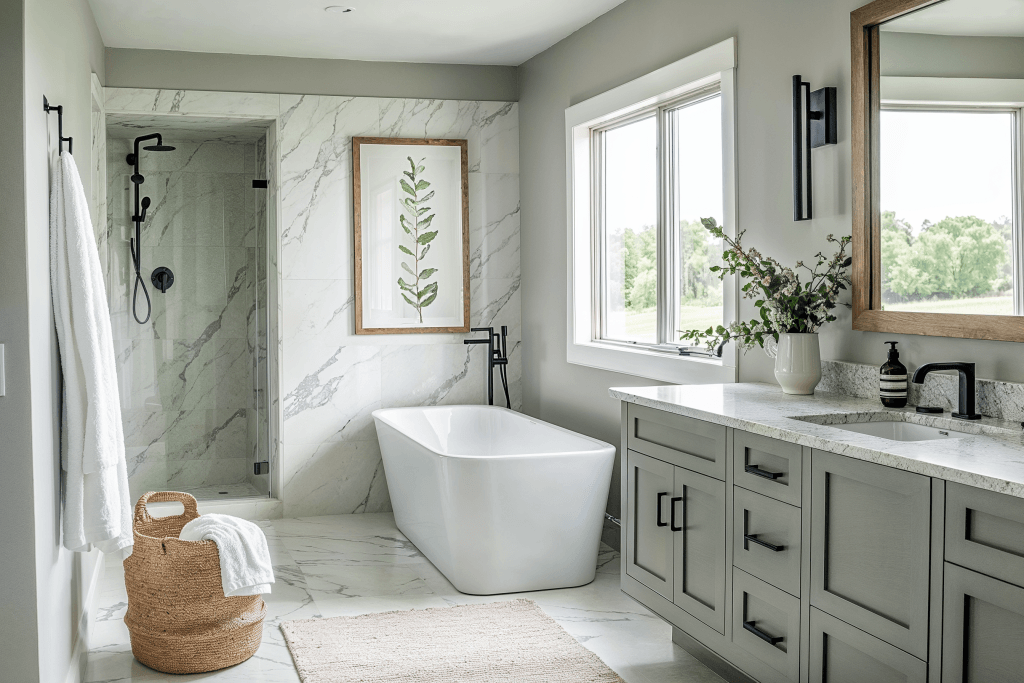
A few habits fall away as bathroom trends 2027 settle.
- Cold, clinical schemes. Grey-based white tile under a single cool downlight flattens skin tone and shows every water mark.
- Vessel sinks that sacrifice function. A bowl sitting proud of the counter raises the rim above comfortable washing height and leaves a seam underneath that collects residue.
- Wall-to-wall open shelving. Towels and bottles left out in a humid room gather dust and remain damp for longer.
- Overhead-only vanity lighting. A ceiling fixture behind the user drops shadow across the eyes and jaw.
- Oversized features that go unused. A 72-inch tub filled twice a year holds the floor area the shower could have taken.
- High-maintenance detailing. A penny-round mosaic across a large floor multiplies both grout lines and cleaning time.
Bathroom Trends 2027 FAQs

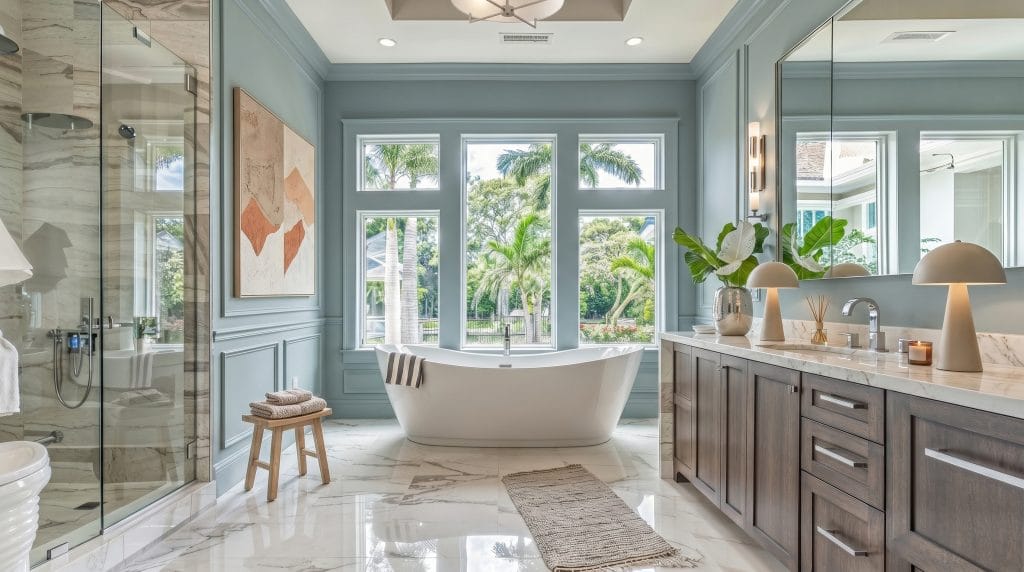
Personalized wellness planning leads, with the shower absorbing most of the added floor area while the tub becomes a selective choice. Underneath sit warmer material palettes. Technology moves out of sight, and glass is doing more of the work of dividing zones.
Chalky whites, mushroom, clay, and caramel are taking over from grey-based neutrals. Sage and olive continue as the dominant accent family. Oxblood and bronze cover the deeper end, usually applied to one surface or to hardware.
Yes, in fewer rooms and at higher specification. Fewer plans include a tub at all. The ones that do tend toward a sculptural freestanding form or a deep soaking tub.
Start with the floor. A wall-hung vanity and continuous tile from door to shower open the plane, and a curbless wet zone replaces the tray. Add one expressive surface, then keep the remaining finishes quiet. The room reads as a single volume that way.
Ready for a bathroom that fits your routine?
A bathroom planned around your own timing holds up longer than one assembled from a trend list. Decorilla matches you with a designer who starts from your routine and your real dimensions, then returns a complete plan with sourcing attached. Book your Free Online Interior Design Consultation to start your project today!