The Right Curtain Lengths for Every Window in Your Home
Curtains can be transformative in a home both aesthetically and functionally. Infusing color, texture, and drama, curtains can elevate a room into feeling more glam or they can bring an element of fun, depending on the style. They also can help modulate the transfer of heat and sunlight into your home, affecting your comfort and energy bills. But, size does matter when it comes to these window coverings.
This curtain length guide details what you need to know about finding the right curtain length for every window in your home.
How Curtain Length Makes a Difference in Decor
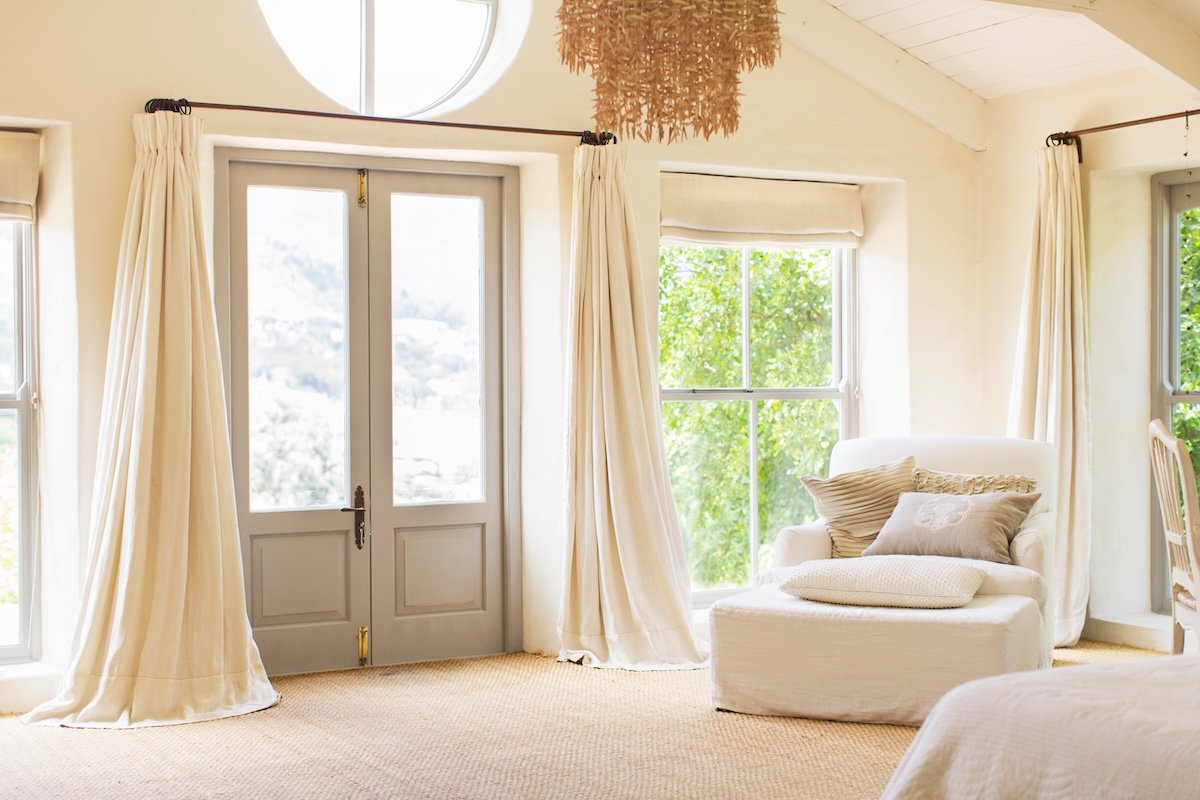
Just as with molding, curtain style and size can either elevate a room or create a more casual ambience.
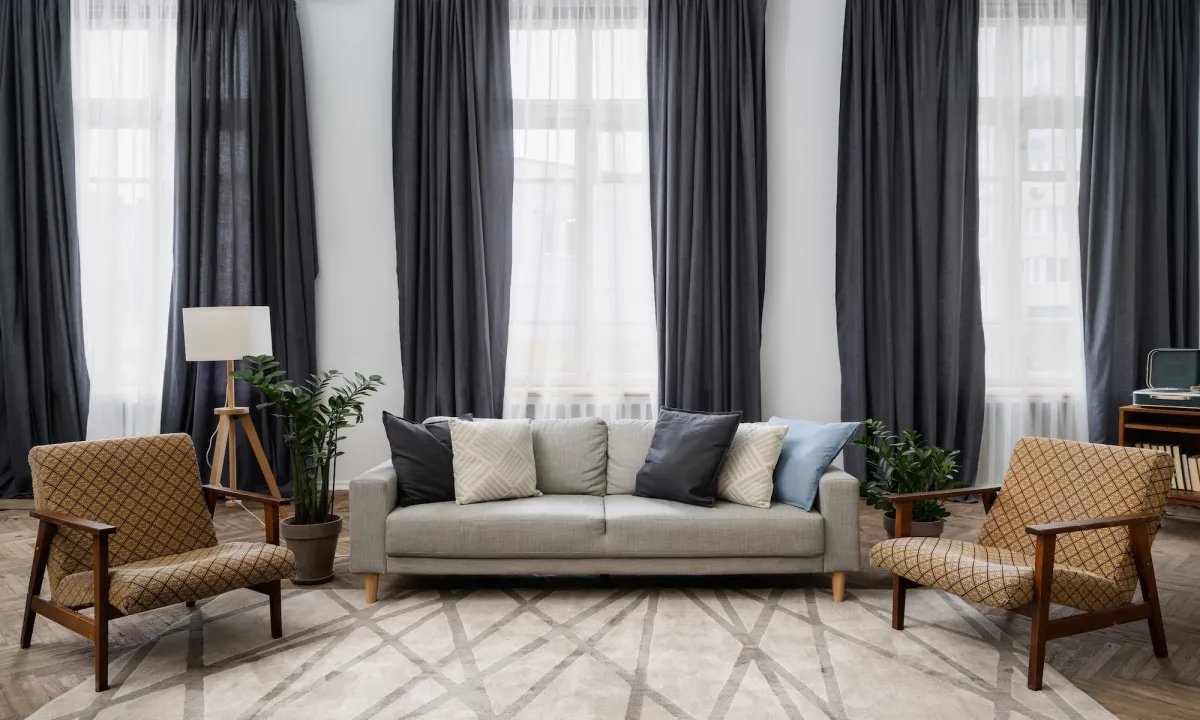
Long curtains: The longer the curtain, the more drama it brings, so curtains that hang from the top of the wall and pool along the floor are more fitting for a formal space like a dining room. If chosen in a thick fabric, the extra length also helps insulate the window, reducing energy transfer and cooling bills during the summer months. Long curtains are also ideal for keeping out light and views to focus on what’s happening inside the room.
Short curtains: Shorter curtains that just cover a window feel more casual, so they are often seen in less formal spaces like laundry rooms and kitchens. While they might come in any type of fabric, most consist of fabric that’s less thick and more whimsical, creating a friendly vibe. Sunlight might be able to peek through the bottom, top, or sides, so they aren’t as effective at lowering solar gain and cooling bills.
Standard Curtain Length Chart
Here is a standard curtain lengths chart that details when each is commonly used.
| Goal | Length |
| Cover a standard double-hung window | 63 inches |
| Cover the window to above the floor | 84 inches |
| Cover the window and rest on the floor in 8-foot-tall room | 96 inches |
| Cover the window and to above the floor in 9-foot-tall room | 108 inches |
| Cover the window and rest on the floor in 9-foot-tall room | 120 inches |
How to Measure Windows for Curtains

There are three key decisions that need to be made before you can measure for curtains: how wide you want the curtains to frame the window, how high you want to hang the curtain rod, and how long you want the curtains to fall past the window bottom. After you know those answers, then you can start measuring.
How to Measure Curtain Height
Determine your ideal curtain length based on curtain type (cafe, apron, floor, or puddle) and the look you want to achieve. Next, consider where you will place the curtain rod. In most homes with 8-foot ceilings, the rod looks best when installed nearly to the ceiling. For taller homes, aim to place the rod about a foot above the window. Finally, measure from the rod to the point where you want the curtain length to end.
How to Measure Curtain Width
To leave space to pull the curtains to the side and to prevent them from looking too small for the window, add an extra 8 to 12 inches on either side of the window frame. This totals to 16 to 24 inches of width to add to the frame width to help you find the right curtain rod. For example, if your window is 36 inches wide, you should look for a curtain rod that is 52 to 60 inches wide.
Once you’ve determined the curtain rod’s size, you can calculate the ideal curtain width for the window. Make sure that the curtain panels are wide enough to properly fit the window without looking too small and to account for desired fullness or folds. In most cases, you will need the total width of the panels to be at least twice that of the window itself.
How to Choose Curtain Lengths for Various Rooms
When deciding on the ideal length of drapes, consider the different types of lengths: cafe, apron, floor, and puddle.
Café curtains: Curtains that only cover the bottom part of a window, usually in a sheer fabric, are called cafe curtains. Often used in bathrooms, laundry rooms, or kitchens, they provide some privacy and infuse a space with casual vibes.
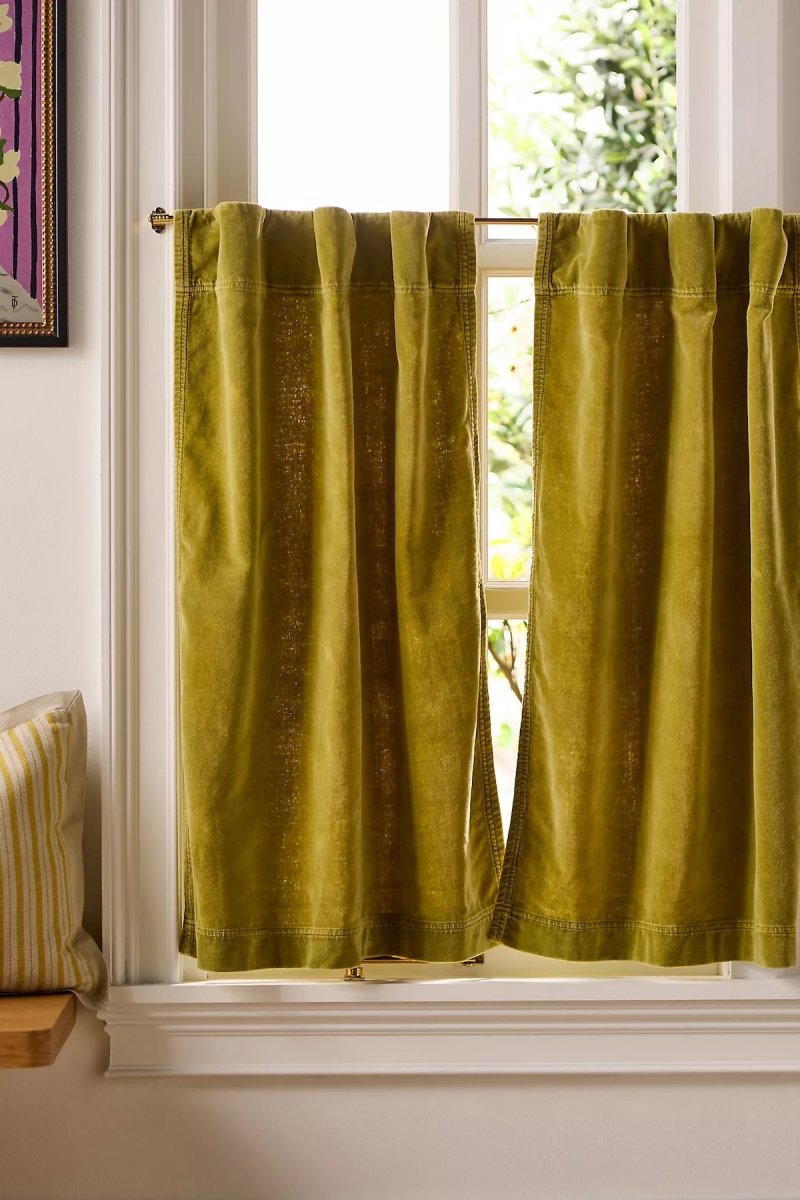
Apron curtains: Usually chosen for bedrooms and other spaces that require privacy but aren’t formal spaces, apron curtains cover the entire window but usually end just below the window sill. These curtains are also chosen when there’s furniture placed under the window.
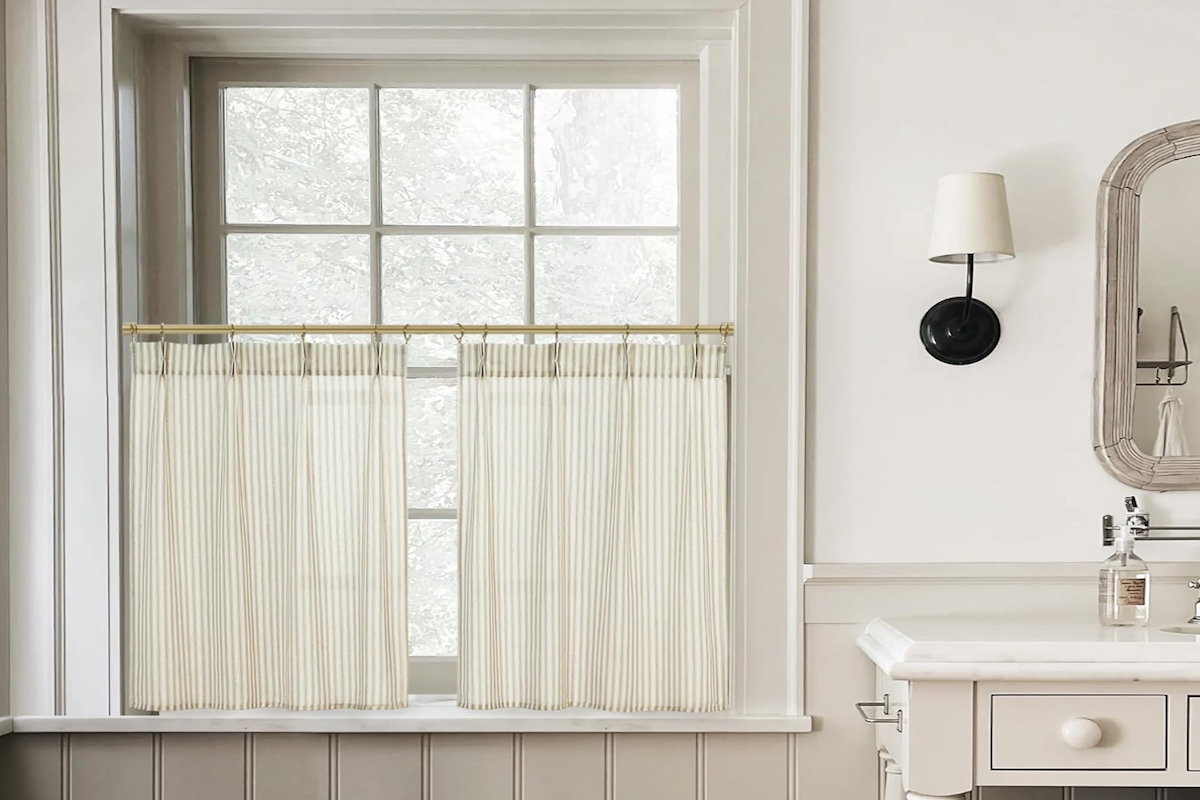
Floor curtains: More formal spaces often have floor curtains, which either extend to just above the floor or just touch the floor. These curtains are often hung near the ceiling and have more layers or panels to create fullness and drama.

Puddle curtains: For an extra boost of drama and formality, choose these curtain lengths that pool on the floor. Puddle curtains are most often seen in formal dining and living rooms. While dramatic and luxurious, they aren’t ideal for households with little kids and pets.

Should I Get Custom Curtains?
If you can’t find standard curtain sizes that suit your overall design aesthetic and size needs, there are custom curtain options available. You can work with a designer who will show you samples and fabric options, and many will measure and manage the installation process. If you are handy and the task of hanging curtains is inside your DIY comfort zone, check out custom curtain makers like Hunter Douglas and The Shade Store.
Common Mistakes When Hanging Curtains
There are several things to keep in mind when deciding on the ideal curtain length for your home. These include:
- When choosing the ideal curtain length, don’t forget to also account for any added space that curtain rings (if your curtains require them) will take up.
- Take multiple height measurements across the width of the window to account for the possibility of an uneven floor or ceiling.
- Likewise, double-check rod height and curtain length before hanging a new curtain rod.
- When buying curtains, it is better to choose a set that might be a bit too long, rather than a set that could end up being too short. You can fix too long by having the curtains hemmed or adjusting the height of the curtain rod, but you won’t be able to add length to curtains that are too short.
- If you can’t find a length that matches your exact needs, consider working with a designer and getting custom curtains.
FAQ
If you ask 10 designers for a curtain length rule, you might get 10 different rules. Essentially, most of the curtain length rules involve mounting the curtain rod at least 4 inches or more above the window frame and making sure the curtains fall past the windowsill for apron curtains or to the floor for floor curtains.
Calculating the right curtain length involves measuring from the rod down to the location where you’d like the curtains to end.
Some curtain makers offer a standard 72-inch curtain length, but it’s not as common as 63 and 84 inches. It’s always best to order longer than shorter, as you can hem too-long curtains with a needle and thread or hem tape or adjust the height of your curtain rod slightly if possible to account for the difference.
The most popular curtain lengths are the standard curtain lengths of 63, 84, 108, and 120 inches.

The Homeowner Survival Kit