Kemetale Reimagines the Traditional Egyptian Dahabeah
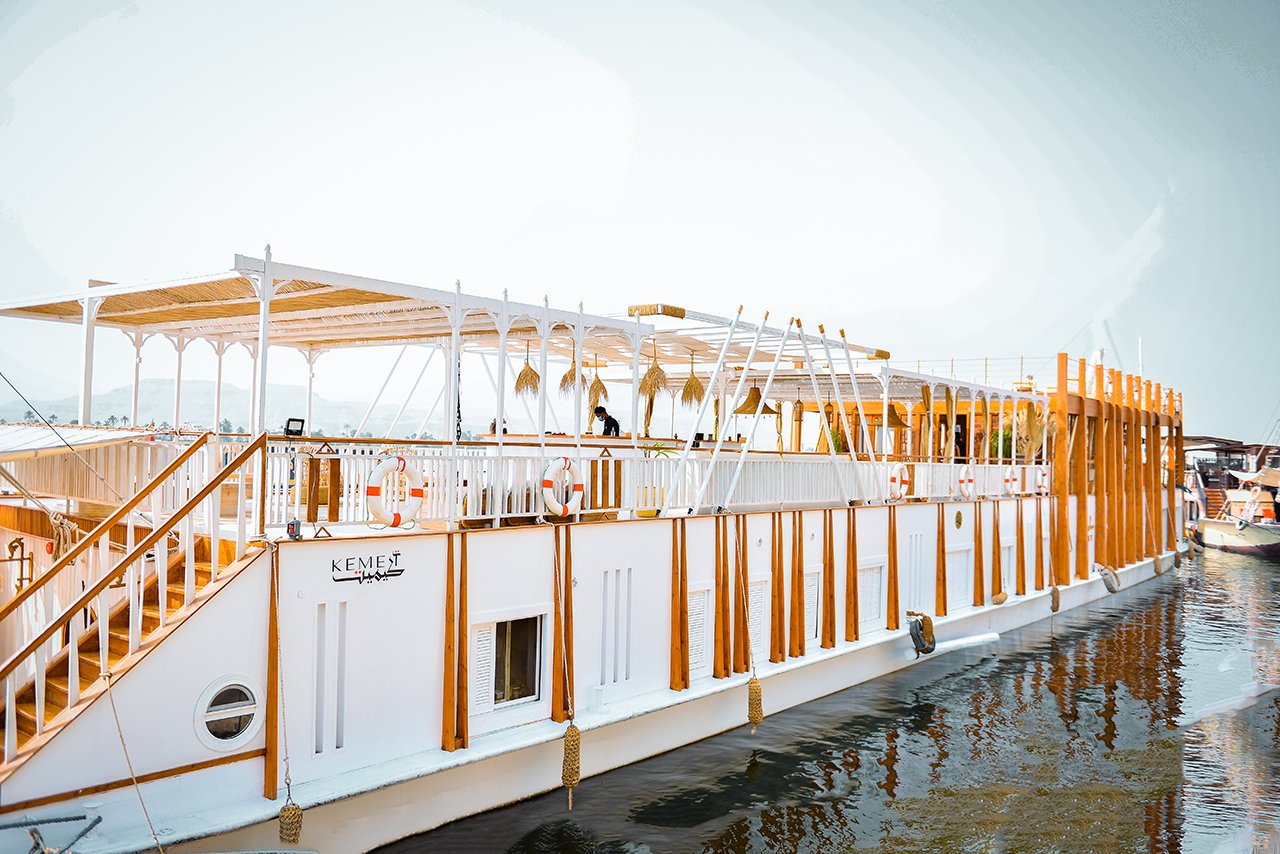
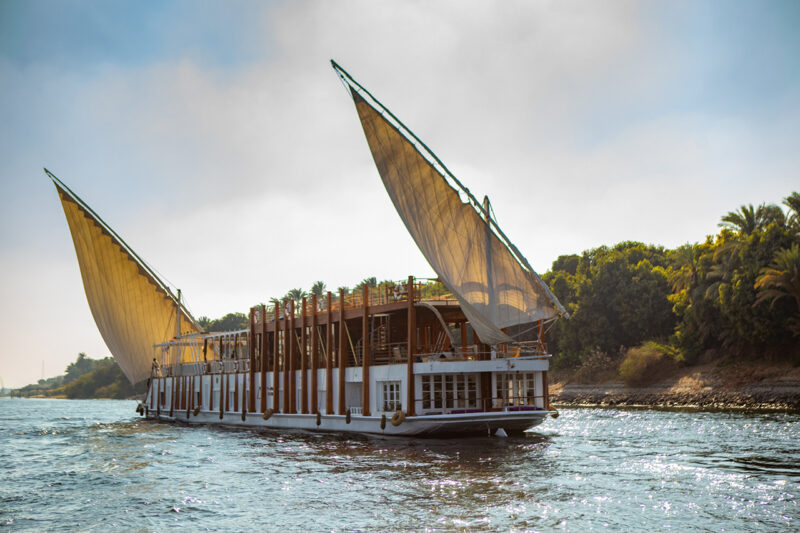
Although Agatha Christie’s seminal murder mystery Death on the Nile unfolds aboard a clunkier, noisier steamer, an earlier generation of Nile travelers made the journey by dahabeah. The quieter, more graceful traditional two-masted passenger sailboats were a fixture of 19th-century travel along the Egyptian river before steamers took over. Today, the waterway is flooded with supercharged, overly amenitized cruise vessels. A reimagined dahabeah, Kemetale seeks to bring back that style of elegant travel—and it’s a welcome change on the Nile.
Photography courtesy of Kemetale
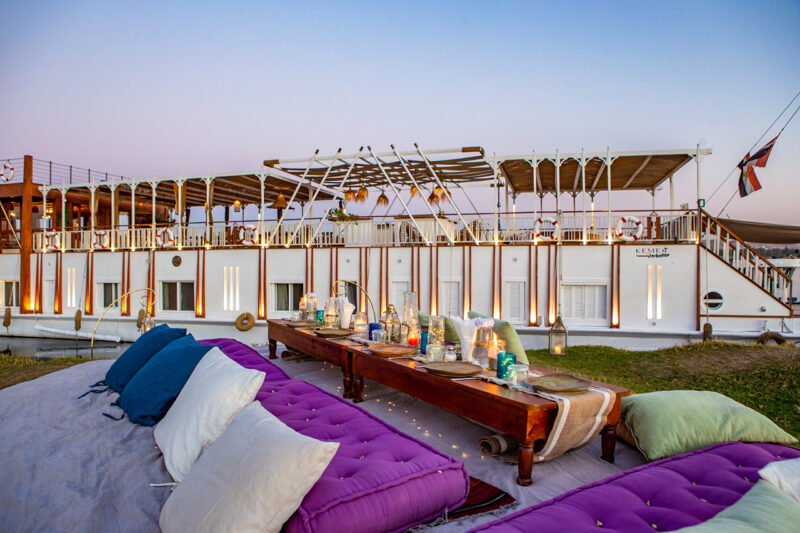
Today, between Luxor and Aswan (a less populated and naturally preserved stretch of the Nile), larger cruise ships typically follow fixed itineraries between ancient temples like Philae, Kom Ombo, and Edfu. They don’t have the flexibility to stop along the way for candle-lit barbeques, traditional dance parties, impromptu bird-watching excursions, or drop-in visits with local mango farmers.
On the other hand, Kemetale—with just eight suites outfitted like a five-star boutique hotel—embraces the “drift” down the Nile, not the “dash.”
Photography courtesy of Kemetale
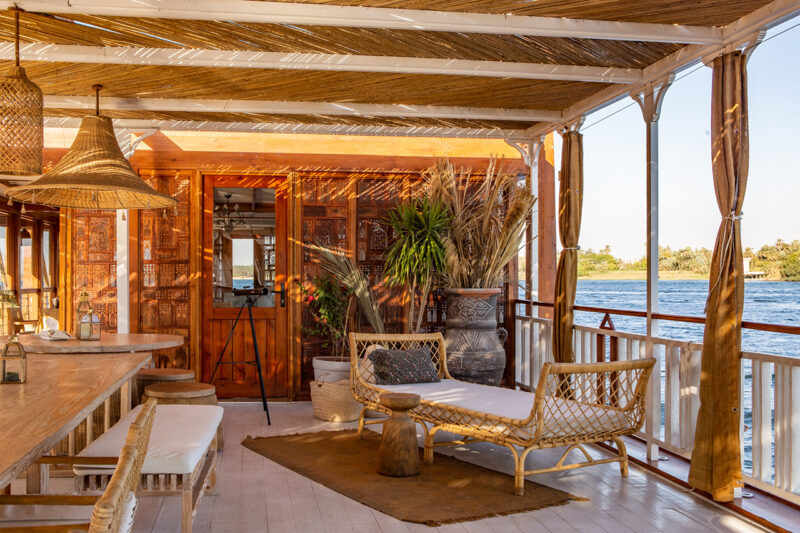
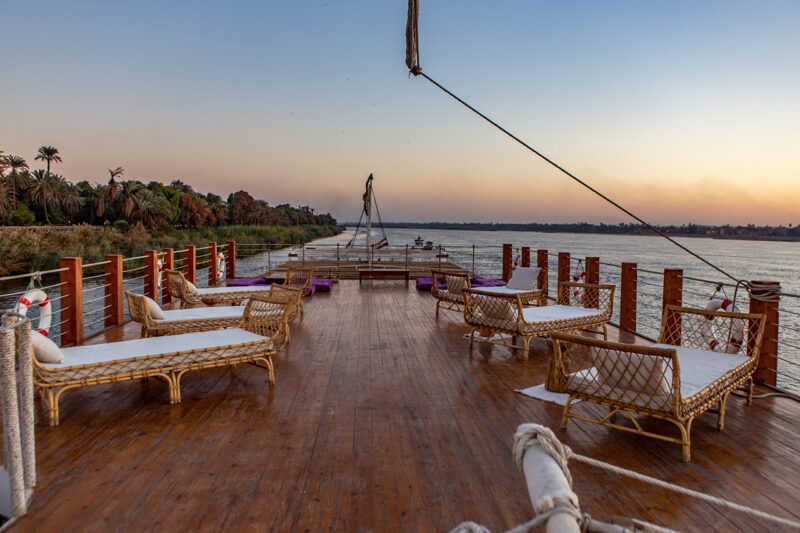
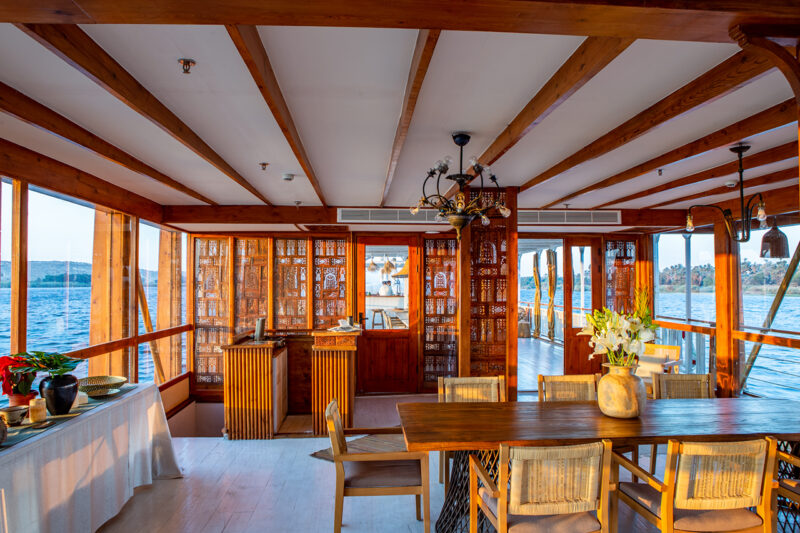
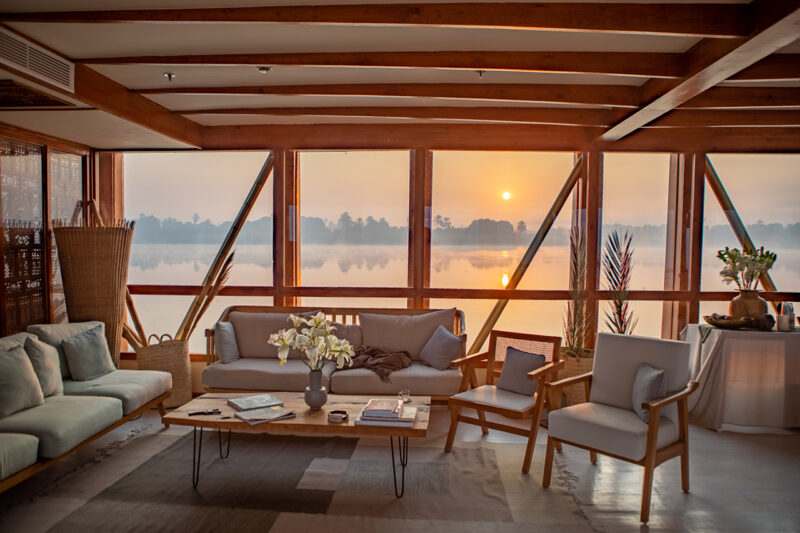
There’s an ease to this bespoke cruise. Days spent slowly covering significant distances can be spent lounging in the glass wall-enclosed lounge, sunbathing on the roof deck, or reading a book on ancient history in the intimate library.
Photography courtesy of Kemetale
A conventional dahabeah layout would have two suites at the end of an enfilade of 12 tight cabins. The lounge would have been cramped into the front of the ship, away from the uninterrupted views that bring everyone to this part of the world.
Photography courtesy of Kemetale
Co-owners Mohamed Hassan and Ahmed El Leissy cut their teeth in the travel and hospitality industry organizing authentic and intimate desert experiences. The decision to start Kemetale a few years back was a natural progression; a way of tying together everything they were offering their discerning clientele.
“We know what our guests are looking for and designed the ship to meet those needs,” El Leissy explains.
Photography courtesy of Kemetale
He and Hassan tapped Cairo-based interiors studio Eklego to stage the ship with a nuanced, contemporary evocation of history: both the early 20th-century style of their precursors and the much older archaeological sites it stops at during sailings. There’s a timeless quality to the white-washed wainscoting and ship-lapped walls of the lower deck corridor.
“The space is meant to unfold like the sequence of a temple,” El Leissy describes. “One moves from larger to smaller halls through arched passageways.”
Photography courtesy of Kemetale
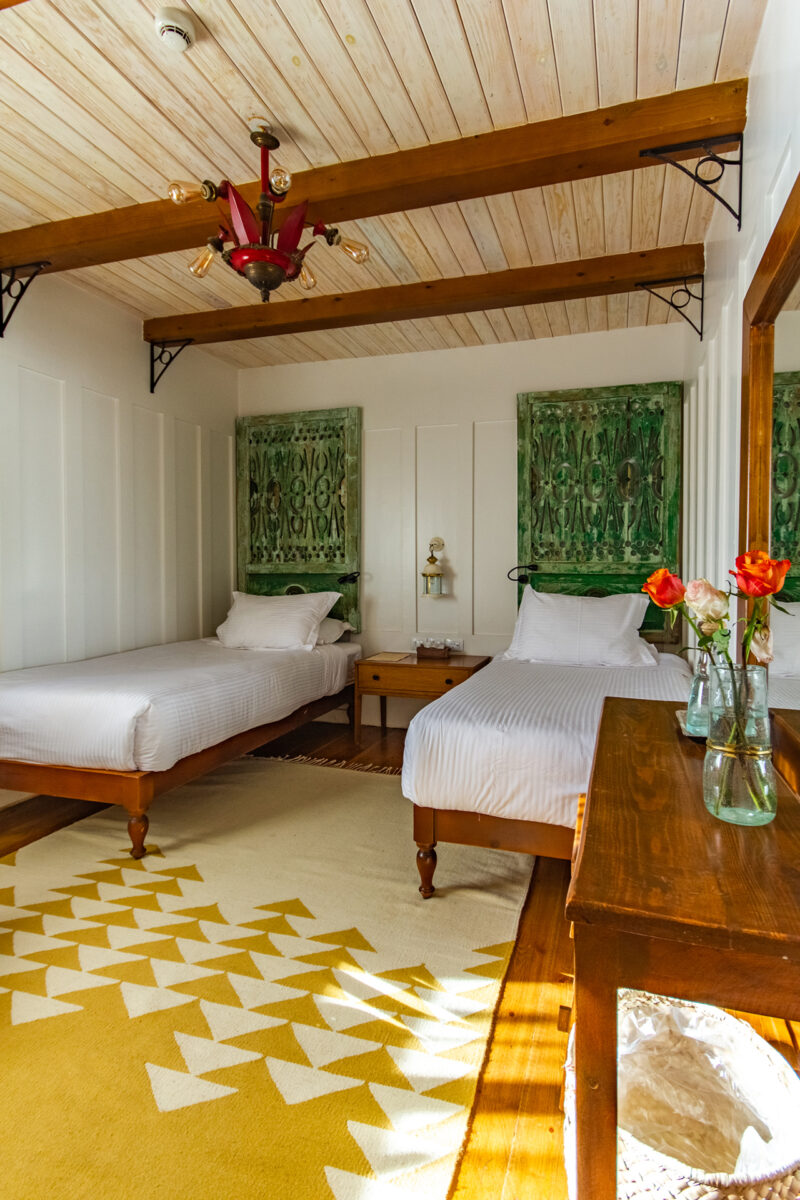
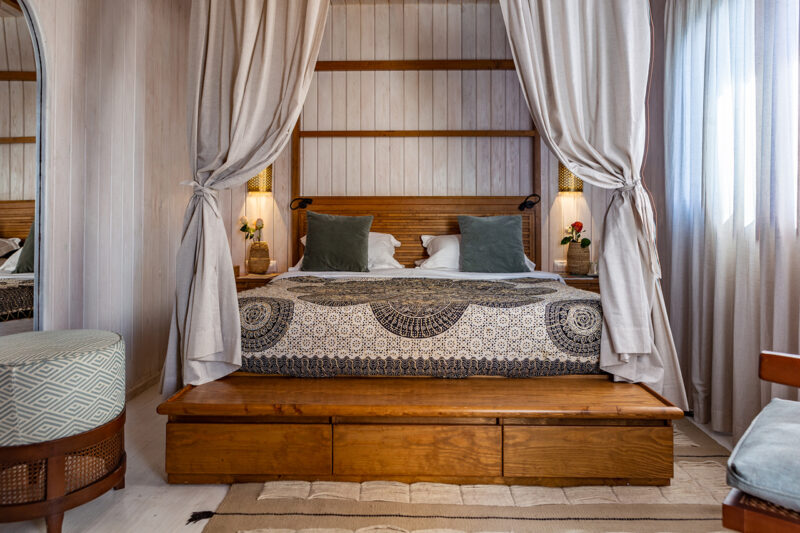
The bedrooms are an exercise in texture, restraint, and minimalist configuration, with sleek en suite bathrooms. Each carefully placed custom furnishing interprets rather than replicates an age-old Egyptian object typology. They’re all produced locally.
Photography courtesy of Kemetale
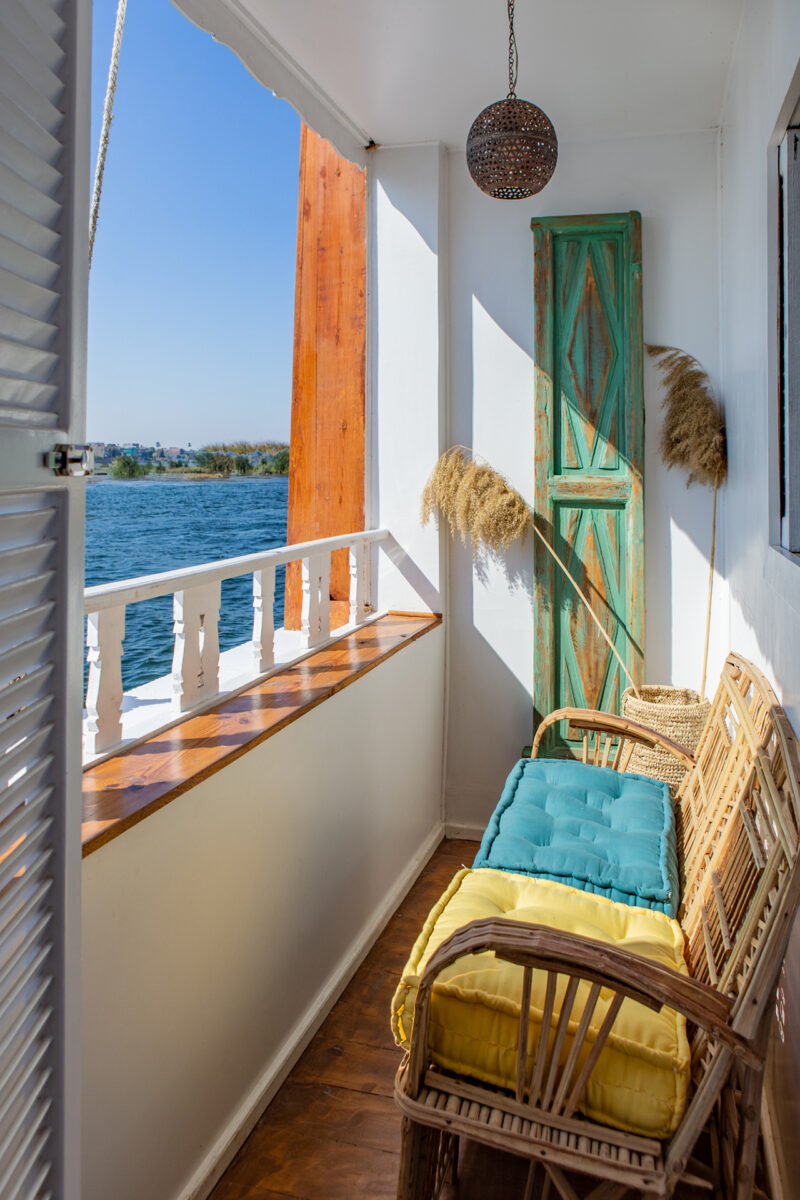
The name Kemetale begins with “Kemet,” the ancient Egyptian name for the “Black Land”—the fertile soil deposited along the Nile. Sycamore fig, date palm, and acacia trees have long grown along its banks, and their woods crop up throughout the interior—but every reference is subtle.
“We didn’t want the space to impose on the stunning surroundings we sail past,” El Leissy says.
Photography courtesy of Kemetale
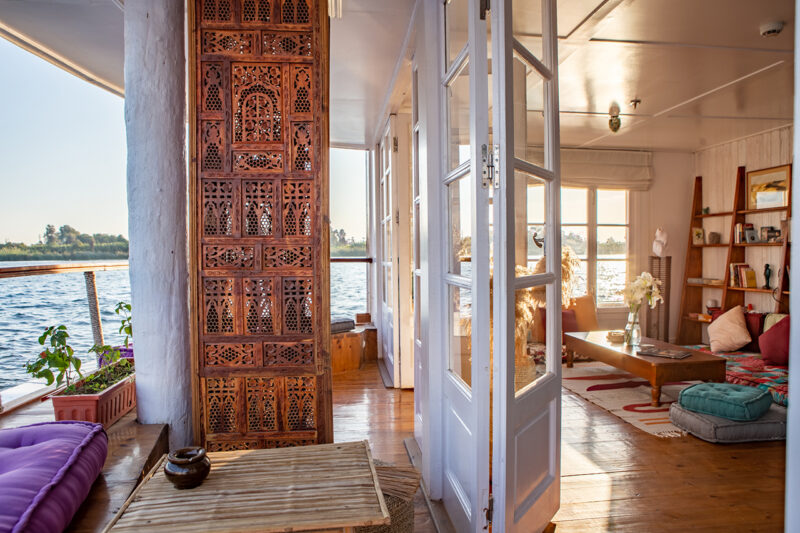
One distinct feature is the Indian Jaali carved wooden screens, which were salvaged from a junkyard and turned into sun-shielding louvers in the main lounge. Despite their intricate carving, the screens sit comfortably within the otherwise restrained interior. Though they don’t directly reference any specific Egyptian craft tradition, these decorative, functional partition walls hint at the fact that some cultural tendencies transcend borders, especially across the Global South.
Photography courtesy of Kemetale
This sentiment carries through details large and small, even the eclectic collection of dinnerware the ship carries: bespoke ceramic plates and bowls produced by artisans across Africa, the Middle East, and Southern Europe.
Photography courtesy of Kemetale
At each meal—where the 16 or so guests gather around a single table to indulge in abundant family-style dishes that reinterpret Egyptian staples—a different set is pulled out. Kemetale is often chartered, but it also runs cruises where unaffiliated travelers quickly become acquainted.
It’s a fitting conclusion to the design philosophy that shapes the entire boat. Kemet doesn’t attempt to recreate the golden age of Nile travel so much as borrow its pace, intimacy, and sense of discovery.