What is the Best Treadmill Incline for Weight Loss?
Incline training can increase the intensity of a treadmill workout without requiring you to continually raise your speed. However, there is no single incline setting that works best for everyone. The right level depends on your fitness, walking speed, training experience, and ability to maintain the workout comfortably over time. This guide explains how different treadmill inclines affect your workout and how to choose a suitable incline to support your weight-loss goals.
How Does Treadmill Incline Support Weight Loss?
Increasing the treadmill incline can make walking more challenging without requiring a much faster speed. A study published in the Journal of Biomechanics found that the metabolic cost of treadmill walking increased as the incline rose from level walking to 5% and 10%. Incline walking may support a weight-loss routine by:
- Requiring more energy than level walking
- Increasing workout intensity as the incline rises
- Engaging the calves, hamstrings and quadriceps more
- Making walking more challenging without increasing speed
However, incline walking alone does not guarantee weight loss. Results ultimately depend on overall energy balance, nutrition, activity levels and long-term consistency.
What is the Best Treadmill Incline for Weight Loss?
No single treadmill incline is best for everyone. A suitable setting depends on your fitness level, walking experience, speed, and ability to maintain proper form. The following ranges can be used as general starting points rather than fixed rules.
Beginners: Start With Gentle Incline
Beginners can start with a gentle 1%–5% incline while becoming familiar with treadmill walking and uphill movement. Focus on maintaining balance and an upright posture without leaning backward or relying heavily on the handrails.
Regular Walkers: Try Moderate Incline
People who already walk regularly can try a moderate 5%–8% incline. This range makes walking more challenging than flat walking without requiring a high speed, making it suitable for longer, sustainable incline sessions.
Experienced Users: Add Steeper Intervals
More experienced users can introduce intervals at a 9% incline or higher. Alternate steeper sections with gentler recovery periods instead of maintaining a high incline throughout the entire workout. As the incline increases, reduce your speed when necessary to maintain control and proper form.
Choosing Treadmill for Incline Training at Home
When choosing a treadmill for incline training at home, consider the available incline range and adjustment levels, as well as whether the speed range supports both walking and running. A spacious running area, effective cushioning, and a stable frame can also help you exercise more comfortably and confidently. Controls should be easy to reach during a workout, while a folding design can make the treadmill more practical for rooms that serve multiple purposes. If space is limited, a foldable treadmill with incline can be an ideal option for combining challenging workouts with convenient storage.
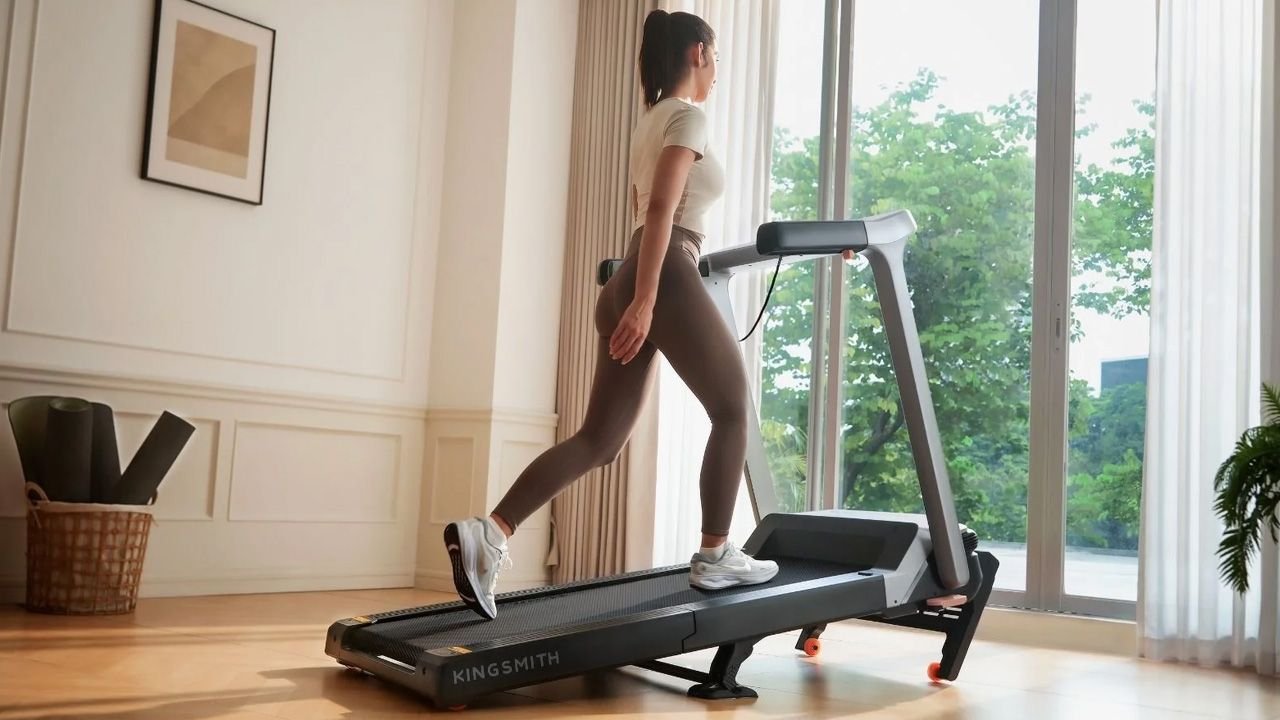
If you want to make incline walks and runs more challenging without permanently giving up floor space, the KingSmith WalkingPad G5i Foldable Incline Treadmill offers a practical solution. Its 25 adjustable incline levels, reaching a maximum of 18%, let you progress from gentle uphill walks to more demanding climbs while increasing workout intensity and energy expenditure. With speeds of up to 10 MPH, a spacious 51.2 × 19.7-inch running area, and SoftStep Incline™ Cushioning, it supports both walking and running workouts. After your workout, this folding treadmill with incline can be stored vertically or flat, so it does not take up valuable floor space when you are not using it.
Incline Walking vs. Flat Walking for Weight Loss
Incline walking and flat walking can both support a weight-loss routine, but they offer different levels of intensity and accessibility.
| Incline Walking | Flat Walking |
| Provides higher workout intensity at the same speed | Is easier to maintain for longer periods |
| Engages the lower-body muscles more | Is more accessible for beginners |
| Works well for shorter, more challenging sessions | Is suitable for recovery and everyday movement |
| Requires more careful control of speed and posture | Places fewer demands on balance and endurance |
You do not have to choose one over the other. Combining flat walking with incline sessions can help you balance workout intensity, recovery and consistency as part of a sustainable weight-loss plan.
Can Walking on Incline Treadmill Help You Lose Thigh Fat?
Incline treadmill walking engages your glutes, hamstrings, quadriceps and calves while increasing the intensity of your workout. However, it cannot specifically target fat loss from your thighs. Your body determines where fat is lost based on factors such as genetics, overall energy balance, and body composition.
Incline walking can contribute to overall fat loss by increasing energy expenditure as part of a consistent exercise routine. It may also help strengthen your lower-body muscles, but reducing thigh fat generally requires a combination of regular activity, balanced nutrition and long-term consistency.
Is Higher Treadmill Incline Always Better?
A higher treadmill incline is not necessarily better or more effective for everyone. If the incline is too steep, you may struggle to maintain proper posture, lean backward, or rely too heavily on the handrails. A steep incline that can only be sustained briefly may also be less practical than a moderate incline you can maintain with good form.
The best treadmill incline should provide enough intensity to challenge you while remaining safe, controlled, and sustainable. Choose a setting that matches your fitness level and increase the incline gradually as your strength and endurance improve.
Tips for Using Treadmill Incline Safely
Follow these practical tips to make incline walking and running safer and more comfortable:
- Start with an incline you can manage comfortably
- Reduce your speed as the incline becomes steeper
- Keep your torso upright and avoid leaning backward
- Use the handrails only when needed for balance
- Increase the incline gradually as your fitness improves
- Stop if you experience pain, dizziness, or unusual discomfort
- Include recovery days and other forms of exercise in your routine
The Bottom Line
No single treadmill incline suits everyone trying to lose weight. Beginners may benefit from starting with a gentle incline, while more experienced users can introduce moderate inclines and steeper intervals.
The most effective setting increases workout intensity while allowing you to maintain proper form and stay consistent over time. Incline walking can support your weight-loss goals, but it works best alongside balanced nutrition, regular physical activity, strength training, adequate sleep, and recovery.