The Fed is watching AI token prices. Here’s why CFOs should, too
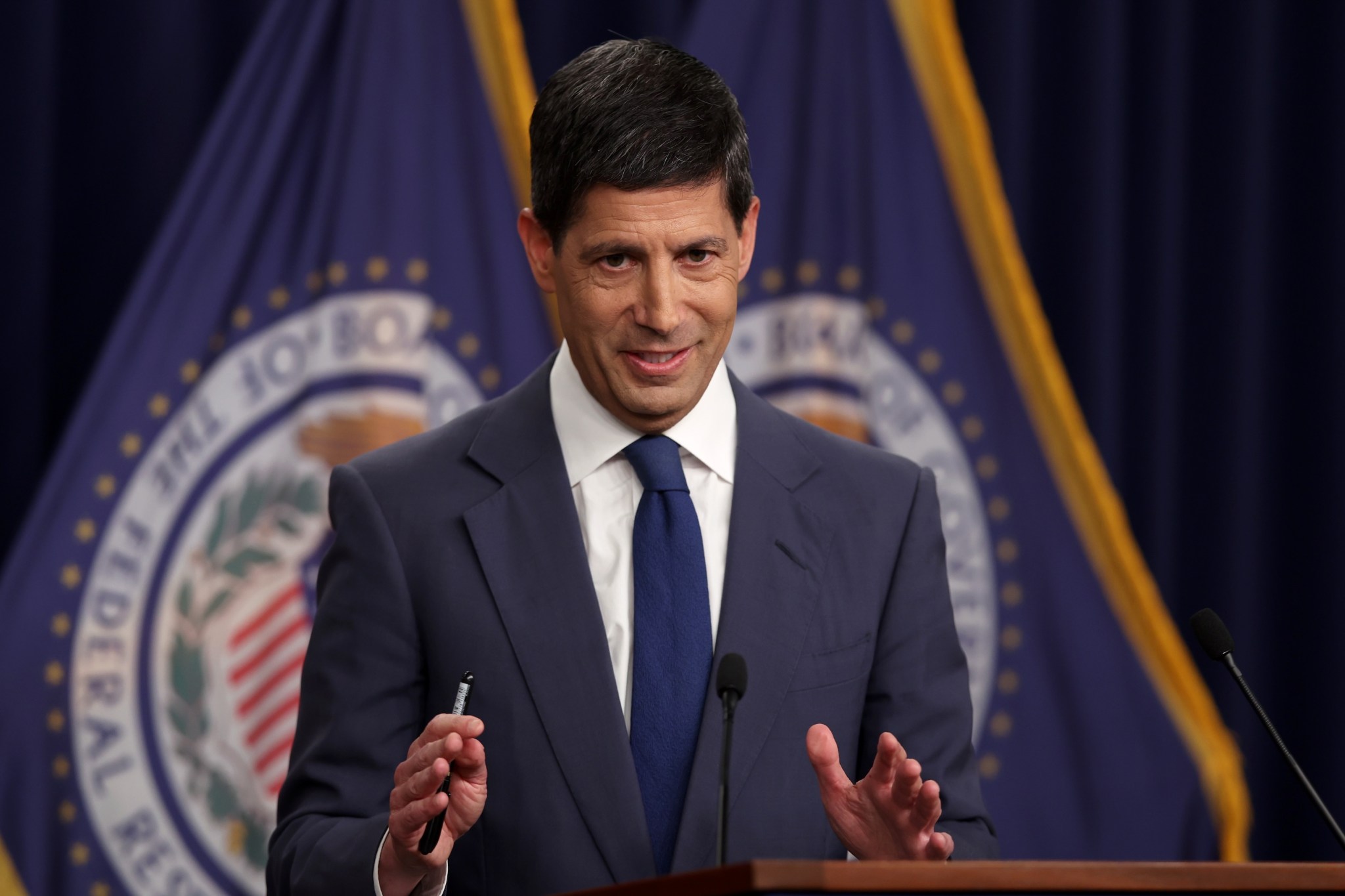
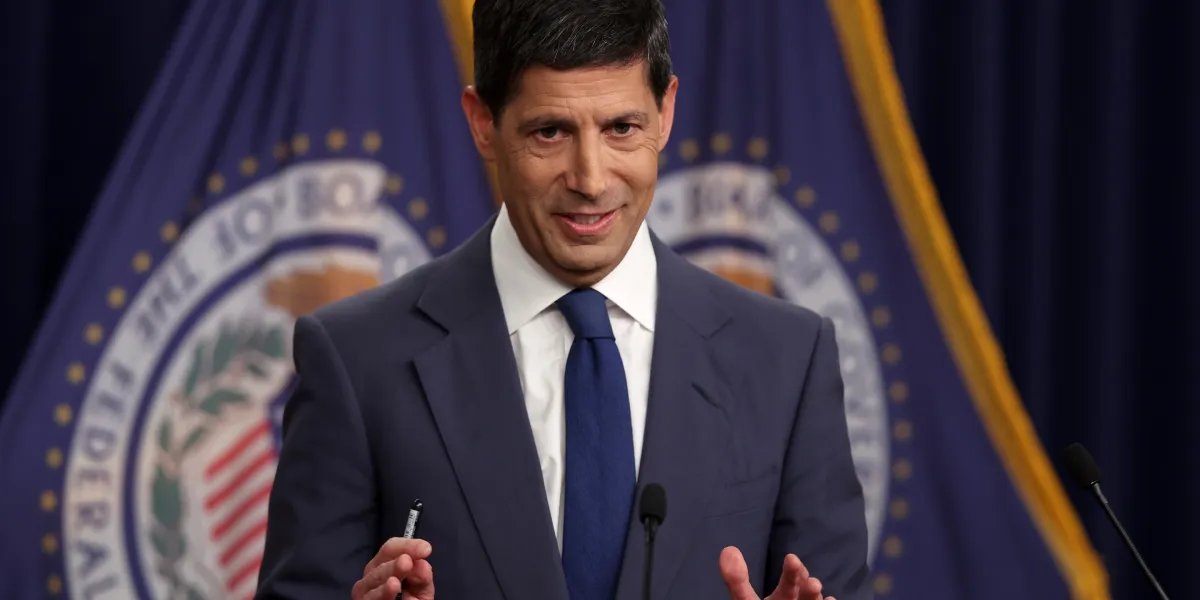
Good morning. Fed Chairman Kevin Warsh used his Jackson Hole speech on Friday to focus on inflation. But he also pointed to an unusual metric that could offer clues about whether AI is delivering the productivity gains businesses are betting on: token prices.
Tokens are the units used to measure the data AI models process, and many AI companies charge customers based on token consumption.
Warsh called AI a potential “new factor of production,” then asked whether customers will pay a premium for tokens from the most advanced models even as prices for older models fall toward marginal cost.
That doesn’t mean token prices are becoming a new Fed indicator. Instead, they could reveal how AI economics are evolving.
Gregory Daco, chief economist at EY Parthenon, told me that Warsh appears to see token prices as a window into the evolving AI market, offering clues about competition among providers, differences in model quality, pricing strategies, and computing costs.
But interpreting those price signals isn’t straightforward. Falling token prices can tell two very different stories.
If AI models become more capable while getting cheaper, businesses could generate more output for every dollar they spend, a sign of genuine productivity gains. But if models become increasingly interchangeable, providers could be forced to compete on price. That could signal commoditization and raise questions about whether the enormous capital flowing into AI will generate strong returns.
“Pricing power at the frontier—not usage growth—is becoming the real scoreboard for whether AI is creating value or just consuming capital,” Luke Lango, a technology analyst and publisher of Innovation Investor, told CFO Daily.
Token use has become a top-of-mind cost concern for CFOs. For companies spending on AI, token prices are an input cost. But lower cost doesn’t necessarily mean higher returns.
“For CFOs, the more relevant question is whether AI adoption is generating measurable productivity gains, improving margins, or creating new revenue opportunities,” Daco said.
That gets to the larger issue behind Warsh’s comments. The economics of AI will ultimately hinge on how much value it creates and who captures it.
Sheryl Estrada
Sheryl.Estrada@fortune.com
Leaderboard
Samuel J. Poletti was promoted to CFO of Amrize (NYSE: AMRZ), a building materials company, effective Aug. 24. Poletti succeeds Baris Oran, who is stepping down for personal reasons. Poletti has been a member of Amrize’s executive committee as its chief strategy and M&A officer since the company’s listing on the NYSE in June 2025. Poletti led the spin-off of Amrize, overseeing all the financial and non-financial aspects of establishing the independent company. He has had a more than 20-year career at Holcim in M&A, finance and strategy. Poletti has also led financial and strategic analysis of the industrials sector with Walleye Capital and served as VP of equity research and head of U.S. machinery and construction at Morgan Stanley.
Christopher Lee was appointed CFO of Gold Coast Health Plan (GCHP). Lee brings more than 25 years of healthcare finance experience to GCHP. Lee comes to GCHP from Healthcare In Action, a community health organization, where he rebuilt the organization’s financial systems. Before that, he spent seven years as vice president of financial planning and analysis at SCAN Health Plan, where he helped oversee a $5.2-billion budget. He also spent eight years in finance leadership roles at CareMore Health and Anthem.
Big Deal
Glassdoor’s new analysis of worker reviews finds AI mentions have surged 240% year-over-year, but the tone has flipped fast—from 81% positive in 2019 to just 43% positive today, with 53% now negative. The divide cuts along generational lines: Gen X workers (nearly 50% positive) are far warmer to AI than Gen Z (33%) or Millennials (40%), suggesting anxiety is highest among the workers AI is most likely to reshape.
For finance leaders, there’s a big warning sign: critical reviewers are six times more likely to mention layoffs, and AI-positive employees are 47% less likely to be job hunting, which indicates that how you roll out AI is now also a retention issue.
Going deeper
The official unemployment is so low that Federal Reserve policymakers see it as a signal the economy is at or near full employment, according to a Fortune report by Jason Ma. Fed Chairman Kevin Warsh said as much during his speech in Jackson Hole, Wyo., on Friday.
“As a result, the Fed’s attention is now fixed on fighting inflation, instead of the other part of its dual mandate, namely supporting the labor market,” Ma writes. “But the Ludwig Institute for Shared Economic Prosperity doesn’t have such a rosy view on the workforce.” Read more here.
Overheard
“Among the top 100 influencers collaborating with Temu, there are certainly some real people among them. In my estimate, however, they account for no more than 15–20%.”
—Online Risk Labs manager Vendula Prokůpková, told Fortune in an interview. ORL is an independent non-profit, which researches cybersecurity and systemic risk online. Read more here.