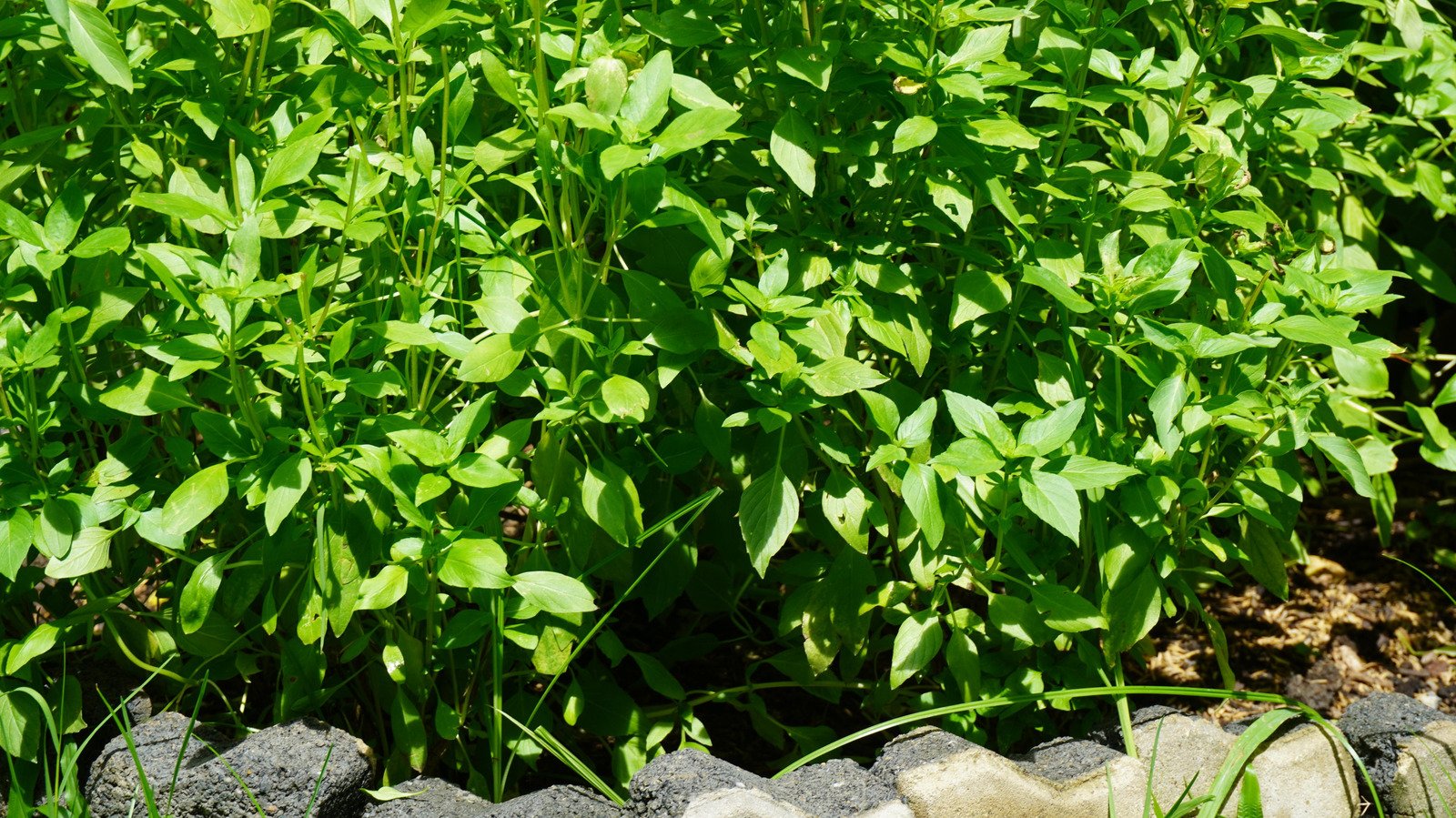
Is Basil A Perennial?
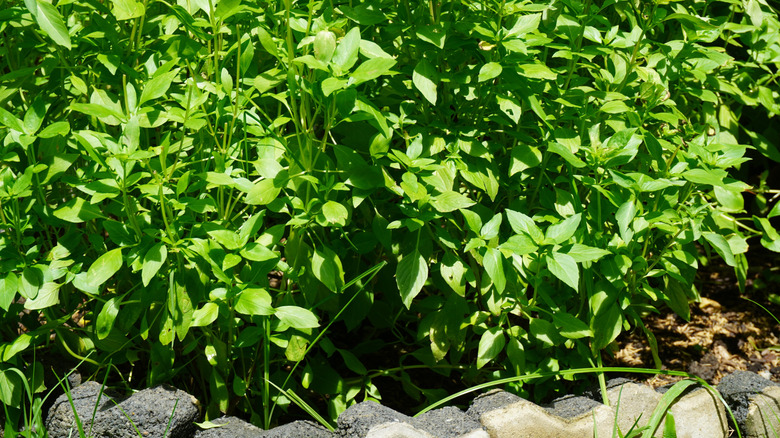
Discovering your store-bought basil leaves have wilted before you could whip up your prized pesto recipe is certainly a bummer. And to prevent that from ever happening again, you may have even considered growing your own basil. After all, when the herb is in your garden, it’s easier to harvest fresh leaves.
But if you’ve wondered whether basil will keep on giving year after year, like most perennial plants, you’ll be sad to read that this isn’t true. Basil (Ocimum spp.) is not a perennial. What it is, in fact, is a tender perennial. Basically, when perennial plants are grown outside their ideal range in colder climates, they terminate their lifecycle once frost hits or temperatures become sub-optimal for growth. Basil plants begin defoliating when temperatures dip below 40 degrees Fahrenheit, and for this reason, are often treated as annuals. However, in frost-free warm climates, such as USDA zones 10 and 11, they can survive as perennials. Still, even then, they’re usually short-lived, remaining productive only for a couple of years before you must start anew.
Growing more basil in the garden
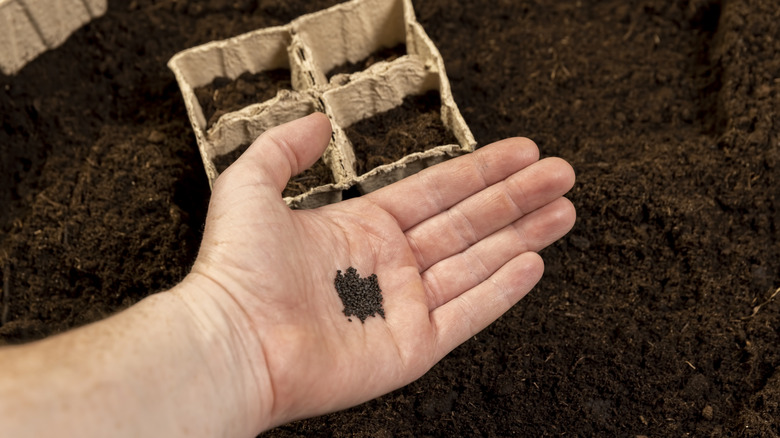
Most annual plants have one goal in life: produce enough seeds to ensure their legacy lives on. And basils aren’t any different. Whether you’re harvesting basil for the freshest flavor or trying to extend its usable life, you may have heard you shouldn’t allow it to set seeds. In other words, you must remove the flower buds from the stems as they emerge so the plant is set back in its growth cycle and instead encouraged to produce new branches and tender leaves.
However, if you let the herb produce flowers towards the end of the growing season (before the expected first light frost), they may produce seeds. Basil plants can usually self-sow, that is, drop seeds into the surrounding soil. If conditions are favorable, meaning the seeds receive full sunlight and the soil temperature warms to about 75 degrees Fahrenheit, they may germinate within 10 days.
If your growing season is short or if the seeds become too dry over the winter, they may not successfully germinate. Moreover, if you’ve grown several basil varieties in the vicinity, they can cross-pollinate. In such cases, new seedlings may not taste like the parent plants.
Making basil outlast a season
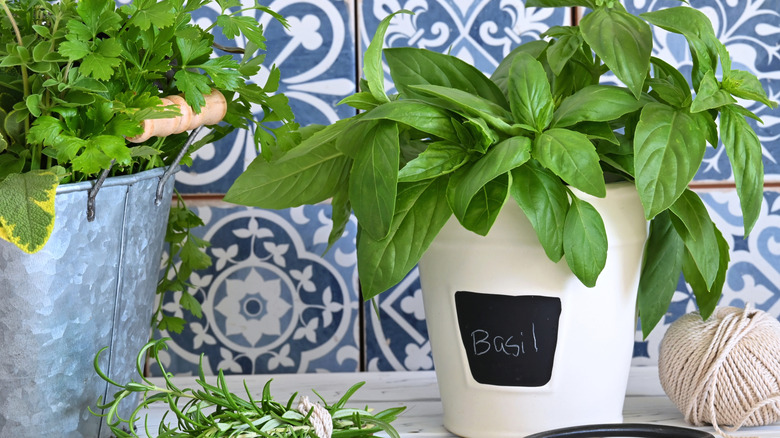
Although basil is frost-sensitive, you can still enjoy it for much longer by bringing it indoors. After harvesting all the tender leaves before the expected frost, trim the plant to the soil level. Carefully dig out the roots and plant them in new potting soil (this will protect it from soil-borne pests that may be overwintering in the soil), and continue growing basil indoors.
Alternatively, if you’ve the dedicated space, you can bring the plant inside as is — if it’s in a container — after slowly acclimating it. To do that, first move the pot to a shaded area, like the patio or the porch. After several days of exposure to low light conditions, you may move it indoors to a sunny window. Don’t worry, unlike other herbs, basil doesn’t lose its flavor when moved indoors, as long as it’s provided optimal care and maintenance. But remember, it may only last for two years or so before you need to bring in replacements.
Luckily, you don’t have to return to the nursery or grocery shelf to invest in new basil plants. You can simply take cuttings from a mature, non-flowering branch. Make an angular cut right below a leaf node (that’s where new roots will emerge) about 4 to 6 inches long, and snip off any leaves from the bottom area. You can propagate these cuttings in water or in soil. Wondering how to go about it? Here’s a quick reference guide on how to grow basil from cuttings. Another option is to save seeds and store them in a dry place, like a vial or bag, until weather becomes favorable for direct sowing or seed starting next year.