Leave Bulky Curtains Behind & Add Privacy To Glass Doors With This Sleek Solution
Partial or full glass entry doors sure pack a serious aesthetic punch when it comes to curb appeal for your home. But for all they boast in elegant beauty and high-end vibes, they also lack in light control and privacy. One major glass front door downside is that they leave the interior of your home visible to the outside world. Sure, you could add those cumbersome, door-mounted curtains to help block the view and light. However, they certainly don’t align with the open and airy vibes that glass doors bring in the first place. Instead, consider low-profile, cellular shades that are the best of both worlds. They’re there when you want them and nearly gone when you don’t.
Designed with collapsible and hollow honeycomb-shaped cells, these pleat down to mere inches when not in use. This slim, sleek profile means that they nearly disappear, especially if you choose a finish that matches your door. When you want privacy, shade, or even temperature control, the cordless operation requires only a simple pull-down to open. The average cellular shade will set you back about $65 to $380 per door. Of course, this depends on the size of the glass panel and the operation method you choose. On top of that, since they’re mounted onto the door itself, installation can be simple for smaller-scale shades. Thanks to their benefits, they are a great solution for a reasonable investment of time and money. So, let’s break down how to use this type of window shade to add the perfect finishing touch to your glass doors.
Benefits of using cellular shades on your glass door
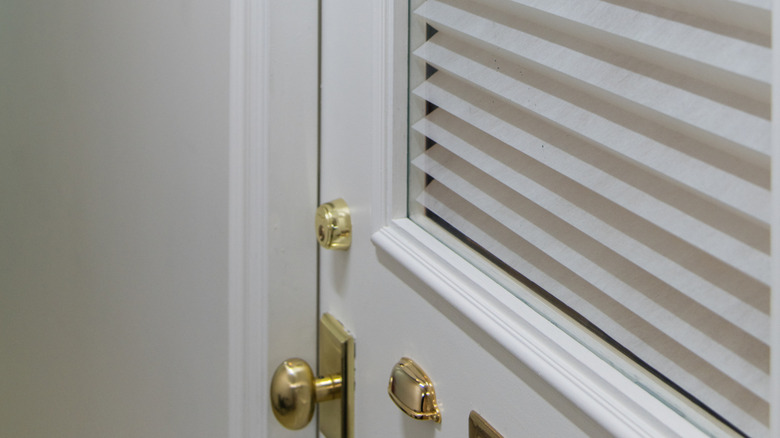
There are some other benefits in addition to the low profile silhouette and barely-there visibility when closed. The cordless lift operation is easy to use, allowing you to lower the shades when you want privacy and light control. However, they can also easily open when you want the space to feel open, airy, and full of natural light. Manual operation is simple for many with standard-height entry doors. If you’d like even more convenience, splurge on a battery operated smart shade with programmable control. Just be aware that a battery pack could make the shade headrail larger and less discreet. Some cordless cellular shades also come in what’s called top down/bottom up operation. This means that you can lower the shade from the top in addition to the typical lift from the bottom for more flexibility in position.
Besides allowing control over the levels of privacy and light, the unique honeycomb shape helps with insulation and temperature control. This is a particularly helpful bonus for those with doors that let in a lot of direct sunlight. The design of these cellular shades can even lower your utility bills. You can order thicker honeycomb material for more insulation and room darkening control. Though if you want a low-profile silhouette for a door ,it’s best to stick with single cell designs (rather than bulkier double cells).
Specifications of door-mounted cellular shades for glass panels
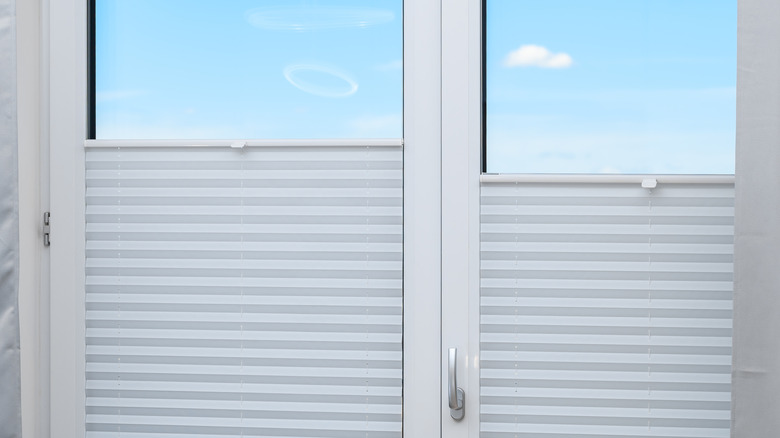
Now that you know how low-profile cellular shades can benefit your glass exterior doors, let’s talk shopping specifics. First, glass panel inner frames rarely have the depth to accommodate a full headrail cassette. So, most shades will be outside-mounted on the door, meaning placed just above and slightly wider than the glass panel. You’ll also want the slimmest cordless operation cassette they offer in a color that matches your door (or refinish it to blend seamlessly). Then, choose a matching bottom rail to keep the look nearly invisible and sleek. However, the shades themselves can be a different color if you’d prefer. Finally, since the door is operational, you’ll want to install hold down brackets or magnets to keep the bottom of the shade tight to the door. This prevents it from bumping around when the door’s in use. Alternatively, some cellular shades come pre-installed inside their own frames. These attach to the door for a super tight, integrated installation.
Cellular shades are ideal for the interior side of exterior swing doors (entry or otherwise) with any kind of glass panel, such as double French and single half-height glass. Additionally, a similar concept can be used for sliders and oversized glass bifolds with a slightly different approach. Door-mounted cellular shades can’t be added to cover each pane because of the way these open. Instead, they need a long, oversized headrail mounted above the opening. It should cover the entire width of the space from rail to floor. Just keep in mind that this is a very pricey commitment, given the size.