How Automakers Would Suffer if U.S.-Canada Trade Threats Stick
The U.S. auto industry is staying mum for the moment as the governments of the United States and Canada duke it out in a trade war that is leaving businesses with uncertainty as to the economic impact it could cause.
President Donald Trump enacted 50% tariffs on about $20 billion worth of Canadian goods imported into the United States starting Aug. 22. The tariffs, imposed under Section 338 of the Tariff Act of 1930, which are taxes paid by importers to bring goods across the border, include a variety of goods as well as steel and aluminum — both used by automakers for vehicle production. Canada’s government announced dollar-for-dollar retaliatory tariffs starting Sept. 8.
Also at stake is the United States-Mexico-Canada Agreement (or USMCA). The United States declined to extend the free trade pact for another 16 years during the mandatory joint review on July 1. That has set in motion an annual review process that keeps the current trade deal fully in effect through 2036. Many automakers have been pushing for a revised USMCA that better rewards domestic manufacturing and penalizes competitors reliant on foreign imports.
Trump also has threatened doubling to 50% the tariffs put in place last year under Section 232 of the Trade Expansion Act of 1962 on imported vehicles and auto parts coming from Canada. Currently, Trump has put a 25% tariff on all imported autos and auto parts. But the Detroit Three receive a USMCA rules-of-origin exemption, meaning auto parts and vehicles that comply with the agreement’s content requirements are exempt from Section 232 auto and parts tariffs, or have duties assessed only on non-U.S. content.
“The 338 tariffs the U.S. actually imposed on Canada were more of an annoyance than a real threat to trade with Canada. Feathers, honey, cotton sweaters and hockey sticks were on the list,” Patrick Anderson, CEO of Anderson Economic Group in East Lansing, told the Detroit Free Press, part of the USA TODAY Network, in an email.
“However, the promised ‘dollar-for-dollar’ Canadian retaliatory tariffs, and the just-threatened tariffs on ‘all cars, trucks, both large and small, automotive parts’ … would be an absolute body blow to the auto industry on both sides of the border. It would mean plants closing, and many job losses in Michigan, Ontario, Ohio, Indiana and Wisconsin,” Anderson said.
Ford Motor, General Motors and Stellantis all declined to comment when the Detroit Free Press asked them how both the unresolved USMCA or the increased tariffs on steel and aluminum, as well as the threat of 50% tariffs on autos and parts coming from Canada, could impact their businesses.
The American Automotive Policy Council, which represents the public policy interests of the Detroit automakers, did send the Detroit Free Press the following statement from Council President Matt Blunt on Aug. 25: “We urge U.S. and Canadian negotiators to reach a deal that enhances North American auto competitiveness and brings about a successful USMCA review.”
Price Hikes and Competitive Disadvantages
Industry experts are much more vocal, and warn that nothing from this trade war will be good for automakers or car buyers — especially if tariffs rise on imported vehicles and parts.
“In the near term, all of the automakers will absorb the additional costs associated with trade-related changes in the market, but that can’t last for long,” Sam Fiorani, vice president of Global Vehicle Forecasting at AutoForecast Solutions, told the Detroit Free Press. “Price increases, de-contenting, and reduced availability of models, trims or options will follow.”
Longer term, Fiorani said there will be a reduction in the collaboration between the two nations, which will lower the region’s ability to compete with the global industry.
“Standing alone makes the U.S. far less competitive against the European Union or China,” Fiorani said. “Dividing the free-trade region lessens the demand for U.S. products across North America and makes them more expensive around the world.”
Edmunds Director of Insights Ivan Drury said Detroit automakers import parts from Canada. Therefore, “if other brands … were to raise prices I would at least expect the Big Three to provide fewer incentives on competitive models, so they don’t look like they’re taking advantage of the situation, but also able to make more profit of each unit while still looking more competitive on price.”
Which Automakers Have the Most at Stake?
On Aug. 23, Honda Executive Vice President Noriya Kaihara said at a news roundtable that “we may have to” raise prices if the United States can’t reach a new trade deal with Canada, according to an Axios article. The executive said that for now the automaker will try to absorb the extra cost with its suppliers.
Kaihara made it clear that if there is no USMCA agreement and/or added tariffs on autos, Honda could shelve its plans to build an eighth assembly plant in North America.
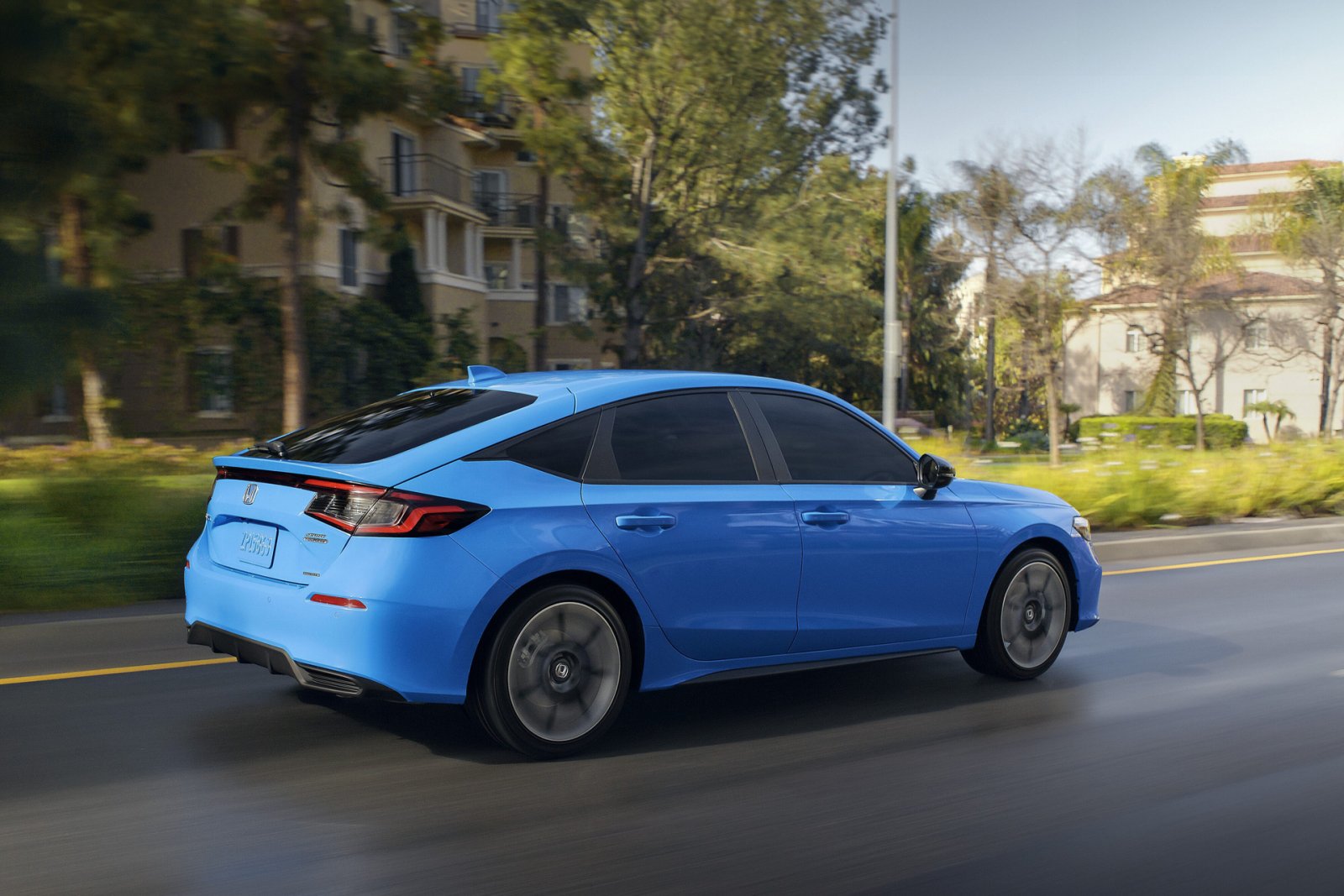
Honda makes the Civic sedan in Canada, where it’s the second-largest vehicle manufacturer by volume, and the Japanese automaker’s total U.S. sales are far more reliant on Canada manufacturing than other automakers, Drury said.
Drury ran data on the share of U.S. sales from vehicles built in Canada from January through Aug. 23. Here is what he found:
- Ford: 0% of its new vehicle sales come from vehicles made in Canada.
- GM: 4.5% of its new vehicle sales come from vehicles made in Canada.
- Stellantis: 5.1% of its new vehicle sales come from vehicles made in Canada.
- Toyota: 13.7% of its new vehicle sales come from vehicles made in Canada.
- Honda: 20.9% of its new vehicle sales come from vehicles made in Canada.
AutoForecast Solutions’ Fiorani provided a list of the vehicles that are made in Canada and imported to the United States for sale. In addition to a number of medium and heavy trucks, here is what each automaker makes:
- Ford: F-150 Super Duty (starts production shortly).
- General Motors: Chevrolet Silverado (ends production shortly); Chevrolet Silverado Heavy Duty.
- Honda: Civic, Honda CR-V.
- Stellantis: Chrysler Pacifica, Dodge Charger and Chrysler Voyager (becomes the “Pacifica LX” for 2027).
- Toyota: Lexus NX, Lexus RX and Toyota RAV4.
Higher Prices, Closed Factories
Anderson said from January to July this year, there were about 689,000 vehicles assembled in Canada.
“We don’t have a good number on the share of these that were shipped to the U.S. and sold here, but we can assume that is a large share of these,” he said.
The trade war will not only hurt the auto industry, Anderson said, it will damage Michigan’s economy, especially with Canada’s promised retaliation.
“Michigan is the most vulnerable state to a U.S.-Canadian trade war,” Anderson said. “We will get hit coming and going, as our agricultural exports, our auto parts exports, auto parts used in our own assembly, and more would all get hit.”
Right across the river, inside Canada, Ontario is the most vulnerable to the fallout from a trade war, Anderson said.
“This may have started with playground taunts and annoying tariffs on feathers and hockey sticks,” Anderson said. “But it will lead to shuttered plants if we don’t find a way to climb down.”
Reporting by Jamie L. LaReau of the Detroit Free Press, with contributions from Jackie Charniga. USA TODAY Network via Reuters Connect.