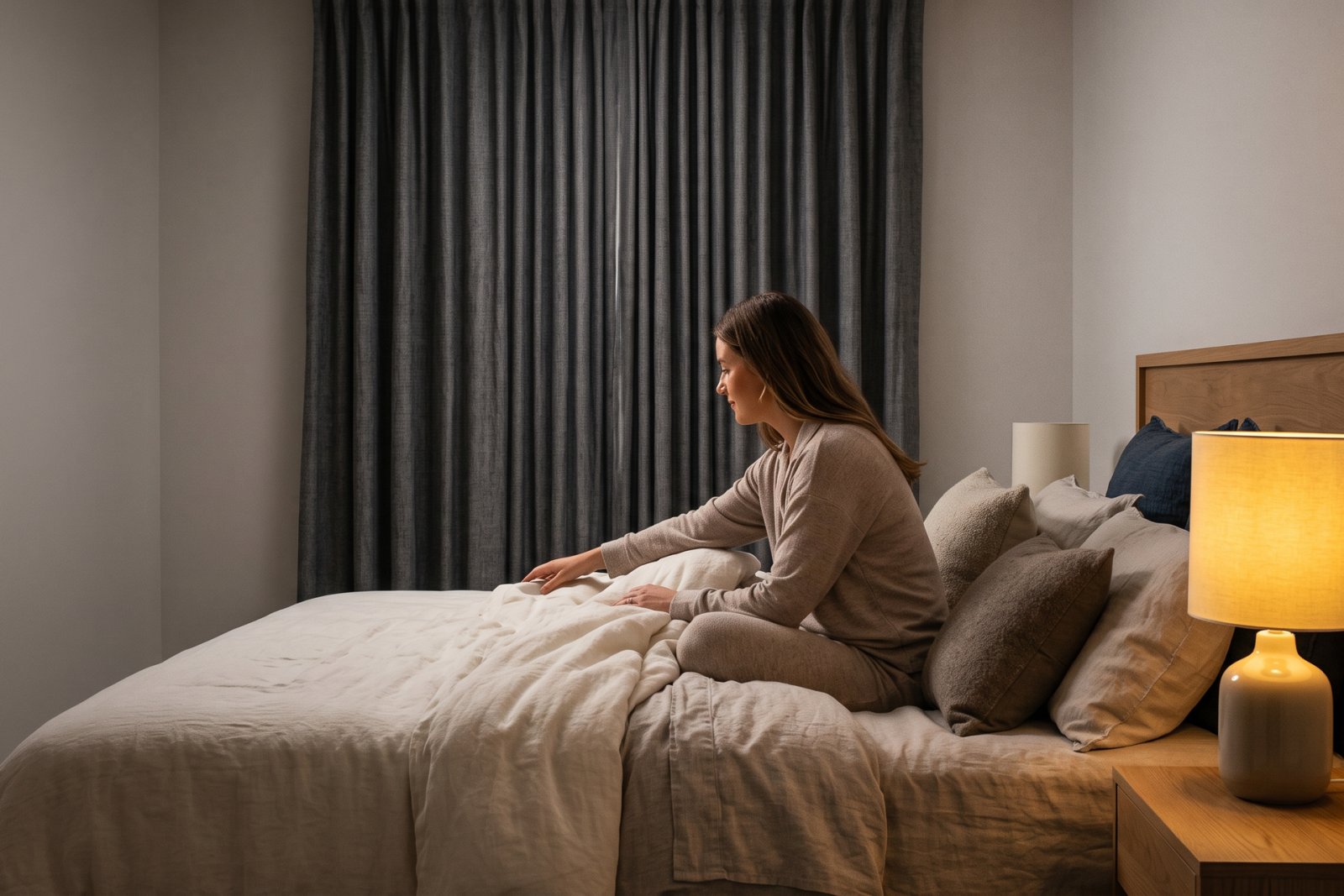
6 Things in Your Bedroom Quietly Wrecking Your Sleep
You’ve tried going to bed earlier. You’ve cut back on coffee. And you’re still staring at the ceiling at 2 a.m. Maybe the problem isn’t you — it’s your bedroom.
Your sleep is shaped by your surroundings more than most people realize. And the fixes are usually cheap or free.
This is worth doing. Harvard researchers link too little sleep to a higher risk of depression, diabetes, and heart problems. Better sleep isn’t a luxury — it’s some of the cheapest preventive medicine there is.
Here are six quiet sleep-wreckers hiding in plain sight, and how to shut them down.
1. Your bedroom is too warm
Your body has to cool down a couple of degrees to fall asleep, so a hot room fights you all night. The Cleveland Clinic says the sweet spot is a cool 60 to 67 degrees.
You don’t have to blast the AC. Crack a window, run a fan, or nudge the thermostat down at night — which also happens to be one of the easiest ways to lower your electric bill. If you’re older, you may want to discuss changing your sleep temperature with your doctor, Cleveland Clinic says.
2. There’s too much light — including your phone
Light is your body’s “stay awake” signal, and it doesn’t take much. Harvard found that even a faint glow can shift your internal clock and hold back melatonin, the hormone that makes you sleepy.
So black out the room. Cheap blackout curtains, a $10 sleep mask, and a piece of tape over that glowing charger light all help. And get your phone off the nightstand — the screen is the worst offender of all.
3. Your bulbs are harsh and blue
The bright, bluish light from ordinary bulbs tells your brain it’s high noon. Switching your bedroom and bathroom bulbs to warm, dim ones in the evening sends the opposite message: It’s time to wind down.
It’s a cheap fix. Warm, soft white LED bulbs cost just a few dollars, and one of our writers found that the right bulbs helped her fall asleep faster. Use a lamp instead of the overhead light for the last hour of the night.
Quick aside — most internet financial advice comes from people who weren’t alive during the last recession. I’ve been writing about money for more than 35 years. Want rock-solid advice? Sign up for the free Money Talks Newsletter. Takes 10 seconds. No fluff. No spam.
4. Your mattress or pillow is worn out
Most mattresses are done after about 7 to 10 years. If yours sags in the middle, or you wake up stiff and sore, it’s stealing your sleep every single night.
You don’t have to overspend. Flip or rotate the mattress, add an inexpensive topper, and replace a flat, lumpy pillow — pillows wear out faster than you’d think. Buy a whole new mattress only when it’s truly shot.
5. It’s too noisy — or too silent
It’s not just loud noises that wake you. It’s sudden ones — a car door, a creak, a snoring partner — cutting through the quiet. The fix is steady, boring background sound.
A $20 box fan or white-noise machine smooths over the bumps and can mask a snorer. Some people sleep better with a set of earplugs. Either way, consistency is what your brain wants.
6. Your bedroom has become a second living room
If you work, watch TV, scroll your phone, and snack in bed, your brain stops linking the room with sleep and starts linking it with being awake. That makes drifting off harder than it should be.
Reclaim the room. Keep the TV and the laptop out, clear the clutter, and let your bed be for sleep. Give it a couple of weeks, and your body relearns the cue.
None of this costs much, and most of it costs nothing. A cooler, darker, quieter room is one of the best trades going — a few small changes tonight for better sleep, a sharper mind, and a healthier heart.
So before you spend another dime on sleep gummies or fancy gadgets, fix the room. That’s likely where the real problem — and the real fix — has been hiding all along.